
Posted on 10/09/2026 10:01:28 PM PDT by fidelis
While Jesus was speaking, a woman from the crowd called out and said to him, “Blessed is the womb that carried you and the breasts at which you nursed.” He replied, “Rather, blessed are those who hear the word of God and observe it.” Luke 11:27–28
Any loving mother would understand the sentiment expressed by this woman in the crowd. We can reasonably infer that she was likely a mother herself, one who took great joy in her children. After being deeply moved by Jesus’ words and presence, she looked upon Him with maternal admiration, expressing the thought that His mother must be truly blessed to have borne and nurtured such a holy man of God. Perhaps, in her heart, she imagined how wonderful it would be to have had the privilege of being the mother of the Messiah.
Jesus, however, gives a surprising response to the woman’s touching and sincere exclamation. Rather than simply accepting the compliment or returning a kind word of thanks, Jesus redirects the focus. He shifts the emphasis from the natural to the supernatural—from biological motherhood to spiritual discipleship.
On a natural level, it is indeed true that the Blessed Virgin Mary is uniquely blessed for being the Mother of the Son of God. As the woman observed, motherhood is a great gift, and to be the mother of the Messiah is an incomprehensible grace. Though Jesus does not deny this, He instead reveals the deeper source of the Virgin Mary’s true blessedness. It was not only that she carried Him in her womb or nursed Him at her breast, it was that she heard the Word of God and observed it with perfect fidelity.
It may be that Jesus’ response to this kind woman arose out of His burning love for His own mother. He loved her because she was His mother, and love was due her for that reason alone. However, His love also flowed from His infinite gratitude to her for her perfect cooperation with the divine plan of salvation. As God, Jesus looked upon His mother as the New Eve, the new mother of all the living. He saw her Immaculate Heart, which she kept pure and free from every sin throughout her life. He foresaw her eventual Assumption into Heaven and her coronation as the Queen of Heaven and Earth.
Jesus also looked upon His mother from the perspective of human nature. She was His mother. She perfectly cared for Him, nursed Him, fed Him, played with Him, and loved Him with all her heart. Her graced virtues forged a sacred bond with her Son that we can only try to imagine.
Therefore, when this woman cried out, “Blessed is the womb that carried you and the breasts at which you nursed,” we can also hear in Jesus’ response an immediate defense of His mother’s honor and dignity. Yes, she carried Him in her womb and nursed Him, but Jesus saw her for who she truly was. She perfectly listened to the Word of God and conformed to God’s will without any deviation. Hence, it might have been Jesus’ human love, united with His divine love, that compelled Him to immediately proclaim His mother’s true dignity and blessedness.
Reflect today on Jesus’ quick and passionate response to this loving mother in the crowd. Hear in His voice a sense of urgency directed to your own soul. He desires to include you in His spiritual kinship and to count you among the blessed, those who hear His Word and faithfully observe it. Imitate the Mother of God, and you, too, will share in the blessings that such a life bestows.
Living Word of God, You continuously speak to us the dictates of love, calling us to Yourself and conforming us to Your will. Please open my ears to hear You and strengthen my heart to obey You. May Your Blessed Mother be my intercessor and model of such a life, and may I share in the blessedness she enjoys. Jesus, I trust in You.

|
Click here: to donate by Credit Card Or here: to donate by PayPal Or by mail to: Free Republic, LLC - PO Box 9771 - Fresno, CA 93794 Thank you very much and God bless you. |
Please keep in mind that this is a Catholic Caucus/Devotional thread for the purpose of prayerful reflection on the Sacred Scriptures and is closed to debate of any kind. Per FR policy on Religion Caucus threads, off-topic, argumentative, and abusive comments are not allowed and will be submitted to the Mods for deletion. Thanks, and God bless you.
The Month of October is Dedicated to the Holy Rosary

“Rejoice in your hope, be patient in tribulation, be constant in prayer.” (Romans 12:12)

Pope Leo XIV’s prayer intention for the month of October, 2026:
For mental health ministry
Let us pray that the mental health ministry be established throughout the Church, helping to overcome the stigma and discrimination of persons with mental illnesses.

Today’s First Reading
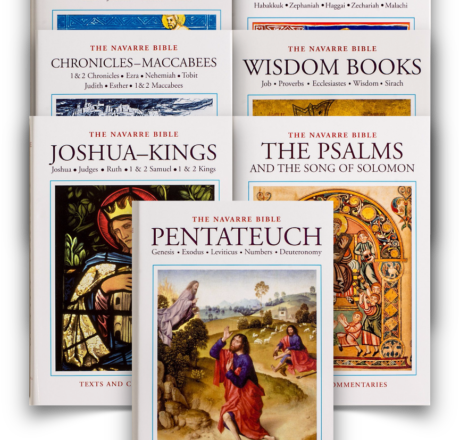
From: Galatians 3:22-29
The Law and the Promise (Continuation)
----------------------------------------------------
[22] But the scripture consigned all things to sin, that what was promised to faith in Jesus Christ might be given to those who believe. [23] Now before faith came, we were confined under the law, kept under restraint until faith should be revealed. [24] So that the law was our custodian until Christ came, that we might be justified by faith. [25] But now that faith has come, we are no longer under a custodian; [26] For in Christ Jesus you are all sons of God, through faith. [27] For as many of you as were baptized into Christ have put on Christ. [28] There is neither Jew nor Greek, there is neither slave nor free, there is neither male nor female; for you are all one in Christ Jesus. [29] And if you are Christ's, then you are Abraham's offspring, heirs according to promise.
***********************************************************************
Commentary:
21-25. "But the scripture consigned all things to sin": it is not easy to understand this phrase but its meaning becomes clearer in the context of the whole passage: God reveals that all men are under the power of sin, Jews as well as Gentiles, despite the Jews having received the Law (cf. Rom 3:10-18). The reason this is so is, again, the inability of the Law to confer justification; the Law had no power to free us from the devil, sin or death. But now, in the fullness of time, God's purpose in giving the Law is made manifest -- namely, to protect and guide mankind during its minority, rather as a governess or tutor looks after a child until he has grown up. The tutor keeps an eye on the child: the child cannot do whatever he likes but must be guided by his teacher. And so it is with mankind: it was a minor, of whom the Law was the custodian, so to speak; but when the fullness of time came God sent his son Jesus Christ, who set us free from sin, from death and from the Law itself, our tutor. That is why the Apostle says, "Now that faith has come, we are no longer under a custodian." This faith is the new life which has taken over from the harsh discipline of the Law.
To us, centuries later, these arguments and teachings of St Paul's may seem irrelevant. We need to put ourselves in the position of a Jew of his time -- a zealous upholder of the Law, and yet unable to cope with the sheer weight of all its precepts and accretions -- who, now that he has converted to faith in Christ, has a real sense of liberation: he has been freed from all his old shackles and is now eager to show his former Jewish brothers that they too can attain the same freedom in Christ Jesus.
24. The Law, like the whole of the Old Testament, had this function in relation to the New -- to prepare the way for its promulgation. Everything in the books of the Old Testament refers directly or indirectly to our Lord Jesus Christ and his work of redemption: the two Testaments are intimately connected, as Tradition teaches and the Second Vatican Council reminds us: "God, the inspirer and author of the books of both Testaments, in his wisdom has so brought it about that the New should be hidden in the Old and that the Old should be made manifest in the New. For, although Christ founded the New Covenant in his blood (cf. Lk 22:20; 1 Cor 11:25), still the books of the Old Testament, all of them caught up into the Gospel message, attain and show forth their full meaning in the New Testament (cf. Mt 5:17, Lk 24:27; Rom 16:25-26; 2 Cor 3:14-16) and, in their turn, shed light on it and explain it" ("Dei Verbum", 16).
27. St John of Avila, commenting on this passage, says, "The Holy Spirit was not content with saying that we are bathed and anointed: here he says that we are clothed, and the clothing we are given is not just something beautiful and costly: it is Jesus Christ himself, who is the sum total of all beauty, all value, all richness, etc. What he means is that the beauty of Jesus Christ, his justice, his grace, his riches, his splendor, shine out from us with the splendor of the sun and is reflected as in the purest of mirrors" ("Lecciones Sobre Gal, ad loc.").
St Paul uses this metaphor of our being decked out in Christ in many other passages (cf. Rom 13:14; 1 Cor 15:43; Eph 4:24; 6:11; Col 3:10; etc.) to describe the intimate union between the baptized person and Christ, a union so intense that the Christian can be said to be "another Christ".
28. In the order of nature, it may be said, all men are radically equal: as descendants of Adam, we are born in the image and likeness of God (cf. Gen 1:26-27). The different functions which people have in the life of society do not alter this basic, natural equality. From this point of view there is no real difference, nor should there be, between one person and another, no difference even between man and woman: both are made in the image and likeness of God.
In the order of grace, which the Redemption inaugurates, this essential, original equality was restored by Christ, who became man and died on the Cross to save all. John Paul II points out that this true meaning of the dignity of man is enhanced by the Redemption: "In the mystery of the Redemption man becomes newly 'expressed' and, in a way, is newly created. He is newly created! 'There is neither Jew nor Greek, there is neither slave nor free, there is neither male nor female; for you are all one in Christ Jesus' (Gal 3:28). The man who wishes to understand himself thoroughly--and not just in accordance with immediate, partial, often superficial, and even illusory standards and measures of his being--must with his unrest, uncertainty and even his weakness and sinfulness, with his life and death, draw near to Christ. He must, so to speak, enter into him with all his own self, he must 'appropriate' and assimilate the whole of the reality of the Incarnation and Redemption in order to find himself" ("Redemptor Hominis", 10)
From this radical equality of all men is derived that universal fraternity which should govern human relations: "Our Lord has come to bring peace, good news and life to all. Not only to the rich, nor only to the poor. Not only to the wise, nor only to the simple. To everyone. To the brethren, for brothers we are, children of the same Father, God. So there is only one race, the race of the children of God. There is only one color, the color of the children of God. And there is only one language, the language which speaks to the heart and to the mind, without the noise of words, making us know God and love one another" (St J. Escriva, "Christ Is Passing By", 106).
From: Luke 11:27-28
Responding to the Word of God
-----------------------------
[27] As He (Jesus) said this, a woman in the crowd raised her voice and said to Him, "Blessed is the womb that bore You, and the breasts that You sucked!" [28] But He said, "Blessed rather are those who hear the word of God and keep it!"
***********************************************************************
Commentary:
27-28. These words proclaim and praise the Blessed Virgin's basic attitude of soul. As the Second Vatican Council explains: "In the course of her Son's preaching she [Mary] received the words whereby, in extolling a Kingdom beyond the concerns and ties of flesh and blood, He declared blessed those who heard and kept the word of God (cf. Mark 3:35; Luke 11:27-28) as she was faithfully doing (cf. Luke 2:19_51)" ("Lumen Gentium", 58). Therefore, by replying in this way Jesus is not rejecting the warm praise this good lady renders His Mother; He accepts it and goes further, explaining that Mary is blessed particularly because she has been good and faithful in putting the word of God into practice. "It was a complement to His Mother on her "fiat", `be it done' (Luke 1:38). She lived it sincerely, unstintingly, fulfilling its every consequence, but never amid fanfare, rather in the hidden and silent sacrifice of each day" (St J. Escriva, "Christ Is Passing By", 177). See the note on Luke 1:34-38.
[Note on Luke 1:34-38 states: 34-38. Commenting on this passage John Paul II said: "`Virgo fidelis', the faithful Virgin. What does this faithfulness of Mary mean? What are the dimensions of this faithfulness? The first dimension is called search. Mary was faithful first of all when she began, lovingly, to seek the deep sense of God's plan in her and for the world. `Quomodo fiet?' How shall this be?, she asked the Angel of the Annunciation [...]."
"The second dimension of faithfulness is called reception, acceptance. The `quomodo fiet?' is changed, on Mary's lips, to a `fiat': Let it be done, I am ready, I accept. This is the crucial moment of faithfulness, the moment in which man perceives that he will never completely understand the `how': that there are in God's plan more areas of mystery than of clarity; that is, however he may try, he will never succeed in understanding it completely [...]."
"The third dimension of faithfulness is consistency to live in accordance with what one believes; to adapt one's own life to the object of one's adherence. To accept misunderstanding, persecutions, rather than a break between what one practises and what one believes: this is consistency [...]."
"But all faithfulness must pass the most exacting test, that of duration. Therefore, the fourth dimension of faithfulness is constancy. It is easy to be consistent for a day or two. It is difficult and important to be consistent for one's whole life. It is easy to be consistent in the hour of enthusiasm, it is difficult to be so in the hour of tribulation. And only a consistency that lasts throughout the whole life can be called faithfulness. Mary's `fiat' in the Annunciation finds its fullness in the silent `fiat' that she repeats at the foot of the Cross" ("Homily in Mexico City Cathedral", 26 January 1979).]
Disclaimer: Opinions posted on Free Republic are those of the individual posters and do not necessarily represent the opinion of Free Republic or its management. All materials posted herein are protected by copyright law and the exemption for fair use of copyrighted works.

