
Posted on 10/07/2026 10:57:21 PM PDT by fidelis
“And I tell you, ask and you will receive; seek and you will find; knock and the door will be opened to you. For everyone who asks, receives; and the one who seeks, finds; and to the one who knocks, the door will be opened. Luke 11:9–10
Prayer is our lifeline to God. It opens the door to the outpouring of His grace. If we need grace every day—and we do—then, we need to pray every day. When we form a habit of prayer, it becomes the central foundation of our identity, enabling us to live as true sons and daughters of God.
How often do you pray? Though the quantity of prayer matters, it is the quality of our prayer that sustains and transforms us. True prayer draws us into intimacy with God, conforms our hearts to His will, and enables us to live as members of His Kingdom of grace, receiving from Him every good gift.
In Luke’s Gospel, after one of the disciples asked Jesus, “Lord, teach us to pray” (Luke 11:1), He gave them the model of all prayer: the Lord’s Prayer, or the Our Father. Today’s Gospel passage immediately follows that instruction, offering a deeper understanding of the nature of prayer and the fruit it bears.
The first quality Jesus highlights is persistence. He tells a parable in which a man knocks on his friend’s door in the middle of the night to ask for bread for an unexpected guest. The friend replies that the door is already locked and his family is asleep. Yet the man persists. Jesus concludes: “I tell you, if he does not get up to give him the loaves because of their friendship, he will get up to give him whatever he needs because of his persistence” (Luke 11:8). The word translated as “persistence” can more literally be rendered as “shameless boldness.” This is not nagging, but a confident insistence born of trust.
As Jesus continues, He reveals that such persistence must be joined with unwavering confidence: “Ask and you will receive; seek and you will find; knock and the door will be opened to you.”
This line can easily be misunderstood or misapplied. When we pray, will God give us whatever we ask, so long as we are persistent and confident? Certainly not. We cannot manipulate God by the force of our requests. Why, then, does Jesus speak this way?
The petition God encourages is a petition for what is truly good—that is, what lies within His will, according to His wisdom and providence. Jesus’ explanation makes this clear: “If you then, who are wicked, know how to give good gifts to your children, how much more will the Father in heaven give the Holy Spirit to those who ask him?” (Luke 11:13).
Return again to the image of a friend knocking at the door in the middle of the night, refusing to leave until you respond. God invites us to knock with the same determination. He wants us to approach Him with shameless boldness, asking for that which is good—not as we define it, but as He defines it.
To pray with persistence, confidence, and humility requires trust. Often, we do not know what the highest good is according to God’s wisdom. Without trust, we risk trying to bend God’s will to our own. But trust, intertwined with persistent and confident prayer, makes our petitions a powerful channel of grace through which God does glorious things.
Reflect today on whether your prayer is persistent, confident, and marked by a blind trust in God’s goodness and perfect will. Do you boldly ask God for His will to be done, even when it requires surrender? Pray for the grace to seek only what is good in God’s eyes, and never cease knocking on the door of His Heart.
Lord of all goodness, Your Heart burns with a desire to pour forth all that is good upon Your sons and daughters. Help me to believe in You and in Your goodness, to pray with persistence and confidence, and to know that You long to bestow the Holy Spirit upon me far more than I will ever understand. Jesus, I trust in You.
Please keep in mind that this is a Catholic Caucus/Devotional thread for the purpose of prayerful reflection on the Sacred Scriptures and is closed to debate of any kind. Per FR policy on Religion Caucus threads, off-topic, argumentative, and abusive comments are not allowed and will be submitted to the Mods for deletion. Thanks, and God bless you.
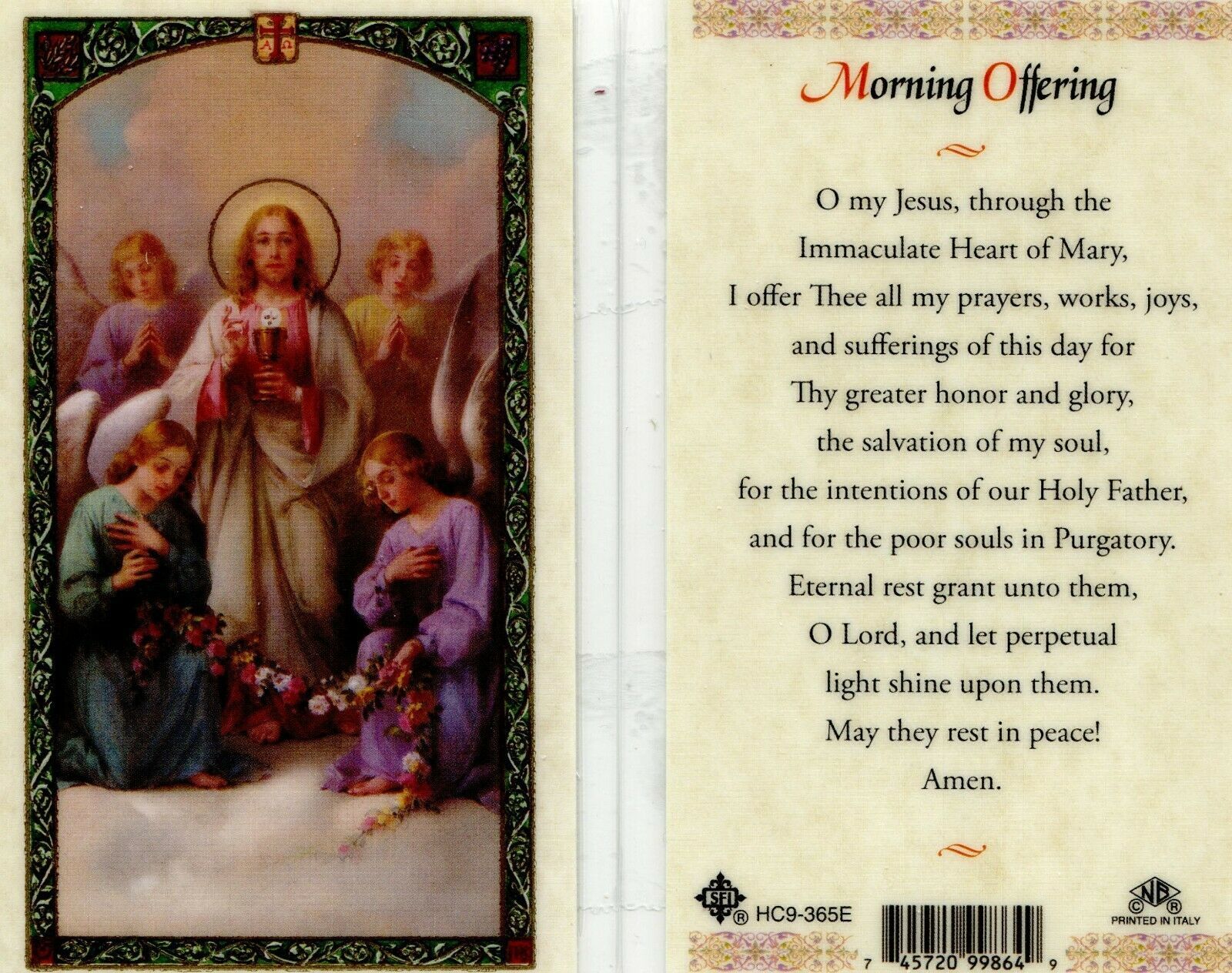
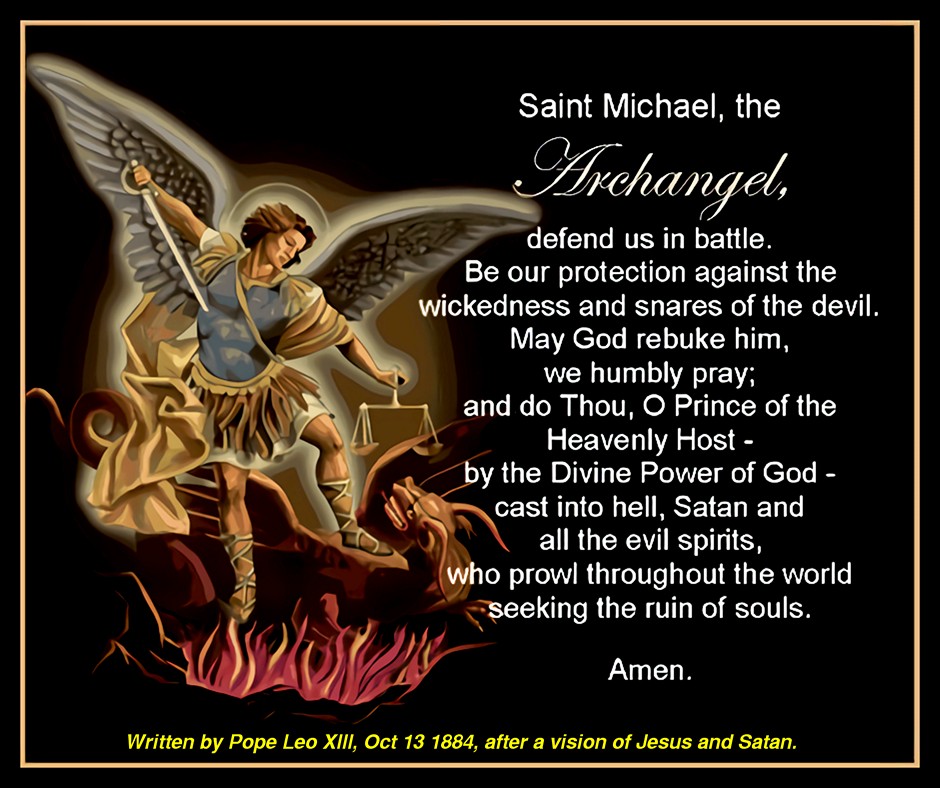
The Month of October is Dedicated to the Holy Rosary

“Rejoice in your hope, be patient in tribulation, be constant in prayer.” (Romans 12:12)

Pope Leo XIV’s prayer intention for the month of October, 2026:
For mental health ministry
Let us pray that the mental health ministry be established throughout the Church, helping to overcome the stigma and discrimination of persons with mental illnesses.

Today’s First Reading
From: Galatians 3:1-5
Justification By Faith
----------------------
[1] O foolish Galatians! Who has bewitched you, before whose eyes Jesus Christ was publicly portrayed as crucified? [2] Let me ask you only this: Did you receive the Spirit by works of the law, or by hearing with faith? [3] Are you so foolish? Having begun with the Spirit, are you now ending with the flesh? [4] Did you experience so many things in vain?--if it really is in vain. [5] Does he who supplies the Spirit to you and works miracles among you do so by works of the law, or by hearing with faith?
***********************************************************************
Commentary:
1-14. It is his love for the Galatians, rather than indignation at their behavior, that causes the Apostle to call them "foolish". His love causes him suffering because they have forgotten that only Jesus, and not the Law, brings salvation. The Galatians should know very well that they received justification without even having heard mention of the Law, for the Holy Spirit came upon them prior to the arrival of the people from Jerusalem (vv. 1-5). All they have to do is remember the charisms which they received--the "so many things", the "miracles", which are manifestations of the Spirit (cf. 1 Cor 12-14).
Besides, there is the example of Abraham (vv. 6-9; cf. Rom 4). The Lord promised him that his descendants would be blessed; he established a covenant with him and justified him not by the works of the Law, which had not yet been promulgated, but through his faith. In the same way, all who have believed and who will in the future believe in God as Abraham did will be his true descendants and will also receive God's blessing.
Finally, the Mosaic Law, far from bringing salvation, is rather a cause of spiritual death, insofar as every precept involves a penalty if it is not obeyed (vv. 10-14; cf. Rom 7:7-12). Our Lord freed us from the curse of the Law by voluntarily taking on himself the punishment merited by man's sin (cf. Is 53:4; Mt 8:17; Rom 3:21-26; 5:6-10). By reverting and submitting to the Law they would in effect be saying that our Redeemer's sacrifice was unnecessary and ineffective.
1. St Paul boasted that he preached Christ crucified, even though he fully realized that it was a stumbling-block to Jews and folly to pagans (cf. 1 Cor 1:23). The mystery of the Passion, Death and Resurrection of Christ was in fact the very essence of the Apostles' teaching (cf. Acts 2:22-24; 3:13-15; etc.), for it was these mysteries that contained all hope of eternal life and salvation. That is why Paul adds that, for believers, Christ crucified, far from being folly, is the power of God and the wisdom of God (cf. 1 Cor 1:24).
Paul had probably described our Lord's Sacrifice with such force and effect that it had been deeply engraved in their memory--and now these Judaizers, these deceivers, were hypnotizing the naive Galatians and causing them to lose sight of Christ: they had switched their attention from Christ on the Cross to the actions of the interlopers.
St Paul's warning is an invitation to fix one's gaze once more on that sign which, as it were, sums up all Christianity--the image of Christ on the Cross, which ever since apostolic times presides over altars and altarpieces, and places of work and leisure.
2-5. St Paul reminds the Galatians that in Baptism they received the Holy Spirit and his gifts. Since their Baptism, and not prior to it, they had experienced the action of the Spirit who, although he is in all ages a source of joy in the Church, was even more evident in the apostolic age in which the Galatians were living. So, how did this life of the Spirit reach the Galatians--through faith in Christ and through Baptism, or through the works of the Law? The Apostle poses the question without providing an answer, surely because it is obvious that it came through Christ. The Mosaic Law played no part at all. How, then, can they be so foolish as to change the Gospel which Paul had preached to them?
From: Luke 11:1-13
Effective Prayer
----------------
[5] And He (Jesus) said to them (the disciples), "Which of you who has a friend will go to him at midnight and say to him, 'Friend, lend me three loaves; [6] for a friend of mine has arrived on a journey, and I have nothing to set before him'; [7] and he will answer from within, 'Do not bother me; the door is now shut, and my children are with me in bed; I cannot get up and give you anything'? [8] I tell you, though he will not get up and give him anything because he is his friend, yet because of his importunity he will rise and give him whatever he needs. [9] And I tell you, Ask, and it will be given to you; seek, and you will find; knock, and it will be opened to you. [10] For every one who asks receives, and he who seeks find, and to him who knocks it will be opened. [11] What father among you, if his son asks for a fish, will instead of a fish give him a serpent; [12] or if he asks for an egg, will give him a scorpion? [13] If you then, who are evil, know how to give good gifts to your children, how much more will the Heavenly Father give the Holy Spirit to those who ask Him!"
***********************************************************************
Commentary:
5-10. One of the essential features of prayer is trusting perseverance. By this simple example and others like it (cf. Luke 18:1-7) our Lord encourages us not to desist in asking God to hear us. "Persevere in prayer. Persevere even when your efforts seem barren. Prayer is always fruitful" (St J. Escriva, "The Way", 101).
9-10. Do you see the effectiveness of prayer when it is done properly? Are you not convinced like me that, if we do not obtain what we ask God for, it is because we are not praying with faith, with a heart pure enough, with enough confidence, or that we are not persevering in prayer the way we should? God has never refused nor will ever refuse anything to those who ask for His graces in the way they should. Prayer is the great recourse available to us to get out of sin, to persevere in grace, to move God's heart and to draw upon us all kinds of blessing from Heaven, whether for the soul or to meet our temporal needs" (St. John Mary Vianney, "Selected Sermons", Fifth Sunday after Easter).
11-13. Our Lord uses the example of human parenthood as a comparison to stress again the wonderful fact that God is our Father, for God's fatherhood is the source of parenthood in Heaven and on earth (cf. Ephesians 3:15). "The God of our faith is not a distant Being who contemplates indifferently the fate of men--their desires, their struggles, their sufferings. He is a Father who loves His children so much that He sends the Word, the Second Person of the Most Blessed Trinity, so that by taking on the nature of man He may die to redeem us. He is the loving Father who now leads us gently to Himself, through the action of the Holy Spirit who dwells in our hearts" (St J. Escriva, "Christ Is Passing By", p. 84).
13. The Holy Spirit is God's best gift to us, the great promise Christ gives His disciples (cf. John 5:26), the divine fire which descends on the Apostles at Pentecost, filling them with fortitude and freedom to proclaim Christ's message (Acts 2). "The profound reality which we see in the texts of Holy Scripture is not a remembrance from the past, from some golden age of the Church which has since been buried in history. Despite the weaknesses and the sins of every one of us, it is the reality of today's Church and the Church in all times. 'I will pray to the Father,' our Lord told His disciples, 'and He will give you another Counsellor to be with you for ever.' Jesus has kept His promise. He has risen from the dead and, in union with the eternal Father, He sends us the Holy Spirit to sanctify us and to give us life" (St J. Escriva, "Christ Is Passing By", 12).
Disclaimer: Opinions posted on Free Republic are those of the individual posters and do not necessarily represent the opinion of Free Republic or its management. All materials posted herein are protected by copyright law and the exemption for fair use of copyrighted works.


