
Posted on 09/29/2026 10:48:06 PM PDT by fidelis
Memorial of Saint Jerome, Priest and Doctor of the Church
As Jesus and his disciples were proceeding on their journey, someone said to him, “I will follow you wherever you go.” Jesus answered him, “Foxes have dens and birds of the sky have nests, but the Son of Man has nowhere to rest his head.” Luke 9:57–58
As Jesus made His final journey toward Jerusalem, where He would offer Himself as the Sacrificial Lamb on the Cross, someone approached Him with a bold declaration: “I will follow you wherever you go.” Jesus does not reject the offer but immediately reveals the radical demands of discipleship: “Foxes have dens and birds of the sky have nests, but the Son of Man has nowhere to rest his head.” By saying this, He makes it clear that following Him requires detachment from earthly comforts and complete reliance on divine providence.
Today’s Gospel presents two more encounters that highlight the uncompromising nature of Christ’s call. In the first, Jesus invites a man to follow Him. The man responds with what seems a reasonable request: He wishes first to bury his deceased father. Yet Jesus replies, “Let the dead bury their dead. But you, go and proclaim the Kingdom of God.”
The third encounter is similar. Another man expresses his desire to follow Jesus but asks first to return home to say farewell to his family.
The request seems understandable, but Jesus replies, “No one who sets a hand to the plow and looks to what was left behind is fit for the Kingdom of God.” In both instances, Jesus insists that discipleship requires a decisive break from anything that could distract from or delay one’s commitment.
The context of these conversations is essential. Jesus was on His way to Jerusalem, fully aware that the Cross awaited Him. His invitation to follow was not simply a call to travel with Him, but a summons to embrace the path of sacrificial love. Each person was challenged to respond immediately and wholeheartedly, without allowing even good human priorities to take precedence over divine ones. In this light, Jesus makes it clear that discipleship cannot be delayed, compromised, or approached with divided intentions. The Kingdom of God demands urgency, total commitment, and a willingness to forsake all for the sake of Christ.
This passage does not suggest we reject love or duty toward family. Rather, Jesus’ surprising responses invite us to examine how fully we are committed to Him. Even with fidelity to His teachings, daily prayer, and the sacramental life, distractions will still threaten our wholehearted devotion. Sometimes even good things, if not rightly ordered, become obstacles to grace.
Reflect today on the immediacy and depth of your own response to Christ’s call. Have you placed conditions on your discipleship? Are there attachments—whether to comfort, relationships, duties, or even noble aspirations—that subtly delay your surrender to God’s will? Jesus does not ask us to abandon genuine love or responsibility, but nothing must come before Him. He must be the first and guiding principle of every decision. When we follow Him without delay, everything else in life will find its proper order. Pray for the grace to say “Yes” to Jesus today with clarity, courage, and complete trust in His providential care.
My radical Lord, You set Your face toward Jerusalem, unwavering in Your mission to offer Your life for the salvation of sinners. Nothing deterred You—not comfort, fear, or distraction. Enliven within me that same urgency and resolve, that my “Yes” to You may be total and unconditional. May I hold nothing back, make no excuses, and follow You all the way to the Cross. Jesus, I trust in You.
Please keep in mind that this is a Catholic Caucus/Devotional thread for the purpose of prayerful reflection on the Sacred Scriptures and is closed to debate of any kind. Per FR policy on Religion Caucus threads, off-topic, argumentative, and abusive comments are not allowed and will be submitted to the Mods for deletion. Thanks, and God bless you.
The Month of September is Dedicated to Our Lady of Sorrows

“And his father and his mother marveled at what was said about him; and Simeon blessed them and said to Mary his mother, ‘Behold, this child is set for the fall and rising of many in Israel, and for a sign that is spoken against (and a sword will pierce through your own soul also), that thoughts out of many hearts may be revealed.’” (Luke 2:33-35)

Pope Leo XIV’s prayer intention for the month of September, 2026:
For the care of water
Let us pray for a just and sustainable management of water, a vital resource, so that everyone may have equal access to it.

Today’s First Reading
From: Job 9:1-12, 14-16
Man cannot defend himself against God
----------------------------------------------------------
[1] Then Job answered:
[2] Truly I know that it is so:
But how can a man be just before God?
[3] If one wished to contend with him,
one could not answer him once in a thousand times.
[4] He is wise in heart, and might in strength
—who has hardened himself against him, and succeeded?—
[5] he who removes mountains, and they know it not,
when he overturns them in his anger;
[6] who shakes the earth out of its place,
and its pillars tremble;
[7] who commands the sun, and it does not rise;
who seals up the stars;
[8] who alone stretched out the heavens,
and trampled the waves of the sea;
[9] who made the Bear and Orion,
the Pleiades and the chambers of the south;
[10] who does great things beyond understanding,
and marvellous things without number.
[11] Lo, he passes by me, and I see him not;
he moves on, hut I do not perceive him.
[12] Behold, he snatches away; who can hinder him?
Who will say to him, ‘What doest thou’?
[14] How then can I answer him,
choosing my words with him?
[15] Though I am innocent, I cannot answer him;
I must appeal for mercy to my accuser.
[16] If I summoned him and he answered me,
I would not believe that he was listening to my voice.
******************************************************
Commentary:
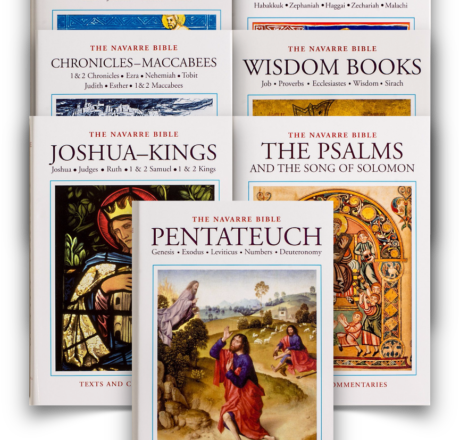
9:1-10:22. This new speech of Job’s takes up what Bildad has said about divine justice (cf. 8:3, 20) and is a sort of direct appeal to God to act as a judge between the two of them and to come down on Job’s side and vindicate him. Job makes no mention here of the three friends. However, he speaks boldly, almost irreverently, against God’s own way of operating, while staying within the bounds of orthodox teaching as regards the creative work and providence of the Lord – which he contrasts with the way God ill-treats the human being (9:11-24); he ends by lamenting the lowly position of man, who is quite unable to assess the probity of God’s actions (9:25-35). The second part of the speech is a supplication similar in content to that of his previous speech (cf. 7:16-21). Here Job complains that God is treating him too harshly (10:1-7) despite the care he took in creating him in the first place (10:8-12). He ends by begging God to leave him in peace and not to be constantly causing him to suffer (10:15-22).
The use of terminology to do with a legal trial serves to emphasize that God does not act in the way men do, and that human criteria cannot explain his actions. On the contrary, human standards should be set in accordance with God’s way of acting.
9:4. Wisdom and omnipotence are two divine attributes that are praised constantly in the Psalms and wisdom books (cf. Ps 115:3; 135:5-6; Prov 8:22-31) as guiding God’s actions both in creation and in salvation history. When discussing the justice of God, St Thomas Aquinas says: “Justice can be corrupted in two ways -- by the cunning of the wise or the violence of the powerful. But since in God is found perfect wisdom and omnipotence, his justice cannot he perverted by his wisdom since he acts without guile, nor can it he harmed by his omnipotence because he does not violently destroy what is just’’) Expositio super lob, 8, 3). But he goes on to say: “In both qualities God is greater than anyone else, for his wisdom surpasses all human knowledge, and his power all human strength” (ibid.>/i> 9, 4).
9:9. This reference to the constellations shows that God’s power embraces all created things that our senses can perceive, such as mountains, stars, the heavens, the seas, including those entities of a mythological type regarded by Israel’s neighbours as divinities.
The Fathers often stressed that this verse 9 and also 38:31-32 show that all things, even those which some people thought had power over men, were created by God and are subject to his rule. Thus, St Gregory of Nyssa, in his controversy against the Arians, taught that the names of the constellations do not imply that they have any power over human beings: “God has not only counted the number of the stars, he knows each one of them by name. This means that his knowledge extends even to the smallest of things, and he knows each thing as intimately as he does man” (Contra Eunomium, 2, 435-436). Quite clearly. God is above everything.
The names of the stars, the Bear, Orion and the Pleiades, which derive from Greek mythology, are used in the Greek version and in the Vulgate to translate the Ais, Quesil, Qimah of the Hebrew -- names that come from Babylonian mythology. The “chambers of the south” refer to another constellation not found in Greek mythology.
9:13. “Rahab” is a mythical figure of evil, connected with the sea (cf. 26:12) and sometimes used to symbolize Egypt (cf. Is 30:7).
From: Luke 9:57-62
The Calling of Three Disciples
------------------------------
[57] As they were going along the way, a man said to Him (Jesus), "I will follow you wherever You go." [58] And Jesus said to him, "Foxes have holes, and birds of the air have nests; but the Son of Man has nowhere to lay His head." [59] To another He said, "Follow Me." But he said, "Lord, let me first go and bury my father." [60] But He said to him, "Leave the dead to bury their own dead; but as for you, go and proclaim the Kingdom of God." [61] Another said, "I will follow You, Lord; but let me first say farewell to those at my home." [62] Jesus said to him, "No one who puts his hand to the plough and looks back is fit for the Kingdom of God."
***********************************************************************
Commentary:
57-62. Our Lord spells out very clearly what is involved in following Him. Being a Christian is not an easy or comfortable affair: it calls for self-denial and for putting God before everything else. See the notes on Matthew 8:18-22 and Matthew 8:22.
[The notes on Matthew 8:18-22 states:18-22. From the very outset of His messianic preaching, Jesus rarely stays in the same place; He is always on the move. He "has nowhere to lay His head" (Matthew 8:20). Anyone who desires to be with him has to "follow Him". This phrase "following Jesus" has a very precise meaning: it means being His disciple (cf. Matthew 19:28). Sometimes the crowds "follow Him"; but Jesus' true disciples are those who "follow Him" in a permanent way, that is, who keep on following Him: being a "disciple of Jesus" and "following Him" amount to the same thing. After our Lord's ascension, "following Him" means being a Christian (cf. Acts 8:26). By the simple and sublime fact of Baptism, every Christian is called, by a divine vocation, to be a full disciple of our Lord, with all that that involves.
The evangelist here gives two specific cases of following Jesus. In the case of the scribe our Lord explains what faith requires of a person who realizes that he has been called; in the second case—that of the man who has already said "yes" to Jesus--He reminds him of what His commandment entails. The soldier who does not leave his position on the battlefront to bury his father, but instead leaves that to those in the rearguard, is doing his duty. If service to one's country makes demands like that on a person, all the more reason for it to happen in the service of Jesus Christ and His Church.
Following Christ, then, means we should make ourselves totally available to Him; whatever sacrifice He asks of us we should make: the call to follow Christ means staying up with Him, not falling behind; we either follow Him or lose Him. In the Sermon on the Mount (Matthew 5-7) Jesus explained what following Him involves--a teaching which we find summarized in even the most basic catechism of Christian doctrine: a Christian is a man who believes in Jesus Christ--a faith he receives at Baptism--and is duty bound to serve Him. Through prayer and friendship with the Lord every Christian should try to discover the demands which this service involves as far as he personally is concerned.]
[The notes on Matthew 8:22 states: 22. "Leave the dead to bury their own dead": although this sounds very harsh, it is a style of speaking which Jesus did sometimes use: here the "dead" clearly refers to those whose interest is limited to perishable things and who have no aspirations towards the things that last forever.
"If Jesus forbade him," St. John Chrysostom comments, "it was not to have us neglect the honor due to our parents, but to make us realize that nothing is more important than the things of Heaven and that we ought to cleave to these and not to put them off even for a little while, though our engagements be ever so indispensable and pressing" ("Hom. on St. Matthew", 27).]
We see here the case of the man who wanted to follow Christ, but on one condition--that he be allowed to say goodbye to his family. Our Lord, seeing that he is rather undecided, gives him an answer which applies to all of us, for we have all received a calling to follow Him and we have to try not to receive this grace in vain. "We receive the grace of God in vain, when we receive it at the gate of our heart, and do not let it enter our heart. We receive it without receiving it, that is, we receive it without fruit, since there is no advantage in feeling the inspiration if we do not accept it [...]. It sometimes happens that being inspired to do much we consent not to the whole inspiration but only to some part of it, as did those good people in the Gospel, who upon the inspiration which our Lord gave them to follow Him wished to make reservations, the one to go first and bury his father, the other to go to take leave of his people" (St. Francis de Sales, "Treatise on the Love of God", Book 2, Chapter 11).
Our loyalty and fidelity to the mission God has given us should equip us to deal with every obstacle we meet: "There is never reason to look back (cf. Luke 9:62). The Lord is at our side. We have to be faithful and loyal; we have to face up to our obligations and we will find in Jesus the love and the stimulus we need to understand other people's faults and overcome our own" (St J. Escriva, "Christ Is Passing By", 160).
Disclaimer: Opinions posted on Free Republic are those of the individual posters and do not necessarily represent the opinion of Free Republic or its management. All materials posted herein are protected by copyright law and the exemption for fair use of copyrighted works.


