
Posted on 09/25/2026 12:52:43 AM PDT by fidelis
Once when Jesus was praying in solitude, and the disciples were with him, he asked them, “Who do the crowds say that I am?” They said in reply, “John the Baptist; others, Elijah; still others, ‘One of the ancient prophets has arisen.’” Then he said to them, “But who do you say that I am?” Peter said in reply, “The Christ of God.” Luke 9:18–20
Today’s Gospel presents a decisive moment of revelation. As Jesus prays in solitude with the Twelve nearby, He asks, “Who do the crowds say that I am?” After hearing their responses, He turns the question more personally to them: “But who do you say that I am?” Peter, speaking on behalf of the Twelve, proclaims, “The Christ of God”—the Anointed One, the long-awaited Messiah.
Though Peter is the one who speaks, it is Jesus, in His divine nature, who reveals this truth to Peter and prompts his profession of faith. Jesus could have simply announced His identity Himself, but He invites Peter to participate in this revelation through faith. Once Peter responds, Jesus immediately “rebuked them and directed them not to tell this to anyone.”
Why the secrecy? It seems counterintuitive. Shouldn’t the truth of Jesus’ identity be proclaimed far and wide? And yet, Jesus, in His divine wisdom, requires temporary silence.
That silence is explained by what follows. Jesus immediately begins to disclose the nature of His mission as Messiah: “The Son of Man must suffer greatly and be rejected by the elders, the chief priests, and the scribes, and be killed and on the third day be raised.” This was not what the disciples expected. Though the prophets had foretold the coming of the Messiah, many Jews envisioned a powerful leader who would unite Israel, overthrow Roman rule, and restore the kingdom to earthly glory.
Jesus shatters that expectation. He reveals that, as the Christ, He will fulfill His mission not through conquest but through suffering, death, and resurrection. While the mention of rising on the third day may have stirred some hope, the announcement of His suffering and death would have been deeply unsettling. What’s more, in the verses immediately following today’s Gospel, Jesus tells the Twelve that anyone who wishes to follow Him must also take up his cross.
One of the most quoted passages from the Prophet Isaiah speaks directly to this mystery: “For my thoughts are not your thoughts, nor are your ways my ways—oracle of the LORD. For as the heavens are higher than the earth, so are my ways higher than your ways, my thoughts higher than your thoughts” (Isaiah 55:8–9).
Reflect today on the shocking revelation that following Christ does not mean the removal of the Cross from our lives but the opposite. Consider whether you, like many of Jesus’ disciples, have false expectations of God and your participation in His life and mission. In what ways is God calling you to carry your cross through a life marked by a greater participation in His Passion? Do you see your sufferings and crosses as obstacles to your happiness or as means to greater sanctity? God’s ways are often difficult to accept, but with time and prayer, we understand the Cross and its glorious fruit. Do not be afraid to follow the path your Messiah has prepared for you.
My suffering Lord, You are the Christ, the Messiah, the Son of the Living God. You took on human nature, not to conquer nations or establish an earthly kingdom, but to conquer sin and death. Draw me into Your Passion, Death, and Resurrection. May I not only know who You are, but also live in union with You, taking up my cross each day and following in Your footsteps. Jesus, I trust in You.
Please keep in mind that this is a Catholic Caucus/Devotional thread for the purpose of prayerful reflection on the Sacred Scriptures and is closed to debate of any kind. Per FR policy on Religion Caucus threads, off-topic, argumentative, and abusive comments are not allowed and will be submitted to the Mods for deletion. Thanks, and God bless you.
The Month of September is Dedicated to Our Lady of Sorrows

“And his father and his mother marveled at what was said about him; and Simeon blessed them and said to Mary his mother, ‘Behold, this child is set for the fall and rising of many in Israel, and for a sign that is spoken against (and a sword will pierce through your own soul also), that thoughts out of many hearts may be revealed.’” (Luke 2:33-35)

Pope Leo XIV’s prayer intention for the month of September, 2026:
For the care of water
Let us pray for a just and sustainable management of water, a vital resource, so that everyone may have equal access to it.

Today’s First Reading
From: Ecclesiastes 3:1-11
For everything there is a season
-------------------------------------
[1] For everything there is a season, and a time for every matter
under heaven:
[2] a time to be born, and a time to die;
a time to plant, and a time to pluck up what is planted;
[3] a time to kill, and a time to heal;
a time to break down, and a time to build up;
[4] a time to weep, and a time to laugh;
a time to mourn, and a time to dance;
[5] a time to cast away stones, and a time to gather stones together;
a time to embrace, and a time to refrain from embracing;
[6] a time to seek, and a time to lose;
a time to keep, and a time to cast away;
[7] a time to rend, and a time to sew;
a time to keep silence, and a time to speak;
[8] a time to love, and a time to hate;
a time for war, and a time for peace.
[9] What gain has the worker from his toil?
Man cannot see far
-----------------------
[10] have seen the business that God has given to the sons of men to be busy with. He has made everything beautiful in its time; also he has put eternity into man’s mind, yet so that he cannot find out what God has done from the beginning to the end.
***************************************************************
Commentary:
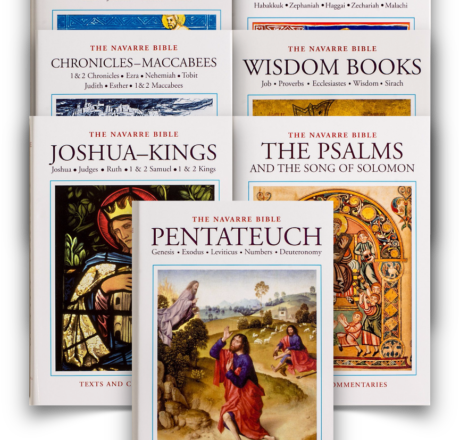
3:1-15. After arriving at the previous conclusion, the sacred writer picks up the thread of his discourse to say something along the same lines as 1:3-7, but this time focusing not on the created world but on “seasonal” changes in human life. These, too, are fixed in advance and man can do nothing to alter them (vv. 1-9). However, even though he may not be able to make sense of them, man has to accept that it is God who makes “everything beautiful in its time” (vv. 10-11), and therefore man should enjoy life as a gift from God (vv. 12-13), conscious that God controls what happens now and in the future (vv. 14-15; cf. 1:9).
3:1-9. In this passage the teacher of Israel uses some ideas from the Greek philosophers. He lists fourteen pairs of “times” in the ordinary life of man. In Hebrew culture, numbers had symbolic values, multiples of seven denoting completeness; so this list is meant to include all the stages and tasks of life. By putting birth and death first he is giving them pride of place: all the other pairs fit in between birth and death. The Stoic philosophers claimed that the human mind can know the season fixed for each activity, and that a virtuous man knows and respects the appropriate time for each thing. As the Preacher sees it, man can know them, but he cannot change them, because it is God who has established those times and he has charged man with the task of discovering them. Moreover, the “seasons of life, the times at which events in man’s life happen, are presented here as transcending man’s understanding, while, at the same time, they lie at the core of his existence. Believing, as we do, that the coming of Christ marks the fullness of time, we see time to be the backdrop against which the salvation history unfolds: “In Christianity, time has a fundamental importance, says John Paul II. “Within the dimension of time the world was created; within it the history of salvation unfolds, finding its culmination in the ‘fullness of time’ of the Incarnation, and its goal in the glorious return of the Son of God at the end of time.
In Jesus Christ, the Word made flesh, time becomes a dimension of God, who is himself eternal. With the coming of Christ there begin ‘the last days’ (cf. Heb 1:2), the ‘last hour’ (cf. 1 Jn 2:18), and the time of the Church, which will last until the Parousia. From this relationship of God with time there arises the duty to sanctify time. This is done, for example, when individual times, days or weeks, are dedicated to God, as once happened in the religion of the Old Covenant, and as happens still, though in a new way, in Christianity. In the liturgy of the Easter Vigil the celebrant, as he blesses the candle which symbolizes the Risen Christ, proclaims: ‘Christ yesterday and today, the beginning and the end. Alpha and Omega, all time belongs to him, and all the ages, to him be glory and power through every age for ever.’ He says these words as he inscribes on the candle the numerals of the current year. The meaning of this rite is clear: it emphasizes the fact that Christ is the Lord of time; he is its beginning and its end; every year, every day and every moment are embraced by his Incarnation and Resurrection, and thus become part of the ‘fullness of time’” (Tertio millenio adveniente, 10). Thus, every time, every moment, is not purely transitory; it is an eternal dimension. So, “what is important is to make good use of time, that time which is always slipping from our grasp and which to a Christian is more precious than gold, because it represents a foretaste of the glory that will he granted us hereafter” (St. J. Escriva, Friends of God, 212).
3:10-15. Earlier, the sacred writer spoke about his personal reflections (“I said to myself”: 1:16; 2:1, 15); now he is going to speak about what he sees, what his own experience has been (“I have seen”: v. 10; cf. 3:16; 4:1; etc.). He sees man’s activity as the “business” entrusted to him by God. Although man does not grasp the full import of his actions, he can still take some pleasure from them and benefit from them.
From: Luke 9:18-22
Peter's Confession of Faith
----------------------------------
[18] Now it happened that as He (Jesus) was praying alone the disciples were with Him; and He asked them, "Who do the people say that I am?" [19] And they answered, "John the Baptist; but others say, Elijah; and others, that one of the old prophets has risen." [20] And He said to them, "But who do you say that I am?" And Peter answered, "The Christ of God."
First Prophecy of the Passion
-------------------------------------
[21] But He charged and commanded them to tell this to no one, [22] saying, "The Son of Man must suffer many things, and be rejected by the elders and chief priests and scribes, and be killed, and on the third day be raised."
***********************************************************************
Commentary:
20. "Christ" means "anointed" and is a name indicating honor and office. In the Old Law "priests" were anointed (Exodus 29:7 and 40:13), as were "kings" (1 Samuel 9:16), because God laid down that they should receiving anointing in view of their position; there was also a custom to anoint "prophets" (1 Samuel 16:13) because they were interpreters and intermediaries of God. "When Jesus Christ our Savior came into the world, He assumed the position and obligations of the three offices of priest, king and prophet and was therefore called Christ" ("St. Pius V Catechism", I, 3, 7).
22. Jesus prophesied His passion and death in order to help His disciples believe in him. It also showed that He was freely accepting these sufferings He would undergo. "Christ did not seek to be glorified: He chose to come without glory in order to undergo suffering; and you, who have been born without glory, do you wish to be glorified? The route you must take is the one Christ took. This means recognizing Him and it means imitating Him both in His ignominy and in His good repute; thus you will glory in the Cross, which was His path to glory. That was what Paul did, and therefore he glorified in saying, `Far be it from me to glory except in the cross of our Lord Jesus Christ' (Galatians 6:14)" (St. Ambrose, "Expositio Evangelii Sec. Lucam, in loc.").
Disclaimer: Opinions posted on Free Republic are those of the individual posters and do not necessarily represent the opinion of Free Republic or its management. All materials posted herein are protected by copyright law and the exemption for fair use of copyrighted works.


