
Posted on 09/09/2026 9:47:07 PM PDT by fidelis
Jesus said to his disciples: “To you who hear I say, love your enemies, do good to those who hate you, bless those who curse you, pray for those who mistreat you. To the person who strikes you on one cheek, offer the other one as well, and from the person who takes your cloak, do not withhold even your tunic. Give to everyone who asks of you, and from the one who takes what is yours do not demand it back.” Luke 6:27–30
Love, do good, bless, and pray. These four commands form the heart of Jesus’ exhortation in the Sermon on the Plain. They are not merely moral instructions or guiding principles, but are invitations to share in the very life of God through His Divine Mercy. Christian charity must extend to all people—even those who harm us—because authentic love is directed toward the image of God within every person, regardless of someone’s behavior. These commands are the active expression of divine charity, showing that love is not a passive sentiment or fleeting feeling but a deliberate choice to will the good of the other, even at great personal cost.
To love one’s enemies requires a movement from natural emotion to supernatural grace. This is not a matter of ignoring evil. Rather, it is an intentional act of agapē—a love rooted in God and ordered toward the true and eternal good of the other. It does not excuse sin or downplay injustice. Instead, it conquers sin through mercy, just as Christ did upon the Cross. When Jesus cried out, “Father, forgive them, they know not what they do,” He did not deny the gravity of their sin; He overcame and overpowered it with Divine Mercy. In this, He gave us the supreme example of what it means to love those who offend us.
Doing good to those who hate you means responding to malice with goodness—not for the sake of superficial appeasement, but as a witness to the transforming power of grace. This active goodness breaks the cycle of retaliation—a common and deeply rooted struggle in first-century Israel—and reveals the presence of God’s new and glorious Kingdom, in which grace replaces vengeance and mercy reigns over judgment. When we return good for evil, we imitate the God who causes the sun to rise on both the just and the unjust. This goodness may not always soften the heart of the one who hates, but it will never fail to sanctify the one who chooses to love.
Blessing those who curse you means using your words not to wound in return, but to heal, intercede, and edify. A verbal blessing given in the face of curses is not a sign of weakness, but of an inner strength that comes only from union with Christ. It reflects the behavior of the saints, who suffered revilement and ridicule yet responded with praise, truth, and mercy. Such a blessing becomes a form of spiritual warfare, unmasking and disarming evil with the power of grace-filled speech. It turns the tongue into an instrument of redemption rather than revenge.
Reflect today on the power of God’s mercy alive in your life. Such divine love is capable of overpowering sin, healing wounds, and restoring hope. Let Divine Mercy consume any resentment you harbor and soften every hardened corner of your heart. Then go forth and extend that same overpowering mercy to those who least deserve it, trusting that in doing so, you will be conformed to the heart of Christ, and that through you, His Kingdom of mercy will shine.
Most merciful Lord, You never allowed the sins of others to deter You from loving them with a pure and holy love. You loved Your enemies, did good to those who hated You, blessed those who cursed You, and prayed for those who mistreated You. Please purify my heart and unite it with Your own, so that the love I offer others may flow first from You and then, through me, to them. Jesus, I trust in You.
Please keep in mind that this is a Catholic Caucus/Devotional thread for the purpose of prayerful reflection on the Sacred Scriptures and is closed to debate of any kind. Per FR policy on Religion Caucus threads, off-topic, argumentative, and abusive comments are not allowed and will be submitted to the Mods for deletion. Thanks, and God bless you.
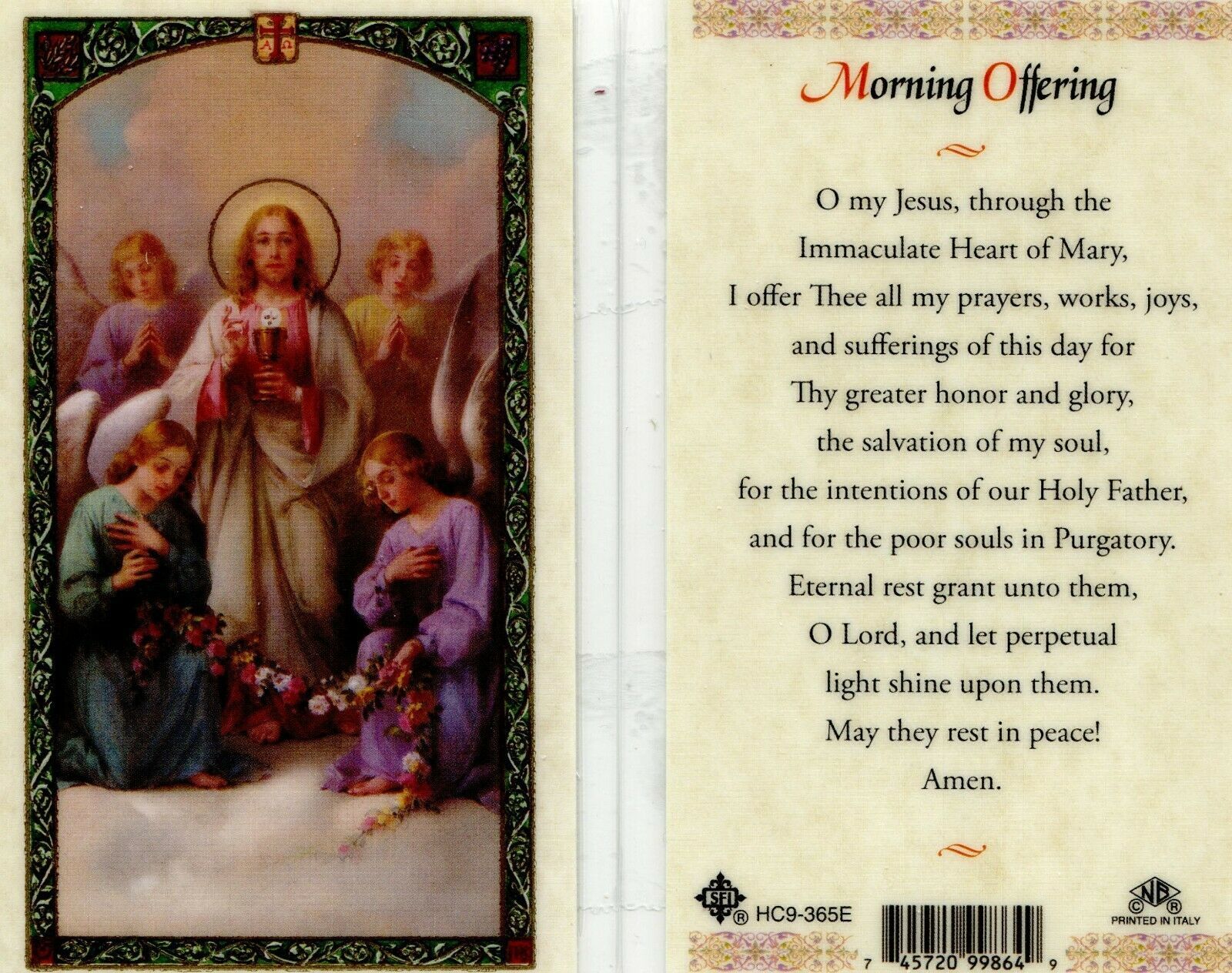
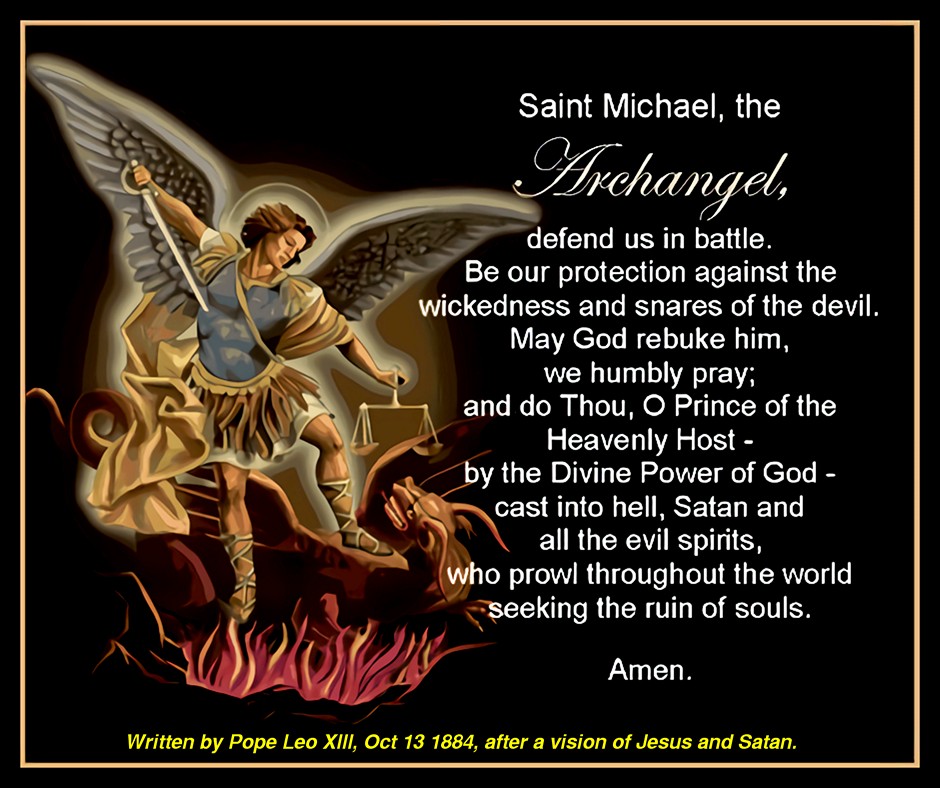
The Month of September is Dedicated to Our Lady of Sorrows

“And his father and his mother marveled at what was said about him; and Simeon blessed them and said to Mary his mother, ‘Behold, this child is set for the fall and rising of many in Israel, and for a sign that is spoken against (and a sword will pierce through your own soul also), that thoughts out of many hearts may be revealed.’” (Luke 2:33-35)

Pope Leo XIV’s prayer intention for the month of September, 2026:
For the care of water
Let us pray for a just and sustainable management of water, a vital resource, so that everyone may have equal access to it.

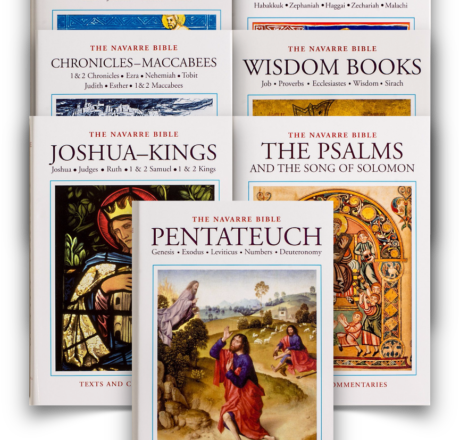
Today’s First Reading
From: 1 Corinthians 8:1b-7, 11-13
Idols Have No Real Existence
-----------------------------------
[1b] "Knowledge" puffs up, but love builds up. [2] If any one imagines that he knows something, he does not yet know as he ought to know. [3] But if one loves God, one is known by him.
[4] Hence, as to the eating of food offered to idols, we know that "an idol has no real existence," and that "there is no God but one." [5] For although there may be so-called gods in heaven or on earth—as indeed there are many "gods" and many "lords"--[6] yet for us there is one God, the Father, from whom are all things and for whom we exist, and one Lord, Jesus Christ, through whom are all things and through whom we exist.
Not Scandalizing the Weak
---------------------------------
[7] However, not all possess this knowledge. But some, through being hitherto accustomed to idols, eat food as really offered to an idol; and their conscience, being weak, is defiled. [11] And so by your knowledge this weak man is destroyed, the brother for whom Christ died. [12] Thus, sinning against your brethren and wounding their conscience when it is weak, you sin against Christ. [13] Therefore, if food is a cause of my brother's falling, I will never eat meat, lest I cause my brother to fall.
***********************************************************************
Commentary:
8:1-10:31. In these chapters St Paul deals with food offered to idols. In pagan religions a portion of the sacrificial food went to the donors, who could consume it in the temple itself (cf. 1 Cor 8:10), or take it home. The meat could also be sold in the market. For some Christians this posed no problem; but for others--who were afraid that by eating this meat they were in some way taking part in the idolatrous worship from which it came (cf. 8:7} various practical questions arose: when buying meat, ought they to ask where it came from? (cf. 10:25-26); could they accept invitations to meals at which food of this type might be served? (cf. 10:27ff). The Council of Jerusalem, which took place around 48-50, had written to the Christians of Antioch, Syria and Cilicia telling them to abstain from food which had been sacrificed to idols (cf. Acts 15:23-29). When St Paul was preaching in Corinth two years later, he probably did not say anything on this subject, given the very pagan environment of that city--very different from the experience of the communities the Council had been addressing: if the faithful at Corinth had to avoid meat of this kind, they should have had to isolate themselves from their fellow-citizens.
In replying to the questions put to him, the Apostle first explains the general principles that apply: they may eat meat of this type, for idols have no real existence (8:1-6), but sometimes charity requires that they do abstain from it (8:7-13); he illustrates what he says by quoting what he himself does (9:1-27) and lessons drawn from the history of Israel (10:1-13); and, finally, he deals with particular queries the Corinthians have raised (10:14-33).
1-6. Clearly, idols are mere things and therefore food sacrificed to them can be eaten without any qualms (10:25-27). But some Christians did not yet grasp this, and they were being shocked to see other Christians eating this food (cf. 8:7-13). so, St Paul again reminds the Corinthians (cf. 1: 18-34) that they must not rely on their "knowledge" unless it be accompanied by charity. "The source of all the Corinthians' problems", St John Chrysostom comments, "was not their lack of knowledge but their lack of charity and lack of concern for their neighbor. This was the cause of the divisions in that church, the cause of the vanity which was blinding them and of all the disorder for which the Apostle has censured them and will censure them. He will often speak to them about charity, and try to clarify, so to speak, the fount of all good things [...]. Have love: that way your knowledge will not lead you astray. I should like your knowledge to outstrip that of your brethren. If you love them, far from being aloof and looking down on them, you will strive to have them share your insights" ("Hom. on 1 Cor, 20, ad loc.").
3. "One is known by him [God]": that is, God has recognized him as one of his own, God is pleased with him: it is almost the same as "God has called him", "God has chosen him".
4-6. St Paul reminds the Corinthians, who were living in a pagan and polytheistic environment, of the first and basic truth of the Christian creed: there is only one true God. Even though the idols which pagans worship were called "gods" (as in Greek mythology) or "lords" (as heroes or divinized emperors were described), they were such only in the imagination of men. The only one who really merits these titles is the living and true God who is revealed to us in Sacred Scripture as One and Three.
6. Both the Father and the Son are God and Lord: "Just as St Paul does not take from the Father the rank of Lord, when he says that the Son is the only Lord, so he is not denying the Son the rank of God, when he says that the Father is the one and only God" (St John Chrysostom, "Hom. on 1 Cor, 20, ad loc.") In fact the title "Lord" is used with reference to God; so, calling Jesus Christ "Lord" is the same as calling him "God"; besides, what the Apostle here says of the Father, he attributes elsewhere to the Son; and vice versa (cf., e.g., Rom 11:36; Eph 4:5-6; Col 16-17; Heb 2:10). Creation is something that is done by all three divine persons of the Blessed Trinity, and the Blessed Trinity is also the end or goal of all created things (cf. Fourth Council of the Lateran, "De Fide Catholica", chap 1).
Although St Paul does not mention the Holy Spirit in this passage, he does speak of him elsewhere in the letter (cf. 2:10ff; 6:19-20).
7-13. Charity requires that one abstain from food sacrificed to idols, if eating can cause scandal to others, can be "a stumbling block to the weak" (v. 9). The Apostle's teaching is clear: if there is any danger of scandalizing someone for whom Christ has died, "I will never eat meat" (v. 13; cf. similar teaching in Rom 14:14-23).
The scandal caused to those Christians is an example of what is called giving "scandal to the weak", whereby an action in itself good or indifferent can lead others into sin because of their ignorance, weakness or poor understanding of the faith. In such cases also one should, out of charity, try to avoid giving scandal (cf. note on Rom 14:13-21).
11-13. St Paul emphasizes the gravity of the scandal given by those Corinthians who in the blindness of their pride failed to realize the harm they were doing to other brothers in the faith: they might lead into perdition someone "for whom Christ died"; our Lord sacrificed himself on the cross for each and every person in every generation. "How precious must man be in the eyes of the Creator, if he 'gained so great a Redeemer' ("Exsultet" at the Easter Vigil), and if God 'gave us his only son' in order that man 'should not perish but have eternal life' (cf. Jn 3:16)" (John Paul II, "Redemptor Hominis" 10). One should never lose sight of the immense value of every individual, a value which can be deduced especially from the price paid for him--the death of Christ. "For every soul is a wonderful treasure; every person is unique and irreplaceable. Every single person is worth all the blood of Christ" (St. J. Escriva, "Christ Is Passing By", 80).
The Apostle also points out that by giving scandal "you sin against Christ": our Lord himself said this: "as you did it to one of the least of these my brethren you did it to me" (Mt 25:40; cf. 25:45); this was something deeply engraved on Paul's soul ever since the time, when he was persecuting Christians, he heard Jesus say to him, "Why do you persecute me?" (Acts 9:4). The Christian should always see Christ in others.
From this it follows logically that, if necessary, as he says, "I will never eat meat." One must be ready for any sacrifice if the salvation of a soul is at stake.
From: Luke 6:27-38
Love of Enemies
---------------
[27] "But I say to you that hear, Love your enemies, do good to those who hate you, [28] bless those who curse you, pray for those who abuse you. [29] To him who strikes you on the cheek, offer the other also; and from him who takes away your cloak do not withhold your coat as well. [30] Give to every one who begs from you; and of him who takes away your goods do not ask them again. [31] And as you wish that men would do to you, do so to them.
[32] "If you love those who love you, what credit is that to you? For even sinners love those who love them. [33] And if you do good to those who do good to you, what credit is that to you? For even sinners do the same. [34] And if you lend to those from whom you hope to receive, what credit is that to you? Even sinners lend to sinners, to receive as much again. [35] But love your enemies, and do good, and lend, expecting nothing in return; and your reward will be great, and you will be sons of the Most High, for he is kind to the ungrateful and the selfish. [36] Be merciful, even as your Father is merciful.
[37] "Judge not, and you will not be judged; condemn not, and you will not be condemned; forgive, and you will be forgiven; [38] give, and it will be given to you; good measure, pressed down, shaken together, running over, will be put into your lap. For the measure you give will be the measure you get back."
***********************************************************************
Commentary:
27. "In loving our enemies there shines forth in us some likeness to God our Father, who, by the death of His Son, ransomed from everlasting perdition and reconciled to Himself the human race, which previously was most unfriendly and hostile to Him" ("St. Pius V Catechism", IV, 14, 19). Following the example of God our Father, we must desire for everyone (even those who say they are our enemies) eternal life, in the first place; additionally, a Christian has a duty to respect and understand everyone without exception, because of his or her intrinsic dignity as a human person, made in the image and likeness of the Creator.
28. Jesus Christ teaches us by example that this is a real precept and not just a pious recommendation; even when nailed to the cross He prayed to His Father for those who had brought Him to such a pass: "Father, forgive them, for they know not what they do" (Lk 23:34). In imitation of the Master, St Stephen, the first martyr of the Church, when he was being stoned, prayed to our Lord not to hold the sin against his persecutors (cf. Acts 7:60). In the liturgy of Good Friday the Church offers prayers and suffrages to God on behalf of those outside the Church, asking Him to give them the grace of faith; to release from their ignorance those who do not know Him; to give Jews the light to the truth; to bring non-Catholic Christians, linked by true charity, into full communion with our Mother the Church.
29. Our Lord gives us more examples to show us how we should act if we want to imitate the mercy of God. The first has to do with one of what are traditionally called the "spiritual works of mercy"—forgiving injuries and being patient with other people's defects. This is what He means in the first instance about turning the other cheek.
To understand what our Lord is saying here, St. Thomas comments that "Sacred Scripture needs to be understood in the light of the example of Christ and the saints. Christ did not offer the cheek to be struck in the house of Annas (Jn 18:22ff), nor did St. Paul when, as we are told in the Acts of the Apostles, he was beaten in Philippi (Acts 16:22f). Therefore, we should not take it that Christ literally meant that you should offer the other cheek to some to hit you; what He was referring to was your interior disposition; that is, if necessary we should be ready not to be intolerant of anyone who hurts us, and we should be ready to put up with this kind of treatment, or worse than that. That was how the Lord acted when He surrendered His body to death" ("Commentary on St John", 18, 37).
36. The model of mercy which Christ sets before us is God Himself, of whom St. Paul says, 'Blessed be the God and Father of our Lord Jesus Christ, the Father of mercies and God of all comfort, who comforts us in all our afflictions" (2 Cor 1:3-4). "The first quality of this virtue", Fray Luis de Granada explains, "is that it makes men like God and like the most glorious thing in Him, His mercy (Lk 6:36). For certainly the greatest perfection a creature can have is to be like his Creator, and the more like Him he is, the more perfect he is. Certainly one of the things which is most appropriate to God is mercy, which is what the Church means when it says that prayer: 'Lord God, to whom it is proper to be merciful and forgiving...'. It says that this is proper to God, because just as a creature, as creature, is characteristically poor and needy (and therefore characteristically receives and does not give), so, on the contrary, since God is infinitely rich and powerful, to Him alone does it belong to give and not to receive, and therefore it is appropriate for Him to be merciful and forgiving" ("Book of Prayer and Meditation", third part, third treatise).
This is the rule a Christian should apply: be compassionate towards other people's afflictions as if they were one's own, and try to remedy them. The Church spells out this rule by giving us a series of corporal works of mercy (visiting and caring for the sick, giving food to the hungry, drink to the thirsty...) and spiritual works of mercy (teaching the ignorant, correcting the person who has erred, forgiving injuries...): cf. "St Pius X Catechism", 944f.
We should also show understanding towards people who are in error: "Love and courtesy of this kind should not, of course, make us indifferent to truth and goodness. Love, in fact, impels the followers of Christ to proclaim to all men the truth which saves. But we must distinguish between the error (which must always be rejected) and the person in error, who never loses his dignity as a person even though he flounders amid false or inadequate religious ideas. God alone is the judge and searcher of hearts; He forbids us to pass judgment on the inner guilt of others" (Vatican II, "Gaudium Et Spes", 28).
38. We read in Sacred Scripture of the generosity of the widow of Zarephath, whom God asked to give food to Elijah the prophet even though she had very little left; He then rewarded her generosity by constantly renewing her supply of meal and oil (1 Kings 17:9ff). The same sort of thing happened when the boy supplied the five loaves and two fish which our Lord multiplied to feed a huge crowd of people (cf. Jn 6:9)—a vivid example of what God does when we give Him whatever we have, even if it does not amount to much.
God does not let Himself be outdone in generosity: "Go, generously and like a child ask Him, 'What can You mean to give me when You ask me for "this"?'" (St J. Escriva, "The Way", 153). However much we give God in this life, He will give us more in life eternal.
Disclaimer: Opinions posted on Free Republic are those of the individual posters and do not necessarily represent the opinion of Free Republic or its management. All materials posted herein are protected by copyright law and the exemption for fair use of copyrighted works.

