
Posted on 09/07/2026 10:53:03 PM PDT by fidelis
Feast of the Nativity of the Blessed Virgin Mary
“Joseph, son of David, do not be afraid to take Mary your wife into your home. For it is through the Holy Spirit that this child has been conceived in her. She will bear a son and you are to name him Jesus, because he will save his people from their sins.” Matthew 1:20–21
The Feast of the Nativity of the Blessed Virgin Mary falls exactly nine months after the Solemnity of the Immaculate Conception and is one of only three liturgical feasts commemorating a birth, alongside those of Jesus and John the Baptist, highlighting her unique role in salvation history. Though Scripture is silent on her birth and early life, early Christian tradition, particularly the Protoevangelium of James, offers insights and gives us the names of her parents, Joachim and Anne. The feast likely originated in the fifth or sixth century and is linked to the dedication of a church near what was believed to be her birthplace in Jerusalem.
The Blessed Virgin Mary’s birth is symbolically depicted as the “dawn of salvation” because she is the pure and holy vessel prepared to bear the Son of God. Today, as we celebrate her birth, we also honor her entire life and her perfect holiness, rejoicing in the wondrous work God accomplished in and through her. She is the dawn that precedes the rising Sun. In honoring her nativity, we celebrate the approach of our Redeemer, Jesus Christ.
The longer version of today’s Gospel presents us with the lengthy genealogy of Jesus according to Saint Matthew. While at first glance this may seem only to be a historical list, it teaches us that God’s plan of salvation unfolds gradually and purposefully through generations. Each name, each family, each story, contributes to the coming of the Messiah. The Blessed Virgin Mary stands at the culmination of this line, as the one chosen before time to give flesh to the Eternal Word. In her, the promises made to Abraham and David are fulfilled.
The genealogy includes not only patriarchs and kings, but also some Gentiles, and others with morally complex stories. In each of them, we are invited to rejoice that God used the great and the lowly, the righteous and sinner, all to bring about the Incarnation and the gift of salvation. This same truth remains in our lives today.
Though Jesus’ bloodline is traced back to Abraham, with whom God made His foundational covenant, there is a mystical way in which His genealogy continues today. Though the Immaculate Conception, the Birth of Mary, and the Incarnation of the Son of God took place in a singularly unique way some 2,000 years ago, these glorious events in salvation history continue in our lives. Like each person in Jesus’ bloodline, we are called to contribute to His ongoing presence in this world by being members of His family, sons and daughters of the Mother of God, and members of His new bloodline of grace.
Reflect today on how you are called to carry forward the light of Christ in this world. Ponder the hidden ways God continues to unfold His saving plan through your life. Rejoice in the gift of Mary, the Mother of God and our mother, and seek her prayers so that you may become more fully a member of the household of faith and a bearer of divine life to others.
Dearest Mother Mary, we rejoice in your holy birth, the dawn of our salvation. You are the pure vessel prepared by God to bring forth the Savior of the world. Intercede for us, your children, that we may say “Yes” to God’s will as you did and allow His saving grace to shine through us. May we never be afraid to walk in His light. Holy Mary, Mother of God, pray for us. Jesus, I trust in You.
Please keep in mind that this is a Catholic Caucus/Devotional thread for the purpose of prayerful reflection on the Sacred Scriptures and is closed to debate of any kind. Per FR policy on Religion Caucus threads, off-topic, argumentative, and abusive comments are not allowed and will be submitted to the Mods for deletion. Thanks, and God bless you.
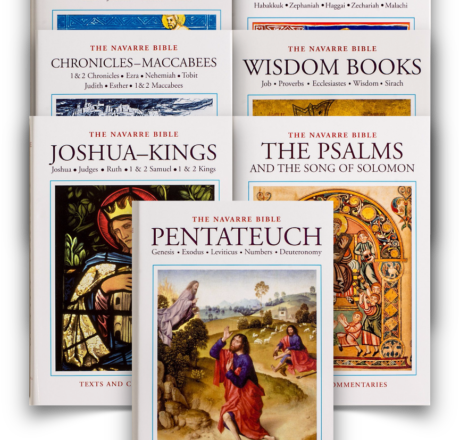
Today’s First Reading
From: Micah 5:1-4a (NABRE numbering)
The Messiah, the Saviour Who Will Be Born in Bethlehem:
-----------------------------------------------------------------
[1] But you, O Bethlehem Ephrathah,
who are little to be among the clans of Judah,
from you shall come forth for me
one who is to be ruler in Israel,
whose origin is from of old,
from ancient days.
[2] Therefore he shall give them up until the time
when she who is in travail has brought forth;
then the rest of his brethren shall return
to the people of Israel.
[3] And he shall stand and feed his flock in the strength of the Lord,
in the majesty of the name of the Lord his God.
And they shall dwell secure, for now he shall be great
to the ends of the earth.
[4a] And this shall be peace.
***************************************************************
Commentary:
5:1-3. The scenario, darkened for a moment in the previous three verses (4:9-5:1), becomes bright again with the announcement of a “ruler” or governor in Israel, who will be born (“come forth from”0 Bethlehem, the city of David, a city in the region of “Ephrath” (Gen 35:16). The region is often distinguished from its leading city (cf. 1 Sam 17:12), but in some passages the region and the city are treated as one and the same (Gen 35:19).
There are many contrasts here, a typical feature of salvation oracles: the future king will have humble origins, for he will be born in a small town (“you … who are little” in v. 2 could also be translated as “you … who are least”); still, Bethlehem is not without honour, for it was the birthplace of David and is therefore the place that guaranteed one’s belonging to the line of David; this ruler comes from an ancient line, but to perceive his presence one must wait until “she who is in travail has brought forth” (v. 3); all he will do is tend his flock, yet the benefits of his rule will extend to the ends of the earth (v. 4). No contemporary king could match this description; the prophet is referring to the future Messiah-king. There are many elements in this passage that link it to the messianic passages in Isaiah (Is 7:14; 9:5-6; 11:1-4) and to passages about the future offspring of David (2 Sam 7:12-16; Ps 89:3).
Jewish tradition read this passage as a messianic prophecy, as can be seen from passages in the Talmud (“Pesahim”, 51, 1 and “Nedarim”, 39, 2). The New Testament contains clear references to it: for example, the verses in the Gospel of St John that report the opinion of Jesus’ contemporaries as to where the Messiah would come from: “Is the Christ to come from Galilee? Has not the scripture said that the Christ is descended from David, and comes from Bethlehem, the village where David was? (Jn 7:40-42); but Matthew 2:4-6 is the main text that applies the prophecy to Jesus: the evangelist subtly ennobles the city of David (he says: “And you, O Bethlehem, in the land of Judah are by no means least among the rulers of Judah”, instead of Micah’s “who are little” or “least” – in order to enhance the figure of Jesus, the Messiah).
Going along with this interpretation in St Matthew, Christian tradition has seen the Micah passage as an announcement of Jesus’ birth in Bethlehem. The Fathers developed many arguments to try to convince Jews that Jesus was the expected Messiah. For example, Tertullian wrote: “Since the children of Israel accuse us of grave error because we believe in Christ, who has come, let us show them from the Scriptures that the Christ who was foretold has come […]. He was born in Bethlehem in Judah, as the prophet foretold: But you, O Bethlehem, are by no means least . . . (v. 2)” (“Adversus Iudaeos”, 13). And St Irenaeus said: “In his day, the prophet Micah told us of the place where the Christ would be born: Bethlehem, in Judah. O Bethlehem… who are little to be among the clans of Judah, from you shall come forth from me one who is to be ruler of Israel. Bethlehem is also in the homeland of David, and Christ comes from the line of David, not only because he was born of the Virgin, but because he was born in Bethlehem” (“Demonstratio praedicationis apostolicae”, 63).
5:4-5. “This [the Messiah who will be born in Bethlehem] shall be peace” (v. 5). In the same way as “Egypt” was synonymous with “bondage”, now Assyria has come to symbolize the oppressive nation. This oracle, then, comes prior to the appearance of Babylon on the horizon of the chosen people. A Christian reading of the passage sees in it a description of any crisis experienced by the people of God or by a sincere believer, who looks to his Lord for peace. Ephesians 2:13-14 echoes 5:4: “But now in Christ Jesus you who once were far off have been brought near in the blood of Christ. For he is our peace, who has made us both one, and has broken down the dividing wall of hostility.”
Or:
From: Romans 8:28-30
Christians are Children of God (Continuation)
---------------------------------------------
[28] We know that in everything God works for good with those who love him, who are called according to his purpose. [29] For those whom he foreknew he also predestined to be conformed to the image of his Son, in order that he might be the first-born among many brethren. [30] And those whom he predestined he also called; and those whom he called he also justified; and those whom he justified he also glorified.
***********************************************************************
Commentary:
28. Awareness of God as Father helps us see all the events of our life as orchestrated by the lovable Will of God. Our Father gives us what is best for us and expects us to discover his paternal love in adverse as well as in favorable events. "Notice", St Bernard points out, "that he does not say that things suit our whims but that they work for our good. They serve not caprice but usefulness; not pleasure but salvation; not what we desire but what is good for us. In that sense everything works for our good, even death itself, even sin [...]. Is it not the case that sins do good to him who on their account becomes more humble, more fervent, more solicitous, more on guard, more prudent?" ("De Fallacia Et Brevitate Vitae", 6). If we have this optimistic, hopeful attitude, we will overcome every difficulty we meet: "The whole world seems to be coming down on top of you. Whichever way you turn you find no way out. This time, it is impossible to overcome the difficulties.
"But, have you again forgotten that God is your Father? —all-powerful, infinitely wise, full of mercy. He would never send you anything evil. That thing that is worrying you is good for you, even though those earthbound eyes of yours may not be able to see it now.
"'Omnia in bonum!' Lord, once again and always, may your most wise Will be done!" (St J. Escriva, "The Way of the Cross", IX, 4).
29. Christ is called the "first-born" for many reasons. He is "the first-born of all creation" (Col 1:15) because he is eternally begotten and because "all things were made through him" (Jn 1:3). He is also the new Adam and therefore the head of the human race in the work of redemption (cf. 1 Cor 15:22, 45). He is "the first-born from the dead" (cf. Col 1:18; Rev 1:5) and therefore is the head of all those who have reached heaven and all who are awaiting their future resurrection (1 Cor 15:20, 23). Finally, he is the "first-born among many brethren" because, in the order of grace, he gives us a share in his divine sonship: by means of habitual grace--"sanctifying" grace--we become children of God and brothers and sisters of Jesus Christ. "For, just as God chose to communicate to others his natural goodness, giving them a share in that goodness, so that he might be not only good but also the author of good things; so the Son of God chose to communicate to others a sonship like his own, so that he might be not only a son, but the first-born of many sons" (St Thomas Aquinas, "Commentary on Rom, ad loc.").
This remarkable fact is what leads the Christian to imitate Christ: our divine sonship moves us to reflect the words and gestures of his Only-begotten Son.
"Lord, help me decide to tear off, through penance, this pitiful mask I have fashioned with my wretched doings.... Then, and only then, by following the path of contemplation and atonement, will my life begin to copy faithfully the features of your life. We will find ourselves becoming more and more like you.
"We will be other Christs, Christ himself, 'ipse Christus'" (St J. Escriva, "The Way of the Cross", VI).
From: Matthew 1:16, 18-21, 23
The Ancestry of Jesus Christ
----------------------------
[16] Jacob was the father of Joseph the husband of Mary, of whom Jesus was born, who is called Christ.
The Virginal Conception of Jesus, and His Birth
-----------------------------------------------
[18] Now the birth of Jesus Christ took place in this way. When His mother Mary had been betrothed to Joseph, before they came together she was found to be with child of the Holy Spirit; [19] and her husband Joseph, being a just man and unwilling to put her to shame, resolved to send her away quietly. [20] But as he considered this, behold, an angel of the Lord appeared to him in a dream, saying, "Joseph, son of David, do not fear to take Mary your wife, for that which is conceived in her is of the Holy Spirit; [21] she will bear a son, and you shall call His name Jesus, for He will save His people from their sins."
***********************************************************************
Commentary:
16. Jewish genealogies followed the male line. Joseph, being Mary's husband, was the legal father of Jesus. The legal father is on a par with the real father as regards rights and duties. This fact provides a sound basis for recognizing St Joseph as Patron of the whole Church, since he was chosen to play a very special role in God's plan for our salvation; with St Joseph as his legal father, Jesus the Messiah has David as his ancestor.
Since it was quite usual for people to marry within their clan, it can be concluded that Mary belonged to the house of David. Several early Fathers of the Church testify to this--for example, St Ignatius of Antioch, St Irenaeus, St Justin and Tertullian, who base their testimony on an unbroken oral tradition.
It should also be pointed out that when St Matthew comes to speak of the birth of Jesus, he uses an expression which is completely different from that used for the other people in the genealogy. With these words the text positively teaches that Mary conceived Jesus while still a virgin, without the intervention of man.
18. St. Matthew relates here how Christ was conceived (cf. Luke 1:25-38): "We truly honor and venerate (Mary) as Mother of God, because she gave birth to a person who is at the same time both God and man" ("St. Pius V Catechism", I, 4, 7).
According to the provisions of the Law of Moses, engagement took place about one year before marriage and enjoyed almost the same legal validity. The marriage proper consisted, among other ceremonies, in the bride being brought solemnly and joyously to her husband's house (cf. Deuteronomy 20:7).
From the moment of engagement onwards, a certificate of divorce was needed in the event of a break in the relationship between the couple.
The entire account of Jesus' birth teaches, through the fulfillment of the prophecy of Isaiah 7:14 (which is expressly quoted in verses 22-23) that: 1) Jesus has David as His ancestor since Joseph is His legal father; 2) Mary is the Virgin who gives birth according to the prophecy; 3) the Child's conception without the intervention of man was miraculous.
19. "St. Joseph was an ordinary sort of man on whom God relied to do great things. He did exactly what the Lord wanted him to do, in each and every event that went to make up his life. That is why Scripture praises Joseph as `a just man'. In Hebrew a just man means a good and faithful servant of God, someone who fulfills the divine will (cf. Genesis 7:1; 18:23-32; Ezekiel 18:5ff.; Proverbs 12:10), or who is honorable and charitable toward his neighbor (cf. Tobias 7:6; 9:6). So a just man is someone who loves God and proves his love by keeping God's commandments and directing his whole life towards the service of his brothers, his fellow men" (St J. Escriva, "Christ Is Passing By", 40).
Joseph considered his spouse to be holy despite the signs that she was going to have a child. He was therefore faced with a situation he could not explain. Precisely because he was trying to do God's will, he felt obliged to put her away; but to shield her from public shame he decided to send her away quietly.
Mary's silence is admirable. Her perfect surrender to God even leads her to the extreme of not defending her honor or innocence. She prefers to suffer suspicion and shame rather than reveal the work of grace in her. Faced with a fact which was inexplicable in human terms she abandons herself confidently to the love and providence of God. God certainly submitted the holy souls of Joseph and Mary to a severe trial. We ought not to be surprised if we also undergo difficult trials in the course of our lives. We ought to trust in God during them, and remain faithful to Him, following the example they gave us.
20. God gives His light to those who act in an upright way and who trust in His power and wisdom when faced with situations which exceed human understanding. By calling him the son of David, the angel reminds Joseph that he is the providential link which joins Jesus with the family of David, according to Nathan's messianic prophecy (cf. 2 Samuel 7:12). As St. John Chrysostom says: "At the very start he straightaway reminds him of David, of whom the Christ was to spring, and he does not wish him to be worried from the moment he reminds him, through naming his most illustrious ancestor, of the promise made to all his lineage" ("Hom. on St. Matthew", 4). "The same Jesus Christ, our only Lord, the Son of God, when He assumed human flesh for us in the womb of the Virgin, was not conceived like other men, from the seed of man, but in a manner transcending the order of nature, that is, by the power of the Holy Spirit, so that the same person, remaining God as He was from eternity, became man, which He was not before" ("St. Pius V Catechism", I, 4, 1).
21. According to the Hebrew root, the name Jesus means "savior". After our Lady, St. Joseph is the first person to be told by God that salvation has begun.
"Jesus is the proper name of the God-man and signifies `Savior'--a name given Him not accidentally, or by the judgment or will of man, but by the counsel and command of God" [...]. All other names which prophecy gave to the Son of God--Wonderful, Counsellor, Mighty God, Everlasting Father, Prince of Peace (cf. Isaiah 9:6)--are comprised in this one name Jesus; for while they partially signified the salvation which He was to bestow on us, this name included the force and meaning of all human salvation" ("St. Pius V Catechism", I, 3, 5 and 6).
The Month of August is Dedicated to Our Lady of Sorrows

“And his father and his mother marveled at what was said about him; and Simeon blessed them and said to Mary his mother, ‘Behold, this child is set for the fall and rising of many in Israel, and for a sign that is spoken against (and a sword will pierce through your own soul also), that thoughts out of many hearts may be revealed.’” (Luke 2:33-35)

Pope Leo XIV’s prayer intention for the month of September, 2026:
For the care of water
Let us pray for a just and sustainable management of water, a vital resource, so that everyone may have equal access to it.

Disclaimer: Opinions posted on Free Republic are those of the individual posters and do not necessarily represent the opinion of Free Republic or its management. All materials posted herein are protected by copyright law and the exemption for fair use of copyrighted works.


