
Posted on 09/06/2026 10:01:40 PM PDT by fidelis
On a certain sabbath Jesus went into the synagogue and taught, and there was a man there whose right hand was withered. The scribes and the Pharisees watched him closely to see if he would cure on the sabbath so that they might discover a reason to accuse him. But he realized their intentions and said to the man with the withered hand, “Come up and stand before us.” And he rose and stood there. Luke 6:6–8
Even on the surface, the thinking and actions of the Pharisees are absurd. They had become blinded by their jealousy for power and envy of Jesus. This is clearly evident in the fact that they were hoping Jesus would perform a miraculous healing on the Sabbath—not because they desired a man to be healed or longed to see divine authority at work, but because they had decided that miracles were considered “work” and, therefore, a violation of the Sabbath law of rest. The absurdity of their reasoning is shocking.
Even an atheist who witnessed a miraculous healing would find it difficult to explain away or ignore. Only the Creator, who established the laws of nature, is capable of bending those laws at will.
What makes the Pharisees such a pitiful group of men is not that they disbelieved Jesus’ miracles, but that they believed and intentionally rejected the meaning of those miracles. Miracles were, in part, signs of Jesus’ divine identity. The Pharisees clearly witnessed the sign with their own eyes, but what they saw was not able to purge their self-centeredness. Rather than worship Jesus, they rejected Him and began to plan His destruction.
Imagine being there in the synagogue, witnessing the miraculous healing of this man’s hand. Being a local synagogue, the people present most likely had known the man for years, and his withered hand would have been undeniable—as would the cure. Consider also, as you watch the miracle, the reaction of the Pharisees. Rather than rejoicing in the goodness of God or falling to their knees in awe and gratitude, they seethe with anger. Their hearts are so hardened by pride and selfishness that even the undeniable power of God does not move them. Instead of seeing this act as a manifestation of divine love and mercy, they see it as a threat to their authority. And rather than allowing the miracle to open their hearts to faith, they begin to plot against Jesus.
Reflect today on the irrationality and spiritual blindness that can arise from self-centeredness, jealousy, and envy. Consider the Pharisees—not to condemn them, but to recognize how easily the same temptations can take root in our own hearts. When God blesses others, are you able to rejoice? When someone else is praised, succeeds, or receives grace, does your heart rise in gratitude or fall into resentment? Be honest. Pray for the grace to be humble, so that you never fall into the trap of rejecting what is good simply because it did not come through you. Let the Pharisees’ behavior serve not only as a warning, but as a call to sincere self-reflection, repentance, and faith.
My divine Lord, Your power is undeniable, and Your identity certain. When You act in this world, Your grace and goodness become manifest for all to see. Give me the grace I need always to rejoice in the good You do, especially when it is done in and through others. Free me from the jealousy that resents Your blessings in my neighbor and from the envy that blinds me to Your presence outside of myself. May I humbly love You in every way You come to me, whether through Your Word, Your Sacraments, or the holiness of those around me. Jesus, I trust in You.
Please keep in mind that this is a Catholic Caucus/Devotional thread for the purpose of prayerful reflection on the Sacred Scriptures and is closed to debate of any kind. Per FR policy on Religion Caucus threads, off-topic, argumentative, and abusive comments are not allowed and will be submitted to the Mods for deletion. Thanks, and God bless you.
Today’s First Reading
From: 1 Corinthians 5:1-8
Punishment of the Sinner
------------------------
[1] It is actually reported that there is immorality among you, and of a kind that is not found even among pagans; for a man is living with his father's wife. [2] And you are arrogant! Ought you not rather to mourn? Let him who has done this be removed from among you.
[3] For though absent in body I am present in spirit, and as if present, I have already pronounced judgment [4] in the name of the Lord Jesus on the man who has done such a thing. When you are assembled, and my spirit is present, with the power of our Lord Jesus, [5] you are to deliver this man to Satan for the destruction of the flesh, that his spirit may be saved in the day of the Lord Jesus.
[6] Your boasting is not good. Do you not know that a little leaven leavens the whole lump? [7] Cleanse out the old leaven that you may be a new lump, as you really are unleavened. For Christ, our paschal lamb, has been sacrificed. [8] Let us, therefore, celebrate the festival, not with the old leaven, the leaven of malice and evil, but with the unleavened bread of sincerity and truth.
***********************************************************************
Commentary:
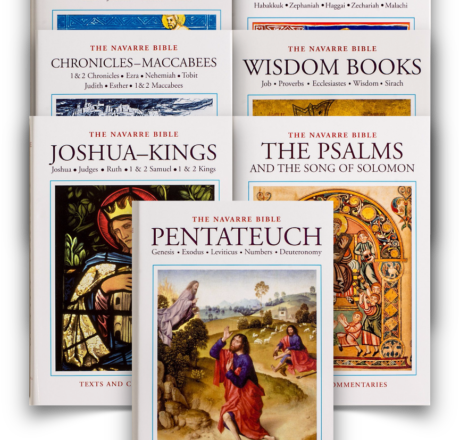
5:1-6:20. These chapters cover the same general subject: after taking the Corinthians to task for their disunity (a sin which is the cause of other evils), and before replying to questions they themselves have raised (chaps. 7ff), St Paul deals with two matters which are inhibiting the Christian life of that community--sins of unchastity, and recourse to pagan courts.
He begins with the case of incest and the punishment of the man in question (5:1-8), and uses this incident to tell the Corinthians how obstinate sinners should be treated: they should be excluded from the Christian community (5:9-13).
The other matters--sins of impurity and recourse to pagan courts-- provide him with an opportunity to give more general practical advice in an elevated tone: firstly, he deals with lawsuits between Christians and how disputes should be solved (6:1-8); human injustice leads him, by association, to describe those sins which prevent people from inheriting the Kingdom of heaven (6:9-11). And then, in a lyrical passage, he extols the dignity of the human body and the need to keep it for God: this is a beautiful hymn in praise of the virtue of holy purity (6:12-20).
1-2. With sadness in his heart St Paul admonishes these Christians for their passive attitude to behavior so scandalous that even pagans would not tolerate it: a Christian was co-habiting with his stepmother-- something which even Roman law forbade. Clearly it could not have been his own mother, for no society would tolerate that; the woman would have been his father's second wife, and probably his father was dead; and the woman must have been a pagan because the Apostle's references are to the man.
It is possible that some self-opinionated Corinthians were arguing in favor of what the man was doing; it may be that they were misinterpreting the idea of conversion being a kind of new birth (cf. Jn 3:5), and using this as a pretext for saying that previous family ties were no longer binding (as some Jewish rabbis taught converts to Judaism).
The Apostle accepts no excuse for this type of behavior: he stresses the gravity of the sin and moves quickly and boldly to see that action is taken.
If the incestuous man is guilty of grave sin, also are those Christians who condone his behavior. Jesus' teaching is that one should correct an erring person (cf. Mt 18:15-17). "Therefore, when in our own life or in that of others we notice that 'something is wrong', something that requires the spiritual and human help which, as children of God, we can and ought to provide, the prudent thing to do is to apply the appropriate remedy by going to the root of the trouble, resolutely, lovingly and sincerely. There is no room here for inhibition, for it is a great mistake to think that problems can be solved by omissions or procrastination" (St. J. Escriva, "Friends of God", 157).
3-5. In addition to giving his personal decision on the case of the incestuous man (v. 3), St Paul also supplies a solemn formula of excommunication (vv. 4-5). This contains four key elements: "in the name of the Lord Jesus", showing that the Church's judgment is on a higher than human plane; "with the power of our Lord Jesus", showing that the Church's authority derives from Christ himself: "Whatever you bind on earth shall be bound in heaven" (Mt 18:18; cf. Mt 16:19; 28:28); "when you are assembled and my spirit is present": although this is not technical language--which would be out of place in a letter --it is easy to see here a reference to collegiality of decisions taken under the hierarchical authority of the Apostle.
And then the sentence is described: "you are to deliver this man to Satan." The erring man should be kept away from the Church, unable to draw on its spiritual resources and exposed to the hostile power of the devil. "The excommunicated, because they are outside the Church, lose some of the benefits it contains. There is an additional danger: the Church's prayer renders the devil less able to tempt us; therefore, when someone is excluded from the Church, he can be easily overcome by him. So it was that in the early Church when someone was excommunicated it was common for him to be physically tormented by the devil" (St Thomas Aquinas, "Super Symbolum Apostolorum", 10). However, this punishment is a temporary one, imposed "that his spirit may be saved in the day of the Lord Jesus", that is, imposed in order to bring him to correct his behavior.
Throughout history the Church has used its power to impose sanctions (even severe ones such as excommunication) when other means of persuasion have failed. "If on account of the gravity of the sin [public] punishment be necessary, they [bishops] must use rigor with meekness, justice with mercy, and severity with gentleness, so as to maintain without asperity that discipline which is good and necessary for people, and which leads those who are corrected to mend their ways; or, if they do not wish to change, so that their punishment may serve as a salutary warning to others and lead them away from vice" (Council of Trent, "De Reformatione", chap. 1).
6. Jesus used the example of leaven in dough to describe the growth of goodness (cf. Mt 13:31-33 and par.) and also of evil (cf. Mk 8:15-16 and par.): in both cases a small amount can produce a very large result. Here St Paul uses the simile to show the Corinthians the harm the incestuous man's behavior can do to the whole community through the bad example and scandal he gives and also through others' consenting to his sin and not doing what they can to get him to reform (cf. St Thomas, "Commentary on 1 Cor, ad loc.").
St Paul draws attention to the gravity of the sin of scandal--"anything said, done or omitted which leads another to commit sins" ("St Pius X Catechism", 417): "For, all other sins, no matter how grave they be, do injury only to the person who commits them; but this sin harms those others whom it steers off God's path. How can satisfaction be made for this injury, which involves killing a soul whom Christ has bought with his blood? For if gold is what gold is worth, the blood of Christ is what cost blood. Whence it follows that, if these people be condemned, not only will they undergo punishment for their faults but also for the faults of those whom they led into evil. Therefore, every Christian realizes how justly Christ spoke when he said (Mt 18:7), "Woe to the world for temptations to sin" (Fray Luis de Granada, "Sermon on Public Sins").
7-8. The Apostle is here using examples taken from the Jewish celebration of the Passover and the Azymes, to draw spiritual lessons for the Corinthians. The Passover was the principal Jewish feast, and its central rite the eating of the passover lamb. At the passover meal, as also on the seven days following, which were also feast-days, the eating of leavened bread was forbidden, which was why they were described as the days of the Azymes ("a-zyme" = without leaven). Thus, in the Book of Exodus God laid it down that during these days no leaven should be kept in Jewish homes (cf. Ex 12:15, 19).
Jesus Christ, our Passover, our paschal lamb, "has been sacrificed". The paschal lamb was a promise and prefigurement of the true Lamb, Jesus Christ (cf. Jn 1:29), who was the victim of the sacrifice on Calvary, offered on behalf of all mankind: "He is the true lamb who took away the sins of the world; by dying he destroyed our death; by rising he restored our life" ("Roman Missal", first Easter Preface). The perennial value of the sacrifice of Christ on the cross (cf. Heb 10:14), renewed every time Mass is said, means that Christians are always celebrating a festival. Therefore, the Apostle concludes, Christians should eliminate from community life and personal life—the old leaven, which in the context of the festival symbolizes impurity and sinfulness; and they should always live a genuinely Christian life, with azymes, the symbol of cleanness and purity, "of sincerity and truth".
"The present time is, then, a festival day,' St John Chrysostom comments, "for when he says 'let us celebrate the festival', Paul does not add: 'for Passover or Pentecost is imminent.' No, he is pointing out that all this life is a festival for Christians by virtue of the ineffable benefits they have received. Indeed, Christians, what wonders have you not received from God? For your sakes Jesus Christ has become man; he has freed you from eternal damnation, to call you to take possession of his kingdom. With this thought in mind, how can you not be in continuous festival right through your life on earth? Poverty, sickness or the persecution which oppresses us--these should not discourage us: this present life, the Apostle tells us, is a life of rejoicing" ("Hom. on 1 Cor, ad loc.").
From: Luke 6:6-11
The Cure of a Man with a Withered Hand
--------------------------------------
[6] On another Sabbath, when He (Jesus) entered the synagogue and taught, a man was there whose right hand was withered. [7] And the scribes and the Pharisees watched Him, to see whether He would heal on the Sabbath, so that they might find an accusation against Him. [8] But He knew their thoughts, and He said to the man who had the withered hand, "Come and stand here." And he rose and stood there. [9] And Jesus said to them, "I ask you, is it lawful on the Sabbath to do good or to do harm, to save life or to destroy it?" [10] And He looked around on them all, and said to him, "Stretch out your hand." And he did so, and his hand was restored. [11] But they were filled with fury and discussed with one another what they might do to Jesus.
***********************************************************************
Commentary:
10. The Fathers teach us how to discover a deep spiritual meaning in apparently casual things Jesus says. St. Ambrose, for example, commenting on the phrase "Stretch out your hand," says: "This form of medicine is common and general. Offer it often, in benefit of your neighbor; defend from injury anyone who seems to be suffering as a result of calumny; stretch your hand out also to the poor man who asks for your help; stretch it out also to the Lord asking Him to forgive your sins; that is how you should stretch your hand out, and that is the way to be cured" ("Expositio Evangelii sec. Lucam, in loc".).
11. The Pharisees do not want to reply to Jesus' question and do not know how to react to the miracle which He goes on to work. It should have converted them, but their hearts were in darkness and they were full of jealousy and anger. Later on, these people, who kept quiet in our Lord's presence, began to discuss Him among themselves, not with a view to approaching Him again but with the purpose of doing away with Him. In this connection St. Cyril comments: "O Pharisee, you see Him working wonders and healing the sick by using a higher power, yet out of envy you plot His death" ("Commentarium in Lucam, in loc.").
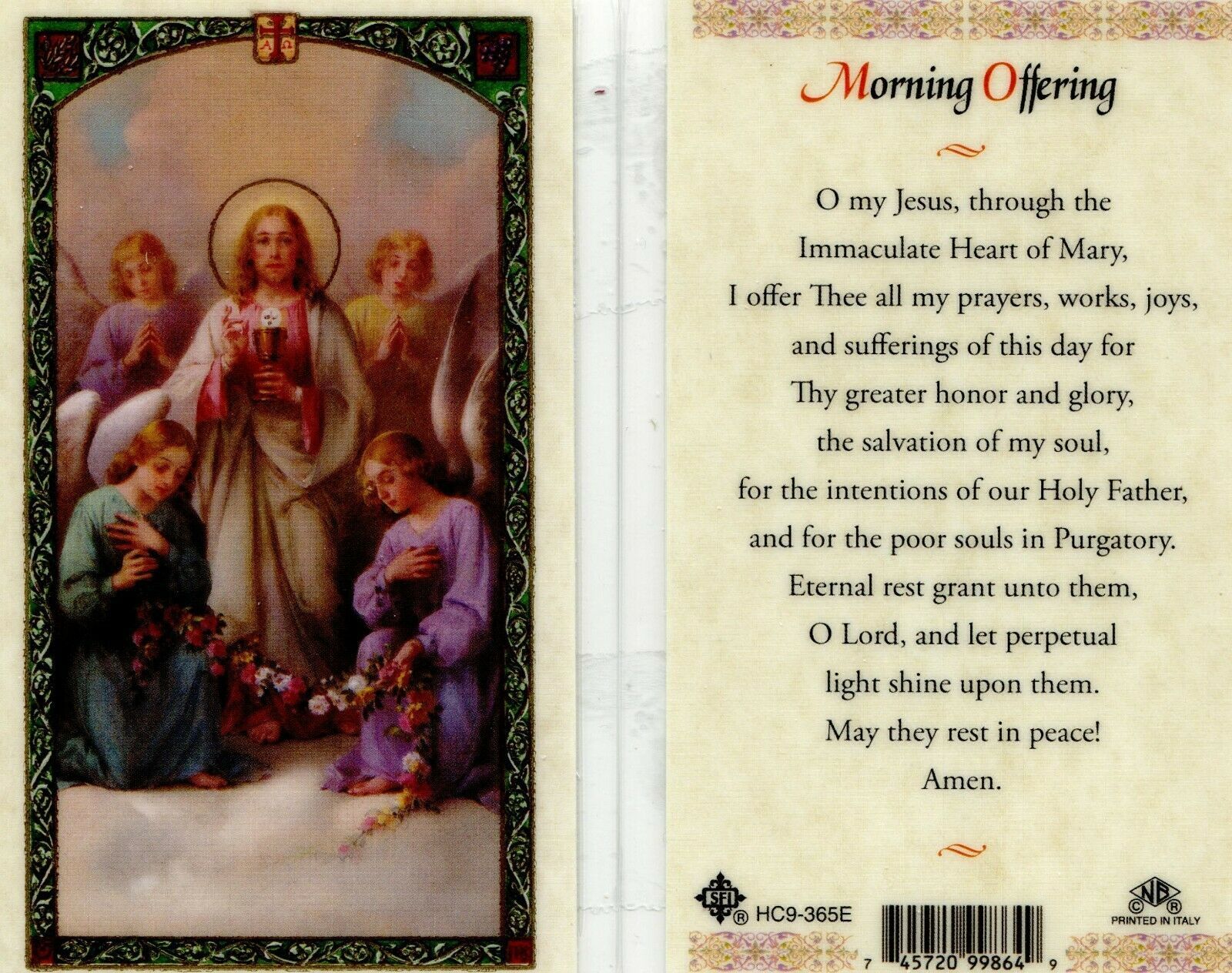
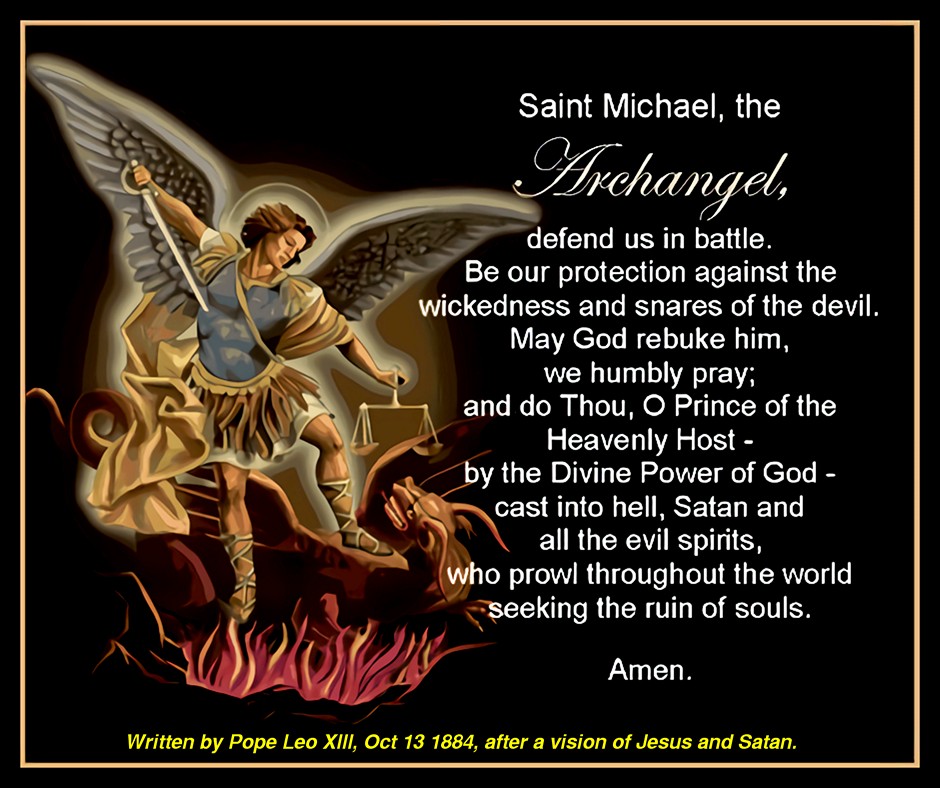
The Month of August is Dedicated to Our Lady of Sorrows

“And his father and his mother marveled at what was said about him; and Simeon blessed them and said to Mary his mother, ‘Behold, this child is set for the fall and rising of many in Israel, and for a sign that is spoken against (and a sword will pierce through your own soul also), that thoughts out of many hearts may be revealed.’” (Luke 2:33-35)

Pope Leo XIV’s prayer intention for the month of September, 2026:
For the care of water
Let us pray for a just and sustainable management of water, a vital resource, so that everyone may have equal access to it.

Disclaimer: Opinions posted on Free Republic are those of the individual posters and do not necessarily represent the opinion of Free Republic or its management. All materials posted herein are protected by copyright law and the exemption for fair use of copyrighted works.


