
Posted on 09/03/2026 10:00:34 PM PDT by fidelis
The scribes and Pharisees said to Jesus, “The disciples of John the Baptist fast often and offer prayers, and the disciples of the Pharisees do the same; but yours eat and drink.” Jesus answered them, “Can you make the wedding guests fast while the bridegroom is with them? But the days will come, and when the bridegroom is taken away from them, then they will fast in those days.” Luke 5:33–35
Though most of the scribes and Pharisees rejected the ministry of John the Baptist, here they attempt to use his discipline of fasting as a weapon to criticize Jesus. But our Lord, perceiving the hollowness of their accusation, turns it into an opportunity for divine revelation. He discloses to them, and to us, a profound truth about His identity: He is the Bridegroom.
By doing so, Jesus draws from the rich prophetic imagery of Isaiah and Hosea, which portrays God as the divine Spouse of Israel. Isaiah declared, “As a bridegroom rejoices in his bride so shall your God rejoice in you” (Isaiah 62:5). Hosea, speaking the word of the Lord, proclaimed, “You shall call me ‘My husband’… I will betroth you to me forever” (cf. Hosea 2:18–22).
Jesus is not merely using a poetic image. By calling Himself the Bridegroom, He reveals a nuptial mystery: Christ comes in the flesh to unite Himself to His Bride, the Church. The proper response to His presence is not fasting in sorrow but rejoicing in the wedding feast. Fasting will have its place, but only once the Bridegroom is taken away, which is a prophetic reference to His Passion.
This exchange exposes not only the Pharisees’ superficial religiosity but also unveils a central mystery of salvation: In Christ, God draws near in spousal love. To follow Him is to enter into a covenant of joy and grace.
Though nuptial imagery might seem more naturally relatable to women, it expresses a truth that transcends gender. Just as “a man leaves his father and mother and clings to his wife, and the two of them become one body” (Genesis 2:24), so each soul is called to a transforming union with Christ. This is not merely symbolic; it is a real and spiritual union. We are called to become His Mystical Body. Saint Paul captures this mystery when he writes, “I have been crucified with Christ; yet I live, no longer I, but Christ lives in me” (Galatians 2:19–20).
Traditionally, this union has been described as Mystical Marriage or Divine Union. Saint Teresa of Ávila favored the image of Mystical Marriage, emphasizing the soul’s intimate, spousal love for Christ. Saint John of the Cross more often spoke of Divine Union, highlighting the complete transformation of the soul in God. Though they use different terms, both describe the soul’s ultimate vocation: perfect union with Christ.
Reflect today on the glorious end to which you are called: union with Christ, your Bridegroom. This journey requires sacrifice, so fasting and penance remain essential. Yet when we keep our eyes fixed on the joy of Divine Union, every sacrifice becomes lighter and a joyful embrace of love. The difficulty of fasting and penance is overshadowed by the union they help bring about. Resolve to fast, to pray, and to stay close to Christ, the Bridegroom of your soul. He is the faithful Spouse who will never abandon you.
Bridegroom of Your Church, You came to enter into union with us, Your sons and daughters by grace. By Your Incarnation, You wedded Yourself to humanity, and through Your Passion, You purified Your Bride, the Church. As I journey toward the Wedding Feast of Heaven, purify me now through acts of penance and prayer, so that my soul may be ready for the Divine Union to come. Jesus, I trust in You.
Please keep in mind that this is a Catholic Caucus/Devotional thread for the purpose of prayerful reflection on the Sacred Scriptures and is closed to debate of any kind. Per FR policy on Religion Caucus threads, off-topic, argumentative, and abusive comments are not allowed and will be submitted to the Mods for deletion. Thanks, and God bless you.
Today’s First Reading
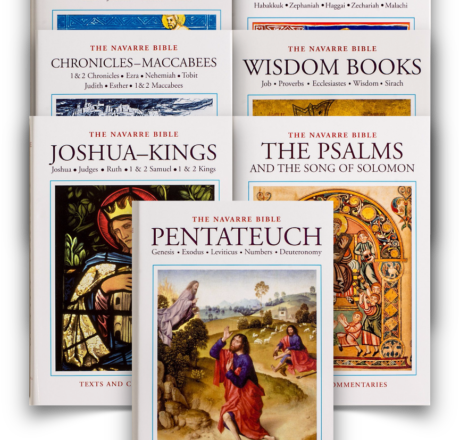
From: 1 Corinthians 4:1-5
Servant of Christ
-----------------
[1] This is how one should regard us, as servants of Christ and stewards of the mysteries of God. [2] Moreover it is required of stewards that they be found trustworthy. [3] But with me it is a very small thing that I should be judged by you or by any human court. I do not even judge myself. [4] I am not aware of anything against myself, but I am not thereby acquitted. It is the Lord who judges me. [5] Therefore do not pronounce judgment before the time, before the Lord comes, who will bring to light the things now hidden in darkness and will disclose the purposes of the heart. Then every man will receive his commendation from God.
***********************************************************************
Commentary:
1-2. The features of every apostle, as outlined here by St Paul-- "servants of Christ", "stewards of God's mysteries"--put this ministry beyond the reach of grudges and petty squabbles. "Servants of Christ", that is, ministers of Christ, are people to whom he has entrusted his property--his teaching and his sacraments--for them to protect it faithfully and, acting as his agents, to manage it, pass it on and "disperse" it to others (cf. "Commentary on 1 Cor, ad loc."). As Paul stresses, a basic qualification for being a servant or steward is trustworthiness: "Those are untrustworthy stewards who when it comes to dispensing the divine mysteries do not seek the welfare of the people, the honor of Christ or the advantage of his members [...]. Trustworthy stewards are those who always seek the honor of God and the welfare of his members" ("ibid., ad loc.").
The Magisterium of the Church has often applied these words to the Christian priesthood: "The Apostle of the Gentiles thus perfectly sums up what may be said of the greatness, the dignity and the duty of the Christian priesthood: 'This is how one should regard us, as servants of Christ and stewards of the mysteries of God' (1 Cor 4:1). The priest is the minister of Christ, an instrument, that is to say, in the hands of the divine Redeemer. He continues the work of the redemption in all its universality and divine efficacy, that work that wrought so marvelous a transformation in the world. Thus the priest, as is said with good reason, is indeed 'another Christ', for, in some way, he is himself a continuation of Christ: 'As the Father has sent me, even so I send you' (Jn 20:21), is spoken to the priest, and hence the priest, like Christ, continues to give 'glory to God in the highest; and on earth peace among men with whom he is pleased' (Lk 2:14). A priest is appointed 'steward of the mysteries of God' (cf. 1 Cor 4:1 ) for the benefit of the members of the mystical body of Christ, since he is the ordinary minister of nearly all the sacraments--those channels through which the grace of the Savior flows for the good of humanity. The Christian, at almost every important stage of his mortal career, finds at his side the priest with power received from God, for the purpose of communicating or increasing that grace which is the supernatural life of his soul" (Pius XI, "Ad Catholici Sacerdotii").
3-5. A servant, an employee, is obviously answerable for his actions--but he is answerable only to his master; only his master can judge him. Therefore, referring to the minister of Christ, St Paul declares that only our Lord can be his judge, because it is to him his service is owed. This teaching applies in the first place to Church ministers; but it also applies to all the faithful, for all should serve God by putting their talents to good use.
Therefore, it is not for us to judge others, unless we have some special position which obliges us to do so. And certainly any judgment we do make is valid only if it accords with the will of God; any type of rash judgment would lead to very unfortunate results. Even that judgment we make about ourselves--examination of conscience, which St Paul seems to be hinting at when he says that he is not aware of anything against himself--should be made with the help of grace. It is not a matter of subjective introspection, but rather a sincere review made in the presence of God. It is not meant to be a reply to the question, What do I think of my behavior?; but rather to a different question, What does God think of it? Thus, a Christian should not be trying to meticulously measure his conduct, but to have recourse to God, who is rich in mercy. If so, the end-product of his examination will never be like that of the Pharisee, "God, I thank thee that I am not like other men", but instead, like the publican's "God, be merciful to me, a sinner" (Lk 18:11, 13).
The Apostle, as we can see, is speaking of his own experience, and speaking from a heart full of pastoral solicitude: he is not merely giving advice or taking people to task.
From: Luke 5:33-39
A Discussion on Fasting
-----------------------
[33] And they (the scribes and the Pharisees) said to Him (Jesus), "The disciples of John fast often and offer prayers, and so do the disciples of the Pharisees, but yours eat and drink." [34] And Jesus said to them, "Can you make the wedding guests fast while the bridegroom is with them? [35] The days will come, when the bridegroom is taken away from them, and then they will fast in those days." [36] He told them a parable also: "No one tears a piece from a new garment and puts it upon an old garment; if he does, he will tear the new, and the piece from the new will not match the old. [37] And no one puts new wine into old wineskins; if he does, the new wine will burst the skins and it will be spilled, and the skins will be destroyed. [38] But new wine must be put into fresh wineskins. [39] And no one after drinking old wine desires new; for he says, `The old is good.'"
***********************************************************************
Commentary:
33-35. In the Old Testament God established certain days as days of fasting--the main one being the "day of atonement" (Numbers 29:7; Acts 27:9). Fasting implied total or partial abstinence from food or drink. Moses and Elijah fasted (Exodus 34:28; 1 Kings 19:8) and our Lord Himself fasted in the desert for forty days before beginning His public ministry. In the present passage Jesus gives a deeper meaning to the word "fasting"--the deprivation of His physical presence which His Apostles would experience after His death. All through His public life Jesus is trying to prepare His disciples for the final parting. At first the Apostles were not very robust and Christ's physical presence did them more good than the practice of fasting.
Christians should sometimes abstain from food. "Fast and abstain from flesh meat when Holy Mother Church so ordains" ("St. Pius X Catechism", 495). That is the purpose of the fourth commandment of the Church, but it has a deeper meaning, as St. Leo the Great tells us: "The merit of our fasts does not consist only in abstinence from food; there is no use depriving the body of nourishment if the soul does not cut itself off from iniquity and if the tongue does not cease to speak evil" ("Sermo IV in Quadragesima").
The Month of August is Dedicated to Our Lady of Sorrows

“And his father and his mother marveled at what was said about him; and Simeon blessed them and said to Mary his mother, ‘Behold, this child is set for the fall and rising of many in Israel, and for a sign that is spoken against (and a sword will pierce through your own soul also), that thoughts out of many hearts may be revealed.’” (Luke 2:33-35)

Pope Leo XIV’s prayer intention for the month of September, 2026:
For the care of water
Let us pray for a just and sustainable management of water, a vital resource, so that everyone may have equal access to it.

Disclaimer: Opinions posted on Free Republic are those of the individual posters and do not necessarily represent the opinion of Free Republic or its management. All materials posted herein are protected by copyright law and the exemption for fair use of copyrighted works.


