
Posted on 09/03/2026 12:25:27 PM PDT by fidelis
While the crowd was pressing in on Jesus and listening to the word of God, he was standing by the Lake of Gennesaret. He saw two boats there alongside the lake; the fishermen had disembarked and were washing their nets. Getting into one of the boats, the one belonging to Simon, he asked him to put out a short distance from the shore. Then he sat down and taught the crowds from the boat. After he had finished speaking, he said to Simon, “Put out into deep water and lower your nets for a catch.” Luke 5:1–4
At that moment, Simon could not have grasped the full significance of Jesus’ actions. Our Lord chose to preach to the crowds from the boat “belonging to Simon.” When He had finished speaking, He turned to Simon and said, “Put out into deep water and lower your nets for a catch.”
Traditionally, the boat has been understood as a symbol of the Church. It is particularly meaningful that this first use of a boat in Jesus’ public ministry involved Simon’s vessel. Later in Luke’s Gospel, Jesus says: “Simon, Simon, behold Satan has demanded to sift all of you like wheat, but I have prayed that your own faith may not fail; and once you have turned back, you must strengthen your brothers” (Luke 22:31–32).
In this powerful passage, Jesus entrusts Simon with the unique mission of leadership and fraternal support. Though Simon would stumble during the Passion, his faith would be restored, and his role confirmed, not merely as a disciple, but as one called to fortify the faith of others. This divine commission echoes the symbolic act at the Lake of Gennesaret, where Simon’s boat becomes the pulpit from which the Word is proclaimed. And, as is recorded in Matthew’s Gospel, Jesus later changed Simon’s name to Peter, making him the rock foundation upon which He would build His Church, promising the gates of hell would not prevail against it (cf. Matthew 16:17–19).
By choosing Simon’s boat, Jesus foreshadowed that the Gospel would go forth from the Church, built upon Simon Peter’s faith and leadership. Christ remains the cornerstone, yet Simon would serve as the rock: a foundational witness whose confession and fidelity would uphold the apostolic Church.
This moment by the lake is far more than a simple teaching setting. It is a prophetic image of the Church: anchored by Peter, guided by Christ, and commissioned to cast its nets into the deep waters of the world, drawing souls into the Kingdom of God. Christ alone has the power to draw all people to Himself, yet He chooses to do so through Peter, his successors, and all faithful collaborators who serve as fishers of men.
As the passage continues, Simon obeys Jesus’ command and puts out into deep water. The result is an astonishing catch that is so abundant that the nets begin to tear. Others must come to help, a clear symbol of the necessary collaboration among all members of the Church, working together in Christ’s divinely guided mission.
We, too, are called to share in that same mission and to imitate Simon’s humility upon witnessing the miraculous catch. He fell at Jesus’ feet and cried out, “Depart from me, Lord, for I am a sinful man” (Luke 5:8). He was deeply humbled and recognized his unworthiness before the divine presence.
Reflect today on the sacred image of Simon’s boat. See in it a foreshadowing of the Church, and consider how you are called to serve within her. Christ continues to preach from this vessel, to call others into its safety, and to call you to cast your net into the deep where many souls await the Gospel and God’s mercy.
All-powerful Lord, You first preached from a humble fishing boat owned by Simon. Today, You continue to preach and reach out to those caught in the deep and turbulent waters of this world. Please send me, as You later sent Simon Peter, to bring Your Gospel to those who need it most. Purify me of every fear, so that I may answer Your call with courage and zeal. Jesus, I trust in You.
Please keep in mind that this is a Catholic Caucus/Devotional thread for the purpose of prayerful reflection on the Sacred Scriptures and is closed to debate of any kind. Per FR policy on Religion Caucus threads, off-topic, argumentative, and abusive comments are not allowed and will be submitted to the Mods for deletion. Thanks, and God bless you.
Today’s First Reading
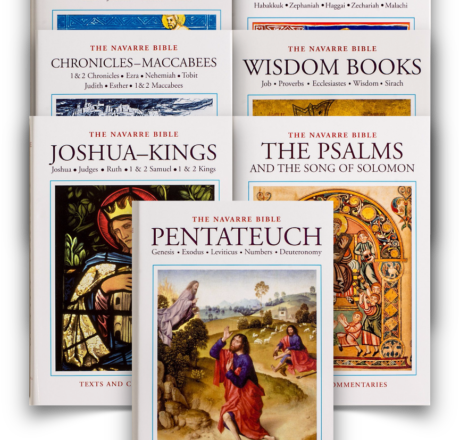
From: 1 Corinthians 3:18-23
Apostolic Ministry (Continuation)
------------------------------------------
[18] Let no one deceive himself. If any one among you thinks that he is wise in this age, let him become a fool that he may become wise. [19] For the wisdom of this world is folly with God. For it is written, "He catches the wise in their craftiness," [20] and again, "The Lord knows that the thoughts of the wise are futile." [21] So let no one boast of men. For all things are yours, [22] whether Paul or Apollos or Cephas or the world or life or death or the present or the future, all are yours; [23] and you are Christ's; and Christ is God's.
***********************************************************************
Commentary:
18-20. As an application of his teaching about true wisdom, St Paul shows Christians that the worst kind of foolishness is that of thinking one is wise when one in fact is not. He uses two biblical quotations (Job 5:13; Ps 94:11) as a gloss to prove that an exclusively human approach is always doomed to failure.
Christians, therefore, are wiser the more they identify their desires with the plan God has for each; that is, the more supernatural their outlook on life is: "We must learn to acquire the divine measure of things, never losing our supernatural outlook, and realizing that Jesus makes use also of our weaknesses to reveal his glory. So, whenever your conscience feels the stirrings of self-love, of weariness, of discouragement, or the weight of your passions, you must react immediately and listen to the Master, without letting the sad truth about our lives frighten us, because as long as we live our personal failings will always be with us" (St. J. Escriva, "Friends of God", 194).
21-23. One consequence of the defective wisdom which St Paul spoke about in the preceding verses is the Corinthians' desire to seize on one particular teacher. They have forgotten that all ministers are there to serve the faithful (v. 5). In fact, the Apostle tells them, it is not only the teachers that are theirs: "all things are yours." This clearly emphasizes the great dignity involved in being a Christian: by being an adoptive son of God, a brother of Jesus Christ, the Christian has a share in Christ's lordship over the universe (cf. 1 Cor 15:24-28), and is the master of all creation (cf. 2 Cor 6:10), through which he should move with a certain proprietorial feeling, called as he is to live in the freedom of the glory of the sons of God (cf. Rom 8:21), a freedom which God has won for him (cf. Gal 4:31). Human factions and dissensions of the type that have arisen among the Corinthians show that they have forgotten all this and therefore their sense of vocation has become impoverished. The Christian belongs to Christ alone: he has only one master, Christ. "Mine are the heavens and mine is the earth", St John of the Cross explains; "mine are the people, the righteous are mine and the Mother of God, and all things are mine; and God himself is mine and for me, for Christ is mine and all for me. What, then, do you ask for and seek, my soul? All this is yours, and it is all for you. Do not despise yourself, do not despise the crumbs that fall from your Father's table" ("A Prayer of the Soul Enkindled by Love").
The Apostle's words also remind us of the love and respect that man should have for created things, which God has entrusted to him (cf. Vatican II, "Gaudium Et Spes", 37). "The world is not evil," Monsignor Escriva reminds us "for it has come from God's hands; it is his creation; Yahweh looked upon it and saw that it was good (cf. Gen 1:7ff). We ourselves, mankind, make it evil and ugly with our sins and infidelities [...] our age needs to give back to matter and to the most trivial occurrences and situations their noble and original meaning. It needs to restore them to the service of the Kingdom of God, to spiritualize them, turning them into a means and an opportunity for a continuous meeting with Jesus Christ [...]. It is understandable that the Apostle should write: 'all things are yours, you are Christ's and Christ is God's (1 Cor 3:22-23). We have here an ascending movement which the Holy Spirit, infused in our hearts, wants to call forth from this world, upwards from the earth to the glory of the Lord" ("Conversations", 114-115).
From: Luke 5:1-11
The Miraculous Catch of Fish and the Calling of the First Disciples
------------------------------------------------------------------------------------
[1] While the people pressed upon Him (Jesus) to hear the word of God, He was standing by the Lake of Gennesaret. [2] And He saw two boats by the lake, but the fishermen had gone out of them and were washing their nets. [3] Getting into one of the boats, which was Simon's, He asked him to put out a little from the land. And He sat down and taught the people from the boat. [4] And when He had ceased speaking, He said to Simon, "Put out into the deep and let down your nets for a catch." [5] And Simon answered, "Master, we toiled all night and took nothing! But at your word I will let down the nets." [6] And when they had done this, they enclosed a great shoal of fish; and as their nets were breaking, [7] they beckoned to their partners in the other boat to come and help them. And they came and filled both the boats, so that they began to sink. [8] But when Simon Peter saw it, he fell down at Jesus' knees, saying, "Depart from me, for I am a sinful man, O Lord." [9] For he was astonished, and all that were with Him, at the catch of fish which they had taken; [10] And so also were James and John, sons of Zebedee, who were partners with Simon. And Jesus said to Simon, "Do not be afraid; henceforth you will be catching men." [11] And when they had brought their boats to land, they left everything and followed Him.
***********************************************************************
Commentary:
1. "Just as they do today! Can't you see? They want to hear God's message, even though outwardly they may not show it. Some perhaps have forgotten Christ's teachings. Others, through no fault of their own, have never known them and they think that religion is something odd. But of this we can be sure, that in every man's life there comes a time sooner or later when his soul draws the line. He has had enough of the usual explanations. The lies of the false prophets no longer satisfy. Even though they may not admit it at the time, such people are longing to quench their thirst with the teachings of our Lord" (St. J. Escriva, "Friends of God", 260).
3. The Fathers saw in Simon's boat a symbol of the pilgrim Church on earth. "This is the boat which according to St. Matthew was in danger of sinking and according to St. Luke was filled with fish. Here we can see the difficult beginnings of the Church and its later fruitfulness" (St. Ambrose, "Expositio Evangelii sec. Lucam, in loc."). Christ gets into the boat in order to teach the crowds--and from the barque of Peter, the Church, He continues to teach the whole world.
Each of us can also see himself as this boat Christ uses for preaching. Externally no change is evident: "What has changed? There is a change inside our soul, now that Christ has come aboard, as He went aboard Peter's boat. Its horizon has been expanded. It feels a greater ambition to serve and an irrepressible desire to tell all creation about the "magnalia Dei" (Acts 2:11), the marvellous doings of our Lord, if only we let Him work" (St. J. Escriva, "Friends of God", 265).
4. "When He had finished His catechizing, He told Simon: `Put out into the deep, and lower your nets for a catch.' Christ is the master of this boat. He it is who prepares the fishing. It is for this that He has come into the world, to do all He can so that His brothers may find the way to glory and to the love of the Father" ("Friends of God", 260). To carry this task out, our Lord charges all of them to cast their nets, but it is only Peter He tells to put out into the deep.
This whole passage refers in some way to the life of the Church. In the Church the bishop of Rome, Peter's successor, "is the vicar of Jesus Christ because he represents Him on earth and acts for Him in the government of the Church" ("St. Pius X Catechism", 195). Christ is also addressing each one of us, urging us to be daring in apostolate: `"Duc in altum. Put out into deep water!' Throw aside the pessimism that makes a coward of you. `Et laxate retia vestra in capturam. And pay out you nets for a catch.' Don't you see that you, like Peter, can say: `In nomine tuo, laxabo rete': Jesus, if You say so, I will search for souls?" (St. J. Escriva, "The Way", 792).
"If you were to fall into the temptation of wondering, `Who's telling me to embark on this?', we would have reply, `Christ Himself is telling you, is begging you.' `The harvest is plentiful enough, but the laborers are few. You must ask the Lord to whom the harvest belongs to send laborers out for the harvesting' (Matthew 9:37-38). Don't take the easy way out. Don't say, `I'm no good at this sort of thing; there are others who can do it; it isn't my line.' No, for this sort of thing, there is no one else: if you could get away with that argument, so could everyone else. Christ's plea is addressed to each and every Christian. No one can consider himself exempt, for whatever reason--age, health or occupation. There are no excuses whatsoever. Either we carry out a fruitful apostolate, or our faith will prove barren" ("Friends of God", 272).
5. When Christ gives him these instructions, Peter states the difficulties involved. "A reasonable enough reply. The night hours were the normal time for fishing, and this time the catch had yielded nothing. What was the point of fishing by day? But Peter has faith: `But at Your word I will let down the nets.' He decides to act on Christ's suggestion. He undertakes the work relying entirely on the word of our Lord" ("Friends of God", 261).
8. Peter does not want Christ to leave him; aware of his sins, he declares his unworthiness to be near Christ. This reminds us of the attitude of the centurion who confesses his unworthiness to receive Jesus into his house (Matthew 8:8). The Church requires her children to repeat these exact words of the centurion before receiving the Blessed Eucharist. She also teaches us to show due external reverence to the Blessed Sacrament when going to Communion: by falling down on his knees Peter also shows that internal adoration of God should be also be expressed externally.
11. Perfection is not simply a matter of leaving all things but of doing so in order to follow Christ--which is what the Apostles did: they gave up everything in order to be available to do what God's calling involved.
We should develop this attitude of availability, for "Jesus isn't satisfied `going halves': He wants the lot" (St. J. Escriva, "The Way", 155).
If we don't give ourselves generously, we will find it very difficult to follow Jesus: "Detach yourself from people and things until you are stripped of them. For, says Pope St. Gregory, the devil has nothing of his own in this world, and naked he comes to battle. If you go clothed to fight him, you will soon be pulled to the ground: for he will have something to catch you by" ("The Way", 149).
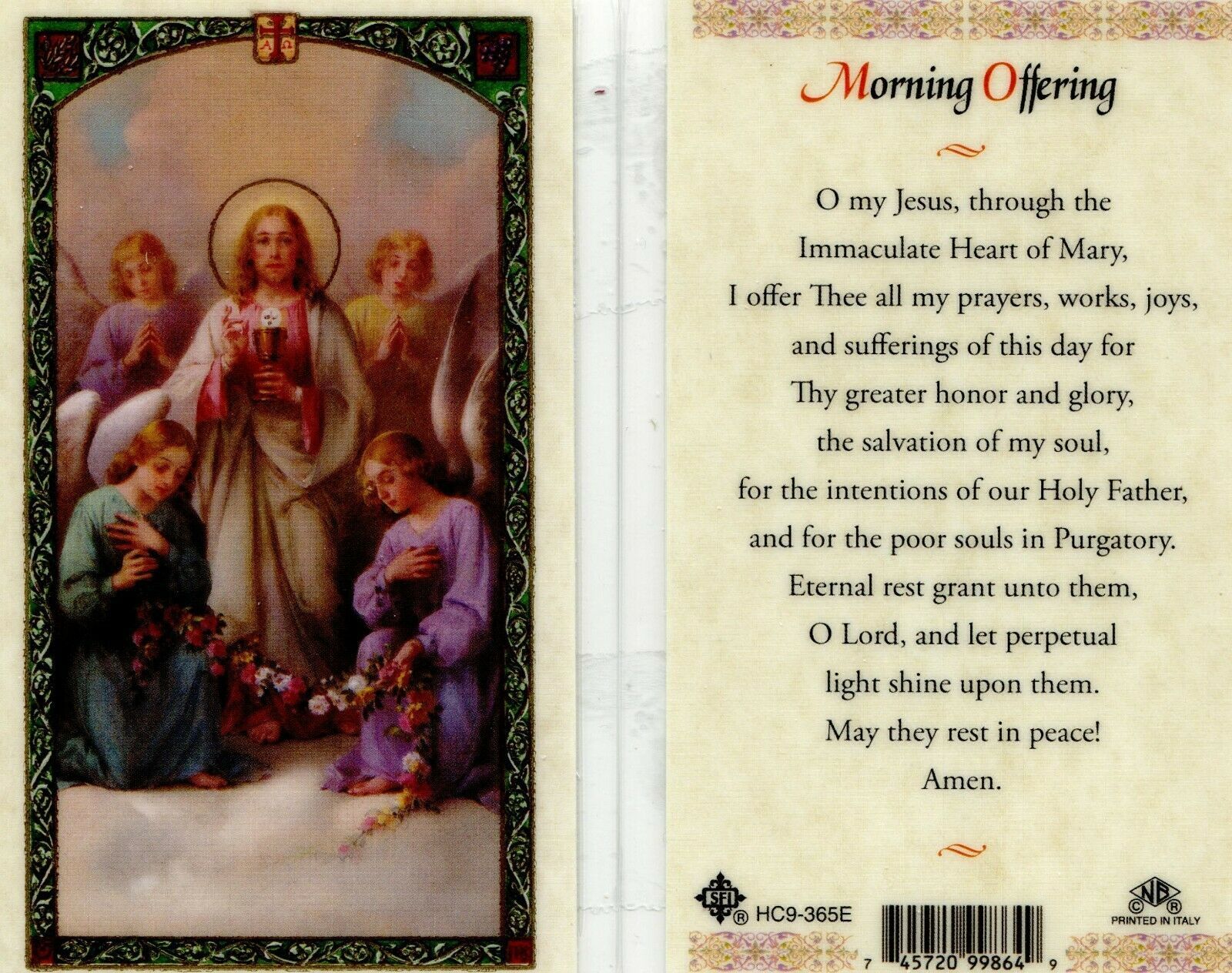
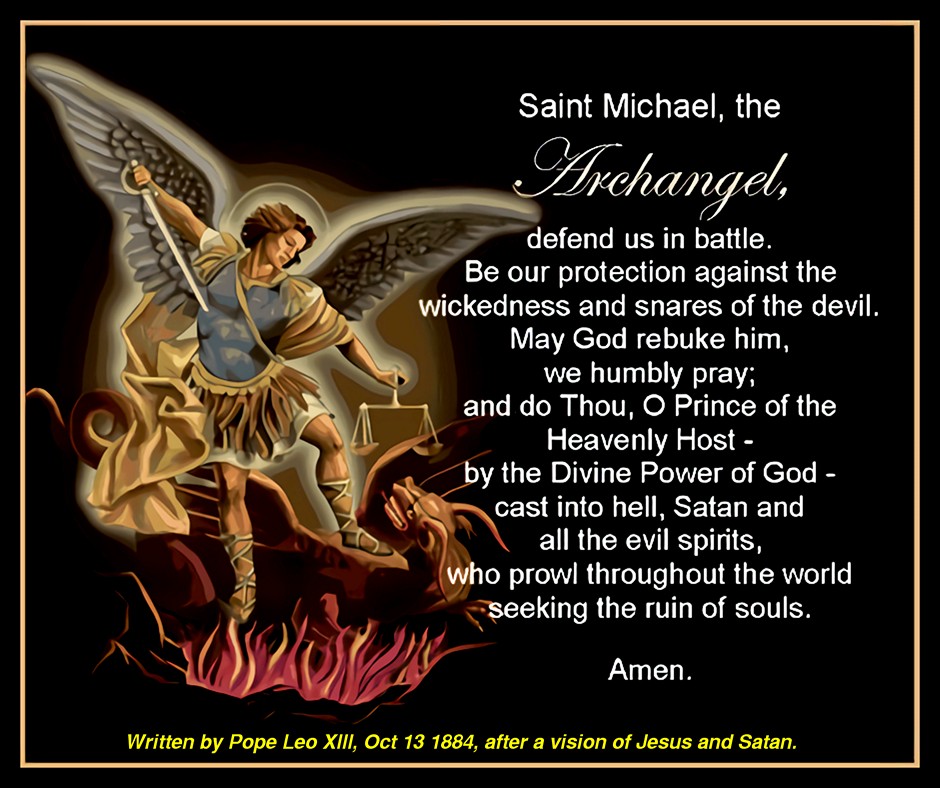
The Month of August is Dedicated to Our Lady of Sorrows

“And his father and his mother marveled at what was said about him; and Simeon blessed them and said to Mary his mother, ‘Behold, this child is set for the fall and rising of many in Israel, and for a sign that is spoken against (and a sword will pierce through your own soul also), that thoughts out of many hearts may be revealed.’” (Luke 2:33-35)

Pope Leo XIV’s prayer intention for the month of September, 2026:
For the care of water
Let us pray for a just and sustainable management of water, a vital resource, so that everyone may have equal access to it.

Disclaimer: Opinions posted on Free Republic are those of the individual posters and do not necessarily represent the opinion of Free Republic or its management. All materials posted herein are protected by copyright law and the exemption for fair use of copyrighted works.

