
Posted on 09/01/2026 10:34:21 PM PDT by fidelis
After Jesus left the synagogue, he entered the house of Simon. Simon’s mother-in-law was afflicted with a severe fever, and they interceded with him about her. He stood over her, rebuked the fever, and it left her. She got up immediately and waited on them. Luke 4:38–39
In today’s Gospel, we encounter the first mention of Simon—whose name Jesus would later change to Peter—in Luke’s account. Simon was likely present in the synagogue and witnessed Jesus cast out a demon from a possessed man. With a simple command, “Be quiet! Come out of him!”, Jesus revealed His divine authority. The people were astonished and exclaimed, “What is there about his word? For with authority and power he commands the unclean spirits, and they come out” (Luke 4:35–36).
Having seen His authority firsthand, Simon presumably spoke to Jesus about his mother-in-law, who was suffering from a severe fever. It is striking to imagine the moment of Simon’s first personal encounter with the Lord. Though Jesus, in His divine foresight, knew what Simon would one day become—the first pope entrusted with the spiritual authority of Heaven—Simon himself could not have foreseen how radically his life was about to change.
Upon entering Simon’s home, Jesus rebuked the fever. The Greek word used here, epitimaō, is the same word used in the previous passage when Jesus rebuked the demon. This deliberate parallel reveals that both the spiritual and physical realms are subject to Jesus’ command. What He rebuked were real evils and disorders: demonic possession as a violation of the soul and the fever as a natural affliction of the body.
Later in this Gospel passage, Jesus continues healing many who are sick and casting out demons. Once again, He rebukes the demons, silencing them and forbidding them to speak. Though they cry out, “You are the Son of God,” Jesus does not permit them to bear witness to Him. He has no need of demons to proclaim His identity. His revelation will come in His time, by His own design, especially through the Cross and Resurrection.
Jesus’ rebukes, whether uttered by a word, expressed through a gesture, or conveyed by His mere presence, are divine actions against evil. They are not expressions of wishful hope, but authoritative, efficacious commands. What He speaks comes to be. His word is not just powerful; it accomplishes what it declares.
Understanding this is foundational to our life of faith and our spiritual journey. When we turn to Christ with trust, we must believe that His word has the power to heal, to free, and to transform. He does not speak in vain. His authority extends to every dimension of our lives, body, soul, and spirit, and He desires to restore all that has been wounded by sin, suffering, or disorder.
Reflect today on your own trust in the power of Jesus’ word. Do you believe He can rebuke the disorders in your life with divine authority? Do you turn to Him with confidence in the Sacraments, knowing that what He speaks, He accomplishes? Surrender all that afflicts you to the power of His Word, and allow Him to restore you to grace, relying especially on the sacramental authority given to Simon Peter and exercised by the priests who have followed after.
My authoritative Lord, when You speak, what You speak comes to be. Speak to me, Lord. Rebuke my sin and weakness, so that Your holy will may be accomplished in my life. Let me hear Your voice, especially in the Sacraments through which Your mercy is poured forth and Your power is made manifest. Jesus, I trust in You.
Please keep in mind that this is a Catholic Caucus/Devotional thread for the purpose of prayerful reflection on the Sacred Scriptures and is closed to debate of any kind. Per FR policy on Religion Caucus threads, off-topic, argumentative, and abusive comments are not allowed and will be submitted to the Mods for deletion. Thanks, and God bless you.
Today’s First Reading
From: 1 Corinthians 3:1-9
The Corinthians Are Still Unspiritual
-------------------------------------
[1] But I, brethren, could not address you as spiritual men, but as men of the flesh, as babes in Christ. [2] I fed you with milk, not solid food; for you were not ready for it; and even yet you are not ready, [3] for you are still of the flesh. For while there is jealousy and strife among you, are you not of the flesh, and behaving like ordinary men?
Apostolic Ministry
--------------------------
[4] For when one says, "I belong to Paul," and another, "I belong to Apollos," are you not merely men?
[5] What then is Apollos? What is Paul? Servants through whom you believed, as the Lord assigned to each. [6] I planted, Apollos watered, but God gave the growth. [7] So neither he who plants nor he who waters is anything, but only God who gives the growth. [8] He who plants and he who waters are equal, and each shall receive his wages according to his labor. [9] For we are God's fellow workers; you are God's field, God's building.
***********************************************************************
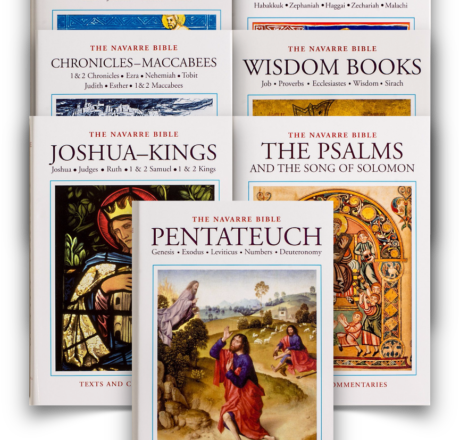
Commentary:
1-3. The Christians of Corinth have themselves to blame for their inability to grasp everything they have been taught. The counterposing of spirit and flesh does not mean that there are two kinds of people in the Church; it is, rather, a fatherly reproach on the Apostle's part: through Baptism they are called to a full (intellectual and practical) grasp of spiritual truths; but because they are letting themselves be led by human principles they are still in a state of lethargy. As St John Chrysostom comments, the reason is that "unclean living makes it difficult for a person to know the truth. Just as a man who is blinded by error cannot for long keep to the right road, so too is it very difficult for someone who is leading a bad life to accept the demands our sublime mysteries make on us. To embrace truth one needs to be detached from all one's passions [...]. This freedom of soul must be total, if one is to attain truth" ("Hom. on 1 Cor", 8, "ad loc.").
"As babes in Christ": St Paul is not referring to the spiritual childhood taught by Jesus Christ (cf. Mt 18:1-6; 1 Pet 2:2). The Apostle uses this comparison to show that one needs to make progress in the Christian life: a Christian has a duty to develop the infused virtues he received in Baptism. To be more specific, the Apostle mentions "jealousy and strife" (v. 3) as two great sins which are paralyzing the Corinthians: they leave a Christian in a lamentable, unspiritual state and prevent him from attaining the spiritual things to which he has been called (cf. Heb 5:12-17).
4-17. Using the dissension at Corinth (cf. 1:11-13), which clearly shows that the Corinthians are still acting in a very unspiritual way (v. 4), St Paul describes the true nature of apostolic office. He especially emphasizes that God is the source of all apostolic work: it is he "who gives the growth" (v. 7); man is God's instrument--a servant or minister (v. 5), a fellow worker (v. 9)--in this task, which can only be carried out if Jesus Christ is its foundation (v. 11). St Paul develops these ideas using two effective similes--a field (vv. 6-9) and a building (vv. 9-17).
5-7. Using a comparison with farm work, St Paul shows the instrumental role men and women play in the apostolate. Only God, through his grace, can make the seed of faith take root and bear fruit in souls: "It may be that going and weeping they [God's workers] cast their seeds; it may be with anxious care they nourished it; but to make it sprout and bring forth the cherished fruit, this is the work of God alone and his powerful assistance. This, also, is to be considered that men are more than instruments which God uses for the saving of souls and that these instruments must be fit, therefore, to be handled by God" (St Pius X, "Haerent Animo", 9).
In this sense, every effort man makes is to no avail (cf. v. 7); yet God chooses to use man's input to produce supernatural fruit which is totally disproportionate: "We must remember that we are only instruments," St. J. Escriva points out. "'What is Apollos? What is Paul? Servants through whom you have believed, as the Lord assigned to each. I planted, Apollos watered, but only God gives the growth' (1 Cor 3:4-6). The teaching, the message which we have to communicate, has in its own right an infinite effectiveness which comes not from us but from Christ. It is God himself who is bent on bringing about salvation, on redeeming the world" ("Christ Is Passing By", 159).
8. The recompense God gives someone who works in the building up of the Church has not so much to do with his particular mission (the various jobs are "equal"), or with the kind of harvest, as with the work itself, the effort one puts into the God-given job. "Since Christians have different gifts (cf. Rom 12:6) they should collaborate in the work of the Gospel, each according to his opportunity, ability, charism and ministry (cf. 1 Cor 3:10); all who sow and reap (cf. Jn 4:37), plant and water, should be one (cf. 1 Cor 3:8) so that 'working together for the same end in a free and orderly manner' ("Lumen Gentium", 18) they might together devote their powers to the building up of the Church" (Vatican II, "Ad Gentes", 28). Therefore, what really matters is that one does whatever job one has been given with the maximum love possible, without losing heart: "[my chosen ones] shall not labor in vain", the Lord assures them, through the prophet Isaiah (65:23).
9. "God's field, God's building". The Second Vatican Council uses these images to describe the inner nature of the Church: "The Church is a cultivated field, the tillage of God (cf. 1 Cor 3:9). on that land the ancient olive tree grows whose holy roots were the prophets and in which the reconciliation of Jews and Gentiles has been brought about and will be brought about again (Rom 11:13-26). That land, like a choice vineyard, has been planted by the heavenly cultivator (Mt 21:33-43; cf. Is 5:1f). Yet the true vine is Christ who gives life and fruitfulness to the branches, that is, to us, who through the Church remain in Christ without whom we can do nothing (Jn 15:1-5).
"Often, too, the Church is called the building of God (1 Cor 3:9). The Lord compared himself to the stone which the builders rejected, but which was made into the cornerstone (Mt 21:42; cf. Acts 4:11; 1 Pet 2:7; Ps 117:22). on this foundation the Church is built by the Apostles (cf. 1 Cor 3:11) and from it the Church receives solidity and unity. This edifice has many names to describe it--the house of God in which his family dwells; the household of God in the Spirit (Eph 2:19:22); the dwelling-place of God among men (Rev 21:3); and, especially, the holy temple. This temple, symbolized in places of worship built out of stone, is praised by the Fathers and, not without reason, is compared in the liturgy to the Holy City, the New Jerusalem. As living stones we here on earth are built into it (1 Pet 2:5). It is this holy city that is seen by John as it comes down out of heaven from God when the world is made anew, prepared like a bride adorned for her husband (Rev 21:1f)" ("Lumen Gentium", 6).
The Lord wants Christians to be living stones in this building and has associated them in the redemptive task of saving all mankind, so that in the course of their own redemption they might also be co-redeemers with him, completing "what is lacking in Christ's afflictions for the sake of his body, that is, the church" (Col 1:24): "Jesus has wanted every person to cooperate freely in the work of redemption [...]. The work of salvation is still going on, and each one of us has a part in it [...]. It is worth while putting our lives on the line, giving ourselves completely, so as to answer to the love and the confidence that God has placed in us. It is worthwhile, above all, to decide to take our Christian faith seriously" (St. J. Escriva, "Christ Is Passing By", 129).
From: Luke 4:38-44
The Cure of Peter's Mother-In-Law
---------------------------------
[38] And He (Jesus) arose and left the synagogue, and entered Simon's house. Now Simon's mother-in-law was ill with a high fever, and they besought Him for her. [39] And He stood over her and rebuked the fever, and it left her; and immediately she rose and served them.
Other Cures
-----------
[40] Now when the sun was setting, all those who had any that were sick with various diseases brought them to Him; and He laid His hands on every one of them and healed them. [41] And demons also came out of many, crying, "You are the Son of God!" But He rebuked them, and would not allow them to speak, because they knew that He was the Christ.
Jesus Preaches in Other Cities in Judea
---------------------------------------
[42] And when it was day He departed and went into a lonely place. And the people sought Him and came to Him, and would have kept Him from leaving them; [43] but He said to them, "I must preach the Good News of the Kingdom of God to the other cities also; for I was sent for this purpose." [44] And He was preaching in the synagogues of Judea.
***********************************************************************
Commentary:
38-39. In the public life of Jesus we find many touching episodes (cf. for example Luke 19:1; John 2:1) which show the high regard He had for everyday family life.
Here we can clearly see the effectiveness of prayer on behalf of other people: "No sooner did they pray to the Savior", St. Jerome says, "than He immediately healed the sick; from this we learn that He also listens to the prayers of the faithful for help against sinful passions" ("Expositio In Evangelium Sec. Lucam, in loc.").
St. John Chrysostom refers to this total, instantaneous cure: "Since this was a curable type of illness He displayed His power through the way He brought healing, doing what medicine could not do. Even after being cured of fever, patients need time to recover their former strength, but here the cure was instantaneous" ("Hom. on St. Matthew", 27).
The Fathers saw in this lady's fever a symbol of concupiscence: "Peter's mother-in-law's fever represents our flesh affected by various illnesses and concupiscences; our fever is passion, our fever is lust, our fever is anger--vices which, although they affect the body, perturb the soul, the mind and the feelings" (St. Ambrose, "Expositio Evangelii Sec. Lucam, in loc.").
On the practical consequences of this St. Cyril says: "Let us receive Jesus Christ, because when He visits us and we take Him into our minds and hearts, even our worst passions are extinguished and we are kept safe to serve Him, that is, to do what pleases Him" ("Hom. 28 In Mattheum").
43. Our Lord again stresses one of the reasons why He has come into the world. St. Thomas, when discussing the purpose of the Eucharist, says that Christ "came into the world, first, to make the truth known, as He Himself says: `for this I was born, and for this I have come into the world, to bear witness to the truth' (John 18:37). Hence it was not fitting that He should hide Himself by leading a solitary life, but rather that He should appear openly and preach in public. For this reason He tells those who wanted to detain Him, `I must preach the Good News of the Kingdom of God to the other cities also; for I was sent for this purpose.' Secondly, He came in order to free men from sin; as the Apostle says, `Christ Jesus came into the world to save sinners' (1 Timothy 1:15). This is why Chrysostom says, `Although Christ might, while staying in the same place, have drawn all men to Himself to hear His preaching, He did not do so--in order to give us the example to go out and seek the lost sheep, as the shepherd does, or as the doctor does, who visits the sick person.' Thirdly, He came so that `we might obtain access to God' (Romans 5:2)" ("Summa Theologiae", III, q. 40, a. 1, c.).
The Month of August is Dedicated to Our Lady of Sorrows

“And his father and his mother marveled at what was said about him; and Simeon blessed them and said to Mary his mother, ‘Behold, this child is set for the fall and rising of many in Israel, and for a sign that is spoken against (and a sword will pierce through your own soul also), that thoughts out of many hearts may be revealed.’” (Luke 2:33-35)

Pope Leo XIV’s prayer intention for the month of September, 2026:
For the care of water
Let us pray for a just and sustainable management of water, a vital resource, so that everyone may have equal access to it.

Disclaimer: Opinions posted on Free Republic are those of the individual posters and do not necessarily represent the opinion of Free Republic or its management. All materials posted herein are protected by copyright law and the exemption for fair use of copyrighted works.


