
Posted on 08/30/2026 9:42:39 PM PDT by fidelis
When the people in the synagogue heard this, they were all filled with fury. They rose up, drove him out of the town, and led him to the brow of the hill on which their town had been built, to hurl him down headlong. But he passed through the midst of them and went away. Luke 4:28–30
What a sobering beginning to our Lord’s public ministry. Shortly after His baptism in the Jordan River and the establishment of Capernaum as the center of His ministry, Jesus began calling His disciples and performing powerful miracles. News of His preaching and healing spread rapidly, reaching His hometown of Nazareth.
When Jesus returned to Nazareth, those who had known Him from His youth were not prepared for what they witnessed. In the synagogue, He stood and read from the scroll of the Prophet Isaiah. It was a messianic passage foretelling the One anointed by the Spirit to bring glad tidings to the poor, liberty to captives, sight to the blind, and freedom to the oppressed. After reading, Jesus sat down and solemnly proclaimed, “Today this Scripture passage is fulfilled in your hearing.” With these words, He revealed Himself to be the long-awaited Messiah.
At first, the people were amazed at the gracious words He spoke. But their awe quickly turned to confusion, then to hostility. “Is this not the son of Joseph?” they asked, unable to reconcile the divine authority they had just encountered with the humble figure they remembered from years past. Their familiarity bred contempt. Their hearts, bound by human reasoning and pride, could not accept the divine mystery standing before them.
Perceiving their thoughts, Jesus addressed the unspoken demand in their hearts—the desire to see in Nazareth the same wonders He had performed elsewhere. But He offered them no signs. Instead, He offered truth, recalling that in the days of Elijah and Elisha, God’s blessings were extended not to Israelites, but to Gentiles—a widow in Zarephath and a leper from Syria. This comparison deeply offended their national pride and shattered their assumptions about divine favor.
Rather than receiving His rebuke with humility, they were filled with fury. The crowd attempted to kill the very One they had once known as neighbor and craftsman. Yet Jesus, untouched, “passed through the midst of them and went away.”
Jesus certainly knew this would happen. In His divine wisdom, He foresaw the reaction He would receive. And in a mysterious way, He even appears to draw it out. Why? Because this holy provocation was an act of mercy. In exposing the hardness of their hearts, Jesus gave them an opportunity to confront their pride, repent, and receive the Kingdom in truth.
Reflect today on the mysterious ways Jesus continues to provoke hearts—including your own. Sometimes His Word unsettles us not because it is harsh, but because it is true, and we are unprepared to accept it and change. The people of Nazareth teach us that we—like them—sometimes need our pride stirred up so we can see it and reject it. As you consider the people of Nazareth from that moment forward, see yourself in them. Recognize any ways that you respond with hostility to humbling truths that are hard to accept, and allow time and grace to heal you—helping you to repent and grow in gratitude for Jesus’ humbling and holy provocation.
My challenging Lord, You see into the depths of my heart. When I resist Your Word, provoke me in mercy. Confront my pride, reveal my blindness, and call me to repentance. May I never reject You, but always surrender with trust to the truth You offer. Jesus, I trust in You.
Please keep in mind that this is a Catholic Caucus/Devotional thread for the purpose of prayerful reflection on the Sacred Scriptures and is closed to debate of any kind. Per FR policy on Religion Caucus threads, off-topic, argumentative, and abusive comments are not allowed and will be submitted to the Mods for deletion. Thanks, and God bless you.
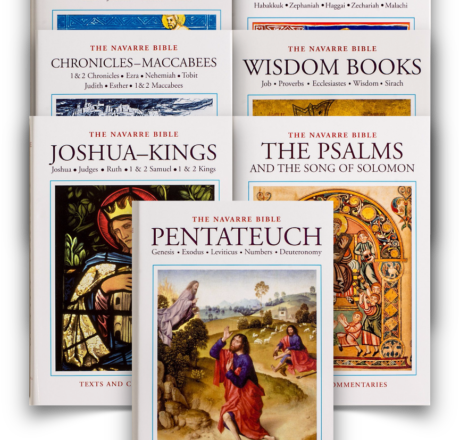
Today’s First Reading
From: 1 Corinthians 2:1-5
St. Paul's Preaching in Corinth
-------------------------------
[1] When I came to you, brethren, I did not come proclaiming to you the testimony of God in lofty words or wisdom. [2] For I decided to know nothing among you except Jesus Christ and him crucified. [3] And I was with you in weakness and in much fear and trembling; [4] and my speech and my message were not in plausible words of wisdom, but in demonstration of the Spirit and power, [5] that your faith might not rest in the wisdom of men but in the power of God.
***********************************************************************
Commentary:
1-3. The Apostle had come to Corinth from Athens, as we know from the Acts of the Apostles (17:16-34); in that city he had not made many converts, despite his brilliant discourse in the Areopagus. This fact, and the moral corruption of Corinthian society, may explain his arriving "in much fear and trembling" (v. 3); he must have felt that he had a difficult task ahead of him. As it turned out, he must have met many difficulties: our Lord appeared to him at night in a vision to comfort and encourage him: "Do not be afraid, but speak and do not be silent; for I am with you" (Acts 18:9-10). St Paul, therefore, putting no reliance on carefully argued speeches, proclaims Christ crucified, to make sure that faith is grounded on God alone.
St Paul sums up his entire message here "Jesus Christ and him crucified". The Church, on whom it devolves to continue the mission of the Apostles, does nothing but make Jesus Christ known: "Our spirit is set in one direction," Pope John Paul II reminds us; "the only direction for our intellect, will and heart is towards Christ our Redeemer, towards Christ, the Redeemer of man. We wish to look towards him because there is salvation in no one else but him, the Son of God-- repeating what Peter said, 'Lord, to whom shall we go? You have the words of eternal life' (Jn 6:68) [...]. The Church lives his mystery, draws unwearyingly from it and continually seeks ways of bringing this mystery of her Master and Lord to mankind--to the peoples, the nations, the succeeding generations, and every individual human being--as if she were ever repeating, as the Apostle did, 'For I decided to blow nothing among you except Jesus Christ and him crucified' (1 Cor 2:2). The Church stays within the sphere of the mystery of the Redemption, which has become the fundamental principle of her life and mission" ("Redemptor Hominis", 7).
Every Christian, for his part, should try to see that those around him "desire to know Jesus Christ and him crucified and that they be firmly convinced and with the most heartfelt piety and devotion believe that no other name under heaven has been given to men by which we may be saved (cf. Acts 4:12), since he is the expiation for our sins (cf. 1 Jn 2:2)" ("St Pius V Catechism", Introduction, 10).
4-5. Just as Paul's preaching did not rely on eloquence, so too faith must not be based on human wisdom (cf. note on 1 Cor 1:20-25). He says that he based his message on "demonstration of the Spirit and power"-- probably a reference to the powerful action of divine grace on those who listened to his preaching, with grace manifesting itself in conversions and extraordinary charisms. This power of God explains how they came to believe.
God continues to act through the Christian message, which "is unique. It cannot be replaced. It does not permit either indifference, syncretism or accommodation. It is a question of people's salvation. It is the beauty of the Revelation that it represents. It brings with it a wisdom that is not of this world. It is able to stir up by itself faith—faith that rests on the power of God (cf. 1 Cor 2:5). It is truth. It merits having the apostle consecrate to it all his time and all his energies, and to sacrifice for it, if necessary, his own life" (Paul VI "Evangelic Nuntiandi", 5).
From: Luke 4:16-30
Jesus Preaches in Nazareth
--------------------------
[16] And He came to Nazareth, where He had been brought up; and He went to the synagogue, as His custom was, on the Sabbath Day. And He stood up to read; [17] and there was given to Him the book of the prophet Isaiah. He opened the book and found the place where it was written, [18] "The Spirit of the Lord is upon Me, because He has anointed Me to preach good news to the poor. He has sent Me to proclaim release to the captives and recovering of sight to the blind, to set at liberty those who are oppressed, [19] to proclaim the acceptable year of the Lord." [20] And He closed the book, and gave it back to the attendant, and sat down; and the eyes of all in the synagogue were fixed on Him. [21] And He began to say to them, "Today this scripture has been fulfilled in your hearing. [22] And all spoke well of Him, and wondered at the gracious words which proceeded out of His mouth; and they said, "Is not this Joseph's son?"
[23] And He said to them, "Doubtless you will quote to me this proverb, 'Physician, heal yourself; what we have heard you did at Capernaum, do here also in your own country.'" [24] And He said, "Truly, I say to you, no prophet is acceptable in his own country. [25] But in truth, I tell you, there were many widows in Israel in the days of Elijah, when the heaven was shut up three years and six months, when there came a great famine over all the land; [26] and Elijah was sent to none of them but only to Zarephath, in the land of Sidon, to a woman who was a widow. [27] And there were many lepers in Israel in the time of the prophet Elisha; and none of them was cleansed, but only Naaman the Syrian." [28] When they heard this, all in the synagogue were filled with wrath. [29] And they rose up and put Him out of the city, and led Him to the brow on the hill on which their city was built, that they might throw Him down headlong. [30] But passing through the midst of them He went away.
***********************************************************************
Commentary:
16-30. For the Jews the Sabbath was a day of rest and prayer, as God commanded (Exodus 20:8-11). On that day they would gather together to be instructed in Sacred Scripture. At the beginning of this meeting they all recited the "Shema", a summary of the precepts of the Lord, and the "eighteen blessings". Then a passage was read from the Book of the Law--the Pentateuch--and another from the Prophets. The president invited one of those present who was well versed in the Scriptures to address the gathering. Sometimes someone would volunteer and request the honor of being allowed to give this address--as must have happened on this occasion. Jesus avails Himself of this opportunity to instruct the people (cf. Luke 4:16ff), as will His Apostles later on (cf. Acts 13:5, 14, 42, 44; 14:1; etc.). The Sabbath meeting concluded with the priestly blessing, recited by the president or by a priest if there was one present, to which the people answered "Amen" (cf. Numbers 6:22ff).
18-21. Jesus read the passage from Isaiah 61:1-2 where the prophet announces the coming of the Lord, who will free His people of their afflictions. In Christ this prophecy finds its fulfillment, for He is the Anointed, the Messiah whom God has sent to His people in their tribulation. Jesus has been anointed by the Holy Spirit for the mission the Father has entrusted to Him. "These phrases, according to Luke (verses 18-19), are His first messianic declaration. They are followed by the actions and words known through the Gospel. By these actions and words Christ makes the Father present among men" (St. Pope John Paul II, "Dives In Misericordia", 3).
The promises proclaimed in verses 18 and 19 are the blessings God will send His people through the Messiah. According to Old Testament tradition and Jesus' own preaching (cf. note on Matthew 5:3), "the poor" refers not so much to a particular social condition as to a very religious attitude of indigence and humility towards God, which is to be found in those who, instead of relying on their possessions and merits, trust in God's goodness and mercy. Thus, preaching good news to the poor means bringing them the "good news" that God has taken pity on them. Similarly, the Redemption, the release, which the text mentions, is to be understood mainly in a spiritual, transcendental sense: Christ has come to free us from the blindness and oppression of sin, which, in the last analysis, is slavery imposed on us by the devil. "Captivity can be felt", St. John Chrysostom teaches in a commentary on Psalm 126, "when it proceeds from physical enemies, but the spiritual captivity referred to here is worse; sin exerts a more severe tyranny, evil takes control and blinds those who lend it obedience; from this spiritual prison Jesus Christ rescued us" ("Catena Aurea"). However, this passage is also in line with Jesus' special concern for those most in need. "Similarly, the Church encompasses with her love all those who are afflicted by human misery and she recognizes in those who are poor and who suffer the image of her poor and suffering Founder. She does all in her power to relieve their need and in them she strives to serve Christ" (Vatican II, "Lumen Gentium", 8).
18-19. The words of Isaiah which Christ read out on this occasion describe very graphically the reason why God has sent His Son into the world--to redeem men from sin, to liberate them from slavery to the devil and from eternal death. It is true that in the course of His public ministry Christ, in His mercy, worked many cures, cast out devils, etc. But He did not cure all the sick people in the world, nor did He eliminate all forms of distress in this life, because pain, which entered the world through sin, has a permanent redemptive value when associated with the sufferings of Christ. Therefore, Christ worked miracles not so much to release the people concerned from suffering, as to demonstrate that He had a God-given mission to bring everyone to eternal salvation.
The Church carries on this mission of Christ: "Go therefore and make disciples of all nations, baptizing them in the name of the Father and of the Son and of the Holy Spirit, teaching them to observe all that I have commanded you; and lo, I am with you always, to the close of the age" (Matthew 28:19-20). These simple and sublime words, which conclude the Gospel of St. Matthew, point out "the obligation to preach the truths of faith, the need for sacramental life, the promise of Christ's continual assistance to His Church. You cannot be faithful to our Lord if you neglect these supernatural demands--to receive instruction in Christian faith and morality and to frequent the Sacraments. It is with this mandate that Christ founded His Church [...]. And the Church can bring salvation to souls only if she remains faithful to Christ in her constitution and teaching, both dogmatic and moral.
"Let us reject, therefore, the suggestion that the Church, ignoring the Sermon on the Mount, seeks a purely human happiness on earth, since we know that her only task is to bring men to eternal glory in Heaven. Let us reject any purely naturalistic view that fails to value the supernatural role of divine grace. Let us reject materialistic opinions that exclude spiritual values from human life. Let us equally reject any secularizing theory which attempts to equate the aims of the Church with those of earthly states, distorting its essence, institutions and activities into something similar to those of temporal society" (St J. Escriva, "In Love with the Church", 23 and 31).
18. The Fathers of the Church see in this verse a reference to the three persons of the Holy Trinity: the Spirit (the Holy Spirit) of the Lord (the Father) is upon Me (the Son); cf. Origen, "Homily 32". The Holy Spirit dwelt in Christ's soul from the very moment of the Incarnation and descended visibly upon Him in the form of a dove when He was baptized by John (cf. Luke 3:21-22).
"Because He has anointed Me": this is a reference to the anointing Jesus received at the moment of His Incarnation, principally through the grace of the hypostatic union. "This anointing of Jesus Christ was not an anointing of the body as in the case of the ancient kings, priests and prophets; rather it was entirely spiritual and divine, because the fullness of the Godhead dwells in Him substantially" ("St. Pius X Catechism", 77). From this hypostatic union the fullness of all graces derives. To show this, Jesus Christ is said to have been anointed by the Holy Spirit Himself--not just to have received the graces and gifts of the Spirit, like the saints.
19. "The acceptable year": this is a reference to the jubilee year of the Jews, which the Law of God (Leviticus 25:8) lays down as occurring every fifty years, symbolizing the era of redemption and liberation which the Messiah would usher in. The era inaugurated by Christ, the era of the New Law extending to the end of the world, is "the acceptable year", the time of mercy and redemption, which will be obtained definitively in Heaven.
The Catholic Church's custom of the "Holy Year" is also designed to proclaim and remind people of the redemption brought by Christ, and of the full form it will take in the future life.
20-22. Christ's words in verse 21 show us the authenticity with which He preached and explained the Scriptures: "Today this scripture has been fulfilled in your hearing." Jesus teaches that this prophecy, like the other main prophecies in the Old Testament, refers to Him and finds its fulfillment in Him (cf. Luke 24:44ff). Thus, the Old Testament can be rightly understood only in the light of the New—as the risen Christ showed the Apostles when He opened their minds to understand the Scriptures (cf. Luke 24:45), an understanding which the Holy Spirit perfected on the day of Pentecost (cf. Acts 2:4).
22-29. At first the people of Nazareth listened readily to the wisdom of Jesus' words. But they were very superficial; in their narrow-minded pride they felt hurt that Jesus, their fellow-townsman, had not worked in Nazareth the wonders He had worked elsewhere. They presume they have a special entitlement and they insolently demand that He perform miracles to satisfy their vanity, not to change their hearts. In view of their attitude, Jesus performs no miracle (His normal response to lack of faith: cf., for example, His meeting with Herod in Luke 23:7-11); He actually reproaches them, using two examples taken from the Old Testament (cf. 1 Kings 17:9 and 2 Kings 5:14), which show that one needs to be well-disposed if miracles are to lead to faith. His attitude so wounds their pride that they are ready to kill Him. This whole episode is a good lesson about understanding Jesus. We can understand Him only if we are humble and are genuinely resolved to make ourselves available to Him.
30. Jesus does not take flight but withdraws majestically, leaving the crowd paralyzed. As on other occasions men do Him no harm; it was by God's decree that He died on a cross (cf. John 18:32) when His hour had come.
The Month of August is Dedicated to the Immaculate Heart of Mary

“In the sixth month the angel Gabriel was sent from God to a city of Galilee named Nazareth, to a virgin betrothed to a man whose name was Joseph, of the house of David; and the virgin’s name was Mary. And he came to her and said, “Hail, full of grace, the Lord is with you!”” (Luke 1:26-28)

Pope Leo XIV’s prayer intention for the month of August, 2026:
For evangelization in the city
Let us pray that in large cities often marked by anonymity and loneliness we find new ways to proclaim the Gospel, discovering creative paths to build community.

Disclaimer: Opinions posted on Free Republic are those of the individual posters and do not necessarily represent the opinion of Free Republic or its management. All materials posted herein are protected by copyright law and the exemption for fair use of copyrighted works.


