
Posted on 08/29/2026 10:20:48 PM PDT by fidelis
Twenty-second Sunday in Ordinary Time
“Get behind me, Satan! You are an obstacle to me. You are thinking not as God does, but as human beings do.” Matthew 16:23
This scene likely unfolds in or near Caesarea Philippi, a Gentile region steeped in pagan worship. There, at the mouth of a cave long associated with the entrance to the netherworld—believed by some pagans to be the very gate of Hades—Jesus had just questioned His disciples: “Who do people say that the Son of Man is?” and then more directly, “But who do you say that I am?” (cf. Matthew 16:13–15). Peter, speaking with conviction on behalf of the Twelve, boldly proclaimed, “You are the Messiah, the Son of the living God” (Matthew 16:16). Jesus responded by declaring him “Peter,” the rock upon which He would build His Church, promising that “the gates of hell shall not prevail against it.”
Just moments later, Jesus issues one of the strongest rebukes recorded in the Gospels: “Get behind me, Satan!” The same Peter who had just spoken divine truth now speaks human fear and shortsightedness. In trying to dissuade Jesus from His suffering and death, Peter unknowingly opposes the very mission of the Messiah. Jesus calls this mindset not merely a mistake, but a diabolical temptation—echoing the same temptation He faced in the desert, when satan sought to lure Him away from the Cross with promises of worldly glory.
What a stark contrast. Peter goes from being the rock of faith to an obstacle in the Lord’s path. But why was Jesus so severe in His response?
Because the stakes were eternal. The Cross is not optional. It is the means of salvation—not just for Jesus, but for all who would follow Him. To think otherwise, even with good intention, is to prefer human comfort over divine wisdom. Peter’s protest reflects a natural aversion to suffering, but Jesus exposes it for what it truly is: a stumbling block to the will of the Father.
This dramatic Gospel scene is recorded for a reason. By calling Peter “Satan,” Jesus wanted to warn him, and us, of the real and ever-present danger of rejecting the way of the Cross. Like Peter, we can easily fall into the trap of wishful thinking and misguided compassion by saying about ourselves or those close to us, “God forbid, Lord! No such thing shall ever happen…” We are saying, in essence: “Lord, please make sure that neither I nor anyone I love ever has to suffer!” But such a prayer, though well-meaning, is clearly mistaken, and Jesus wants that point to be clearly understood.
Reflect today on Peter’s and Jesus’ words: “God forbid, Lord!” and “Get behind me, Satan!” In this exchange, Jesus is also speaking to each of us, saying, “Never run from the Cross!” We must never flee from a selfless and sacrificial embrace of suffering, even when that suffering is unjust. God can and will transform all freely embraced suffering into a means of His eternal glory and our sanctification. With our Lord, reject the evil one’s false empathy. Reject the lie that suffering is meaningless. Choose instead to lay down your life in love with Christ, and in doing so, you will rise with Him, victorious over every sin and diabolical lie, overcoming even the sufferings of this life through your free and faithful embrace.
My compassionate Lord, Your firm rebuke of Peter was direct, powerful, and loving. Rather than offering false comfort or misleading empathy, You spoke a hard truth to awaken Peter—and all of us—to the spiritual necessity of the Cross. Grant me the grace, dear Lord, to say “Yes” to the suffering I must face. May I embrace it not with fear or resistance, but with a heart filled with Your love and unwavering courage. Jesus, I trust in You.
Please keep in mind that this is a Catholic Caucus/Devotional thread for the purpose of prayerful reflection on the Sacred Scriptures and is closed to debate of any kind. Per FR policy on Religion Caucus threads, off-topic, argumentative, and abusive comments are not allowed and will be submitted to the Mods for deletion. Thanks, and God bless you.
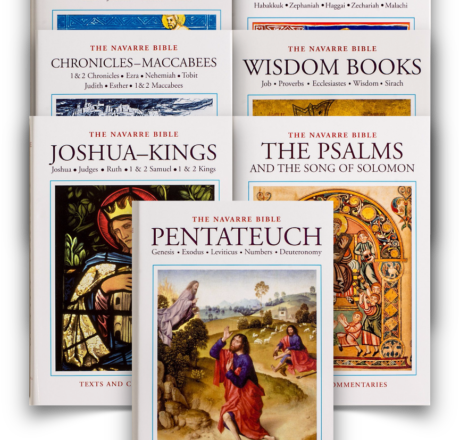
Today’s First Reading
From: Jeremiah 20:7-9
Jeremiah’s fifth “confession”
-----------------------------------
[7] O Lord, thou has deceived me,
and I was deceived;
though art stronger than I,
and thou hast prevailed.
I have become a laughingstock all the day;
and every one mocks me.
[8] For whenever I speak, I cry out,
I shout, "Violence and destruction!"
For the word of the Lord has become for me
a reproach and derision all day long.
[9] If I say, “I will not mention him,
or speak any more in his name,”
there is in my heart as it were a burning fire
shut up in my bones,
and I am weary with holding it in,
and I cannot.
*************************************************
Commentary:
20:7-18. This last, very dramatic “confession” is one of the most impressive passages in prophetical literature. It (especially vv. 14-18) has features in common with Job 3:1-10. It could have been uttered around 605-604 BC when Jeremiah was being persecuted by King Jehoiakim. Despite all his efforts, Jeremiah feels that he has failed; he believes in God – but could it be that he never received a special call? It is a time of inner crisis for Jeremiah. He laments his vocation, for it has led to his persecution (vv. 7-9); then he makes an act of trust in God despite the harassment he is suffering (vv. 10-13); the passage ends with a series of imprecations (vv. 14-18).
The prophet confides his feelings to God and complains about his calling (v. 7a). It looks as if God has misled him (v. 7b): the prophet has made enemies on every side. When he proclaims the word of God no one listens: reproach and derision are the only response he gets (v. 10). He would like to walk away. Yet he cannot, for God is like a “burning fire” in his heart (v. 9). Despite all his difficulties, his zeal for the Lord wins the day: it only goes to prove that those who have experienced desire to make him known to others – those who once knew him and have forgotten him, and to those who have never heard of him. That is the message that Theodoret of Cyrus takes from this passage, recalling the example of St. Paul: “The same happened to St. Paul as he stood in silence in Athens. His soul burned within him when he saw the terrible idolatry that was practiced in that city (cf. Acts 17:16). The prophet had the same experience” (“Interpretatio in Jeremiam”, 20, 9). And when Origen reads this passage and asks himself whether God could ever deceive someone, he explains: “We are little children, and we must be treated as little children. God, therefore, entrances us in order to form us, although we may not be aware of this captivation before the appropriate time comes. God does not deal with us as people who have already left childhood, who can no longer be led by sweet words but only by deeds” (“Homiliae in Jeremiam”, 19, 15).
In spite of everything, Jeremiah is sure that God will never forsake him (v. 11). From what he says, we can see that there is an inner tension between his experience of all kinds of sufferings (vv. 14-18) and the conviction that God will never leave him (vv. 12-13). What he says in v. 18 could suggest that he is utterly depressed, but what he is doing is baring his soul to someone whom he loves and trusts entirely, even in the midst of total darkness and a sense of powerlessness. Events will show this to be the case: Jeremiah did not give up his ministry but persevered in it to the end of his life. He admits his limitations but he stays true to God: this bears out what the Lord will tell St. Paul when he feels the situation is beyond him: “My power is made perfect in your weakness” (2 Cor 12:9).
Meditating on this “confession” of Jeremiah, St. John of the Cross concludes that sometimes God’s purposes are impossible to understand: “It is very difficult to attempt to understand fully the words and deeds of God, or even to decide what they may be, without falling often into error or becoming very confused. The prophets who were entrusted with the word of God knew this well; their task of prophesying to the people was a daunting one, for the people could not always see what was spoken coming to pass. Therefore, they mocked and laughed at the prophets, as Jeremiah says: I have become a laughingstock all the day; every one mocks me (20:7). Although the prophet speaks as though resigned to his fate, in the voice of a weak man who is unable to bear any longer the vicissitudes of God, he makes clear the difference between the prophecy and its fulfillment and the common sense that the divine sayings contain, because he knows that the prophets were often taken as mischief-makers” (“Ascent of Mount Carmel”, 2, 20, 6).
From: Romans 12:1-2
Solidarity in the Mystical Body
-------------------------------------
[1] I appeal to you therefore, brethren, by the mercies of God, to present your bodies as a living sacrifice, holy and acceptable to God, which is your spiritual worship.[2] Do not be conformed to this world but be transformed by the renewal of your mind, that you may prove what is the will of God, what is good and acceptable and perfect.
***********************************************************************
Commentary:
1. In the New Testament Christians are clearly called to offer sacrifices to God--no longer sacrifices of animals, as in the Old Law, but offerings of themselves. This new kind of worship must take a spiritual form, as Jesus told the Samaritan woman, rather than a purely material form: it must be something living, holy, not merely external and formal, and pleasing to God (cf. Jn 4:23). "It is by the apostolic preaching of the Gospel that the people of God is called together and gathered so that all who belong to this people, sanctified as they are by the Holy Spirit, may offer themselves 'a living sacrifice, holy and acceptable to God' (Rom 12:1)" (Vatican II, "Presbyterorum Ordinis", 2).
The basis of this priestly meaning of Christian life is to be found in the sacrament which makes us members of Christ's body: "Through Baptism all of us have been made priests of our lives, 'to offer spiritual sacrifices acceptable to God through Jesus Christ' (1 Pet 2:5). Everything we do can be an expression of our obedience to God's will and so perpetuate the mission of the God-man" (St. J. Escriva, "Christ Is Passing By", 96).
Every day the Christian can and should offer himself along with Christ in the Holy Mass: "If the oblation whereby the faithful in this Sacrifice offer the divine victim to the heavenly Father is to produce its full effect [...] they must also offer themselves as victim, desiring intensely to make themselves as like as possible to Jesus Christ who suffered so much, and offering themselves as a spiritual victim with and through the High Priest himself" (Pius XII, "Mediator Dei", 25). From this it follows that the whole Christian life and the struggle which it implies are imbued with deep priestly significance: "If I renounce everything I possess, if I carry the cross and follow Christ, I have offered a holocaust on the altar of God, or if I burn up my body in the fire of charity [...] I have offered a holocaust on the altar of God [...]; if I mortify my body and abstain from all concupiscence, if the world is crucified unto me and not me unto the world, then I have offered a holocaust on the altar of God and I am become a priest of my own sacrifice" (Origen, "In Lev. Hom.", 9, 9).
From: Matthew 16:20-23
Peter's Profession of Faith and His Primacy (Continued)
--------------------------------------------------------------------
[20] Then He strictly charged the disciples to tell no one that He was the Christ.
Jesus Foretells His Passion and Resurrection
------------------------------------------------------
[21] From that time Jesus began to show His disciples that He must go to Jerusalem and suffer many things from the elders and chief priests and scribes, and be killed, and on the third day be raised. [22] And Peter took Him and began to rebuke Him, saying, "God forbid, Lord! This shall never happen to You." [23] But He turned and said to Peter, "Get behind Me, Satan! You are a hindrance to Me; for you are not on the side of God, but of men."
[24] Then Jesus told His disciples, "If any man would come after Me, let him deny himself and take up his cross and follow Me. [25] For whoever would save his life will lose it, and whoever loses his life for my sake will find it. [26] For what will it profit a man, if he gains the whole world and forfeits his life? Or what shall a man give in return for his life? [27] For the Son of Man is to come with His angels in the glory of His Father, and then He will repay every man for what he has done.
***********************************************************************
Commentary:
23. Jesus rejects St. Peter's well-intentioned protestations, giving us to understand the capital importance of accepting the cross if we are to attain salvation (cf. 1 Corinthians 1:23-25). Shortly before this (Matthew 16:17) Jesus had promised Peter: "Blessed are you, Simon"; now He reproves him: "Get behind me, Satan." In the former case Peter's words were inspired by the Holy Spirit, whereas what he says now comes from his own spirit which he has not yet sloughed off.
24. "Divine love, `poured into our hearts by the Holy Spirit who has been given to us' (Romans 5:5), enables lay people to express concretely in their lives the spirit of the Beatitudes. Following Jesus in His poverty, they feel no depression in want, no pride in plenty; imitating the humble Christ, they are not greedy for vain show (cf. Galatians 5:26). They strive to please God rather than men, always ready to abandon everything for Christ (cf. Luke 14:26) and even to endure persecution in the cause of right (cf. Matthew 5:10), having in mind the Lord's saying? `If any man wants to come after Me, let him deny himself and take up his cross and follow Me'" (Matthew 16:24) ("Apostolicam Actuositatem", 4).
25. A Christian cannot ignore these words of Jesus. He has to risk, to gamble, this present life in order to attain eternal life: "How little a life is to offer to God!" (St J. Escriva, "The Way", 420).
Our Lord's requirement means that we must renounce our own will in order to identify with the will of God and so to ensure that, as St. John of the Cross comments, we do not follow the way of those many people who "would have God will that which they themselves will, and are fretful at having to will that which He wills, and find it repugnant to accommodate their will to that of God. Hence it happens to them that oftentimes they think that that wherein they find not their own will and pleasure is not the will of God; and that, on the other hand, when they themselves find satisfaction, God is satisfied. Thus they measure God by themselves and not themselves by God" ("Dark Night of the Soul", Book 1, Chapter 7, 3).
26-27. Christ's words are crystal-clear: every person has to bear in mind the Last Judgment. Salvation, in other words, is something radically personal: "He will repay every man for what he has done" (verse 27).
Man's goal does not consist in accumulating worldly goods; these are only means to an end; man's last end, his ultimate goal, is God Himself; he possesses God in advance, as it were, here on earth by means of grace, and possesses him fully and forever in Heaven. Jesus shows the route to take to reach this destination--denying oneself (that is, saying no to ease, comfort, selfishness and attachment to temporal goods) and taking up the cross. For no earthly--impermanent--good can compare with the soul's eternal salvation. As St. Thomas expresses it with theological precision, "the least good of grace is superior to the natural good of the entire universe" ("Summa Theologiae", I-II, q. 113, a. 9).
The Month of August is Dedicated to the Immaculate Heart of Mary

“In the sixth month the angel Gabriel was sent from God to a city of Galilee named Nazareth, to a virgin betrothed to a man whose name was Joseph, of the house of David; and the virgin’s name was Mary. And he came to her and said, “Hail, full of grace, the Lord is with you!”” (Luke 1:26-28)

Pope Leo XIV’s prayer intention for the month of August, 2026:
For evangelization in the city
Let us pray that in large cities often marked by anonymity and loneliness we find new ways to proclaim the Gospel, discovering creative paths to build community.

Disclaimer: Opinions posted on Free Republic are those of the individual posters and do not necessarily represent the opinion of Free Republic or its management. All materials posted herein are protected by copyright law and the exemption for fair use of copyrighted works.


