
Posted on 08/28/2026 10:32:07 PM PDT by fidelis
Memorial of the Passion of Saint John the Baptist
Herod was the one who had John the Baptist arrested and bound in prison on account of Herodias, the wife of his brother Philip, whom he had married. John had said to Herod, “It is not lawful for you to have your brother’s wife.” Herodias harbored a grudge against him and wanted to kill him but was unable to do so. Mark 6:17–19
Today’s memorial recalls one of the most appalling acts of murder the world has ever known, surpassed only by the crucifixion of the Son of God. Saint John the Baptist stands as a towering figure in Salvation History. Though God raised up many prophets from the time of Israel’s founding, none was greater than John, as our Lord Himself declared, “Among those born of women there has been none greater than John the Baptist” (Matthew 11:11).
John was miraculously conceived by elderly parents, Zechariah and Elizabeth, after long years of barrenness. The Archangel Gabriel foretold his birth, identifying him as the one who would go before the Lord “in the spirit and power of Elijah” (Luke 1:17). According to ancient Christian tradition, John was sanctified in his mother’s womb at the moment of the Visitation. When the Blessed Virgin Mary, newly pregnant with the Son of God, greeted her kinswoman Elizabeth, “the infant leaped in her womb,” and Elizabeth was “filled with the Holy Spirit” (Luke 1:41).
From the desert, John preached repentance, preparing hearts for the coming of the Messiah. But his boldness went beyond gentle invitations to conversion. He confronted the most powerful of his time, publicly rebuking Herod Antipas for his unlawful union with Herodias, his brother’s wife. This courageous act of prophetic truth-telling cost John his freedom and, ultimately, his life.
Herodias’ vengeful hatred reveals the darkened heart of one who obstinately persists in grave sin when confronted by truth. She could not bear John’s righteous rebuke. Herod, by contrast, was conflicted. He feared John, recognizing him as a holy and righteous man, and was even drawn to his preaching. But Herod lacked the moral courage to follow the truth. Enslaved by lust, pride, and concern for human opinion, he chose instead to silence the prophet through a cowardly act of murder at a banquet steeped in vanity and sensuality.
Why would God permit the greatest of the prophets to suffer such a horrific death at the hands of evil? Because John’s ultimate witness was not in his words or baptism alone, but in his martyrdom. His death became his greatest sermon, proclaiming through blood that the Messiah he heralded would also be slain by the wicked. Though John’s disciples grieved his death—and Jesus Himself withdrew in sorrow when He heard the news—today the Church rejoices in the heroic witness of this great saint.
Reflect today on your own willingness to imitate Saint John’s bold fidelity. How far are you willing to go to proclaim the Gospel to those who need it most? No sacrifice is too great, no cost too high when it comes to responding to Christ’s call. Give everything for the Truth, and your witness will bear eternal fruit.
My sorrowful Lord, Your Heart was grieved at the death of Saint John the Baptist, yet it also rejoiced in his unwavering fidelity to the truth he proclaimed with boldness and love. Fill me, too, with the spirit and power of Elijah, that I may carry on the proclamation of salvation in the way You have called me, even to the shedding of my blood, if You so will. Jesus, I trust in You.
Please keep in mind that this is a Catholic Caucus/Devotional thread for the purpose of prayerful reflection on the Sacred Scriptures and is closed to debate of any kind. Per FR policy on Religion Caucus threads, off-topic, argumentative, and abusive comments are not allowed and will be submitted to the Mods for deletion. Thanks, and God bless you.
Today’s First Reading
From: 1 Corinthians 1:26-31
The Wisdom of the Cross (Continuation)
--------------------------------------
[26] For consider your call, brethren; not many of you were wise according to worldly standards, not many were powerful, not many were of noble birth; [27] but God chose what is foolish in the world to shame the wise, God chose what is weak in the world to shame the strong. [28] God chose what is low and despised in the world, even things that are not, to bring to nothing things that are, [29] so that no human being might boast in the presence of God. [30] He is the source of your life in Christ Jesus, whom God made our wisdom, our righteousness and sanctification and redemption; [31] therefore, as it is written, "Let him who boasts, boast of the Lord."
*****************************************
Commentary:
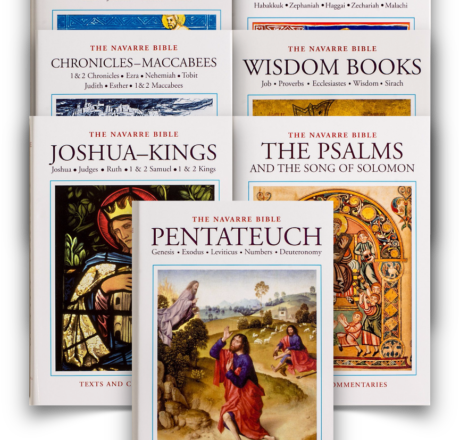
26-29. As in the case of the Apostles "You did not choose me, but I chose you" (Jn 15:16)--it is the Lord who chooses, who gives each Christian his vocation. St Paul emphasizes that the initiative lies with God by saying three times that it was God who chose those Corinthians to be Christians, and he did not base his choice on human criteria. Human wisdom, power, nobility, these were not what brought them to the faith--nor the inspirations which God later gives. "God is no respecter of persons (cf. 2 Chron 19:7; Rom 2:1; Eph 6:9; Col 3:25; etc.)", St. J. Escriva reminds us. "When he invites a soul to live a life fully in accordance with the faith, he does not set store by merits of fortune, nobility, blood or learning. God's call precedes all merits [...]. Vocation comes first. God loves us before we even know how to go toward him, and he places in us the love with which we can respond to his call" ("Christ Is Passing By", 33).
Thus, God chooses whomever he wants to, and these first Christians-- uneducated, unimportant, even despised people, in the world's eyes-- will be what he uses to spread his Church and convert the wise, the strong and the "important": this disproportion between resources and results will make it quite clear that God is responsible for the increase.
However, this does not mean that none of the first Christians was educated or influential, humanly speaking. The Acts of the Apostles, for example, tell us about early converts who were out of the ordinary --a minister of the court of the Kandake of Ethiopia; a centurion, Cornelius; Apollos; Dionysius the Areopagite; etc. "It would appear that worldly excellence is not godly unless God uses it for his honor. And therefore, although at the beginning they were indeed few, later God chose many humanly outstanding people for the ministry of preaching. Hence the gloss which says, 'If the fisherman had not faithfully led the way, the orator would not have humbly followed"' (St Thomas Aquinas, "Commentary on 1 Cor, ad loc".).
27. St Paul's words remind us that supernatural resources are the thing an apostle must rely on. It is true that human resources are necessary, and God counts on them (cf. 1 Cor 3:5-10); but the task God has commended to Christians exceeds their abilities and can be carried out only with his help. The Second Vatican Council reminded priests of this verse, when stressing the need for humility; and what it says can be useful to all Christians: "The divine task for the fulfillment of which they have been set apart by the Holy Spirit (cf. Acts 13:2) transcends all human strength and human wisdom; for 'God chose what is weak in the world to shame the strong' (1 Cor 1:27). Therefore the true minister of Christ is conscious of his own weakness and labors in humility. He tries to discover what is well-pleasing to God (cf. Eph 5:10) and, bound as it were in the Spirit (cf. Acts 20:22), he is guided in all things by the will of him who wishes all men to be saved. He is able to discover and carry out that will in the course of his daily routine by humbly placing himself at the service of all those who are entrusted to his care by God in the office that has been committed to him and the variety of events that make up his life" ("Presbyterorum Ordinis", 15).
From: Mark 6:17-29
John the Baptist Beheaded
--------------------------------
[17] For Herod had sent and seized John, and bound him in prison for the sake of Herodias, his brother Philip's wife; because he had married her. [18] For John said to Herod, "It is not lawful for you to have your brother's wife." [19] And Herodias had a grudge against him, and wanted to kill him. But she could not, [20] for Herod feared John, knowing that he was a righteous and holy man, and kept him safe. When he heard him, he was much perplexed; and yet he heard him gladly. [21] But an opportunity came when Herod on his birthday gave a banquet for his courtiers and officers and the leading men of Galilee. [22] For when Herodias' daughter came in and danced, she pleased Herod and his guests; and the king said to the girl, "Ask me for whatever you wish, and I will grant it." [23] And he said to her, "Whatever you ask me, I will give you, even half of my kingdom." [24] And she went out, and said to her mother, "What shall I ask?" And she said, "The head of John the Baptizer." [25] And she came in immediately with haste to the king, and asked, saying, "I want you to give me at once the head of John the Baptizer on a platter." [26] And the king was exceedingly sorry; but because of his oath and his guests he did not want to break his word to her. [27] And immediately the king sent a soldier of the guard and gave him orders to bring his head. He went and beheaded him in prison, [28] and brought his head on a platter, and gave it to the girl; and the girl gave it to her mother. [29] When his disciples heard of it, they came and took his body, and laid it in a tomb.
***********************************************************************
Commentary:
16-29. It is interesting that the extensive account of the death of John the Baptist is inserted here in the Gospel narrative. The reason is St. John the Baptist's special relevance in the history of salvation: he is the Precursor, entrusted with the task of preparing the way for the Messiah. Besides, John the Baptist had a great reputation among the people: they believed him to be a prophet (Mark 11:32); some even thought he was the Messiah (Luke 3:15; John 1:20); and they flocked to him from many places (Mark 1:5). Jesus Himself said: "Among those born of women there has risen no one greater than John the Baptist" (Matthew 11:11). Later, the Apostle St. John will speak of him in the Gospel: "There was a man sent from God, whose name was John" (John 1:6); but the sacred text points out that, despite this, he was not the light, but rather the witness to the light (John 5:35). We are told here that he was a righteous man and preached to everyone what had to be preached: he had a word for people at large, for publicans, for soldiers (Luke 3:10-14); for Pharisees and Sadducees (Matthew 3:7-12); for King Herod himself (Mark 6: 18-20). This humble, upright and austere man paid with his life for the witness he bore to Jesus the Messiah (John 1:29 and 36-37).
26. Oaths and promises immoral in content should never be made, and, if made, should never be kept. This is the teaching of the Church, which is summed up in the "St. Pius X Catechism", 383, in the following way: "Are we obliged to keep oaths we have sworn to do unjust and unlawful things? Not only are we not obliged: we sin by making such oaths, for they are prohibited by the Law of God or of the Church.
The Month of August is Dedicated to the Immaculate Heart of Mary

“In the sixth month the angel Gabriel was sent from God to a city of Galilee named Nazareth, to a virgin betrothed to a man whose name was Joseph, of the house of David; and the virgin’s name was Mary. And he came to her and said, “Hail, full of grace, the Lord is with you!”” (Luke 1:26-28)

Pope Leo XIV’s prayer intention for the month of August, 2026:
For evangelization in the city
Let us pray that in large cities often marked by anonymity and loneliness we find new ways to proclaim the Gospel, discovering creative paths to build community.

Disclaimer: Opinions posted on Free Republic are those of the individual posters and do not necessarily represent the opinion of Free Republic or its management. All materials posted herein are protected by copyright law and the exemption for fair use of copyrighted works.

