
Posted on 08/26/2026 10:43:33 PM PDT by fidelis
Memorial of Saint Monica
“Who, then, is the faithful and prudent servant, whom the master has put in charge of his household to distribute to them their food at the proper time? Blessed is that servant whom his master on his arrival finds doing so. Amen, I say to you, he will put him in charge of all his property.”Matthew 24:46–47
In the verse that follows, Jesus contrasts the “faithful and prudent servant” with a “wicked servant.” The wicked servant is the one who says in his heart, “My master is long delayed.” Believing this, he acts sinfully. Convinced that his master’s return is far off, the wicked servant lowers his guard, mistreats others, indulges in excess, and neglects his responsibilities. Why? Because he foolishly concludes that such a way of living is more desirable than a life of fidelity. This deceptive reasoning is rooted in a lie and ultimately leads to misery and destruction.
Most people do not choose sin because they desire misery. Rather, they sin because they fail to grasp the surpassing worth and eternal reward of holiness. They mistakenly believe—often without full awareness—that sin will bring greater satisfaction. On a superficial and momentary level, that may seem to be the case. It is easier to indulge the flesh, lash out in anger, or ignore one’s duties than it is to practice virtue, self-restraint, and discipline.
But is that which is easier necessarily better? More pointedly, is the path of least resistance ever the road to deep and lasting fulfillment? The Gospel offers a clear answer: no.
The faithful and prudent servant, who labors with diligence even during the master’s absence, is the one to whom the master will entrust everything. The reward of fidelity far exceeds the fleeting comforts of sin. What appears easier often leads to ruin, while the more demanding path of virtue leads to glory.
This truth is easy to affirm intellectually but much harder to live out daily. To live faithfully, diligently, and prudently requires perseverance and sacrifice. But it is always worth it—both in the present moment and in eternity. Consider the present moment: Though sin may tempt us with immediate pleasure, the peace that flows from doing God’s will is far greater than any passing pleasure that sin offers. Those who embrace a life of virtue become increasingly aware of God’s abiding presence and the dignity it confers. This spiritual joy far surpasses the shallow consolations of sin.
As time moves forward, the contrast becomes even more striking. The one who chooses faithfulness day after day becomes like a flourishing vine, bearing fruit in abundance. As virtue matures, temptation loses its grip, and the soul becomes deeply rooted in truth. On the other hand, those who live for momentary indulgence discover that even sinful pleasures lose their appeal. The soul, unsatisfied, becomes restless—seeking ever more desperate forms of gratification.
Reflect today on how this truth challenges any habits or temptations that lead you down the easier path of self-indulgence. Consider where compromise may have crept into your daily life, and resolve instead to be the faithful and prudent servant, living with integrity, even when no one is watching. This is the way of holiness and the path to peace, authentic joy, and eternal glory in the presence of your Master.
My Lord and Master, the holiness to which I am called, demands vigilance, fidelity, and prudence, day and night. You continuously come to me, offering the grace I need to live according to Your will. May I be like the faithful and prudent servant, always ready to give an account of my life, and may I find joy and true satisfaction in daily obedience to You. Jesus, I trust in You.
Please keep in mind that this is a Catholic Caucus/Devotional thread for the purpose of prayerful reflection on the Sacred Scriptures and is closed to debate of any kind. Per FR policy on Religion Caucus threads, off-topic, argumentative, and abusive comments are not allowed and will be submitted to the Mods for deletion. Thanks, and God bless you.
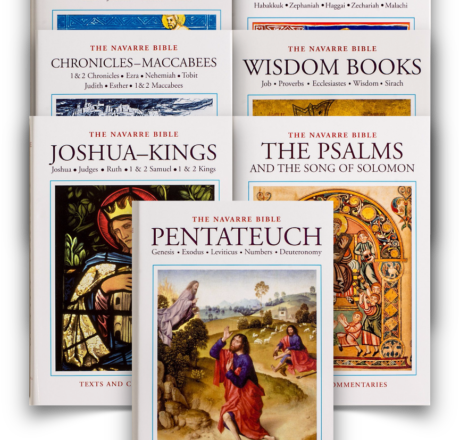
Today’s First Reading
From: 1 Corinthians 1:1-9
Greeting
----------
[1] Paul, called by the will of God to be an apostle of Christ Jesus, and our brother Sosthenes,
[2] To the church of God which is at Corinth, to those sanctified in Christ Jesus, called to be saints together with all those who in every place call on the name of the Lord Jesus Christ, both their Lord and ours:
[3] Grace to you and peace from God our Father and the Lord Jesus Christ.
Thanksgiving
----------------
[4] I give thanks to God always for you because of the grace of God which was given you in Christ Jesus, [5] that in every way you were enriched in him with all speech and all knowledge [6] even as the testimony to Christ was confirmed among you--[7] so that you are not lacking in any spiritual gift, as you wait for the revealing of our Lord Jesus Christ; [8] who will sustain you to the end, guiltless in the day of our Lord Jesus Christ. [9] God is faithful, by whom you were called into the fellowship of his Son, Jesus Christ our Lord.
***********************************************************************
Commentary:
1-9. With slight variations almost all St Paul's letters begin in the same kind of way: there is a greeting (vv. 1-3), which carries the name of the writer, information on the addressee(s), and the conventional phrase; and an act of thanksgiving to God (vv. 4-9), in which the Apostle refers to the main qualities and endowments of the Christians to whom he is writing. By comparing his letters with other letters that have come down to us from the same period, it is quite apparent that St Paul usually begins his letters in the style of the time. yet he does not entirely follow this rigid pattern: he changes the usual opening--"Greeting!" (cf. Acts 15:23; 23:26)—to this more personal one, which has a pronounced Christian stamp: "Grace to you and peace." Also, the way in which he introduces himself and describes those he is addressing tells much more than a simple "Paul to the Corinthians: greeting!" Even his words of thanksgiving convey tenderness and warmth--and their tone is not merely human, for he attributes to God the virtues he praises in the faithful.
The Fathers of the Church have drawn attention to this characteristic of Paul's letters--the way he manages to convey a deep doctrinal message in a familiar style, nicely suited to whomever he happens to be addressing: "A doctor", St John Chrysostom explains, "does not treat the patient in the same way at the start of his illness as when he is recovering; nor does a teacher use the same method with children as with those who need more advanced tuition. That is how the Apostle acts: he writes as suits the needs and the times" ("Hom. On Rom", Prologue).
1. St Paul attaches to his name three features which identify him—his divine calling; his office as Apostle of Jesus Christ; and the will of God, the source of his apostolic vocation.
"Called": this is a carefully chosen word designed to convey the vigorous and personal way God called him. He calls all men to faith, to grace, to holiness, and to heaven (cf., e.g. Rom 1:7; 1 Cor 1:2; 1:26; 7:20; Eph 1:18). By defining himself as "called" (cf. Rom 1:1), St Paul is very probably referring to the episode on the road to Damascus (cf. Acts 9:1-19), when Christ changed his life, as he had earlier changed the lives of the Twelve.
"Apostle of Christ Jesus": Paul can find no stronger expression than this to describe his mission: he is forever applying this title to himself--thirty-five times by our reckoning. This fact of his apostleship is the basis of his authority—authority to praise, teach, admonish and correct orally and in writing. He is so totally identified with this mission that he has no other purpose than to pursue it; his life is dedicated to this end; all his thoughts, words and actions are aimed at achieving it. Humbly (because he once persecuted the Church: 1 Cor 15:9) and yet forthrightly (cf. 1 Cor 9:1-2) he puts himself on the same level as the Twelve as far as vocation and apostleship are concerned.
"By the will of God": the Apostle's energy and vitality are ascribable not to himself but to God, who had plans for Paul ever since he was in his mother's womb (Gal 1: 15); so much so that later in this letter he actually says, "If I preach the Gospel, that gives me no ground for boasting. For necessity is laid upon me. Woe to me if I do not preach the Gospel" (1 Cor 9:16).
"Our brother, Sosthenes": it is uncertain whether this was the same person as the ruler of the synagogue in Corinth mentioned in Acts (18:17). The prominent position given him here suggests that he was someone well-known to the community at Corinth, either for his ministry among them or because he often accompanied St Paul; he may have been the secretary, or scribe, who actually wrote the letter down (cf. 16:21).
2. "The church of God at Corinth": the addressee of the letter. The very grammar of the phrase emphasizes the fact that the Church is not the totality of the local communities: rather, each local community--here, the Christians of Corinth--represents the whole Church, which is one and indivisible: "The Apostle calls it [the community] 'the church of God' in order to show that unity is one of its essential and necessary characteristics. The Church of God is one in its members and forms nothing but a single Church with all the communities spread throughout the world, for the word 'church' does not mean schism: it means unity, harmony, concord" (St John Chrysostom, "Hom on 1 Cor", 1, "ad loc".).
In another three brush-strokes St Paul here describes those who make up the Church--those sanctified in Jesus Christ, those called to be saints, those who invoke the name of our Lord Jesus Christ.
"Those sanctified in Christ Jesus": the faithful receive at Baptism the grace which makes them a holy people (cf. Ex 19:6; 1 Pet 2:9); the participle "sanctified" implies something stable, such as is the intimate union between the individual Christian and Jesus. The formula "in Christ Jesus" here refers to the fact that the baptized are grafted on to Christ like branches attached to a wine (cf. Jn l5:1ff); this link with Christ is what makes them saints, that is, sharers in God's own holiness; and it involves a duty to strive for moral perfection. "As those who profess any art, even though they depart from its rules, are still called artists, so in like manner the faithful, although offending in many things and violating the engagements to which they had pledged themselves, are still called holy, because they have been made the people of God and have consecrated themselves to Christ by faith and Baptism. Hence, St Paul calls the Corinthians sanctified and holy, although it is certain that among them there were some whom he severely rebuked as carnal, and charged with grosser crimes" ("St Pius V Catechism", I, 10, 15).
"Called to be saints": through faith and Baptism "all Christians in any state or walk of life are called to the fullness of Christian life and to the perfection of love" (Vatican II, "Lumen Gentium", 40).
"Those who in every place call on the name of our Lord Jesus Christ": this circumlocution describes Christian believers (cf. Acts 9:14, 21; 22:16; Rom 10:12); what makes them different from others is that they worship Jesus Christ as Lord and God, in the same way as the faithful of the Old Covenant invoked the name of Yahweh. To be a member of the Church of God, therefore, it is essential that a person believe that Christ is God. "We believe in our Lord Jesus Christ, who is the Son of God. He is the eternal Word of the Father before time began, one in substance with the Father, "homoousios to Patri", through whom all things were made. He was incarnate of the Virgin Mary by the power of the Holy Spirit and was made man. 'Equal, therefore, to the Father according to his divinity, less than the Father according to his humanity, his unity deriving not from some impossible confusion of substance but from his Person"' (Paul Vl, "Creed of the People of God", 11).
3. Peace of soul, that "serenity of mind, tranquillity of soul, simplicity of heart, bond of love, union of charity" of which St Augustine spoke ("De Verb. Dom. Serm.", 58), originates in the friendship with God which grace brings with it; it is one of the fruits of the Holy Spirit (cf. Gal 5:22-23). This is the only true kind of peace: "There is no true peace, just as there is no true grace, other than the grace and peace which come from God," St John Chrysostom teaches, "Possess this divine peace and you will have nothing to fear, even if you be threatened by the direct danger, whether from men or even from the demons themselves; whereas see how everything is a cause of fear for the man who is at war with God through sin" ("Hom. on 1 Cor", 1, "ad loc".).
4-9. After the greeting, words of thanksgiving conclude the introduction to the letter, before St Paul begins the doctrinal part. He reminds the Corinthians that they owe their privileged position to God. They, like all Christians, received God's grace in Christ, and that grace has enriched them in every way, for it causes man to share in God's very nature (cf. 2 Pet 1:4), raising him to an entirely new level of existence. This transfiguration enables a person, even here, to know the perfections of God's inner life and to partake of that life--albeit in a limited, imperfect way--through the theological virtues of faith, hope and charity, which grace brings and which elevate the mind and will to know and love God, One and Three.
St Paul teaches the need to give thanks to God and he sets us an example in this regard. Obdurate sinners fail to acknowledge the benefits God gives them (cf. Rom 1:21), but Christians should always base their prayer on gratitude to God (cf. Phil 4:6). "Nothing charms God more than a heart that is grateful either on its own account or on account of others" (Chrysostom, "Hom. on 1 Cor", 2, "ad loc".).
5-6. The grace of God, mentioned in the previous verse, embraces gifts, including those to do with eloquence and knowledge. So richly does God endow the Christian that St Alphonsus exclaims: "Our wretchedness should not make us uneasy, for in Jesus crucified we shall find all richness and all grace (cf. 1 Cor 1:5, 7). The merits of Jesus Christ have enriched us with all the wealth of God and there is no grace we might desire that we cannot obtain by asking for it" ("The Love of God Reduced to Practice", chap. 3). The Fathers interpret these gifts as meaning that the Corinthians had such a good grasp of Christian teaching that they were able to express it clearly: "There are those who have the gift of knowledge but not that of speech; and there are others who have the gift of speech but not knowledge. The faithful in general, who are uneducated, know these truths, but they cannot clearly explain what they have in their soul. You on the other hand, St Paul says, are different; you know these truths and you can speak about them; you are rich in the gift of speech and in that of knowledge" (Chrysostom, "Hom. on 1 Cor", 2, "ad loc".).
8-9. "The day of our Lord': in St Paul's writings and in the New Testament generally, this refers to the day of the General Judgment when Christ will appear as Judge, clothed in glory (cf. 2 Cor 1:14; 1 Thess 5:2).
Christians actively hope that that Day will find them "blameless" (cf. Phil 1:10; 1 Thess 3:13; 5:23); the basis for this hope is God's faithfulness--an attitude frequently applied to him in the Old Testament (cf. Deut 7:9; Is 49:7) and in St Paul's letters (cf. 1 Cor 10:13; 2 Cor 1:18; 1 Thess 5:24; 2 Thess 3:3; Heb 10:23): the Covenant which God made with the chosen people was primarily a gift and a grace, but it also was a legal commitment. The Covenant was grounded on God's fidelity, which was not merely a matter of legal obligation: it involved faithful, constant love. The God's fidelity will finds its fullest expression in the Redemption brought about by Jesus Christ: "If, in fact, the reality of the Redemption," Pope John Paul II says, "in its human dimension, reveals the unheard-of greatness of man, "qui talem ac tantum meruit habere Redemptorem", at the same time "the divine dimension of the Redemption" enables us [...] to uncover the depth of that love which does not recoil before the extraordinary sacrifice of the Son, in order to satisfy the fidelity of the Creator and Father towards human beings, created in his image" ("Dives In Misericordia", 7).
From: Matthew 24:42-51
Vigilance. The Faithful Servant
--------------------------------------
(Jesus said to his disciples,) [42] "Watch therefore, for you do not know on what day your Lord is coming. [43] But know this, that if the householder had known in what part of the night the thief was coming, he would have watched and would not have let his house be broken into. [44] Therefore you also must be ready; for the Son of man is coming at an hour you do not expect.
[45] "Who then is the faithful and wise servant, whom his master has set over his household, to give them their food at the proper time? [46] Blessed is that servant whom his master when he comes will find so doing. [47] Truly, I say to you, he will set him over all his possessions. [48] But if that wicked servant says to himself, 'My master is delayed,' [49] and begins to beat his fellow servants, and eats and drinks with the drunken, [50] the master of that servant will come on a day when he does not expect him and at an hour he does not know, [51] and will punish him, and put him with the hypocrites; there men will weep and gnash their teeth."
***********************************************************************
Commentary:
42. Jesus himself draws from this revelation about the future the practical moral that a Christian needs to be on the watch, living each day as if it were his last.
The important thing is not to be speculating about when these events will happen and what form they will take, but to live in such a way that they find us in the state of grace.
51. "And will punish him [or, cut him in pieces]": this can be understood as a metaphor for "will cast him away". "Weeping and gnashing of teeth": the pains of hell.
The Month of August is Dedicated to the Immaculate Heart of Mary

“In the sixth month the angel Gabriel was sent from God to a city of Galilee named Nazareth, to a virgin betrothed to a man whose name was Joseph, of the house of David; and the virgin’s name was Mary. And he came to her and said, “Hail, full of grace, the Lord is with you!”” (Luke 1:26-28)

Pope Leo XIV’s prayer intention for the month of August, 2026:
For evangelization in the city
Let us pray that in large cities often marked by anonymity and loneliness we find new ways to proclaim the Gospel, discovering creative paths to build community.

Disclaimer: Opinions posted on Free Republic are those of the individual posters and do not necessarily represent the opinion of Free Republic or its management. All materials posted herein are protected by copyright law and the exemption for fair use of copyrighted works.


