
Posted on 08/24/2026 10:29:45 PM PDT by fidelis
Jesus said: “Woe to you, scribes and Pharisees, you hypocrites. You pay tithes of mint and dill and cummin, and have neglected the weightier things of the law: judgment and mercy and fidelity. But these you should have done, without neglecting the others. Blind guides, who strain out the gnat and swallow the camel!” Matthew 23:23–24
Over the course of yesterday, today, and tomorrow, the Church presents nearly all of Chapter 23 of Matthew’s Gospel, which contains Jesus’ powerful denunciation of the scribes and Pharisees. This confrontation took place in the Temple area during Passover week—the days leading up to His Passion and Death. After His triumphal entry into Jerusalem on what we now commemorate as Palm Sunday, Jesus spent the following days preaching, healing, and facing mounting opposition from religious leaders. He began by cleansing the Temple, overturning the tables of the moneychangers and declaring, “My house shall be a house of prayer, but you are making it a den of thieves” (Matthew 21:13). In the days that followed, He was challenged by the chief priests, scribes, Herodians, elders, and Pharisees, and He responded to each with unwavering clarity—firmly, yet lovingly rebuking them in an attempt to win them over.
In this particular encounter, Jesus condemns the scribes and Pharisees for neglecting “the weightier things of the law: judgment and mercy and fidelity,” while appearing outwardly righteous. He accuses them of being “full of plunder and self-indulgence,” revealing the dissonance between their external piety and their inner corruption. Though meticulous in tithing even the smallest herbs—mint, dill, and cummin—they ignored the heart of the law: love of God and neighbor.
Their spiritual blindness led them to fixate on minor religious details while disregarding justice and mercy. By calling them “blind guides,” Jesus exposes their failure as leaders who burden others without embracing the deeper demands of righteousness themselves.
Reflect today on the gravity of Jesus’ words. Though most of the scribes and Pharisees appear to have rejected His rebukes, they are recorded in Scripture so that every generation may apply them to their own lives. Hear them as if spoken to you—not to discourage, but to inspire conversion. While we may not mirror the scribes and Pharisees in every detail, we all benefit from confronting our own spiritual complacency. This can be a challenging exercise, but when undertaken with humility and trust—recognizing that Jesus’ words are meant to heal and draw us closer to Him—it becomes a path to deeper grace. Let His rebukes take root within you, pulling up even the smallest weeds of pride or neglect, so that true virtue may flourish.
Most merciful Lord, Your love for the scribes and Pharisees was so deep and consuming that You relentlessly pursued them, challenging the hardness of their hearts so they might turn from self-righteousness to the righteousness that comes through Your grace. Grant me the humility to receive Your loving rebukes and apply them to my own life, that I may be moved to true repentance and become fertile ground for Your transforming grace. Jesus, I trust in You.
Please keep in mind that this is a Catholic Caucus/Devotional thread for the purpose of prayerful reflection on the Sacred Scriptures and is closed to debate of any kind. Per FR policy on Religion Caucus threads, off-topic, argumentative, and abusive comments are not allowed and will be submitted to the Mods for deletion. Thanks, and God bless you.
Today’s First Reading
From: 2 Thessalonians 2:1-3a, 14-17
The Coming of the Lord
----------------------------------
[1] Now concerning the coming of our Lord Jesus Christ and our assembling to meet him, we beg you, brethren, [2] not to be quickly shaken in mind or excited, either by spirit or by word, or by letter purporting to be from us, to the effect that the day of the Lord has come. [3] Let no one deceive you in any way.
The Need for Steadfastness
----------------------------------------
[14] To this he called you through our gospel, so that you may obtain the glory of our Lord Jesus Christ. [15] So then, brethren, stand firm and hold to the traditions which you were taught by us, either by word of mouth or by letter.
[16] Now may our Lord Jesus Christ himself, and God our Father, who loved us and gave us eternal comfort and good hope through grace, [17] comfort your hearts and establish them in every good work and word.
******************************************************************
Commentary:
1-2. The main theme of the letter is given here--the timing of the second coming of the Lord. Some people had been unsettling the minds of the Thessalonians by saying that the Parousia was about to happen.
The phrase "by spirit" is a reference to people claiming to have a charismatic gift of prophecy from the Holy Spirit who were spreading their own ideas as if they came from God. Others preferred to pass off what they had to say as coming from St. Paul (orally or in writing).
Those who try to mislead the people of God by teachings contrary to Christian faith often use methods of the same sort. By twisting the meaning of Sacred Scripture (cf. Mt 4:6) they not infrequently promote wrong teaching as if it were a revelation from the Holy Spirit. The Second Vatican Council has reminded us how to identify subjective interpretation of that kind: "The task of giving an authentic interpretation, whether in its written form or in the form of Tradition, has been entrusted to the living teaching office of the Church alone. Its authority is exercised in the name of Jesus Christ" ("Dei Verbum", 10).
Even in our own day there are sects and impressionable people who put a lot of effort into working out when the second coming will take place, sometimes making specific predictions which the passage of time disproves. They are missing the main point, which is that we should be always on the watch, always ready to joyfully meet the Lord.
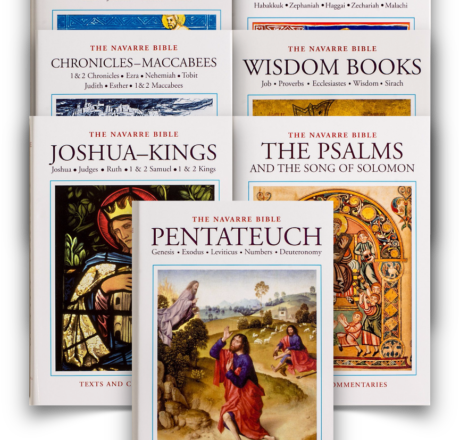
"To the effect that the day of the Lord has come": this is literally what the Greek says -- or "as if the day of the Lord is here", in the sense of "about to come any minute now". The New Vulgate [and the Navarre Spanish: trs.] translate it as "as if the day of the Lord were imminent", which is faithful to the tenor of the text and reads more clearly.
3-4. Our Lord's second coming is not imminent, for two things must happen first-- the "rebellion" and the advent of the "man of lawlessness". It is extremely difficult to make any definite predictions as to the nature of these events because the Apostle says very little about them--and nothing to indicate WHEN they may occur.
The "rebellion" or apostasy seems to suggest that a massive flight from God, affecting a substantial part of the world's population, will signal that time is coming to an end. When speaking about the fall of Jerusalem and the destruction of the temple (events prefiguring what would happen at the end of the world) Jesus himself predicted (cf. Mt 24:11-13) that this would happen. He said that most people's love would grow cold (cf. Mt 24:12), to such as extent that they would lose all knowledge of God; when their rebellion had run its course, the End would come and the general judgment would take place.
"The man of lawlessness": it is not clear whether this refers to a particular individual, someone uniquely evil, or whether this is a literary device indicating a multitude of people given over to sin and actively hostile to Christ's work in the world. It is more likely to refer to all the forces of evil taken together as a tool used by Satan to pursue his ends. "Man of lawlessness" and "son of perdition" are Semitic expressions indicating that these people have a particularly close connection with sin and with eternal perdition.
The "man of lawlessness" is a declared enemy of God who is systematically hostile to everything to do with the service of God. The Apostle stresses that he is so brazen that "he takes his seat in the temple of God", that is, insists on divine honors. He will go to great lengths to induce people to rebel against God before the end of the world, just as false prophets tried to lead people astray prior to the fall of Jerusalem (cf. Mt 24:4-5, 11, 23-24).
The description of this adversary of God is very like that of the "antichrist" whom St. John speaks of (cf. 1 Jn 2:18 and note on same).
13-14. Although there may be some people who refuse to accept the truth, the Apostle feels moved to thank God for his readers' "sanctification by the Spirit" and their "belief in the truth". This will bring them to salvation. The brethren too should thank God for choosing them, for the election shows that they are "beloved by the Lord". (On the meaning of the expression "beloved by God", see the note on 1 Thess 1:4).
The mention of the three divine Persons reminds us that salvation is the joint work of the Blessed Trinity: "God the Father" chooses the person to obtain the glory of our "Lord Jesus Christ" through the sanctifying action of the "Spirit". Man, who is submerged in sin and unable to free himself by his own efforts, is offered, by the entire Trinity, the means to attain faith, salvation and sanctification: "There was no power great enough to raise us and free us from such a catastrophic and eternal death. But God, the Creator of the human race, who is infinitely merciful, did this through his only-begotten Son. By his kindness, man was not only restored to the position and nobility whence he had fallen, but was adorned with even richer gifts. No one can express the greatness of this work of divine grace in the souls of men. Because of it, men, both in Sacred Scripture and in the writings of the Fathers of the Church, are described as being reborn, new creatures, sharers in the divine nature, sons of God, deified" ("Divinum Illud Munus", 9).
For the fifth time in these two short letters to the Thessalonians we find the verb "to give thanks" (cf. 1 Thess 1:2; 2:13; 5:18: 2 Thess 1:3 and 2:13). It is good to realize that in these two earliest New Testament texts there is evidence of frequent, spontaneous thanks to God for his fatherly kindness. It is not a matter of a minion thanking his master for benefits received; rather it is an expression of filial, heartfelt, joyful gratitude (cf. Jn 11:41).
"From the beginning": as the RSV note says, "other ancient authorities read "as the first converts", that is, as the first fruits--probably a reference to the fact that the church as Thessalonica was one of the first churches founded by St. Paul in Europe.
15. To avoid being led astray by unsound or unreliable teaching the thing to do is to hold fast to the faith one received and to apostolic tradition.
"Tradition": this term (cf. also 2 Thess 3:6) seems to refer to the Christian teaching St. Paul himself received which he preached to them. Elsewhere the Apostle uses a term with a more specific meaning, the "paratheke" ("deposit") of teachings concerning the Christian faith (cf. 1 Tim 6:20 and 2 Tim 1:14 and notes on same). He makes the point a number of times (cf. 1 Cor 11:23; 15:1-3) that he was not preaching his personal opinions but rather passing on truths given him as revealed doctrine. That is why he cannot allow his message to be tampered with.
"It is obvious", St. Thomas Aquinas observes, "that many things which are not written down in the Church were taught by the Apostles and therefore should be followed" ("Commentary on 2 Thess, ad loc."). Thus, the truth revealed by God is passed on through Sacred Scripture and Sacred Tradition. The Second Vatican Council teaches that both "are bound closely together, and communicate one with the other. For both of them, flowing out from the same divine well-spring, come together in some fashion to form one thing, and move towards the same goal [...]. Tradition transmits in its entirety the Word of God which has been entrusted to the apostles by Christ the Lord and the Holy Spirit. It transmits it to the successors of the apostles so that, enlightened by the Spirit of truth, they may faithfully preserve, expound and spread it abroad by their preaching. Thus it comes about that the Church does not draw her certainty about all revealed truths from the Sacred Scriptures alone. Hence, both Scripture and Tradition must be accepted and honored with equal feelings of devotion and reverence" ("Dei Verbum", 9).
From: Matthew 23:23-26
Jesus Indicts the Scribes and Pharisees
--------------------------------------------------
(Jesus said to the scribes and Pharisees,) [23] "Woe to you, scribes and Pharisees, hypocrites! for you tithe mint and dill and cummin, and have neglected the weightier matters of the law, justice and mercy and faith; these you ought to have done, without neglecting the others. [24] You blind guides, straining out a gnat and swallowing a camel!
[25] "Woe to you, scribes and Pharisees, hypocrites! for you cleanse the outside of the cup and of the plate, but inside they are full of extortion and rapacity. [26] You blind Pharisee! first cleanse the inside of the cup and of the plate, that the outside also may be clean."
***********************************************************************
Commentary:
23. Mint, dill (aniseed) and cummin were herbs the Jews used in cooking or to perfume rooms. They were such insignificant items that they were not covered by the Mosaic precept on paying tithes (Leviticus 27:30-33; Deuteronomy 14:22ff); the precept did not apply to domestic animals and the more common agricultural products such as wheat, wine and olive oil. However, the Pharisees, being so intent on showing their scrupulous observance of the Law, paid tithes even of these herbs. Our Lord does not despise or reject the Law; He is simply telling people to get their priorities right: there is no point in attending to secondary details if one is neglecting what is really basic and important-- justice, mercy and faith.
24. The Pharisees were so scrupulous about not swallowing any insect which the Law declared to be unclean that they went as far as to filter drinks through a linen cloth. Our Lord criticizes them for being so inconsistent--straining mosquitos, being so scrupulous about little things, yet quite happily "swallowing a camel", committing serious sins.
25-26. After reproaching the Pharisees for their hypocrisy in religious practice, our Lord now goes on to indict their two-facedness in matters of morality. The Jews used to perform elaborate washings of plates, cups and other tableware, in line with the regulations on legal cleansing (cf. Mark 7:1-4).
The example He chooses suggests a deeper level of meaning--concern for that moral purity which should characterize man's interior life. What is of prime importance is cleanliness of heart, an upright intention, consistency between what one says and what one does, etc.
The Month of August is Dedicated to the Immaculate Heart of Mary

“In the sixth month the angel Gabriel was sent from God to a city of Galilee named Nazareth, to a virgin betrothed to a man whose name was Joseph, of the house of David; and the virgin’s name was Mary. And he came to her and said, “Hail, full of grace, the Lord is with you!”” (Luke 1:26-28)

Pope Leo XIV’s prayer intention for the month of August, 2026:
For evangelization in the city
Let us pray that in large cities often marked by anonymity and loneliness we find new ways to proclaim the Gospel, discovering creative paths to build community.

Disclaimer: Opinions posted on Free Republic are those of the individual posters and do not necessarily represent the opinion of Free Republic or its management. All materials posted herein are protected by copyright law and the exemption for fair use of copyrighted works.

