
Posted on 08/22/2026 10:37:33 PM PDT by fidelis
Twenty-first Sunday in Ordinary Time
Jesus went into the region of Caesarea Philippi and he asked his disciples, “Who do people say that the Son of Man is?” They replied, “Some say John the Baptist, others Elijah, still others Jeremiah or one of the prophets.” He said to them, “But who do you say that I am?” Simon Peter said in reply, “You are the Christ, the Son of the living God.” Matthew 16:13–16
The symbolism associated with Caesarea Philippi is central to today’s Gospel. Located north of Jesus’ home base in Capernaum, it was a predominantly pagan city known for its shrines to false gods. One of the most prominent was Pan, after whom the region was named Panias (later Banias). Pan, a Greek god, was honored at a shrine near a large cave and spring considered the entrance to Hades. Pan was the god of nature, shepherds, flocks, wild places, fertility, and rustic music, and was often depicted as half man, half goat, with horns and hooves. He played the pan flute and was associated with lust, chaos, and sudden fear—from which we get the word panic.
Additionally, the city was the site of a temple dedicated to the late emperor, Caesar Augustus, who was worshiped as a god throughout the Roman Empire. It was into this spiritually dark pagan setting that Jesus led His disciples—on what may have been a two-day journey—for what culminated in a single, monumental question.
Jesus took the Twelve away from the comfort of their familiar fishing village and Jewish neighbors for a reason. He wanted them to answer His question not in the midst of the familiar and safe, but in a place marked by spiritual confusion and idolatry. Why? So that faith could be professed even there, and divine grace could confront the darkness that permeated the region.
At first, He asked who the people said He was. They answered, “Some say John the Baptist, others Elijah, still others Jeremiah or one of the prophets.” But then He posed the question that reached the heart of His mission: “But who do you say that I am?” This was a moment of divine testing—one which Simon passed with profound faith: “You are the Christ, the Son of the living God.” Jesus’ extraordinary and consequential response has enduring significance to this day. He declared:
“Blessed are you, Simon son of Jonah. For flesh and blood has not revealed this to you, but my heavenly Father... and the gates of the netherworld shall not prevail against it. I will give you the keys to the kingdom of heaven. Whatever you bind on earth shall be bound in heaven; and whatever you loose on earth shall be loosed in heaven” (Matthew 16:17–19).
Reflect today on the significance of the papacy. Even now, in the successor of Saint Peter, the words of Simon continue to echo throughout the world: “You are the Christ, the Son of the living God.” This is the pope’s first and most important duty—to bear witness to Christ, the Son of God. Despite the personal weaknesses of some popes and the saintliness of others, it is Jesus who established Peter and his successors as the visible foundation of the Church. Pray for the Holy Father, and trust in the timeless witness of every pope since that first moment in Caesarea Philippi—a witness upheld not by human strength, but by Christ’s own promise. To profess faith in the papacy is to profess faith in the One who instituted it and endowed it with His divine authority.
My Lord, You are the Christ, the Son of the Living God. With Simon, I profess this truth and place my faith in You, who established Simon, son of Jonah, as Peter—the rock and foundation of Your Church. I believe and profess that the gates of hell shall never prevail against the Church, not because of human strength or perfection, but because of Your eternal promise. I pray for our Holy Father, the pope, and for all his successors. Make them true and faithful witnesses to the confession first spoken by Saint Peter. Jesus, I trust in You.
Please keep in mind that this is a Catholic Caucus/Devotional thread for the purpose of prayerful reflection on the Sacred Scriptures and is closed to debate of any kind. Per FR policy on Religion Caucus threads, off-topic, argumentative, and abusive comments are not allowed and will be submitted to the Mods for deletion. Thanks, and God bless you.
First Reading
From: Isaiah 22:19-23
Oracle concerning Shebna
---------------------------------------
[19] I will thrust you from your office, and you will be cast down from your station. [20] In that day I will call my servant Eliakim the son of Hilkiah, [21] and I will clothe him with your robe, and will bind your girdle on him, and will commit your authority to his hand; and he shall be a father to the inhabitants of Jerusalem and to the house of Judah. [22] And I will place on his shoulder the key of the house of David; he shall open, and none shall shut; and he shall shut, and none shall open. [23] And I will fasten him like a peg in a sure place, and he will become a throne of honour to his father’s house.
*****************************************
Commentary:
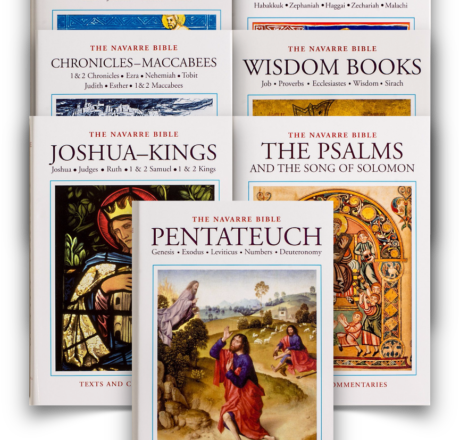
22:15-25. Shebna had a high position in the royal court, and he is mentioned in other passages (36:3, 11, 22; 37:2; and 2 Kings 18:26, 37; 19:2). He may have been a foreigner who, after occupying a senior position in Hezekiah’s palace, was replaced by Eliakim. Isaiah reproaches Shebna for being ostentatious (v. 16) and he tells him he will be dismissed from office (vv. 17-19. 25). His successor, Eliakim, son of Hilkiah (vv. 20-24), will be the official who, during the Assyrian siege of Jerusalem, heads a royal embassy charged with negotiating peace (cf. 2 Kings 18:18-19:2).
Irrespective of the historical context in which the oracle was spoken, the words of v. 22 find significant resonance in the New Testament. The first part of the verse is reminiscent of what Jesus says to Peter when giving him the “keys of the kingdom” (Mt 16:19). In this connexion it is no harm to remember that the king’s high steward, as his representative, opened and closed the official court business of the day. The text of the second part of this same verse is applied in the book of Revelation to the Messiah, “the holy one, the true, who has the key of David” (Rev 3:7), because Jesus, the Messiah, as the new David opens the doors of heaven. The Church’s liturgy, in the famous “O” antiphons prior to Christmas, extols Christ, giving him this messianic title: “Key of David and sceptre of the house of Israel, you, who reign over the whole world, come and free those who wait for you in darkness” (Divine Office, Antiphon at Vespers, 20 December).
From: Romans 11:33-36
The Conversion of the Jews (Continuation)
-----------------------------------------
[33] 0 the depth of the riches and wisdom and knowledge of God! How unsearchable are his judgments and how inscrutable his ways! [34] "For who has known the mind of the Lord, or who has been his counselor?" [35] "Or who has given a gift to him that he might be repaid?" [36] For from him and through him and to him are all things. To him be glory for ever. Amen.
***********************************************************************
Commentary:
33-36. God's admirable goodness, to both Jews and Gentiles, permitting them to disobey and then talking pity on them in their wretchedness, causes the Apostle to pour out his heart in words reminiscent of the Book of Isaiah: "For my thoughts are not your thoughts, neither are your ways my ways, says the Lord. For as the heavens are higher than the earth, so are my ways higher than your ways, and my thoughts than your thoughts" (55:8-9). The designs of divine Providence may disconcert us, may be difficult to understand; but if we remember how great God is--he is beyond our comprehension--and how God's power and faithfulness overcome any obstacle man may place in God's way we will realize that the very things which seem to frustrate his plans actually serve to forward them.
The correct attitude of man to the designs of God is one of humility. This will lead him to realize that the mysteries of God, which are intrinsically clear, seem obscure to us, simply because our mind's capacity is limited. Therefore, as Fray Luis de Granada reminds us, we must avoid saying that "something cannot be because we cannot understand it [...], for what is more in conformity with reason than to him the highest and best nature that our mind can conceive? [...] So it is that our failure to understand the sublimity of this mystery has a trace and scent of something divine, because, as we said, God being infinite must necessarily be beyond our comprehension" ("Introduccion Al Simbolo De La Fe", Part IV).
From: Matthew 16:13-20
Peter's Profession of Faith and His Primacy
-------------------------------------------
[13] Now when Jesus came into the district of Caesarea Philippi, He asked His disciples, "Who do men say that the Son of Man is?" [14] And they said, "Some say John the Baptist, others say Elijah, and others Jeremiah or one of the prophets." [15] He said to them, "But who do you say that I am?" [16] Simon Peter replied, "You are the Christ, the Son of the living God." [17] And Jesus answered him, "Blessed are you, Simon Bar-Jona! For flesh and blood has not revealed this to you, but My Father who is in Heaven. [18] And I tell you, you are Peter, and on this rock I will build My Church, and the powers of death shall not prevail against it. [19] I will give you the keys of the Kingdom of Heaven, and whatever you bind on earth shall be bound in Heaven, and whatever you loose on earth shall be loosed in Heaven." [20] Then He strictly charged the disciples to tell no one that He was the Christ.
***********************************************************************
Commentary:
13-20. In this passage St. Peter is promised primacy over the whole Church, a primacy which Jesus will confer on him after His Resurrection, as we learn in the Gospel of St. John (cf. John 21:15-18). This supreme authority is given to Peter for the benefit of the Church. Because the Church has to last until the end of time, this authority will be passed on to Peter's successors down through history. The Bishop of Rome, the Pope, is the successor of Peter.
The solemn Magisterium of the Church, in the First Vatican Council, defined the doctrine of the primacy of Peter and his successors in these terms:
"We teach and declare, therefore, according to the testimony of the Gospel that the primacy of jurisdiction over the whole Church was immediately and directly promised to and conferred upon the blessed Apostle Peter by Christ the Lord. For to Simon, Christ had said, `You shall be called Cephas' (John 1:42). Then, after Simon had acknowledged Christ with the confession, `You are the Christ, the Son of the living God' (Matthew 16:16), it was to Simon alone that the solemn words were spoken by the Lord: `Blessed are you, Simon Bar-Jona. For flesh and blood has not revealed this to you, but My Father who is in Heaven. And I tell you, you are Peter, and on this rock I will build My Church, and the powers of Hell shall not prevail against it. I will give you the keys of the Kingdom of Heaven, and whatever you bind on earth shall be bound in Heaven, and what you loose on earth shall be loosed in Heaven' (Matthew 16:17-19). And after His Resurrection, Jesus conferred upon Simon Peter alone the jurisdiction of supreme shepherd and ruler over His whole fold with the words, `Feed My lambs…Feed My sheep' (John 21:15-17) [...]
"(Canon) Therefore, if anyone says that the blessed Apostle Peter was not constituted by Christ the Lord as the Prince of all the Apostles and the visible head of the whole Church militant, or that he received immediately and directly from Jesus Christ our Lord only a primacy of honor and not a true and proper primacy of jurisdiction: let him be condemned.
"Now, what Christ the Lord, Supreme Shepherd and watchful guardian of the flock, established in the person of the blessed Apostle Peter for the perpetual safety and everlasting good of the Church must, by the will of the same, endure without interruption in the Church which was founded on the rock and which will remain firm until the end of the world. Indeed, `no one doubts, in fact it is obvious to all ages, that the holy and most blessed Peter, Prince and head of the Apostles, the pillar of faith, and the foundation of the Catholic Church, received the keys of the kingdom from our Lord Jesus Christ, the Savior and the Redeemer of the human race; and even to this time and forever he lives,' and governs, `and exercises judgment in his successors' (cf. Council of Ephesus), the bishops of the holy Roman See, which he established and consecrated with his blood. Therefore, whoever succeeds Peter in this Chair holds Peter's primacy over the whole Church according to the plan of Christ Himself [...]. For this reason, `because of its greater sovereignty,' it was always `necessary for every church, that is, the faithful who are everywhere, to be in agreement' with the same Roman Church [...]
"(Canon) Therefore, if anyone says that it is not according to the institution of Christ our Lord himself, that is, by divine law, that St Peter has perpetual successors in the primacy over the whole Church; or if anyone says that the Roman Pontiff is not the successor of St Peter in the same primacy: let him be condemned.
"We think it extremely necessary to assert solemnly the prerogative which the only-begotten Son of God deigned to join to the highest pastoral office. "And so, faithfully keeping to the tradition received from the beginning of the Christian faith, for the glory of God our Savior, for the exaltation of the Catholic religion, and for the salvation of Christian peoples, We, with the approval of the sacred council, teach and define that it is a divinely revealed dogma: that the Roman Pontiff, when he speaks "ex cathedra", that is, when, acting in the office of shepherd and teacher of all Christians, he defines, by virtue of his supreme apostolic authority, doctrine concerning faith or morals to be held by the universal Church, possesses through the divine assistance promised to him in the person of St. Peter, the infallibility with which the divine Redeemer willed His Church to be endowed in defining doctrine concerning faith or morals; and that such definitions of the Roman Pontiff are therefore irreformable because of their nature, but not because of the agreement of the Church.
"(Canon) But if anyone presumes to contradict this our definition (God forbid him to do so): let him be condemned" (Vatican I, "Pastor Aeternus", Chaps. 1, 2 and 4).
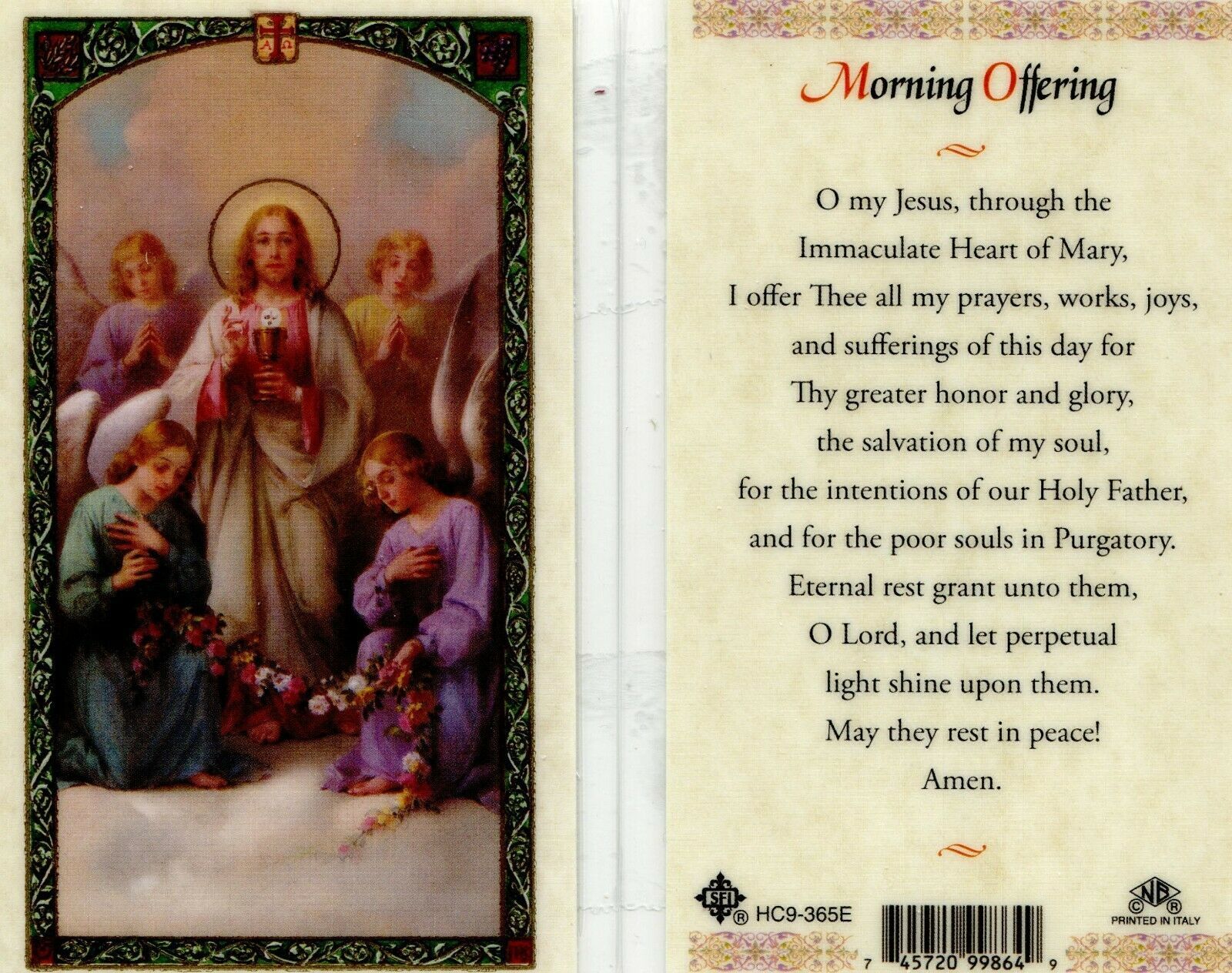
The Month of August is Dedicated to the Immaculate Heart of Mary

“In the sixth month the angel Gabriel was sent from God to a city of Galilee named Nazareth, to a virgin betrothed to a man whose name was Joseph, of the house of David; and the virgin’s name was Mary. And he came to her and said, “Hail, full of grace, the Lord is with you!”” (Luke 1:26-28)

Pope Leo XIV’s prayer intention for the month of August, 2026:
For evangelization in the city
Let us pray that in large cities often marked by anonymity and loneliness we find new ways to proclaim the Gospel, discovering creative paths to build community.

Disclaimer: Opinions posted on Free Republic are those of the individual posters and do not necessarily represent the opinion of Free Republic or its management. All materials posted herein are protected by copyright law and the exemption for fair use of copyrighted works.


