
Posted on 08/21/2026 10:37:55 PM PDT by fidelis
Memorial of the Queenship of the Blessed Virgin Mary
Jesus spoke to the crowds and to his disciples, saying, “The scribes and the Pharisees have taken their seat on the chair of Moses. Therefore, do and observe all things whatsoever they tell you, but do not follow their example. For they preach but they do not practice…” Matthew 23:1–3
What does it mean to be truly great in God’s eyes? In a world that prizes recognition, success, and honor, Jesus offers a radically different vision—one that exalts the lowly and humbles the proud.
Today’s Gospel takes place during the final week of Jesus’ earthly life as He participates in the Passover celebrations in the Temple. Throughout that week, He faced ongoing opposition and envy from the very religious leaders entrusted with guiding God’s people. Though these leaders gravely failed in their sacred duties, Jesus does not rebuke them out of resentment but with divine charity and a desire for their conversion. Of note, He does not address them directly, but speaks about them to the crowds and His disciples, humbling them through public correction. By doing so, Jesus makes it clear that His words are not merely a historical critique. They are a lasting teaching for every generation, offering timeless guidance for the Church and for every soul striving for holiness.
The scribes and Pharisees held legitimate authority. Having “taken their seat on the chair of Moses,” they were official interpreters of the Law. Jesus does not condemn the office, only the corruption of those who occupied it. The faithful are instructed to follow the teachings that conform to God’s law, even if the leaders’ lives fall short. This reminds us that the efficacy of the Church’s sacraments and teachings—entrusted today to the “chair of Peter”—depends not on the personal holiness of the minister, but on the divine authority of the office.
What Jesus does condemn is the hypocrisy of the scribes and Pharisees. They impose heavy burdens without offering help. Their religious observance is external, not flowing from hearts aflame with love. They seek titles and status—honor without humility—and in doing so, distort the very Law they claim to uphold.
Jesus contrasts this shallow religiosity with true holiness. He calls for interior conversion over external display. This message echoes the words of the prophets and resounds through the life of the Church, especially in the radiant witness of the saints. Time and again, we are reminded that humility and authenticity—not performance or prestige—mark the path of true discipleship.
Though His rebukes are sharp, the heart of Jesus’ message is love. He calls each of us to discover a higher form of greatness rooted in service, self-forgetfulness, and humility. “The greatest among you must be your servant. Whoever exalts himself will be humbled; but whoever humbles himself will be exalted” (Matthew 23:11–12). In these words, Jesus unveils the paradox of the Kingdom: To descend in humility is to ascend in glory.
Reflect today on any desires within your heart that are selfish or self-elevating rather than humble and oriented toward service. True charity always seeks the good of the other first. And paradoxically, it is precisely this self-forgetful love that brings about our own exaltation—not by our striving, but by God’s grace. Humble yourself, and God will lift you up. Exalt yourself, and your self-exaltation will be your only reward.
Lord of perfect humility, You never exalted Yourself, despite Your being the Son of God and Second Person of the Most Holy Trinity. Teach me to imitate and participate in Your humility, permitting myself to be lifted up on Your Cross, living sacrificially for You and others. In that humble, selfless, and sacrificial love, may I one day also share in Your glory. Jesus, I trust in You.
Please keep in mind that this is a Catholic Caucus/Devotional thread for the purpose of prayerful reflection on the Sacred Scriptures and is closed to debate of any kind. Per FR policy on Religion Caucus threads, off-topic, argumentative, and abusive comments are not allowed and will be submitted to the Mods for deletion. Thanks, and God bless you.
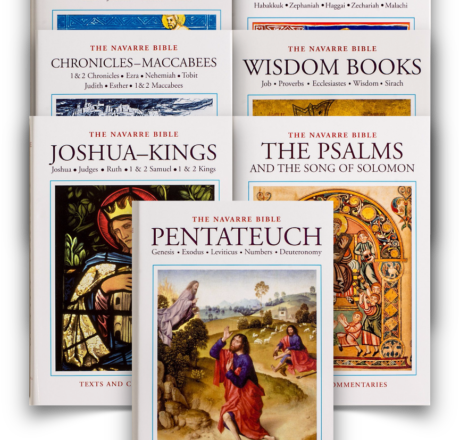
Today’s First Reading
From: Ezekiel 43:1-7ab
The glory of the Lord filling the temple
------------------------------------------------
[1] Afterward he brought me to the gate, the gate facing east. [2] And behold, the glory of the God of Israel came from the east; and the sound of his coming was like the sound of many waters, and the earth shone with his glory. And the vision I saw was like the vision which I had seen when he came to destroy the city, and like the vision which I had seen by the river Chebar; and I fell upon my face. [4] As the glory of the Lord entered the temple by the gate facing east, [5] the Spirit lifted me up, and brought me into the inner court; and behold, the glory of the Lord filled the temple.
[6] While the man was standing beside me, I heard one speaking to me out of the temple; [7] and he said to me, "Son of man, this is the place of my throne and the place of the soles of my feet, where I will dwell in the midst of the people of Israel for ever.
***************************************************************************
Commentary:
43:1-42. This is the climax of the vision: "the glory of the Lord entered the temple by the gate facing east" (v. 4), that is, by the same route it took when it left the temple and the city (cf. 10:19; 11:22-23). The renewal of the temple and the re-habilitation of the people have been completed -- so much so that there will never again be any defilement (vv. 7-9).
"I will dwell in their midst for ever" (v. 9). The presence of God is a guarantee of safety and effectiveness. Our Lord promised his disciples that he would he with them until the end of time (cf. Mt 28:20), and the Church develops in the world thanks to the presence of Jesus and the help of the Holy Spirit. "The God we seek is never far from us, because he dwells within us if we are worthy of his presence. He lives in us as the soul inhabits the body, as long as we are holy members of his Body and dead to sin. Then he will truly dwell among us" (St Columbanus, Instructiones, 1, 3).
From: Matthew 23:1-12
Vices of the Scribes and Pharisees
-----------------------------------------
[1] Then said Jesus to the crowds and to His disciples, [2] "The scribes and the Pharisees sit on Moses' seat; [3] so practice and observe whatever they tell you, but not what they do; for they preach, but do not practice. [4] They bind heavy burdens, hard to bear, and lay them on men's shoulders; but they themselves will not move them with their finger. [5] They do all their deeds to be seen by men; for they make their phylacteries broad and their fringes long, [6] and they love the place of honor at feasts and the best seats in the synagogues, [7] and salutations in the market places, and being called rabbi by men. [8] But you are not to be called rabbi, for you have one teacher, and you are all brethren. [9] And call no man your father on earth, for you have one Father, who is in Heaven. [10] Neither be called masters, for you have one master, the Christ. [11] He who is greatest among you shall be your servant; [12] whoever exalts himself will be humbled, and whoever humbles himself will be exalted."
***********************************************************************
Commentary:
1-39. Throughout this chapter Jesus severely criticizes the scribes and Pharisees and demonstrates the sorrow and compassion He feels towards the ordinary mass of the people, who have been ill-used, "harassed and helpless, like sheep without a shepherd" (Matthew 9:36). His address may be divided into three parts: in the first (verses 1-12) He identifies their principal vices and corrupt practices; in the second (verses 13-36) He confronts them and speaks His famous "woes", which in effect are the reverse of the Beatitudes He preached in Chapter 5: no one can enter the Kingdom of Heaven--no one can escape condemnation to the flames--unless he changes his attitude and behavior; in the third part (verses 37-39) He weeps over Jerusalem, so grieved is He by the evils into which the blind pride and hardheartedness of the scribes and Pharisees have misled the people.
2-3. Moses passed on to the people the Law received from God. The scribes, who for the most part sided with the Pharisees, had the function of educating the people in the Law of Moses; that is why they were said to "sit on Moses' seat". Our Lord recognized that the scribes and Pharisees did have authority to teach the Law; but He warns the people and His disciples to be sure to distinguish the Law as read out and taught in the synagogues from the practical interpretations of the Law to be seen in their leaders' lifestyles. Some years later, St. Paul--a Pharisee like his father before him--faced his former colleagues with exactly the same kind of accusations as Jesus makes here: "You then who teach others, will you not teach yourself? While you preach against stealing, do you steal? You who say that one must not commit adultery, do you commit adultery? You who abhor idols, do you rob temples? You who boast in the law, do you dishonor God by breaking the law? For, as it is written, `The name of God is blasphemed among the Gentiles because of you'" (Romans 2:21-24).
5. "Phylacteries": belts or bands carrying quotations from sacred Scripture which the Jews used to wear fastened to their arms or foreheads. To mark themselves out as more religiously observant than others, the Pharisees used to wear broader phylacteries. The fringes were light-blue stripes on the hems of cloaks; the Pharisees ostentatiously wore broader fringes.
8-10. Jesus comes to teach the truth; in fact, He is the Truth (John 14:6). As a teacher, therefore, He is absolutely unique and unparalleled. "The whole of Christ's life was a continual teaching: His silences, His miracles, His gestures, His prayer, His love for people, His special affection for the little and the poor, His acceptance of the total sacrifice on the cross for the redemption of the world, and His resurrection are the actualization of His word and the fulfillment of revelation. Hence for Christians the crucifix is one of the most sublime and popular images of Christ the Teacher.
"These considerations are in line with the great traditions of the Church and they all strengthen our fervor with regard to Christ, the Teacher who reveals God to man and man to himself, the Teacher who saves, sanctifies and guides, who lives, who speaks, rouses, moves, redresses, judges, forgives, and goes with us day by day on the path of history, the Teacher who comes and will come in glory" (John Paul II, "Catechesi Tradendae", 9).
11. The Pharisees were greedy for honor and recognition: our Lord insists that every form of authority, particularly in the context of religion, should be exercised as a form of service to others; it must not be used to indulge personal vanity or greed. "He who is the greatest among you shall be your servant".
12. A spirit of pride and ambition is incompatible with being a disciple of Christ. Here our Lord stresses the need for true humility, for anyone who is to follow Him. The verbs "will be humbled", "will be exalted" have "God" as their active agent. Along the same lines, St. James preaches that "God opposes the proud, but gives grace to the humble" (James 4:6). And in the "Magnificat", the Blessed Virgin explains that the Lord "has put down the mighty from their thrones, and exalted those of low degree [the humble]" (Luke 1:52).
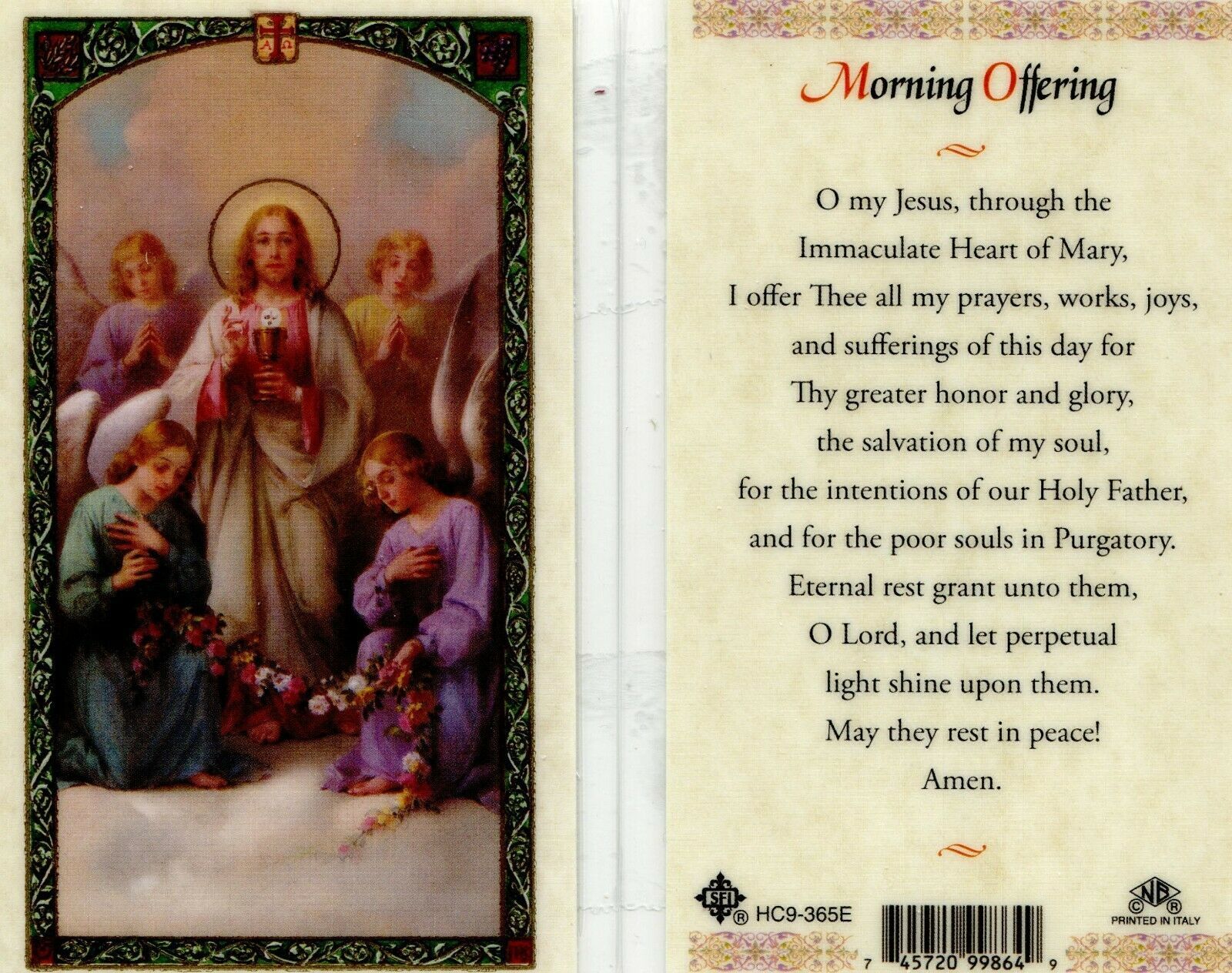
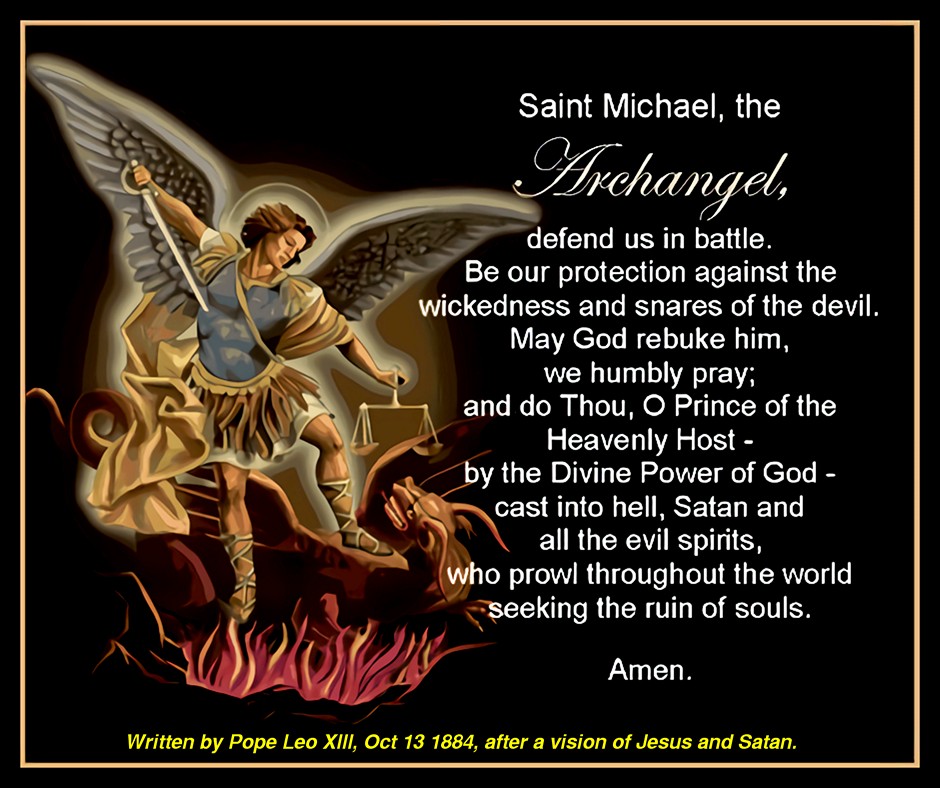
The Month of August is Dedicated to the Immaculate Heart of Mary

“In the sixth month the angel Gabriel was sent from God to a city of Galilee named Nazareth, to a virgin betrothed to a man whose name was Joseph, of the house of David; and the virgin’s name was Mary. And he came to her and said, “Hail, full of grace, the Lord is with you!”” (Luke 1:26-28)

Pope Leo XIV’s prayer intention for the month of August, 2026:
For evangelization in the city
Let us pray that in large cities often marked by anonymity and loneliness we find new ways to proclaim the Gospel, discovering creative paths to build community.

Disclaimer: Opinions posted on Free Republic are those of the individual posters and do not necessarily represent the opinion of Free Republic or its management. All materials posted herein are protected by copyright law and the exemption for fair use of copyrighted works.

