
Posted on 08/19/2026 10:32:34 PM PDT by fidelis
Memorial of Saint Bernard, Abbot and Doctor of the Church
But when the king came in to meet the guests he saw a man there not dressed in a wedding garment. He said to him, ‘My friend, how is it that you came in here without a wedding garment?’ But he was reduced to silence. Then the king said to his attendants, ‘Bind his hands and feet, and cast him into the darkness outside, where there will be wailing and grinding of teeth.’ Many are invited, but few are chosen.” Matthew 22:11–14
Among the many layers in today’s Gospel parable, perhaps the most sobering is the image of the guest without a wedding garment. He symbolizes a soul who has received the invitation to salvation but failed to prepare interiorly. Though present at the feast, he is not clothed with the “wedding garment,” which the Church Fathers commonly interpreted as sanctifying grace adorned with charity.
Outwardly he may appear to belong, but inwardly he lacks the necessary disposition of soul.
The wedding feast represents the Kingdom of Heaven—a life of grace in the present and, ultimately, eternal union with God in glory. The invitation went first to Israel and now extends to all nations through the Church. In His mercy, God desires to fill His banquet hall. He wills that all be saved, but His justice, which works in perfect harmony with His mercy, requires proper spiritual readiness.
When the king encounters him, the guest without the garment is speechless. He cannot excuse himself; the invitation was free, the conditions clear—you must be clothed with grace and adorned with charity. As a result of his lack of preparedness, he is cast into the outer darkness. This moment reveals the fate of those who presume they are saved without genuine repentance, prayer, and a life grounded in grace.
This parable stands as a powerful warning against the sin of presumption—the false assurance that one may enter Heaven without ongoing conversion or a sincere effort to live the Gospel. It is not enough to be counted among the invited: attending Mass, bearing the name Catholic, or fulfilling outward duties. One must be inwardly transformed, clothed with grace and charity, so that the life of Christ shines from within.
Of all the sins referenced in the Gospel, none are more spiritually perilous than the sins against the Holy Spirit—presumption being counted among them (cf. CCC 1864; Mark 3:29). Presumption is grave because it twists trust in God’s mercy into a license to sin, rejecting the urgency of conversion. Presumption assumes salvation without repentance or postpones it indefinitely, hardening the heart and dulling the conscience until it is too late.
Reflect today on the man cast out from the feast. Though he was invited, he failed to be properly clothed in grace. Jesus offers this parable not to condemn, but to awaken us to the need for ongoing purification of heart. In many ways, the wedding feast is an image of our parish churches, where the banquet of the Lamb is continually offered in the Holy Eucharist. All are invited—but only those properly disposed through humility, repentance, and faith can enter fully into the joy of the Eternal Feast, which begins here and now through the worthy reception of the Eucharist. Consider your own participation in the Holy Mass and strive to adorn your soul with the beauty of charity, for without this garment of grace, we will be cast out of the eternal Banquet of Heaven.
Most merciful and just Lord, though You invite all to share in the Feast of Grace—both the Eucharist in this life and the Heavenly Banquet in the next—Your Divine Justice requires hearts properly disposed to receive Your grace. Grant me, I pray, the grace of continual repentance, that I may always remain open to the gift of sanctifying grace. May that grace transform me interiorly and bear fruit in the charity to which You call me. Jesus, I trust in You.
Please keep in mind that this is a Catholic Caucus/Devotional thread for the purpose of prayerful reflection on the Sacred Scriptures and is closed to debate of any kind. Per FR policy on Religion Caucus threads, off-topic, argumentative, and abusive comments are not allowed and will be submitted to the Mods for deletion. Thanks, and God bless you.
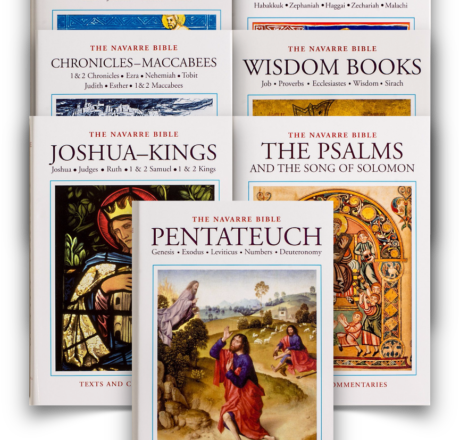
Today’s First Reading
From: Ezekiel 36:23-28
Restoration; return from exile
------------------------------------------
[23] And I will vindicate the holiness of my great name, which has been profaned among the nations, and which you have profaned among them; and the nations will know that I am the Lord, says the Lord God, when through you I vindicate my holiness before their eyes. [24] For I will take you from the nations, and gather you from all the countries, and bring you into your own land.
Inner renewal
-------------------
[25] I will sprinkle clean water upon you, and you shall be clean from all your uncleannesses, and from all your idols I will cleanse you. [26] A new heart I will give you, and a new spirit I will put within you; and I will take out of your flesh the heart of stone and give you a heart of flesh. [27] And I will put my spirit within you, and cause you to walk in my statutes and be careful to observe my ordinances. [28] You shall dwell in the land which I gave to your fathers; and you shall be my people, and I will be your God.
**************************************************************************
Commentary:
36:16-39:29. In this second last section of the book, the prophet uses a series of metaphors to paint the scene of a restored Israel. The oracles have an eschatological dimension to them, particularly the latter ones (38:1-39:29).
Overall, what we are given here is a song celebrating hope; nothing is impossible to the Lord: he is able to renew Israel (36:16-38), by giving her a new heart and a new spirit (v. 25); he can make the people come back to life (37:1-14); and the unity between this new people and their Lord will he almost like the way things were in Eden (37:15-28) -- so wonderful that it will astonish the nations (37:28). The final oracles (38:1-39:29) are a dramatic climax that convey an idea of the vicissitudes of the chosen people up to when their fortunes will be permanently restored. The empires seem to be those determining the course of events, but that is not the case: the Lord is always in control and, when the end comes, his victory will be so amazing that not only Israel but all other nations, too, will know that he truly is the Lord.
36:16-38. In these oracles, which continue the proclamation of Israel’s restoration-purification, we can see the core of Ezekiel’s teaching, namely, that the Lord, who is above all things, is the one who determines the election, punishment and restoration of his people. People have an obligation to accept the gifts that God offers; they must acknowledge that the Lord is sovereign and free, and render him due worship. This teaching can be seen in the announcement about restoration and a return to the promised land (vv. 16—24) and in the Lord’s promise of inner renewal (vv. 25-38).
“They defiled it by their ways” (v. 17): the people’s straying, their sins, defiled the promised land, the most precious of all the gifts God had given them. As Ezekiel explains it, their exile was a necessary punishment (v. 19), but it is also a condition for restoring to the land its lost honour.
“The holiness of my great name, which has been profaned among the nations” (v. 22): when the pagan nations saw the Israelites being deported, they thought that the God of Israel had been defeated or, at least, that he had failed to protect his people. In this sense the exile caused the name of the Lord to he profaned among the nations. The return of the people to the promised land was a necessary part of their deliverance (v. 24). but it was also needed to vindicate the name of the Lord (v. 22). This “theology” of the Name of God carries over into the New Testament, where we find it as a petition in the Our Father (cf. Mt 6:9; Lk 11:2, and from there it becomes part of the whole Christian tradition. The Catechism of the Council of Trent has this to say about these verses of Ezekiel: “Many people judge the truth of religion and of its Author by the deeds and lives of Christians. Those who truly profess their faith and put it into practice in their lives carry out the most valuable apostolate, provoking in others the desire to glorify the name of the heavenly Father” (Roman Catechism, 4, 10, 9).
“You shall be clean[sed]” (v. 25): Ezekiel views the renewal of Israel from the perspective of divine worship -- sprinkling with water and other purification rites being a sign of inner change. This passage can be read as an announcement of the effects of Baptism: “Baptism, by the power of God, remits and pardons all sin -- the original sin that we inherited from our first parents, and all our personal sins, no matter how grave and terrible they may seem to us, no matter how grave and terrible they were. This truth was foretold long ago by the prophet Ezekiel, through whom the Lord God spoke: I will sprinkle clean water upon you, and you shall be clean from all your uncleannesses (Ezek 36:25)” (ibid., 2, 2, 42).
“A new heart” and “a new spirit” (v. 26): renewal affects a person’s disposition (heart) and motivation (spirit). The Israelites will have a completely new life-force: as a result, their conduct will be perfect (v. 27), the Covenant will never again be broken (v. 28), and the land, also cleansed of defilement, will he abundant in the fruit it yields (v. 30).
God’s patent initiative in repatriating and renewing Israel is a proof of his disinterested love for his people. Jesus makes this very clear, for example, in his discourse on the bread of life: “No one can come to me unless the Father who sent me draws him” (Jn 6:44). “Our salvation flows from God’s initiative of love for us, because ‘he loved us and sent his Son to be the expiation for our sins’ (Jn 4:10)’’ (Catechism of the Catholic Church, 620).
From: Matthew 22:1-14
The Parable of the Marriage Feast
---------------------------------
[1] And again Jesus spoke to them in parables, saying, [2] "The kingdom of heaven may be compared to a king who gave a marriage feast for his son, [3] and sent his servants to call those who were invited to the marriage feast; but they would not come. [4] Again he sent other servants, saying, 'Tell those who are invited, Behold, I have made ready my dinner, my oxen and my fat calves are killed, and everything is ready; come to the marriage feast.' [5] But they made light of it and went off, one to his farm, another to his business, [6] while the rest seized his servants, treated them shamefully, and killed them. [7] The king was angry, and he sent his troops and destroyed those murderers and burned their city. [8] Then he said to his servants, "The wedding is ready, but those invited were not worthy. [9] Go therefore to the thoroughfares, and invite to the marriage feast as many as you find.' [10] And those servants went out into the streets and gathered all whom they found, both bad and good; so the wedding hall was filled with guests.
[11] "But when the king came in to look at the guests, he saw there a man who had no wedding garment; [12] and he said to him, 'Friend, how did you get in here without a wedding garment?' And he was speechless. [13] Then the king said to the attendants, 'Bind him hand and foot, and cast him into the outer darkness; there men will weep and gnash their teeth.' [14] For many are called, but few are chosen." ***********************************************************************
Commentary:
1-14. In this parable Jesus reveals how intensely God the Father desires the salvation of all men--the banquet is the Kingdom of heaven --and the mysterious malice that lies in willingly rejecting the invitation to attend, a malice so vicious that it merits eternal punishment. No human arguments make any sense that go against God's call to conversion and acceptance of faith and its consequences.
The Fathers see in the first invitees the Jewish people: in salvation history God addresses himself first to the Israelites and then to all the Gentiles (Acts 13:46).
Indifference and hostility cause the Israelites to reject God's loving call and therefore to suffer condemnation. But the Gentiles also need to respond faithfully to the call they have received; otherwise they will suffer the fate of being cast "into outer darkness".
"The marriage", says St Gregory the Great ("In Evangelia Homiliae", 36) "is the wedding of Christ and his Church, and the garment is the virtue of charity: a person who goes into the feast without a wedding garment is someone who believes in the Church but does not have charity."
The wedding garment signifies the dispositions a person needs for entering the Kingdom of heaven. Even though he belongs to the Church, if he does not have these dispositions he will be condemned on the day when God judges all mankind. These dispositions essentially mean responding to grace.
13. The Second Vatican Council reminds us of the doctrine of the "last things", one aspect of which is covered in this verse. Referring to the eschatological dimension of the Church, the Council recalls our Lord's warning about being on the watch against the wiles of the devil, in order to resist in the evil day (cf. Eph 6:13). "Since we know neither the day nor the hour, we should follow the advice of the Lord and watch constantly so that, when the single course of our earthly life is completed (cf. Heb 9:27), we may merit to enter with him into the marriage feast and be numbered among the blessed (cf. Mt 25:31-46) and not, like the wicked and slothful servants (cf. Mt 25:26), be ordered to depart into the eternal fire (cf. Mt 25:41), into the outer darkness where "men will weep and gnash their teeth'" ("Lumen Gentium", 48).
14. These words in no way conflict with God's will that all should be saved (cf. 1 Tim 2:4). In his love for men, Christ patiently seeks the conversion of every single soul, going as far as to die on the cross (cf. Mt 23:37; Lk 15:4-7). St Paul teaches this when he says that Christ loved us and "gave himself up for us, a fragrant offering and sacrifice to God" (Eph 5:2). Each of us can assert with the Apostle that Christ "loved me and gave himself for me" (Gal 2:20). However, God in his infinite wisdom respects man's freedom: man is free to reject grace (cf. Mt 7:13-14).
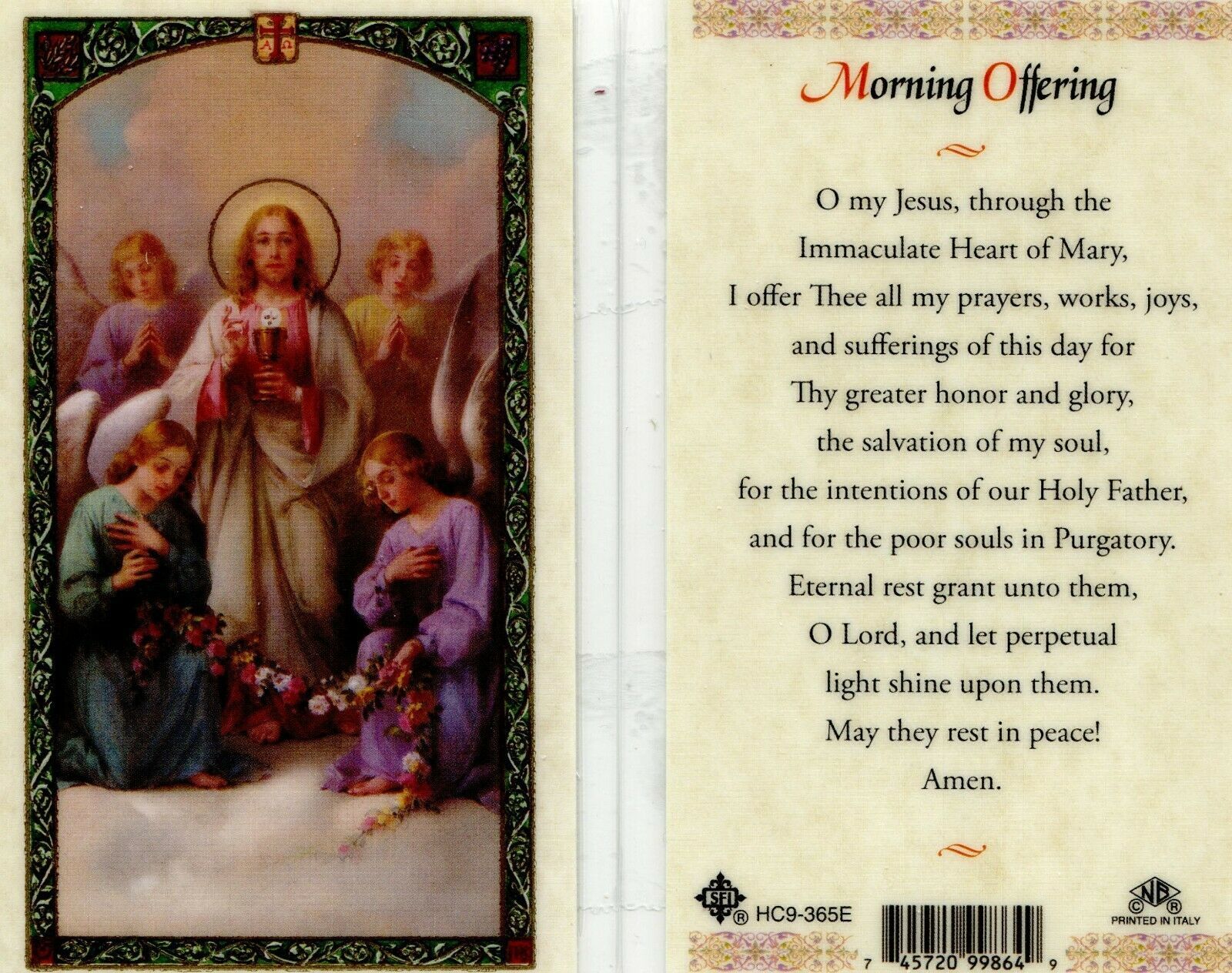
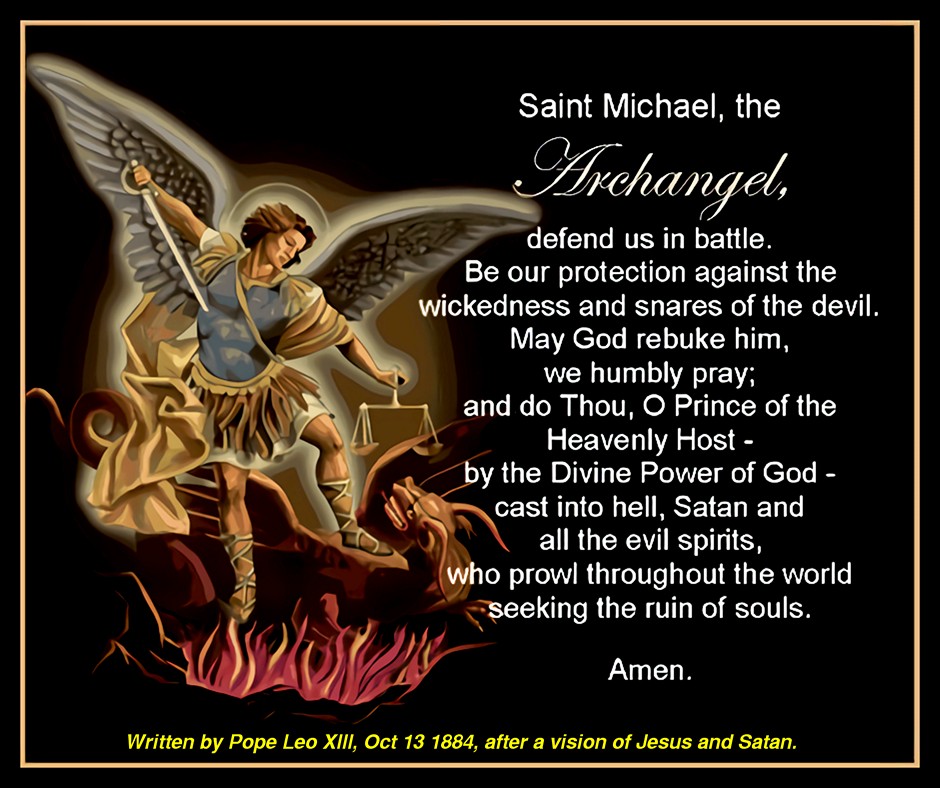
The Month of August is Dedicated to the Immaculate Heart of Mary

“In the sixth month the angel Gabriel was sent from God to a city of Galilee named Nazareth, to a virgin betrothed to a man whose name was Joseph, of the house of David; and the virgin’s name was Mary. And he came to her and said, “Hail, full of grace, the Lord is with you!”” (Luke 1:26-28)

Pope Leo XIV’s prayer intention for the month of August, 2026:
For evangelization in the city
Let us pray that in large cities often marked by anonymity and loneliness we find new ways to proclaim the Gospel, discovering creative paths to build community.

Disclaimer: Opinions posted on Free Republic are those of the individual posters and do not necessarily represent the opinion of Free Republic or its management. All materials posted herein are protected by copyright law and the exemption for fair use of copyrighted works.

