
Posted on 08/18/2026 10:00:23 PM PDT by fidelis
He said to one of them in reply, “‘My friend, I am not cheating you. Did you not agree with me for the usual daily wage? Take what is yours and go. What if I wish to give this last one the same as you? Or am I not free to do as I wish with my own money? Are you envious because I am generous?’ Thus, the last will be first, and the first will be last.” Matthew 20:13–16
Jesus certainly cares about economic justice, especially as it relates to charity and human dignity. But today’s Gospel reveals something far more profound: the mysterious and generous nature of God’s mercy. This parable is not merely about fairness in wages; it is a revelation of the Kingdom of Heaven and God’s reign as King, both now and in the New Heavens and the New Earth to come.
In the parable, the landowner goes out five times during the day to hire laborers for his vineyard—at dawn, nine o’clock, noon, three, and five. When the day ends, those who worked only one hour receive the same wage as those who labored all day. To earthly ears, this may sound unjust. Indeed, those hired first grumble. From a human point of view, one might even think, “If that’s how he pays, I’ll just come at five o’clock tomorrow.”
But this is not a lesson in labor economics; it is a lesson about the generous heart of God. The denarius, the full day’s wage, symbolizes the reward of eternal life. God does not bestow grace based on the number of hours served, but according to the depth and sincerity of each soul’s response to His invitation.
When each person stands before God in the particular judgment, God will not weigh good deeds against sins on a balance. Rather, He pierces the depths of the heart and judges according to love, by the quality of one’s conversion. It is possible that someone who faithfully attended Mass, prayed daily, and served others for many years may not have responded to grace as deeply as one who, later in life, underwent a radical and sincere conversion. The latter may have endured profound purification, grown rapidly in holiness, and entered into a more intimate union with God, despite having lived many years in spiritual complacency, or even in utter sinfulness.
God’s generosity often confounds our limited sense of justice. But His ways are not our ways (cf. Isaiah 55:8). His judgment is not about the quantity of labor but the quality of the heart—a heart that says “Yes” to grace, however late the hour.
In a sense, we should each consider today to be the final hour of the day of our life on earth. Time is short, and there is much work to be done. Just as the landowner went out again and again in search of laborers, so too does God continually seek out souls, inviting them to labor in His vineyard. That vineyard is the Church, planted amidst the world and bearing fruit for the Kingdom of Heaven.
Reflect today on how readily and generously you respond to God’s call. Do you labor with a pure heart, seeking only to please Him? Or do you struggle with jealousy and envy, tempted to compare your path to that of others? Ask our Lord for the grace to serve Him with humility, joy, and love, confident that He will reward you according to the perfection of your response to His invitation.
Most generous Lord, Your goodness is never outdone, and Your Divine Mercy is inexhaustible. I pray for all who have grown complacent in their spiritual journeys—including myself. Come to us, Lord. Invite us anew to labor in the vineyard of Your Kingdom, and give us the grace to respond wholeheartedly to Your call. May I give You my entire mind, heart, and soul in humble service to You and to others, so that Your vineyard may bear abundant and eternal fruit. Jesus, I trust in You.
Please keep in mind that this is a Catholic Caucus/Devotional thread for the purpose of prayerful reflection on the Sacred Scriptures and is closed to debate of any kind. Per FR policy on Religion Caucus threads, off-topic, argumentative, and abusive comments are not allowed and will be submitted to the Mods for deletion. Thanks, and God bless you.
Today’s First Reading
From: Ezekiel 34:1-11
Oracle against the shepherd of Israel
---------------------------------------------
[1] The word of the Lord came to me: [2] "Son of man, prophesy against the shepherds of Israel, prophesy, and say to them, even to the shepherds, Thus says the Lord God: Ho, shepherds of Israel who have been feeding yourselves! Should not shepherds feed the sheep? [3] You eat the fat, you clothe yourselves with the wool, you slaughter the fatlings; but you do not feed the sheep. [4] The weak you have not strengthened, the sick you have not healed, the crippled you have not bound up, the strayed you have not brought back, the lost you have not sought, and with force and harshness you have ruled them. [5] So they were scattered, because there was no shepherd; and they became food for all the wild beasts. [6] My sheep were scattered, they wandered over all the mountains and on every high hill; my sheep were scattered over all the face of the earth, with none to search or seek for them.
[7] "Therefore, you shepherds, hear the word of the Lord: [5] As I live, says the Lord God, because my sheep have become a prey, and my sheep have become food for all the wild beasts, since there was no shepherd; and because my shepherds have not searched for my sheep, but the shepherds have fed themselves, and have not fed my sheep; [9] therefore, you shepherds, hear the word of the Lord: [10] Thus says the Lord God, Behold, I am against the shepherds; and I will require my sheep at their hand, and put a stop to their feeding the sheep; no longer shall the shepherds feed themselves. I will rescue my sheep from their mouths, that they may not be food for them.
************************************
Commentary:
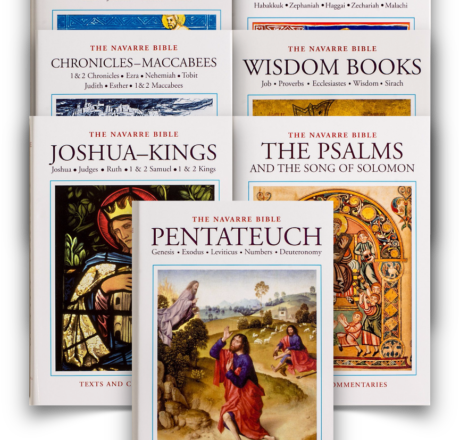
34:1-31. In some Sumerian and Egyptian texts, the image of the shepherd is sometimes applied to leading men and gods. In the Bible it is often applied to kings (1 Kings 22:17), perhaps because David began life as a shepherd (1 Sam 17:34; Ps 78:70-72), and to the Lord (cf. Ps 23:1-6; 80:2-3). The prophets, particularly Jeremiah, use the image when talking about rulers, be they kings or priests (cf Jer 2:8; 10:21; 25:34-36; Zech 11:4-17). In this first address to the exiles, Ezekiel talks about bad shepherds, that is, the evil rulers who led the people into the disaster of the exile (vv. 1-10) -- and, by contrast, he speaks of the Lord, the supreme shepherd who takes over the reins of government to rule his people without intermediaries (vv. 11-22), and of the new messiah-ruler whom God himself will place at their head: he will be their new shepherd, David, who will lead his flock to the best pastures (vv. 23-31).
Jesus found this a very appropriate image for explaining his role as Messiah and Saviour (in 10:1-18) and as Judge at the end of time (cf. Mt 25:31-46). Moreover, he confirmed his words by actions. When, at the multiplication of the loaves, he gathers those who have followed him (they are "like sheep without a shepherd": Mk 6:34: cf. Ezek 34:5), and nourishes them with bread and with the word of his teaching, he is fulfilling this prophecy of Ezekiel which promises a new king, a true shepherd, and a new Covenant. Jesus is, then, the shepherd who assembles all mankind to lead it to salvation: "He is the one who has gathered together into one flock all the holy sheep from all the nations under heaven, without neglecting any of the peoples of the earth: he carries out every day what he once promised, when he said: 'There are other sheep, that are not of this flock, and these too I will tend, and they will listen to my voice, and there will be one flock, and there will be one shepherd'" (St Leo the Great, “Sermones”, 63, 7). And as John Paul II teaches: "The figure of Jesus Christ as shepherd of the Church, his flock, takes up and represents in new and more evocative terms the same content as that of Jesus Christ as head and servant. Fulfilling the prophetic proclamation of the Messiah and saviour joyfully announced by the psalmist and the prophet Ezekiel (cf. Ps 22-23; Ezek 34:11ff), Jesus presents himself as 'the good shepherd' (Jn 10:11, 14), not only of Israel but of all humanity (cf. Jn 10:16). His whole life is a continual manifestation of his 'pastoral charity'" (“Pastores dabo vobis”, 22).
34:1-10. As is usual in condemnatory oracles, the charges are mentioned first (vv. 2 6) and then comes the sentence, which begins with the usual "Therefore" (vv. 7-10). The rulers of the people (cf. 23:23-31), that is, the princes, priests, elders and professional prophets, have exploited the people and sought their own gain. What Ezekiel says here carries a message for those who hold office in Christian communities: "In the Church of Christ, everyone is obliged to make a tenacious effort to remain loyal to the teaching of Christ. No one is exempt. If the shepherds do not themselves strive to acquire a sensitive conscience and to remain faithful to dogma and moral teaching -- which make up the deposit of faith and the inheritance of all -- then the prophetic words of Ezekiel will be borne out: 'Son of man, prophesy against the shepherds of Israel, prophesy, and say to them, even to the shepherds, thus says the Lord God: Ho, shepherds of Israel who have been feeding yourselves! [...] This is a strong reproof, but the offence against God is even worse when those who have received the task of promoting the spiritual welfare of everyone abuse souls instead, depriving them of the crystal water of baptism, which regenerates the soul; of the soothing oil of confirmation, which strengthens it; of the tribunal which pardons; of the food which gives eternal life" (St Josemaria Escrivá, “Christ Is Passing By”, 81).
From: Matthew 20:1-16
The Parable of the Laborers in the Vineyard
---------------------------------------------------------
[1] "For the Kingdom of Heaven is like a householder who went out early in the morning to hire laborers for his vineyard. [2] After agreeing with the laborers for a denarius a day, he sent them into his vineyard. [3] And going out about the third hour he saw others standing idle in the market place; [4] and to them he said, `You go into the vineyard too, and whatever is right I will give you.' So they went. [5] Going out again about the sixth hour and the ninth hour, he did the same. [6] And about the eleventh hour he went out and found others standing; and he said to them, `Why do you stand here idle all day?' [7] They said to him, `Because no one has hired us.' He said to them, `You go into the vineyard too.' [8] And when evening came, the owner of the vineyard said to his steward, `Call the laborers and pay them their wages, beginning with the last, up to the first.' [9] And when those hired about the eleventh hour came, each of them received a denarius. [10] Now when the first came, they thought they would receive more; but each of them also received a denarius. [11] And on receiving it they grumbled at the householder, [12] saying, `These last worked only one hour, and you have made them equal to us who have borne the burden of the day and the scorching heat.' [13] But he replied to one of them, `Friend, I am doing you no wrong; did you not agree with me for a denarius? [14] Take what belongs to you, and go; I choose to give to this last as I give to you. [15] Am I not allowed to do what I choose with what belongs to me? Or do you begrudge my generosity? [16] So the last will be first, and the first last."
***********************************************************************
Commentary:
1-16. This parable is addressed to the Jewish people, whom God called at an early hour, centuries ago. Now the Gentiles are also being called--with an equal right to form part of the new people of God, the Church. In both cases it is a matter of a gratuitous, unmerited, invitation; therefore, those who were the "first" to receive the call have no grounds for complaining when God calls the "last" and gives them the same reward--membership of His people. At first sight the laborers of the first hour seem to have a genuine grievance—because they do not realize that to have a job in the Lord's vineyard is a divine gift. Jesus leaves us in no doubt that although He calls us to follow different ways, all receive the same reward—Heaven.
2. "Denarius": a silver coin bearing an image of Caesar Augustus (Matthew 22:19-21).
3. The Jewish method of calculating time was different from ours. They divided the whole day into eight parts, four-night parts (called "watches") and four-day parts (called "hours")—the first, third, sixth and ninth hour.
The first hour began at sunrise and ended around nine o'clock; the third ran to twelve noon; the sixth to three in the afternoon; and the ninth from three to sunset. This meant that the first and ninth hours varied in length, decreasing in autumn and winter and increasing in spring and summer and the reverse happening with the first and fourth watches.
Sometimes intermediate hours were counted--as for example in verse 6 which refers to the eleventh hour, the short period just before sunset, the end of the working day.
16. The Vulgate, other translations and a good many Greek codices add: "For many are called, but few are chosen" (cf. Matthew 22:14).
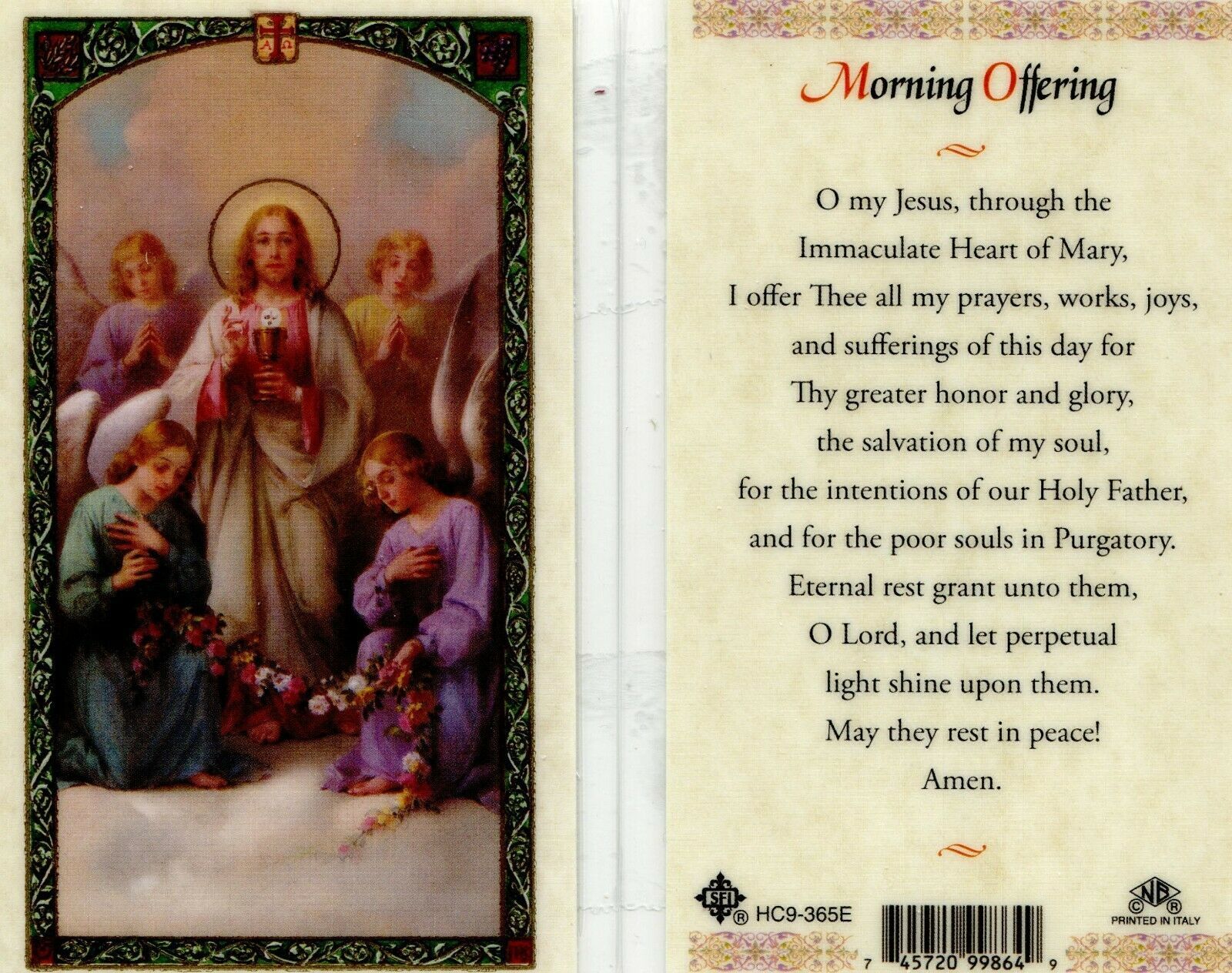
The Month of August is Dedicated to the Immaculate Heart of Mary

“In the sixth month the angel Gabriel was sent from God to a city of Galilee named Nazareth, to a virgin betrothed to a man whose name was Joseph, of the house of David; and the virgin’s name was Mary. And he came to her and said, “Hail, full of grace, the Lord is with you!”” (Luke 1:26-28)

Pope Leo XIV’s prayer intention for the month of August, 2026:
For evangelization in the city
Let us pray that in large cities often marked by anonymity and loneliness we find new ways to proclaim the Gospel, discovering creative paths to build community.

Disclaimer: Opinions posted on Free Republic are those of the individual posters and do not necessarily represent the opinion of Free Republic or its management. All materials posted herein are protected by copyright law and the exemption for fair use of copyrighted works.


