
Posted on 08/16/2026 11:11:22 PM PDT by fidelis
A young man approached Jesus and said, “Teacher, what good must I do to gain eternal life?” He answered him, “Why do you ask me about the good? There is only One who is good. If you wish to enter into life, keep the commandments.” Matthew 19:16–17
We all desire eternal life in Heaven. But do we also desire perfection while here on earth? And if so, are we truly resolved to do what it takes to attain it, or are we content with simply being pretty good? This is where the rich young man in today’s Gospel encountered difficulty.
The young man was clearly a faithful observer of the Law. When Jesus listed the commandments as the path to eternal life, he replied, “All of these I have observed.” Morally speaking, that is admirable. It reveals a sincere devotion to God’s law and a commendable commitment to righteousness.
Yet Jesus came not only to affirm the Mosaic Law but to fulfill and elevate it. When the young man pressed further, asking, “What do I still lack?” he revealed a deeper spiritual longing. Though he had faithfully followed the Law, he sensed that there was something more. Within his soul stirred a desire for greater intimacy with God.
It is here that Jesus introduced the ideal of perfection: “If you wish to be perfect…” Obedience to the Law is foundational, but it is not the culmination of the spiritual life. Jesus invites us beyond mere obedience to radical discipleship, to a life of complete detachment and wholehearted surrender. Perfection, in this sense, is not about flawlessness in behavior, but about fullness in love. The goal of Christian discipleship is not achieved merely by avoiding sin, but by entering into a pure and transforming relationship with the Triune God—a communion that draws us ever deeper into divine love.
The rich young man went away sorrowful, “for he had many possessions.” He desired eternal life and even sensed the call to something beyond the minimal moral life, but his attachments prevented him from walking the path to perfection.
This sacred encounter teaches us several important spiritual lessons. First, eternal life begins with obedience, but it blossoms through surrender. The first question to ask ourselves, in light of this Gospel, is whether we can, like the young man, honestly affirm our obedience to God’s commandments. Without that foundation, we are not yet prepared to ask, “What do I still lack?”
By God’s grace, once we do live a life of sincere obedience to the Ten Commandments, we become ready to go deeper and seek perfection. And perfection requires detachment from anything that competes with our love for Christ. Even good or morally neutral things can become obstacles if they take the place of God in our hearts.
Reflect today on the difference between obeying God’s Commandments and surrendering to Him in radical, wholehearted love. If you keep the Law, what do you still lack? What might Jesus be asking you to let go of so that you can follow Him more perfectly? Ask Him to reveal where your attachments lie. Then pray for the courage not to walk away in sadness, but to follow Him in joy and trust, wherever He leads.
Lord of every perfection, Your holiness surpasses all understanding, yet You graciously draw me to Yourself, inviting me to live in intimate union with You. Reveal to me, I pray, any obstacle that hinders my journey toward You. Grant me the grace and courage to surrender all that stands in the way of the perfection You have placed within my soul as its deepest desire. Jesus, I trust in You.
Please keep in mind that this is a Catholic Caucus/Devotional thread for the purpose of prayerful reflection on the Sacred Scriptures and is closed to debate of any kind. Per FR policy on Religion Caucus threads, off-topic, argumentative, and abusive comments are not allowed and will be submitted to the Mods for deletion. Thanks, and God bless you.
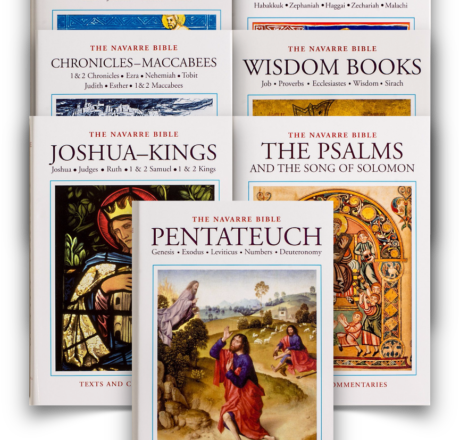
Today’s First Reading
From: Ezekiel 24:15-23
Death of Ezekiel’s wife
----------------------------
[15] Also the word of the Lord came to me: [16] Son of man, behold, I am about to take the delight of your eyes away from you at a stroke; yet you shall not mourn or weep nor shall your tears run down. [17] Sigh, but not aloud; make no mourning for the dead. Bind on your turban, and put your shoes on your feet; do not cover your lips, nor eat the bread of mourners.” [18] So I spoke to the people in the morning, and at evening my wife died. And on the next morning I did as I was commanded.
[19] And the people said to me. “Will you not tell us what these things mean for us, that you are acting thus?” [20] Then I said to them, “The word of the Lord came to me: [21] ’Say to the house of Israel, Thus says the Lord God: Behold, I will profane my sanctuary, the pride of your power, the delight of your eyes, and the desire of your soul; and your sons and your daughters whom you left behind shall fall by the sword. [22] And you shall do as I have done; you shall not cover your lips, nor eat the bread of mourners. [23] Your turbans shall be on your heads and your shoes on your feet; you shall not mourn or weep, but you shall pine away in your iniquities and groan to one another.
********************************************
Commentary:
24:15-27. The first part of the book ends here with this moving passage revealing the prophet’s feelings about the death of his wife. All this -- the sudden death of his wife, the fact that he does not publicly mourn her, his profound, silent grief – is the supreme symbol of what the siege of Jerusalem involved. Ezekiel’s wife must have been still quite young, “the delight of your eyes” (v. 16; cf. Lam 2:4), and she must have died suddenly. She is a symbol of the temple, of which the people were so proud; no one could have imagined it would he destroyed. Mourning was a function of the person’s social status and the regard in which he or she was held (cf. 2 Sam 1:2; 3:31; 14:2; 15:30, 32), but even the humblest in society would put on a veil and wear that sign of mourning at funeral meals, at the “bread of mourners” (v. 17). However, Ezekiel was not to weep for his wife; nor should the exiles show any public sign of grief; this would show that the misfortunes that befell Jerusalem were a private affair between themselves and God.
The mention of the prophet’s name (v. 24), which has not appeared since the title of the book (1:3), gives these verses the stamp of his authority. The same is true of vv. 25-27 which tell the prophet that on the very day of his wife’s death the fugitive will arrive reporting the destruction of Jerusalem, and Ezekiel will recover his power of speech (cf. 3:25-27 and 33:21-22).
From: Matthew 19:16-22
The Rich Young Man
------------------
[16] And behold, one man came up to Him (Jesus), saying, "Teacher, what good deed must I do, to have eternal life?" [17] And He said to him, "Why do you ask Me about what is good? One there is who is good. If you would enter life, keep the commandments." [18] He said to Him, "Which?" And Jesus said, "You shall not kill, You shall not commit adultery, You shall not steal, You shall not bear false witness, [19] Honor your father and mother, and, You shall love your neighbor as yourself." [20] The young man said to Him, "All these I have observed; what do I still lack?" [21] Jesus said to him, "If you would be perfect, go, sell what you possess and give to the poor, and you will have treasure in Heaven; and come, follow Me." [22] When the young man heard this he went away sorrowful; for he had great possessions.
***********************************************************************
Commentary:
17. The Vulgate and other translations, supported by a good many Greek codexes, fill this verse out by saying, "One alone is good, God."
20-22. "What do I still lack?" The young man kept the commandments that were necessary for salvation. But there is more. This is why our Lord replies, "if you would be perfect..." that is to say, if you want to acquire what is still lacking to you. Jesus is giving him an additional calling, "Come, follow Me": He is showing that He wants him to follow Him more closely, and therefore He requires, as He does others (cf. Matthew 4:19-22), to give up anything that might hinder his full dedication to the Kingdom of God.
The scene ends rather pathetically: the young man goes away sad. His attachment to his property prevails over Jesus' affectionate invitation. Here is sadness of the kind that stems from cowardice, from failure to respond to God's calling with personal commitment.
In reporting this episode, the evangelists are actually giving us a case-study which describes a situation and formulates a law, a case-study of specific divine vocation to devote oneself to God's service and the service of all men.
This young man has become a symbol of the kind of Christian whose mediocrity and shortsightedness prevent him from turning his life into a generous, fruitful self-giving to the service of God and neighbor.
What would this young man have become, had be been generous enough to respond to God's call? A great apostle, surely.
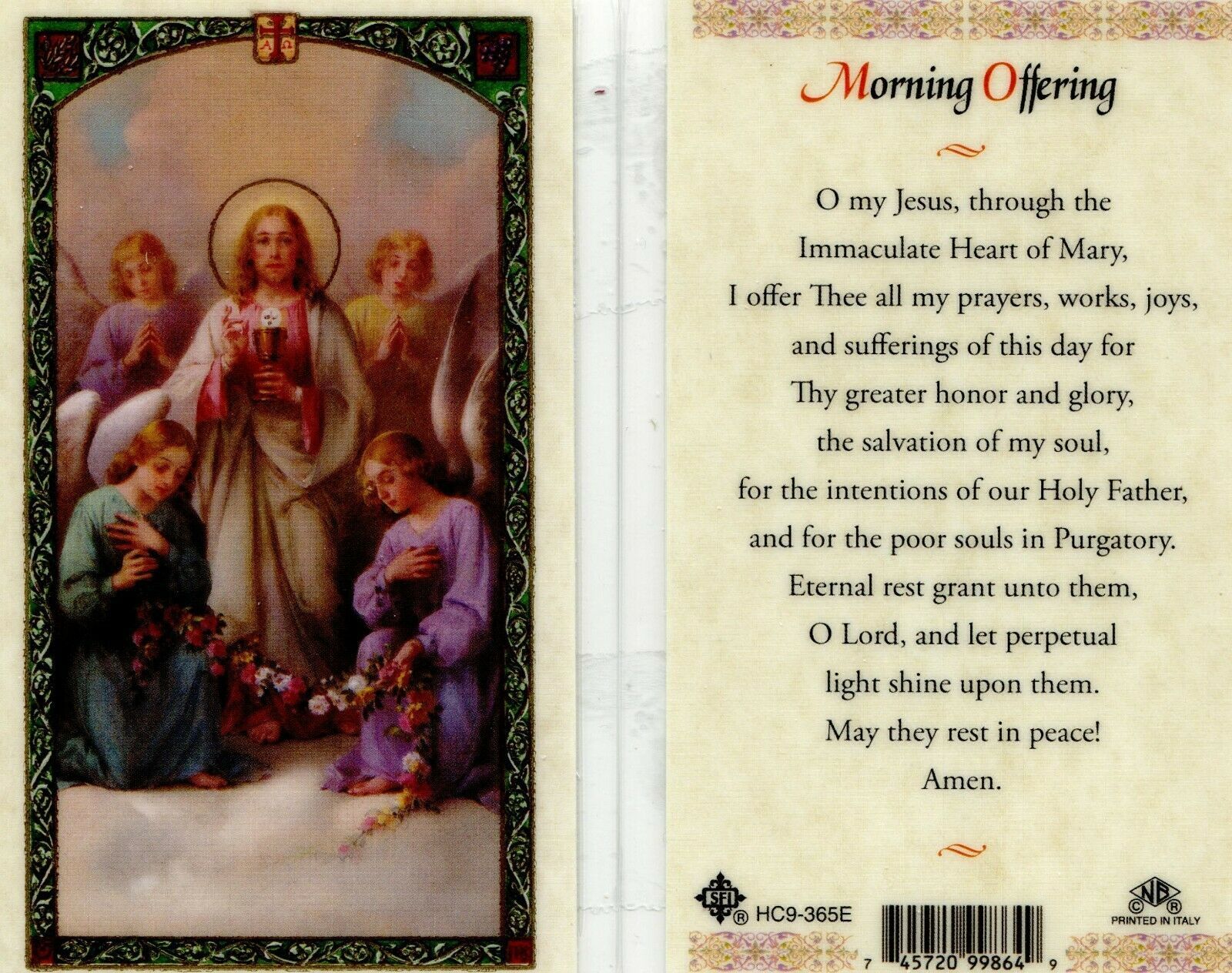
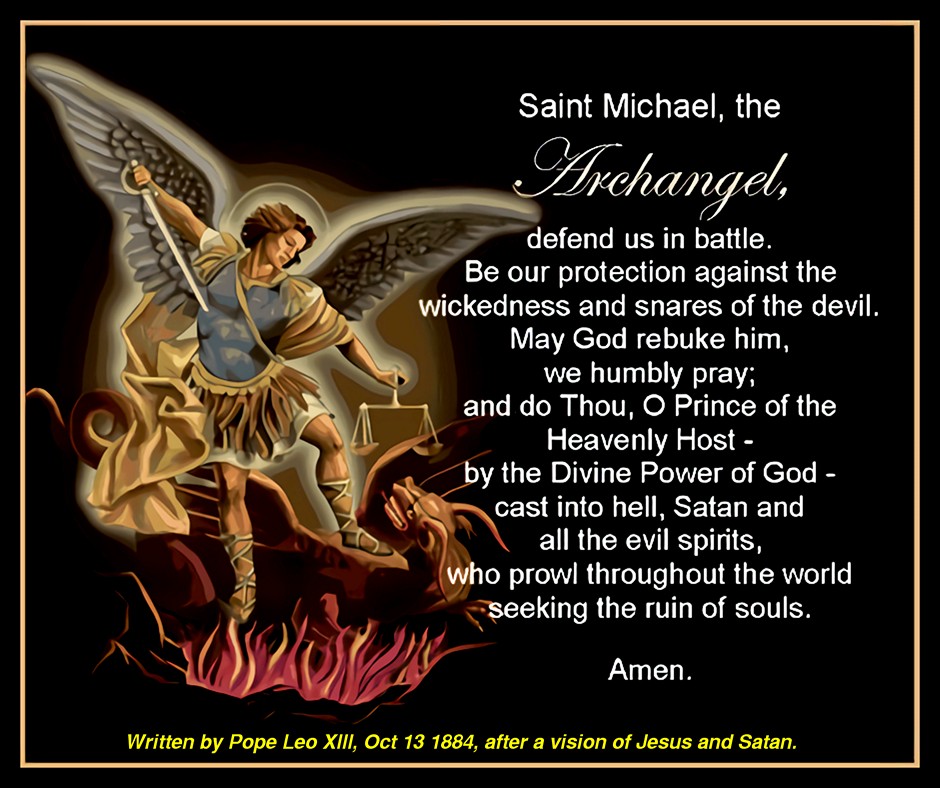
The Month of August is Dedicated to the Immaculate Heart of Mary

“In the sixth month the angel Gabriel was sent from God to a city of Galilee named Nazareth, to a virgin betrothed to a man whose name was Joseph, of the house of David; and the virgin’s name was Mary. And he came to her and said, “Hail, full of grace, the Lord is with you!”” (Luke 1:26-28)

Pope Leo XIV’s prayer intention for the month of August, 2026:
For evangelization in the city
Let us pray that in large cities often marked by anonymity and loneliness we find new ways to proclaim the Gospel, discovering creative paths to build community.

Disclaimer: Opinions posted on Free Republic are those of the individual posters and do not necessarily represent the opinion of Free Republic or its management. All materials posted herein are protected by copyright law and the exemption for fair use of copyrighted works.


