
Posted on 08/15/2026 10:29:59 PM PDT by fidelis
Twentieth Sunday in Ordinary Time
“It is not right to take the food of the children and throw it to the dogs.” She said, “Please, Lord, for even the dogs eat the scraps that fall from the table of their masters.” Then Jesus said to her in reply, “O woman, great is your faith! Let it be done for you as you wish.” Matthew 15:26–28
Imagine the Son of God referring to you as a dog. For most people, that would be deeply offensive. So why would Jesus do such a thing? He did so, in part, to draw forth from this woman an act of profound humility and faith. Through this moment of divine humiliation, Jesus invited her to rise to a heroic response, prompting Him to exclaim, “O woman, great is your faith!” He desires to do the same with each one of us.
When Jesus first encountered this woman, He saw into her soul and perceived the depth of her faith. As God, He knew everything about her—her suffering, her love for her daughter, her perseverance. He also knew He would heal the girl, yet He did not do so immediately. Instead, He engaged in what theology refers to as divine pedagogy—a method of instruction by which God teaches slowly, carefully, and with purpose. In this case, Jesus used the moment to teach His disciples, and us, a profound lesson about humility and unwavering faith. He tested her, and she passed the test marvelously.
The location of this encounter is also significant. It took place in the region of Tyre and Sidon, in modern-day Lebanon—a Gentile territory known for its Greek-speaking population and pagan customs. The woman is specifically identified as a Canaanite, evoking the memory of Israel’s ancient enemies. And yet, it is precisely this outsider—this woman of seemingly little spiritual privilege—who becomes a model of the faith the chosen people were meant to embody.
She first approaches Jesus, crying out, “Have pity on me, Lord, Son of David! My daughter is tormented by a demon.” By calling Him, “Son of David,” she reveals her belief in His messianic identity. But what does Jesus do? Nothing. He appears to ignore her—not because He is displeased or uncaring, but because He is testing her faith, knowing full well she will persevere and shine.
God often allows similar experiences in the lives of the faithful. It’s easy to assume that if we follow Christ, we will be shielded from difficulty. On the contrary, one of the most powerful ways God forms His saints is by allowing them to undergo trials. These trials, far from being signs of abandonment, are invitations to heroic virtue. They are divine tests. And God never permits more than we can endure by His grace.
Reflect today on the ways God may be inviting you to a deeper faith through silence, delay, or trial. Could He be calling you, like this woman, to heroic humility and steadfast trust? Embrace those moments of divine testing, for they are often the very means by which His greatest works of grace are accomplished—in you and through you.
Divine Teacher and Guide, You teach us through Your Word, Your actions, and even through Your silence. When You are silent in the midst of trials and tribulations, grant me the grace to persevere in faith, trusting that You will never abandon me. Help me to understand that every trial You permit is an invitation to deeper trust, so that Your grace and glory may be revealed in me, and through me, shine forth to others. Jesus, I trust in You.
Please keep in mind that this is a Catholic Caucus/Devotional thread for the purpose of prayerful reflection on the Sacred Scriptures and is closed to debate of any kind. Per FR policy on Religion Caucus threads, off-topic, argumentative, and abusive comments are not allowed and will be submitted to the Mods for deletion. Thanks, and God bless you.
Today’s First Reading
From: Isaiah 56:1-3a, 6-8
Worship Open to All
-----------------------------
[1] Thus says the Lord: “Keep justice, and do righteousness, for soon my salvation will come, [2] Blessed is the man who does this, and the son of man who holds it fast, who keeps the sabbath, not profaning it, and keeps his hand from doing any evil.” [3] Let not the foreigner who has joined himself to the Lord say, “The Lord will surely separate me from his people”.
[6] “And the foreigners who join themselves to the Lord, to minister to him, to love the name of the Lord, and to be his servants, every one who keeps the sabbath, and does not profane it, and holds fast my covenant--[7] these I will bring to my holy mountain, and make them joyful in my house of prayer; their burnt offerings and their sacrifices will be accepted on my altar; for my house shall be called a house of prayer for all peoples. [8] Thus says the Lord God, who gathers the outcasts of Israel, I will gather yet others to him besides those already gathered."
***********************************************************************
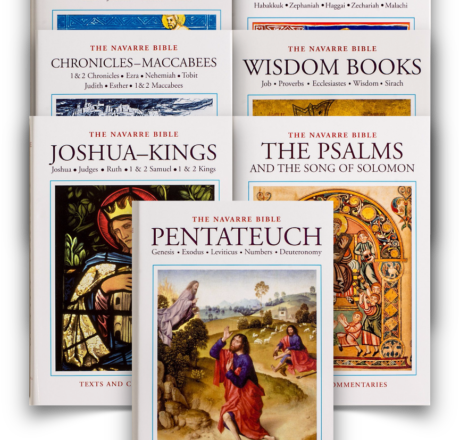
Commentary:
56:1-66:24. These chapters make up the third part of the book of Isaiah, sometimes called “Third Isaiah”. It consists of prophetic visions and oracles about the new Zion and the nations of the earth. The variety of style and content here makes it difficult to identify any clear structure: the sacred writer seems to have drawn these oracles together, apparently content that they are all to do with the End and all refer to the whole world and not just to Israel. But he has carefully positioned chapter 61 in the middle, making it the high-point of these chapters. Also, 56:1-8 and 66:18-24, which stress the universality of justice and worship, are very appropriately positioned at start and finish. To make this part easier to read, we have divided it into three sections in this edition. The first (56:1-59:21) is a series of oracles that show salvation being extended to all mankind, even though the sins of the people of God will cause delays. In the second (60:1-64:11), the salvation that the Lord will provide is proclaimed to all the nations from Jerusalem. And the third section (65:1-66:24) has as its theme the judgment of God, handed down to each according to his or her merits, be it punishment for sin, or salvation.
Historically, the oracles have to do with the years following the return from exile after Cyrus issued his decree of repatriation (539 BC). It was for Judah a time for “beginning again”. God sent messages of hope to raise the Jews’ spirits during their years in exile and on their return, when they were confronted by a scene of devastation. They cannot fail to see that, from now on, peace and salvation are linked with a return to God, conversion, the practice of righteousness, and holiness.
This means that the horizon of divine salvation extends to include the whole world, extending beyond the narrow limits of Jewish nationalism. When the prophetic texts speak of Zion, they see it as the center of a new view of mankind, as a source of light for all nations. The new Jerusalem stands for a new order, as it will in the Revelation to John. Although all the energies of repatriates are focused on the rebuilding of the temple (60:7-13), the message here is that the ultimate goal is not material reconstruction, for the throne of God is to be found in heaven, and the earth is only his footstool (66:1-2). Hope in a glorious future is not measured in terms of external institutions--in the monarchy (which does not exist), or in any other human authority, or in force of arms. Even divine worship, and the rules and regulations to do with fasting and sacrifices, will be cleansed of the old formalism (58:1-14). God will act directly to save his people (62:2-12). The new horizon opened up by “Third Isaiah” has its parallel in Haggai and Zechariah, and, above all, it prepares the way for the still-distant eschatological vision found in the Revelation to John.
56:1-59:21. The new section looks forward to a salvation that is open to everyone who practises righteousness (56: 1-12). However, the first announcement of this is put on hold, as it were, due to the sins of the people of God; these delay the manifestation of God’s salvific power, for he refuses to hearken to the prayers of the ungodly (57:1-21). Therefore, first and foremost, the prophet issues a call to conversion (58: 1-14), while promising that the Lord, who is faithful to his Covenant, will reward people according to their actions: he will punish those who are faithless and redeem those who return to him (59:1-21).
56:1-8. In the restored Jerusalem, the temple will begin to open its doors to all peoples. What we were told at the start of the book (cf. 2:2-5) would happen “in the latter days” is beginning to happen: the temple of the Lord will be a house of prayer for those who previously could not enter it; it will be open to all peoples. The old rulings (Lev 22:25; Deut 23:2-9) did not permit eunuchs or foreigners to take part in the assembly of Israel (a similar approach is found in Ezra 9:1-12 and Nehemiah 9:1-2); but this oracle displays a much more open and universalist attitude (cf. V/is 3:14):there is no objection to eunuchs and foreigners provided that they observe the sabbath and the Covenant (cf. vv. 2, 4,6) Blood ties are no longer the criteria for membership of the community of the people of God now it suffices that a person keep to the moral teaching laid down in the old Covenant, and worship the true God.
The mission of the temple, rebuilt by the exiles after their return with its open invitation to all without exception to come and worship God as part of his people, will reach its fullness in the redemption wrought by Christ Jesus. When he cleanses the temple (Mt 21:12-13 and par.), appealing to the words of v. 6 (along with Jeremiah 7:11; cf. note on same), this prophecy will be fulfilled.
From: Romans 11:13-15, 29-32
The New Chosen People
----------------------------
[13] Now I am speaking to you Gentiles. Inasmuch then as I am an apostle to the Gentiles, I magnify my ministry [14] in order to make my fellow Jews jealous, and thus save some of them. [15] For if their rejection means the reconciliation of the world, what will their acceptance mean but life from the dead?
The Conversion of the Jews (Continuation)
--------------------------------------------------
[29] For the gifts and the call of God are irrevocable. [30] Just as you were once disobedient to God but now have received mercy because of their disobedience, [31] so they have now been disobedient in order that by the mercy shown to you they may also receive mercy. [32] For God has consigned all men to disobedience, that he may have mercy upon all.
***********************************************************************
Commentary:
25-32. We all yearn for the fulfillment of these words--threatening yet consoling--which Christ addressed to the scribes and Pharisees: "For I tell you, you will not see me again, until you say 'Blessed is he who comes in the name of the Lord"' (Mt 23:39). "Together with the prophets and the Apostle, the Church awaits the day, known to God alone, when all peoples will call on God with one voice and 'serve him with one accord' (Zeph 3:9)" (Vatican II, "Nostra Aetate", 4). The conversion of the Jews is a secret--a mystery, the text says (v. 25)—hidden in the future, which will come about when the Incarnation of the Word achieves its ultimate purpose.
This conversion will follow on that of the Gentiles, which will be as it were a prelude to it. Jesus has foretold that "Jerusalem will be trodden down by the Gentiles, until the times of the Gentiles are fulfilled" (Lk 21:24; cf. note on same), which in some way suggests that the Jews will be converted at the end of time.
However, when the Church in its preaching touches on the main signs of the end of the world, it only refers to the proclamation of the Gospel throughout the world, to apostasy and to the Antichrist, but it has nothing to say about the conversion of the Jews (cf. "St Pius V Catechism", I, 8, 7). What the Church does do, and what we should do, is to pray the Lord to listen to its prayers "that the people you first made your own may arrive at the fullness of redemption" ("Roman Missal", Good Friday Liturgy, Prayer of the Faithful).
"The same thing is happening, St Paul explains, now that the Gospel is being preached. The people of Israel in general are not accepting it and are not becoming part of the Church; only a small number of Jews have believed, and these are the "remnant.' of Israel, chosen by God so that in them the promises might be kept. The conversion of Paul himself is an example and an earnest of this return of the people of Israel to their God, in line with the invitation that Hosea addressed to them: "Return, O Israel, to the Lord your God, for you have stumbled because of your iniquity" (Hos 14:2).
Throughout the history of the Church lapses of this type have occurred, with a consequent breakdown in morality. Whenever this happens, those Christians who stay true to the faith may, like Elijah, feel inclined to despair; but they should react with a realistic and vigilant optimism and not indulge in useless lamentation. In the presence of God, they should reflect on the fact that God actually wants to use them and their holy lives to turn the situation around: "A secret, an open secret: these world crises are sanctity crises. God wants a handful of men 'of his own' in every human activity. And then...'"pax Christi in regno Christi"--the peace of Christ in the kingdom of Christ" (St J. Escriva, The Way, 301).
29. God never goes back on anything he promises; therefore he continues to call the Jews to enter the chosen people. He does not take account of their disobedience or their sins: he will love them with an everlasting love, as he promised the patriarchs and in line with the merits accruing to them for their fidelity (cf. Rom 9:4-5). It is this very immutability of God's love that makes it possible for "all Israel" (v. 26) to be saved. God's calling, which is eternal, cannot cease; but we for our part can reject his call. The immutability of God's plan is reassuring to us: it means that even if we abandon him at any point, we can always return to our earlier fidelity: he is still there, waiting for us.
From: Matthew 15:21-28
The Canaanite Woman
----------------------------
[21] And Jesus went away from there and withdrew to the district of Tyre and Sidon. [22] And behold, a Canaanite woman from that region came out and cried, "Have mercy on me, O Lord, Son of David; my daughter is severely possessed by a demon." [23] But He did not answer her a word. And His disciples came and begged Him, saying, "Send her away, for she is crying after us." [24] He answered, "I was sent only to the lost sheep of the house of Israel." [25] But she came and knelt before Him, saying, "Lord, help me." [26] And He answered, "It is not fair to take the children's bread and throw it to the dogs." [27] She said, "Yes, Lord, yet even the dogs eat the crumbs that fall from their master's table." [28] Then Jesus answered her, "O woman, great is your faith! Be it done for you as you desire." And her daughter was healed instantly.
***********************************************************************
Commentary:
21-22. Tyre and Sidon were Phoenician cities on the Mediterranean coast, in present-day Lebanon. They were never part of Galilee but they were near its northeastern border. In Jesus' time they were outside the territory of Herod Antipas. Jesus withdrew to this area to escape persecution from Herod and from the Jewish authorities and to concentrate on training His Apostles.
Most of the inhabitants of the district of Tyre and Sidon were pagans. St. Matthew calls this woman a "Canaanite"; according to Genesis (10:15), this district was one of the first to be settled by the Canaanites; St. Mark describes the woman as a "Syrophoenician" (Mark 7:26). Both Gospels point out that she is a pagan, which means that her faith in our Lord is more remarkable; the same applies in the case of the centurion (Matthew 8:5-13).
The Canaanite woman's prayer is quite perfect: she recognizes Jesus as the Messiah (the Son of David)—which contrasts with the unbelief of the Jews; she expresses her need in clear, simple words; she persists, undismayed by obstacles; and she expresses her request in all humility: "Have mercy on me." Our prayer should have the same qualities of faith, trust, perseverance and humility.
24. What Jesus says here does not take from the universal reference of His teaching (cf. Matthew 28:19-20; Mark 16:15-16). Our Lord came to bring His Gospel to the whole world, but He Himself addressed only the Jews; later on He will charge His Apostles to preach the Gospel to pagans. St. Paul, in his missionary journeys, also adopted the policy of preaching in the first instance to the Jews (Acts 13:46).
25-28. This dialogue between Jesus and the woman is especially beautiful. By appearing to be harsh He so strengthens the woman's faith that she deserves exceptional praise: "Great is your faith!" Our own conversation with Christ should be like that: "Persevere in prayer. Persevere, even when your efforts seem barren. Prayer is always fruitful" (St J. Escriva, "The Way", 101).
The Month of August is Dedicated to the Immaculate Heart of Mary

“In the sixth month the angel Gabriel was sent from God to a city of Galilee named Nazareth, to a virgin betrothed to a man whose name was Joseph, of the house of David; and the virgin’s name was Mary. And he came to her and said, “Hail, full of grace, the Lord is with you!”” (Luke 1:26-28)

Pope Leo XIV’s prayer intention for the month of August, 2026:
For evangelization in the city
Let us pray that in large cities often marked by anonymity and loneliness we find new ways to proclaim the Gospel, discovering creative paths to build community.

Disclaimer: Opinions posted on Free Republic are those of the individual posters and do not necessarily represent the opinion of Free Republic or its management. All materials posted herein are protected by copyright law and the exemption for fair use of copyrighted works.


