
Posted on 08/13/2026 10:40:00 PM PDT by fidelis
Memorial of Saint Maximilian Kolbe, Priest and Martyr
Some Pharisees approached Jesus, and tested him, saying, “Is it lawful for a man to divorce his wife for any cause whatever?” He said in reply, “Have you not read that from the beginning the Creator made them male and female and said, For this reason a man shall leave his father and mother and be joined to his wife, and the two shall become one flesh? So they are no longer two, but one flesh. Therefore, what God has joined together, man must not separate.” Matthew 19:3–6
In Jesus’ time, divorce was a controversial and divisive issue. Two prominent schools of thought offered opposing views: The followers of Rabbi Hillel permitted divorce for trivial reasons, while the followers of Rabbi Shammai allowed it only for serious offenses. In today’s Gospel, Jesus does not side with either group. Instead, He elevates the conversation by pointing back to God’s original design for marriage, revealed at the beginning of creation.
Jesus reminds us that God’s intention for marriage is the permanent and sacred union of man and woman—a covenant, not merely a contract. When the two become “one flesh,” it is not only a physical union but also a spiritual and ontological reality: A new creation comes into being through the marital bond.
Today, many people misunderstand the sacredness of marriage. Many marriages falter for a variety of reasons. This is partly because the ideal of marriage is demanding and requires deep personal sacrifice. True love—caritas, or charity—goes far beyond emotion and affection. It calls for the complete gift of self, radical selflessness, and unwavering commitment. When lived according to God’s design, such love yields rewards that far surpass the trials it entails. But when relationships are clouded by selfishness, resentment, unforgiveness, or sin, they often unravel, leaving behind pain and regret.
Saint Paul refers to marriage as “a great mystery,” likening it to the union between “Christ and the Church” (Ephesians 5:32). This is more than a metaphor; it is a theological truth. Every baptized person is called to be part of the Body of Christ and to share in the eternal Wedding Feast of the Lamb. The saints and mystics refer to this as “spiritual marriage”—the soul’s union with Christ in Divine Love.
The path to such divine union is rigorous. It demands the total gift of oneself to God. Every sin and attachment to sin must be stripped away by grace—and by our cooperation with that grace. This purifying journey prepares the soul for Mystical Marriage, a lasting and unbreakable union with God.
Just as the heights of sanctity are reached only through great effort, so too is the perfection of marriage—or any relationship. This can feel daunting, but it should not lead to discouragement. Rather, it should inspire us with hope and resolve. Whether in marriage, friendship, or our relationship with God, we must pursue the ideal with zeal. Sanctity does not happen overnight, and neither do holy relationships. All require perseverance, humility, and grace.
Reflect today on your vocation and how well you live the depth of love to which you are called. Whether you are married or celibate, trust in God’s providence and resolve to live not by the standards of the world, but by the wisdom of the Kingdom of Heaven. Such a calling can only be fulfilled by grace and by hearts courageous enough to say “Yes” to that grace, day after day. Resolve to say “Yes,” and your reward will be great.
My loving Lord, the charity that flows from Your Sacred Heart is pure and holy, radiating throughout Your entire Church. Draw me ever deeper into that love, so that I may receive You into my life and radiate Your love to others. Help me and all Your children to love You with all our hearts and to love one another, so that we may be perfectly united in You. Jesus, I trust in You.
Please keep in mind that this is a Catholic Caucus/Devotional thread for the purpose of prayerful reflection on the Sacred Scriptures and is closed to debate of any kind. Per FR policy on Religion Caucus threads, off-topic, argumentative, and abusive comments are not allowed and will be submitted to the Mods for deletion. Thanks, and God bless you.
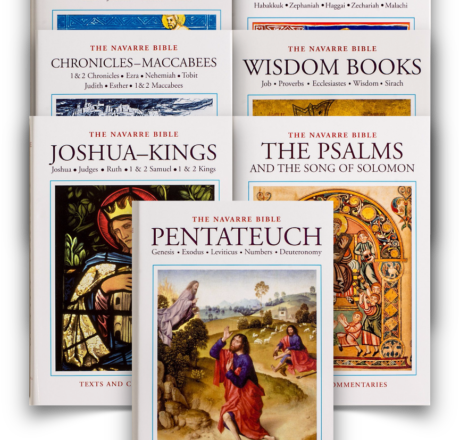
Today’s First Reading
Ezekiel 16:1-15, 60, 63
Jerusalem, the unfaithful wife
-----------------------------------
[1] Again the word of the LORD came to me: [2] "Son of man, make known to Jerusalem her abominations, [3] and say, Thus says the Lord GOD to Jerusalem: Your origin and your birth are of the land of the Canaanites; your father was an Amorite, and your mother a Hittite. [4] And as for your birth, on the day you were born your navel string was not cut, nor were you washed with water to cleanse you, nor rubbed with salt, nor swathed with bands. [5] No eye pitied you, to do any of these things to you out of compassion for you; but you were cast out on the open field, for you were abhorred, on the day that you were born.
[6] "And when I passed by you, and saw you weltering in your blood, I said to you in your blood, 'Live, [7] and grow up like a plant of the field.' And you grew up and became tall and arrived at full maidenhood; your breasts were formed, and your hair had grown; yet you were naked and bare.
[8] "When I passed by you again and looked upon you, behold, you were at the age for love; and I spread my skirt over you, and covered your nakedness: yea, I plighted my troth to you and entered into a covenant with you, says the Lord GOD, and you became mine. [9] Then I bathed you with water and washed off your blood from you, and anointed you with oil. [10] I clothed you also with embroidered cloth and shod you with leather, I swathed you in fine linen and covered you with silk. [11] And I decked you with ornaments, and put bracelets on your arms, and a chain on your neck. [12] And I put a ring on your nose, and earrings in your ears, and a beautiful crown upon your head. [13] Thus you were decked with gold and silver; and your raiment was of fine linen, and silk, and embroidered cloth; you ate fine flour and honey and oil. You grew exceedingly beautiful, and came to regal estate. [14] And your renown went forth among the nations because of your beauty, for it was perfect through the splendor which I had bestowed upon you, says the Lord GOD.
[15] "But you trusted in your beauty, and played the harlot because of your renown, and lavished your harlotries on any passer-by. [60] yet I will remember my covenant with you in the days of your youth, and I will establish with you an everlasting covenant. [63] that you may remember and be confounded, and never open your mouth again because of your shame, when I forgive you all that you have done, says the Lord GOD."
********************************************************************
Commentary:
16:1-19:14. In these chapters Ezekiel announces the sentence passed on Israel and Judah on account of the transgressions and sins they have been piling up. He does this by imagining a formal trial (rib) in which the charges are described by a series of allegories. First there is the story of the unfaithful and evil wife, who stands for Israel (chap. 16); then comes the allegory of the eagles, symbolizing the deportation: Nebuchadnezzar seems to destroy everything before him, but the Lord comes on the scene and sets about reassembling the broken pieces (chap. 17); thirdly, the metaphor of the father and son is used to reiterate teaching about personal responsibility (chap. 18); thirdly, the metaphor of the father and son is used to reiterate teaching about personal responsibility (chap. 18); and finally, comes the allegory of the lioness and her cubs -- a lament over the plight of the Exiles in Babylon (chap. 19).
16:1-43. The prophet Hosea was the first to use the metaphor of the wanton wife to charge Israel with her infidelity (Hos 1-3); Jeremiah uses the imagery of marriage to describe the Covenant and how Israel came to break it (Jer 2:2). Ezekiel, here and in chapters 20 and 23, is the one who develops the metaphor most. The wife is Jerusalem, depicted with negative features from her birth onwards (vv. 1-5) and then completely transformed into the most beautiful of princesses (vv. 6-14). However, she proved unfaithful and committed the most vile sins of adultery with the empires round about (vv. 15-34). All this, a mixture of fact and metaphor, paves the way for the sentence that must be passed: "I will judge you as women who break wedlock" (v. 38); she will become the prey of the nations that she adulated (vv. 35-41). But the end is not destruction (vv. 42-43), as one would have expected; it is the start of a new phase (cf. 16:59-63). Ezekiel, who is addressing the exiles, once again opens the door to hope in an ultimate restoration (vv. 42-43).
16:1-5. "Your father was an Amorite, and your mother a Hittite" (v. 3). Jerusalem had, in fact, belonged to the Canaanites until David conquered it; these would have included the Amorites, a Semitic people (cf. Num 21:13), and the Hittites, who had come from Asia Minor (cf. Gen 23:16). Ezekiel is not so much concerned about historical accuracy (cf. Deut 7:1 and par.) as in pointing out the pagan origins of the holy city, to make it clear that all its qualities and all its dignity derive solely from the Lord. The practices mentioned in v. 4 were ancient customs to do with the care of newborn babies. The point being made is that in addition to having an obscure origin, Jerusalem began life utterly alone.
16:6-34. The charge of infidelity against Jerusalem lies in the endowments it received from God (vv. 6-14) and its history of wickedness -- evidence of the fact that it has persistently abused God's gifts (vv. 15-34). Although the charge has historical basis, the passage is not meant to be a detailed catalogue; the point being made is that the city had a history of sin and infidelity.
"I passed by you" (v. 6): when God passes by, he brings salvation; here he turns an abandoned child into the most beautiful of women, the envy of all her peers. St John of the Cross will apply this to what happens when the Lord passes by the soul ("Spiritual Canticle", 23, 6) and the things said here help us to see the relationship between the soul and God as a love story. St Thérèse of Lisieux mentions Ezekiel in this connexion: "I was at the most troubling age for girls. But the Lord passed by, and did for me as he said he would do, in the words of the prophet Ezekiel: 'When he passed by me, Jesus saw that I was at the age for love. He pledged his troth to me, and I became his … He wrapped his cloak about me, and anointed me with perfume; he dressed me in embroidered cloth and silk, and gave me gold and silver and precious jewels to wear ... He gave me fine flour and honey and oil to eat ... and I grew more and more beautiful, until I was like a queen ...' (cf. Ezek 16:6-13). Jesus did all these things for me. I could repeat, again, all the words that I have just written, and show how he has fulfilled each, one by one, in me. But all the graces that I have referred to elsewhere are proof enough" ("Autobiographical Writings", 5, 47, r).
"You trusted in your beauty, and played the harlot" (v. 15): breaking away from God, particularly the sin of idolatry, was called prostitution by the prophets who used marriage as a metaphor for the Covenant (cf. Hos 2:18-25; Jer 2:2-3). Ezekiel accentuates the features of this sin by pointing out that, instead of being paid for her harlotry, Jerusalem took the initiative: she gave herself over to her lovers, that is, other gods, and, worse still, presented to them the finery that the Lord had bestowed on her (v. 33): that was how Jerusalem behaved towards Egypt (v. 26), Assyria (v. 28) and Babylon (v. 29). The prophet shows that, since Jerusalem's history could not have been worse, it would be difficult to devise a punishment fitted to such a crime. However, while spelling out the whole charge, Ezekiel is able to see the wonderful rehabilitation that will take place once her punishment is over.
Some of the things he says have been read as a prophecy about Christ: "The Daughter of Sion did not repay the Lord for the gifts she received from his bounty. The Father washed her clean with his blood; she covered his son with spittle. He dressed her in the purple robes of kings; she wrapped him in a rag woven from jibes and jeers. He crowned her with glory; she crowned him with thorns. He gave her milk and honey to eat; she gave him gall to drink. He poured out pure wine for her; she handed him a sponge dipped in vinegar. He made her welcome in his cities; she cast him out into the wilderness. He clothed her feet in sandals; she made him limp barefoot to Golgotha. He gave her a sapphire brooch to wear on her breast; she pierced his side with a spear. When she committed outrages against the servants of God and killed the prophets, and endured exile in Babylon as a punishment, he led her home to freedom when the day of her chastisement was ended" (St Ephraem of Nisibi, "Commentarii in Diatessaron", 18, 1).
Pseudo-Macanus, for his part, applies this text of Ezekiel to every Christian soul that has been unfaithful to divine grace. After quoting and making a précis of 16:6-15, he exclaims: "Thus does the Spirit reprove the soul who, by his grace, had come to know God; the soul who had been forgiven all his past sins, and adorned with the precious gifts of the Holy Spirit, and given divine and heavenly food to eat; the soul who, in spite of his knowledge of the Lord, turned his back on righteous living, and was cast out of the life in which he had once rejoiced because his deeds were not just, and he was judged lacking in love for Christ, his heavenly spouse" ("Homiliae spirituals", 15, 4).
From: Matthew 19:3-12
Marriage and Virginity
---------------------------
[3] And Pharisees came up to Him (Jesus) and tested Him by asking, "Is it lawful to divorce one's wife for any cause?" [4] He answered, "Have you not read that He who made them from the beginning made them male and female, [5] and said, `For this reason a man shall leave his father and mother and be joined to his wife, and the two shall become one'? [6] So they are no longer two but one. What therefore God has joined together, let no man put asunder." [7] They said to Him, "Why then did Moses command one to give a certificate of divorce, and to put her away?" [8] He said to them, "For your hardness of heart Moses allowed you to divorce your wives, but from the beginning it was not so. [9] And I say to you: whoever divorces his wife, except for unchastity, and marries another, commits adultery; and he who marries a divorced woman commits adultery."
[10] The disciples said to Him, "If such is the case of a man with his wife, it is not expedient to marry." [11] But He said to them, "Not all men can receive this precept, but only those to whom it is given. [12] For there are eunuchs who have been so from birth, and there are eunuchs who have been made eunuchs by men, and there are eunuchs who have made themselves eunuchs for the sake of the Kingdom of Heaven. He who is able to receive this, let him receive it."
***********************************************************************
Commentary:
4-5. "Marriage and married love are by nature ordered to the procreation and education of children. Indeed children are the supreme gift of marriage and greatly contribute to the good of the parents themselves. God Himself said: `It is not good that man should be alone' (Genesis 2:18), and `from the beginning (He) made them male and female' (Matthew 19:4); wishing to associate them in a special way with his own creative work, God blessed man and woman with the words: `Be fruitful and multiply' (Genesis 1:28). Without intending to underestimate the other ends of marriage, it must be said that true married life and the whole structure of family life which results from it is directed to disposing the spouses to cooperate valiantly with the love of the Creator and Savior, who through them will increase and enrich His family from day to day" (Vatican II, "Gaudium Et Spes", 50).
9. Our Lord's teaching on the unity and indissolubility of marriage is the main theme of this passage, apropos of which St. John Chrysostom comments that marriage is a lifelong union of man and woman (cf. "Hom. on St. Matthew", 62). On the meaning of "except for unchastity", see the note on Matthew 5:31-32).
11. "Not all men can receive this precept": our Lord is fully aware that the demands involved in His teaching on marriage and His recommendation of celibacy practised out of love of God run counter to human selfishness. That is why He says that acceptance of this teaching is a gift from God.
12. Our Lord speaks figuratively here, referring to those who, out of love for Him, renounce marriage and offer their lives completely to Him. Virginity embraced for the love of God is one of the Church's most precious charisms (cf. 1 Corinthians 7); the lives of those who practise virginity evoke the state of the blessed in Heaven, who are like the angels (cf. Matthew 22:30). This is why the Church's Magisterium teaches that the state of virginity for the sake of the Kingdom of Heaven is higher than the married state (cf. Council of Trent, "De Sacram. Matr.", can. 10; cf. also Pius XII, "Sacra Virginitas"). On virginity and celibacy the Second Vatican Council teaches: "The Church's holiness is also fostered in a special way by the manifold counsels which the Lord proposes to His disciples in the Gospel for them to observe. Towering among these counsels is that precious gift of divine grace given to some by the Father (cf. Matthew 19:11; 1 Corinthians 7:7) to devote themselves to God alone more easily in virginity or celibacy [...]. This perfect continence for love of the Kingdom of Heaven has always been held in high esteem by the Church as a sign and stimulus of love, and as a singular source of spiritual fertility in the world" ("Lumen Gentium", 42; cf. "Perfectae Caritatis", 12). And, on celibacy specifically, see Vatican II's "Presbyterorum Ordinis", 16 and "Optatam Totius", 10.
However, both virginity and marriage are necessary for the growth of the Church, and both imply a specific calling from God: "Celibacy is precisely a gift of the Spirit. A similar though different gift is contained in the vocation to true and faithful married love, directed towards procreation according to the flesh, in the very lofty context of the sacrament of Matrimony. It is obvious that this gift is fundamental for the building up of the great community of the Church, the people of God. But if this community wishes to respond fully to its vocation in Jesus Christ, there will also have to be realized in it, in the correct proportion, that other gift, the gift of celibacy `for the sake of the Kingdom of Heaven'" (St. Pope John Paul II, "Letter To All Priests", 1979).
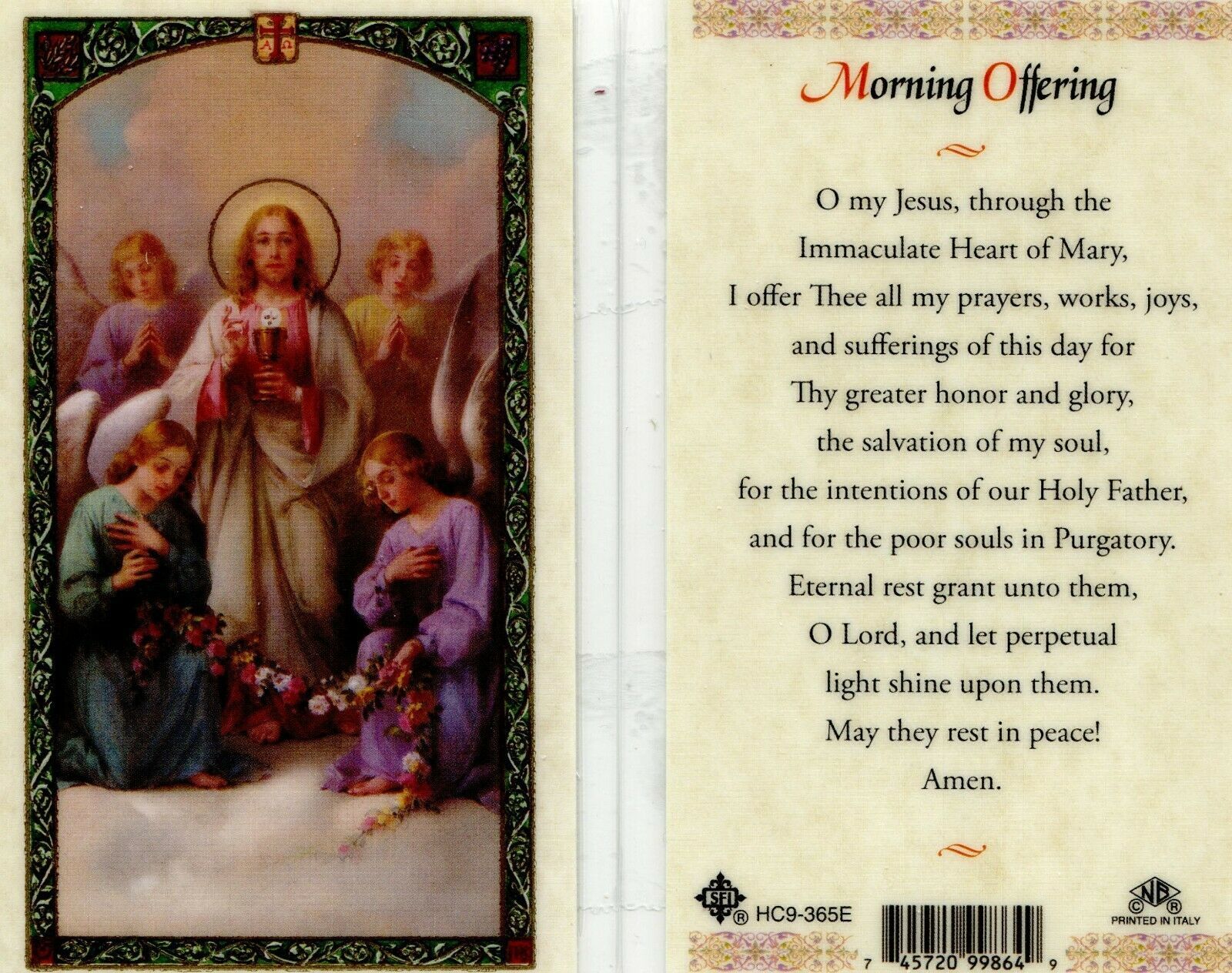
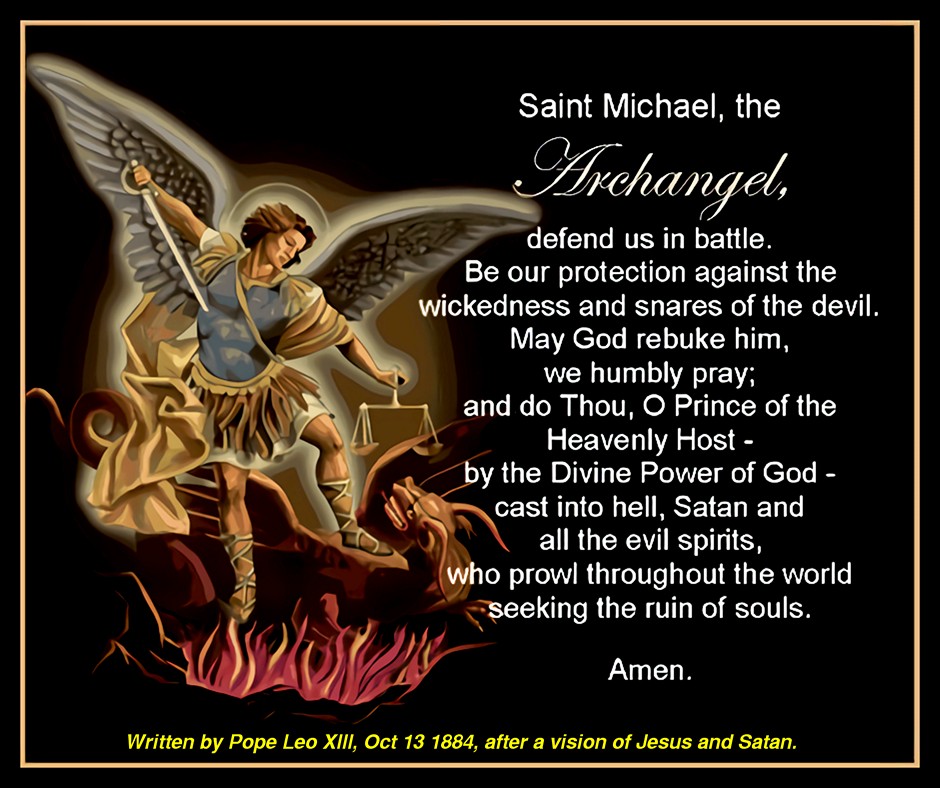
The Month of August is Dedicated to the Immaculate Heart of Mary

“In the sixth month the angel Gabriel was sent from God to a city of Galilee named Nazareth, to a virgin betrothed to a man whose name was Joseph, of the house of David; and the virgin’s name was Mary. And he came to her and said, “Hail, full of grace, the Lord is with you!”” (Luke 1:26-28)

Pope Leo XIV’s prayer intention for the month of August, 2026:
For evangelization in the city
Let us pray that in large cities often marked by anonymity and loneliness we find new ways to proclaim the Gospel, discovering creative paths to build community.

Disclaimer: Opinions posted on Free Republic are those of the individual posters and do not necessarily represent the opinion of Free Republic or its management. All materials posted herein are protected by copyright law and the exemption for fair use of copyrighted works.


