
Posted on 08/11/2026 10:32:38 PM PDT by fidelis
Jesus said to his disciples: “If your brother sins against you, go and tell him his fault between you and him alone. If he listens to you, you have won over your brother. If he does not listen, take one or two others along with you, so that every fact may be established on the testimony of two or three witnesses.” Matthew 18:15–16
Fraternal charity is an absolute necessity. We are called to love everyone unconditionally, even those who have sinned against us. Moreover, our charity must go beyond an interior disposition; it must be expressed in action. At times, such love is easy—like the natural affection parents feel toward a child entrusted to them by God. But when a family member, friend, or stranger sins against us, offering unconditional love becomes far more difficult.
In today’s Gospel, Jesus addresses this difficult form of love: “If your brother sins against you…” Here, “brother” refers to every person. In Christ, we are all brothers and sisters, children of our Heavenly Father—even those who have strayed. When someone sins against us, the natural result is a wound. If charity is absent from our response, that wound can fester, giving way to bitterness, resentment, and even a desire for revenge.
The love to which Jesus calls us is one that allows grace to quickly heal the wounds inflicted by sin. Yes, the pain is real—there is always a wound—but that wound does not have to infect the soul. Instead, God’s grace can transform our pain into a source of healing, even for the one who has harmed us. In fact, when someone sins against us, we may become instruments of God’s mercy in a unique and powerful way, drawing the sinner back to God.
To facilitate this, Jesus lays out four progressive expressions of mercy that His disciples—and we—are to follow when someone sins against us. The first is to approach the offender privately: “Go and tell him his fault between you and him alone.” This is an act of mercy. Our first instinct may be to speak about the offense with others—to gossip or vent in anger. Yet even when the wrongdoing is real, we must guard against the sin of detraction, the unjust or unnecessary revelation of another’s faults. The Lord’s method preserves the person’s dignity and seeks the offender’s repentance, not shame.
Second, if a private conversation proves ineffective, we are to return with one or two others. In Jewish law, a matter was legally confirmed by the testimony of two or three witnesses. Jesus draws on this tradition, not to humiliate, but to validate the concern and strengthen the call to conversion, extending mercy more firmly.
Reflect today on the mercy to which you are called when others sin against you. Consider the wounds you carry and whether they have become occasions of grace or sources of resentment. Pray for the strength to follow our Lord’s clear path of fraternal correction—not with harshness or judgment, but with the gentle firmness of love. Let your wounds become channels of healing, and allow Christ’s mercy to flow through you so that others may be drawn back to God. In this way, you will not only win your brother or sister back but also grow in holiness yourself.
Most merciful Jesus, You desire that every sinner turn back to You and be restored to Your grace. When someone sins against me, please place the desire of Your Heart in mine, so that I never seek retribution but love. May I become a powerful instrument of Your mercy for others, especially those who have sinned against me most deeply. Jesus, I trust in You.
Please keep in mind that this is a Catholic Caucus/Devotional thread for the purpose of prayerful reflection on the Sacred Scriptures and is closed to debate of any kind. Per FR policy on Religion Caucus threads, off-topic, argumentative, and abusive comments are not allowed and will be submitted to the Mods for deletion. Thanks, and God bless you.

Today’s First Reading
From: Ezekiel 9:1-7; 10:18-22
Punishment deserved by the Israelites
----------------------------------------------
[1] Then he cried in my ears with a loud voice, saying, “Draw near, you executioners of the city, each with his destroying weapon in his hand.” [2] And lo, six men came from the direction of the upper gate, which faces north, every man with his weapon for slaughter in his hand, and with them was a man clothed in linen, with a writing case at his side. And they went in and stood beside the bronze altar.
[3] Now the glory of the God of Israel had gone up from the cherubim on which it rested to the threshold of the house; and he called to the man clothed in linen, who had the writing case at his side. [4] And the Lord said to him, “Go through the city, through Jerusalem, and put a mark upon the foreheads of the men who sigh and groan over all the abominations that are committed in it.” [5] And to the others he said in my hearing. “Pass through the city after him, and smite; your eye shall not spare, and you shall show no pity; [6] slay old men outright, young men and maidens, little children and women, but touch no one upon whom is the mark. And begin at my sanctuary.” So they began with the elders who were before the house. [7] Then he said to them, “Defile the house, and fill the courts with the slain. Go forth.” So they went forth, and smote in the city.
[18] Then the glory of the Lord went forth from the threshold of the house, and stood over the cherubim. “And the cherubim lifted up their wings and mounted up from the earth in my sight as they went forth, with the wheels beside them; and they stood at the door of the east gate of the house of the Lord; and the glory of the God of Israel was over them.
[20] These were the living creatures that I saw underneath the God of Israel by the river Chebar; and I knew that they were cherubim. [21] Each had four faces, and each four wings, and underneath their wings the semblance of human hands. [22] And as for the likeness of their faces, they were the very faces whose appearance I had seen by the river Chebar. They went every one straight forward.
********************************************************************
Commentary:
9:1-11. The implications of the Lord’s decision to “deal in wrath” (8:18) is spelt out in detail. The description of the massacre of the inhabitants of Jerusalem (v. 6) is more a piece of religious teaching that an exact account of what happened when the Babylonians invaded the city. There is intentional symbolism in the description, even if we don’t always manage to see what it means. Thus, the executioners come from the north (v. 2), that is, the direction from which came Assyrian-Babylonian invasions capable of destroying the kingdom. There are seven of them, six with “weapons for slaughter in their hands” and one clothed in linen like a priest (cf. Ex 28:42; Lev 16:4)—seven in all, that is, a number indicating completeness; and the fact that there is a priest in charge implies that they are there by order of the Lord. What is being described, then, is absolute and utter destruction. If these men stand for the armies of Nebuchadnezzar, as they seem to do, Ezekiel is depicting those armies as being weapons in God’s hands and not as wicked invaders.
The “glory of the God of Israel” (v. 3) goes up from the Holy of Holies to direct the plan of punishment, and, above all, as a sign that God is preparing to leave his dwelling-place, the temple. The “mark” (v. 4) is a tau, the last letter of the alphabet, which in ancient Hebrew had the form of a cross; it is reminiscent of the mark of Cain (Gen 4:15). All who bear the mark will escape death; but they will not escape punishment (cf. 7:16). The people who bear the mark may be the exiles, the prophet’s companions. St Jerome records a nice interpretation by Origen: “When the people of Israel were asked what the taw means, some answered that because it is the last of the twenty-two letters of the alphabet it shows the perfection of those who remained to wail and lament the sins of the people. Others said it was a sign of those who had fulfilled the Law, which is Torah in Hebrew. And, finally, others said that it referred to those who believe in Christ, because the taw takes the form of a cross, the sign with which all Christians are marked at their baptism” (“Selecta in Eechielein”, 9).
Defilement of the temple with the bodies of the slain (v. 7) was the very worst form of punishment, because it would force the Lord to withdraw. The destruction of the city (which has yet to happen) is a foregone conclusion, the inevitable outcome of this defilement.
10:1-22. The siege of Jerusalem ended with a terrible fire that razed the temple, the royal palace and private houses (cf. 2 Kings 25:9). Ezekiel describes the event in theological language, and he describes it as happening when the glory of the Lord dramatically withdraws from the temple.
The first scene (vv. 1-7) shows the priest, dressed in linen, charged with taking coals from the very throne of God and flinging them on the city to set it ablaze. The war in Jerusalem is therefore being interpreted as a necessary purification, carried out on the express instructions of God. The glory of God (v. 4) manifests itself here in the midst of the cloud of smoke and in the brightness given off by the cleansing tire. That, too, is how it appears in the account of the call of Isaiah (cf. Is 6:6-7).
The second scene (vv. 8-17) describes in detail the throne of the glory of God. Many of the details given here fill out and help to explain what is described in chapter one. The “cherubim”, mentioned as many as eighteen times here, are the same “living creatures” as appeared in that chapter (1:15); in addition to bearing the throne, they obey the Lord’s commands, specifically that of giving the cleansing fire to the man clothed in linen (v. 7). They are fantastic characters; in Ezekiel, they symbolize all imaginable, exotic creatures, yet ones that are subject to the Lord, whom they serve and obey promptly and meticulously.
The last scene (vv. 18-22) is about the withdrawal of the glory of the Lord from the temple. It is a particularly forceful description precisely because it does not go into detail about the actual withdrawal, but focuses on the entourage of the divine glory and identifies each of the elements, all of which appeared already in the vision at the Chebar: there is the same glory of the God of Israel (v. 19), the same cherubim and living creatures (v. 20), with the same faces and wings. All these details betoken the seer’s sense of loss and desolation, so deeply does he feel the absence of the God of Israel. Applying to his own times this nostalgia for God and for his glory, St Gregory the Great commented: “Since we can no longer see the likeness of the glory of the Lord in the spirit of prophecy, we should seek it continually and desire to contemplate it in Holy Scripture, in the teachings sent from heaven and in the doctrines of the spirit” (“Homilae Ezechielem prophetam”, 1, 8, 32).
From: Matthew 18:15-20
Fraternal Correction. The Apostles' Authority
--------------------------------------------------------
(Jesus said to His disciples), [15] "If your brother sins against you, go and tell him his fault, between you and him alone. If he listens to you, you have gained your brother. [16] But if he does not listen, take one or two others along with you, that every word may be confirmed by the evidence of two or three witnesses. [17] If he refuses to listen to them, tell it to the Church; and if he refuses to listen even to the Church, let him be to you as a Gentile and a tax collector. [18] Truly, I say to you, whatever you bind on earth shall be bound in Heaven, and whatever you loose on earth shall be loosed in Heaven. [19] Again I say to you, if two of you agree on earth about anything they ask, it shall be done for them by My Father in Heaven. [20] For where two or three are gathered in My name, there am I in the midst of them."
***********************************************************************
Commentary:
15-17. Here our Lord calls on us to work with Him for the sanctification of others by means of fraternal correction, which is one of the ways we can do so. He speaks as sternly about the sin of omission as He did about that of scandal (cf. Chrysostom, "Hom. on St. Matthew", 61).
There is an obligation on us to correct others. Our Lord identifies three stages in correction: 1) alone; 2) in the presence of one or two witnesses; and 3) before the Church. The first stage refers to giving scandal and to secret or private sins; here correction should be given privately, just to the person himself, to avoid unnecessarily publicizing a private matter and also to avoid hurting the person and to make it easier for him to mend his ways. If this correction does not have the desired effect, and the matter is a serious one, resort should be had to the second stage--looking for one or two friends, in case they have more influence on him. The last stage is formal judicial correction by reference to the Church authorities. If a sinner does not accept this correction, he should be excommunicated that is, separated from communion with the Church and Sacraments.
18. This verse needs to be understood in connection with the authority previously promised to Peter (cf. Matthew 16:13-19): it is the hierarchy of the Church that exercises this power given by Christ to Peter, to the Apostles and their lawful successors--the Pope and the Bishops.
19-20. "’Ubi caritas et amor, Deus ibi est’: where charity and love resides, there God is", the Holy Thursday liturgy intones, drawing its inspiration from the sacred text of 1 John 4:12. For it is true that love is inconceivable if there is only one person: it implies the presence of two or more (cf. Aquinas, "Commentary on St. Matthew", 18:19-20). And so it is that when Christians meet together in the name of Christ for the purpose of prayer, our Lord is present among them, pleased to listen to the unanimous prayer of His disciples: "All those with one accord devoted themselves to prayer, together with the women and Mary the mother of Jesus" (Acts 1:14). This is why the Church from the very beginning has practiced communal prayer (cf. Acts 12:5). There are religious practices--few, short, daily "that have always been lived in Christian families and which I think are marvelous--grace at meals, morning and night prayers, the family rosary (even though nowadays this devotion to our Lady has been criticized by some people). Customs vary from place to place, but I think one should always encourage some acts of piety which the family can do together in a simple and natural fashion" (St J. Escriva, "Conversations", 103).
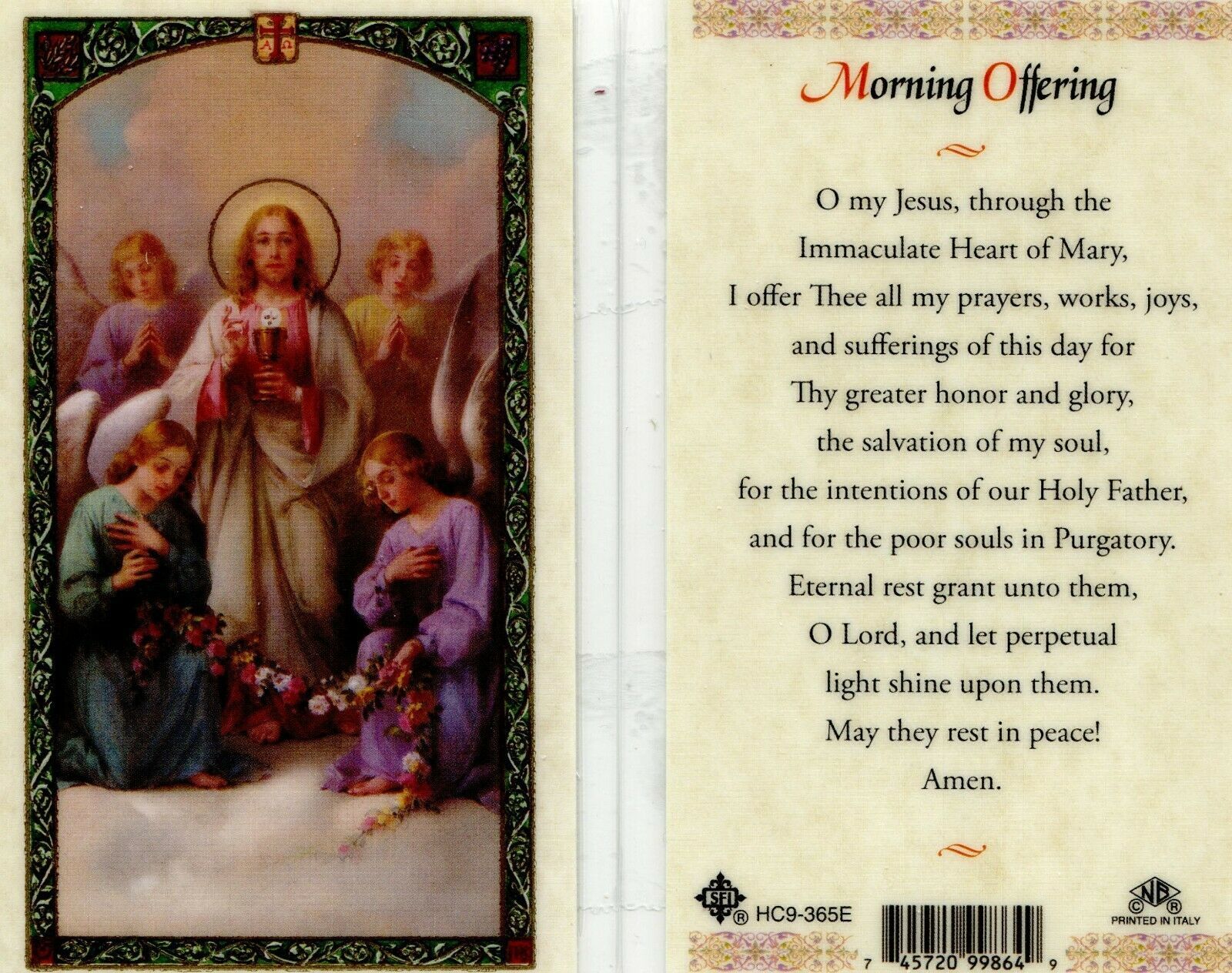
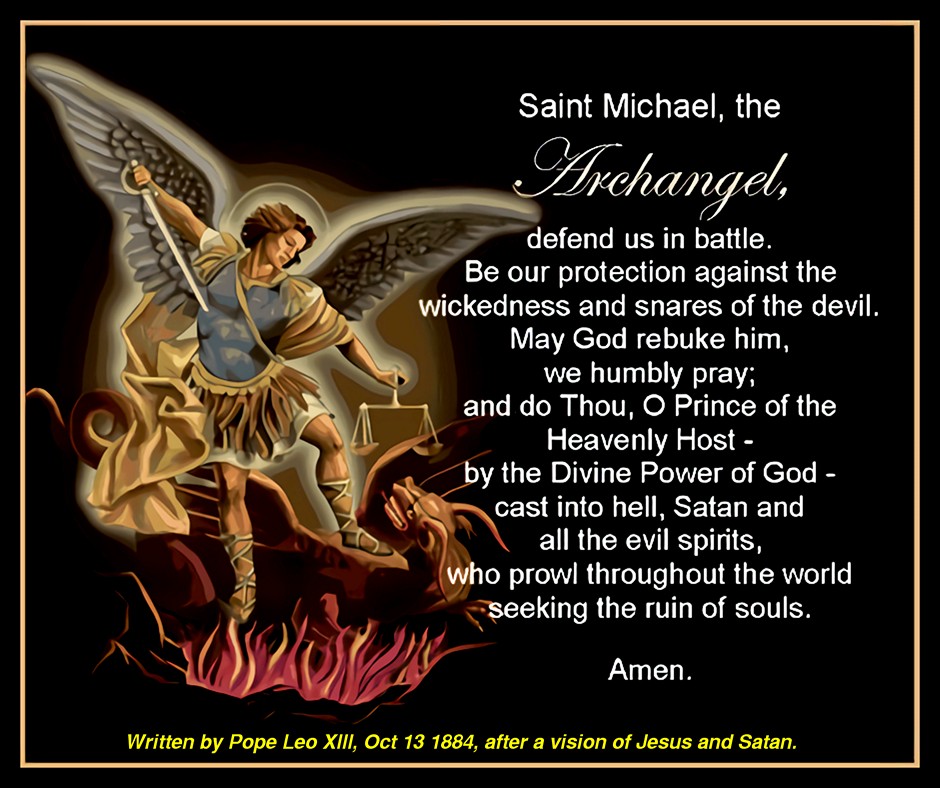
The Month of August is Dedicated to the Immaculate Heart of Mary

“In the sixth month the angel Gabriel was sent from God to a city of Galilee named Nazareth, to a virgin betrothed to a man whose name was Joseph, of the house of David; and the virgin’s name was Mary. And he came to her and said, “Hail, full of grace, the Lord is with you!”” (Luke 1:26-28)

Pope Leo XIV’s prayer intention for the month of August, 2026:
For evangelization in the city
Let us pray that in large cities often marked by anonymity and loneliness we find new ways to proclaim the Gospel, discovering creative paths to build community.

Disclaimer: Opinions posted on Free Republic are those of the individual posters and do not necessarily represent the opinion of Free Republic or its management. All materials posted herein are protected by copyright law and the exemption for fair use of copyrighted works.


