
Posted on 08/10/2026 10:55:39 PM PDT by fidelis
Memorial of Saint Clare, Virgin
The disciples approached Jesus and said, “Who is the greatest in the Kingdom of heaven?” He called a child over, placed it in their midst, and said, “Amen, I say to you, unless you turn and become like children, you will not enter the Kingdom of heaven. Whoever becomes humble like this child is the greatest in the Kingdom of heaven. And whoever receives one child such as this in my name receives me.” Matthew 18:1–5
Divine logic upends worldly assumptions and reveals the gentle majesty of God’s ways, as today’s Gospel makes clear. Worldly wisdom and ambitions of greatness must give way to the Heavenly greatness that God wants to bestow.
The disciples were not immune to ambition. Their question—“Who is the greatest in the Kingdom of heaven?”—reveals that they were still thinking in worldly terms, imagining a hierarchy of honor and status. Though their question was flawed, Jesus does not rebuke them harshly. Instead, He teaches with a gesture: He calls a child and places the child in their midst.
This visual lesson would have been startling. In the cultural context of the time, children were not considered important. They had no legal status, no authority, and little societal recognition. Due to high child mortality rates, a child often was not regarded with full dignity until reaching a more mature age—typically around twelve. For that reason, no adults would have desired to “become like children” again.
Jesus, of course, was not saying that His disciples needed to return to immaturity. Rather, they needed to “turn and become like children.” The word translated as “turn” in this passage implies a complete change of direction—a conversion of heart and mind. This transformation is one of humility, dependence, trust, and simplicity. A child does not pretend to be self-sufficient. A child receives, learns, trusts, and loves freely. The proud cannot enter the Kingdom because pride isolates the soul from grace, whereas humility opens it to divine life.
Jesus then uses the disciples’ struggle with a desire for greatness to further invite them to hear and respond to what He said: “Whoever becomes humble like this child is the greatest in the Kingdom of heaven.” Perhaps the disciples did not yet understand what heavenly greatness looked like or what it meant to become humble like the child Jesus embraced, but, nonetheless, they desired greatness. By feeding that desire—albeit a misguided one—Jesus sparks within them the motivation to listen and to follow what He taught. Suddenly, humility would have become compelling to them—something to ponder, inquire about, and desire.
Reflect today on the deepest ambitions of your heart. Do you desire greatness in the eyes of God? If so, embrace the paradox of divine logic. The path to the heights of heavenly glory is found in the lowliness of humility. Desire greatness on God’s terms, not the world’s. Be small, and God will lift you up.
Lord of all greatness, Your glory, power, and holiness are beyond anything we could ever fathom, yet You invite us to share in Your divine life. Fill my heart, I pray, with a desire for greatness, not as the world sees it, but as You define it. Make me great in Your eyes by helping me become humble like a child: dependent, trusting, little, and simple. Teach me to love You and others freely and without condition, so that my love may store up an abundance of treasure in Heaven. Jesus, I trust in You.
Please keep in mind that this is a Catholic Caucus/Devotional thread for the purpose of prayerful reflection on the Sacred Scriptures and is closed to debate of any kind. Per FR policy on Religion Caucus threads, off-topic, argumentative, and abusive comments are not allowed and will be submitted to the Mods for deletion. Thanks, and God bless you.
Today’s First Reading
From: Ezekiel 2:8—3:4
The Prophet’s mission
---------------------------
[2:8] “But you, son of man, hear what I say to you: be not rebellious like that rebellious house; open your mouth, and eat what I give you.” [9] And when I looked, behold, a hand was stretched out to me, and, lo, a written scroll was in it; [10] and he spread it before me; and it had writing on the front and on the back, and there were written on it words of lamentation and mourning and woe.
[3:1] And he said to me, “Son of man, eat what is offered to you; eat this scroll, and go, speak to the house of Israel.” So I opened my mouth, and he gave me the scroll to eat. [3] And he said to me. “Son of man, eat this scroll that I give you and fill your stomach with it.” Then I ate it; and it was in my mouth as sweet as honey.
[4] And he said to me, “Son of man, go, get you to the house of Israel, and speak with my words to them.
****************************************************************************
Commentary:
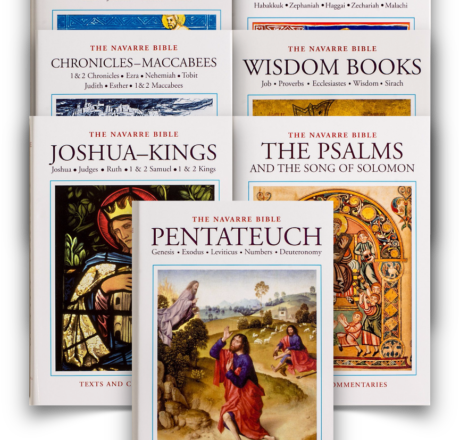
2:1-3:3. The vision by the river Chebar is all about the grandeur and glory of God, who is sovereign over all things; whereas the account given of the call of Ezekiel tells us about the prophet and about the people of Israel, for whom the message is meant. The prophet is described as a son of man, whom the Spirit moves, a prophet among the people; and they are a rebellious people. The account takes the form of an address by the Lord containing a command to pass his word on to the people (2: 1-7) and a symbolic action in which Ezekiel eats the scroll given to him by God (2:8-3:3).
2:8-3:3. The action of eating the scroll symbolizes to the people that the prophet is faithfully passing on the word of God, and therefore that they should not neglect to take on board anything he says or try to tone it down. It also shows the positive attitude of the prophet himself: he eagerly “fills his stomach” with the words of the Lord even though they are severe. Commenting on this passage, Pope St Gregory the Great points out: “The Holy Scriptures are food and drink to nourish us [....]. The obscure pages, which cannot he understood unless further explanation be provided, are food, because everything must be explained in order to be properly understood, just as everything must be chewed in order to be swallowed. We do not chew what we drink: when the teaching is clear, we swallow it whole, because we are in need of no further explanation. The prophet Ezekiel will hear difficult and obscure words, so he is told to eat the scroll, not to drink it, as if to say, ‘Meditate on this teaching and understand it well’’’ (“Homiliae in Ezechielem prophetam”, 1,10, 3).
A “written scroll” (2:9): in ancient times books were written on rolls of parchment or on papyrus (see also Jer 36:4).
From: Matthew 18:1-5, 10, 12-14
The "Little Ones" and the Kingdom. The Lost Sheep
----------------------------------------------------------------
[1] At that time, the disciples came to Jesus, saying, "Who is the greatest in the Kingdom of Heaven?" [2] And calling to Him a child, He put him in the midst of them, [3] and said, "Truly, I say to you, unless you turn and become like children, you will never enter the Kingdom of Heaven. [4] Whoever humbles himself like this child, he is the greatest in the Kingdom of Heaven. [5] "Whoever receives one such child in My name receives Me.
[10] "See that you do not despise one of these little ones; for I tell you that in Heaven their angels always behold the face of My Father who is in Heaven.
[12] "What do you think? If a man has a hundred sheep, and one of them has gone astray, does he not leave the ninety-nine on the hills and go in search of the one that went astray? [13] And if he finds it, truly, I say to you, he rejoices over it more than over the ninety-nine that never went astray. [14] So it is not the will of My Father who is in Heaven that one of these little ones should perish."
***********************************************************************
Commentary:
1-35. The teachings of Jesus recorded in chapter 18 of St. Matthew are often called the "discourse on the Church" or "ecclesiastical discourse" because they are a series of instructions on the way in which His Church is to be administered.
The first passage (Matthew 18:1-5), addressed to leaders, that is, the future hierarchy of the Church, warns them against natural tendencies to pride and ambition: even though they have positions of government, they must act with humility. In verses 6-10 Jesus emphasizes the fatherly care which pastors of the Church should have for the "little ones"--a term which covers everyone in need of special care for whatever reason (because they are recent converts, or are not well grounded in Church teaching, or are not yet adults, etc.) ...God takes special care of the weak and will punish those who harm them.
Our Lord shows similar concern for those who are experiencing spiritual difficulties. Every effort, even an heroic effort, must be made to seek out the "lost sheep" (verses 12-14). If the Church in general and each Christian in particular should be concerned to spread the Gospel, all the more reason for them to try and see that those who already embraced the faith do not go astray...
Thus, the whole of Chapter 18, the "discourse of the Church", is a survey of the future history of the Church during its earthly stage, and a series of practical rules for conduct for Christians--a kind of complement to the Sermon on the Mount, (Chapters 5-7), which is a "magna carta" for the new Kingdom established by Christ.
1-6. Clearly the disciples still suffer from human ambition: they want to occupy key positions when Jesus comes to establish the Kingdom on earth (cf. Acts 1:6). To correct their pride, our Lord shows them a child and tells them that if they want to enter the Kingdom of Heaven, they must decide to be like children: children are incapable of hating anyone and are totally innocent of vice, particularly of pride, the worst vice of all. They are simple and full of trust.
Humility is one of the main pillars of the Christian life. "If you ask me", St. Augustine says, "what is the essential thing in the religion and discipline of Jesus Christ, I shall reply: first humility, second humility and third humility" ("Letter 118").
3-4. Applying these words to our Lord's virtues, Fray Luis de Granada makes the point that humility is superior to virginity: "If you cannot imitate the virginity of the humble, then imitate the humility of the virgin. Virginity is praiseworthy, but humility is more necessary. The former is recommended to us, the latter is an obligation for us; to the former we are invited, to the latter we are obliged [...]. And so we see that the former is celebrated as voluntary sacrifice, the latter required as an obligatory sacrifice. Lastly, you can be saved without virginity, but not without humility" ("Summa De La Vida Cristiana", Book 3, Part 2, Chapter 10).
5. Receiving a child in Jesus' name is the same as receiving Jesus Himself. Because children reflect the innocence, purity, simplicity and tenderness of our Lord, "In children and in the sick a soul in love sees Him" (St J. Escriva, "The Way", 419).
10. Jesus warns that giving scandal to little children is a very serious matter, for they have angels who guard them, who will plead a case before God against those who led them to commit sin.
In this context He speaks of children having guardian angels. However, everyone, adult or child, has a guardian angel. "By God's providence angels have been entrusted with the office of guarding the human race and of accompanying every human being so as to preserve him from any serious dangers [...]. Our Heavenly Father has placed over each of us an angel under whose protection and vigilance we are" ("St. Pius V Catechism", IV, 9, 4).
This means that we should have a trusting relationship with our guardian angel. "Have confidence in your guardian Angel. Treat him as a lifelong friend--that is what he is--and he will render you a thousand services in the ordinary affairs of each day" (St J. Escriva, "The Way", 562).
12-14. This parable clearly shows our Lord's loving concern for sinners. It expresses in human terms the joy God feels when a wayward child comes back to Him.
Seeing so many souls living away from God, Pope John Paul II comments: "Unfortunately we witness the moral pollution which is devastating humanity, disregarding especially those very little ones about whom Jesus speaks."
"What must we do? We must imitate the Good Shepherd and give ourselves without rest for the salvation of souls. Without forgetting material charity and social justice, we must be convinced that the most sublime charity is spiritual charity, that is, the commitment for the salvation of souls. And souls are saved with prayer and sacrifice. This is the mission of the Church!" ("Homily to the Poor Clares of Albano," 14 August 1979).
As the RSV points out, "other ancient authorities add verse 11, "For the Son of Man came to save the lost"--apparently taken from Luke 19:10.
The Month of August is Dedicated to the Immaculate Heart of Mary

“In the sixth month the angel Gabriel was sent from God to a city of Galilee named Nazareth, to a virgin betrothed to a man whose name was Joseph, of the house of David; and the virgin’s name was Mary. And he came to her and said, “Hail, full of grace, the Lord is with you!”” (Luke 1:26-28)

Pope Leo XIV’s prayer intention for the month of August, 2026:
For evangelization in the city
Let us pray that in large cities often marked by anonymity and loneliness we find new ways to proclaim the Gospel, discovering creative paths to build community.

Disclaimer: Opinions posted on Free Republic are those of the individual posters and do not necessarily represent the opinion of Free Republic or its management. All materials posted herein are protected by copyright law and the exemption for fair use of copyrighted works.

