
Posted on 08/09/2026 10:32:27 PM PDT by fidelis
Feast of Saint Lawrence, Deacon and Martyr
Jesus said to his disciples: “Amen, amen, I say to you, unless a grain of wheat falls to the ground and dies, it remains just a grain of wheat; but if it dies, it produces much fruit. Whoever loves his life loses it, and whoever hates his life in this world will preserve it for eternal life. Whoever serves me must follow me, and where I am, there also will my servant be. The Father will honor whoever serves me.” John 12:24–26
Saint Lawrence, whom we honor today, has been highly revered by the Church since the time of his martyrdom in the mid-third century, at around the age of thirty-three—the same age at which our Lord laid down His life. Lawrence is believed to have been one of the seven deacons of Rome, likely serving as archdeacon. He was entrusted with the distribution of the Church’s goods to the poor and is said to have shared a close friendship with Pope Sixtus II.
When Emperor Valerian began persecuting the Church in 257, he issued an edict ordering the execution of bishops, priests, and deacons. On August 6, 258, Pope Sixtus and several deacons were martyred. According to Saint Ambrose, Lawrence rejoiced over their heroic deaths and grieved because he had not died alongside his spiritual father.
Soon afterward, Lawrence was arrested and commanded to surrender the Church’s treasures. Instead, he distributed the goods to the poor and, when brought before the prefect, presented the poor themselves as the true treasures of the Church. Enraged by this bold act, the prefect sentenced Lawrence to death by roasting on a gridiron. Tradition holds that Lawrence, with holy defiance, declared as he burned, “The flesh is roasted, turn it and eat.”
Saint Lawrence, like all martyrs, accomplished more for the Church in death than he could have in life. He embodies Jesus’ solemn words in today’s Gospel: “Unless a grain of wheat falls to the ground and dies, it remains just a grain of wheat; but if it dies, it produces much fruit.” It may be said that every martyr dies twice: first, through the total surrender of self in loving service and detachment from the world; and second, through physical martyrdom. To “hate” one’s life in this world means to live with total abandonment to God’s will, free from self-centered pursuits. Living in this way prepared Lawrence for his final sacrifice.
The Church honors those who embraced physical martyrdom because they become living icons of Christ’s sacrificial love. They are visible expressions of the Gospel, and their witness bears tremendous spiritual fruit.
Reflect today on the example of Saint Lawrence and the deep meaning of Jesus’ words. Are you also willing to become that grain of wheat, falling to the ground, dying to self, and bearing fruit for the Kingdom of God? What attachments, fears, or self-centered desires do you still cling to that deter you from the spiritual witness of martyrdom? God is calling us to a deeper detachment from this world so that we may live more fully for Him. Though physical martyrdom may not be asked of you, the spiritual martyrdom of daily self-giving is a path all are called to walk. Imitate Saint Lawrence by embracing that path with courage, joy, and total trust in God’s providence, so that your life, too, may produce much fruit for eternity.
My sacrificial Lord, You filled Saint Lawrence with such fervent love that he counted death as gain, trusting in the abundant fruit his martyrdom would yield. Grant me that same courage and willing spirit, that I may die to self each day and live only for You. May my life bear rich and lasting fruit for the coming of Your Kingdom. Jesus, I trust in You.
Please keep in mind that this is a Catholic Caucus/Devotional thread for the purpose of prayerful reflection on the Sacred Scriptures and is closed to debate of any kind. Per FR policy on Religion Caucus threads, off-topic, argumentative, and abusive comments are not allowed and will be submitted to the Mods for deletion. Thanks, and God bless you.
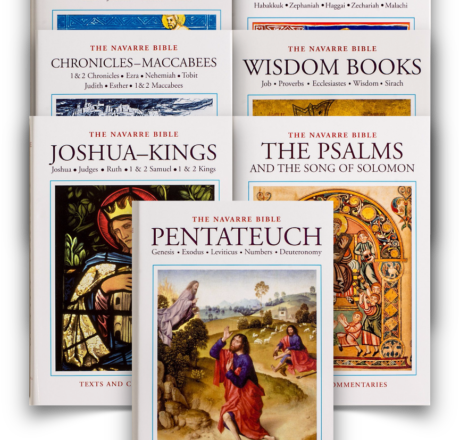
Today’s First Reading
From: 2 Corinthians 9:6-10
Blessings To Be Expected
------------------------
[6] The point is this: he who sows sparingly will also reap sparingly, and he who sows bountifully will also reap bountifully. [7] Each one must do as he has made up his mind, not reluctantly or under compulsion, for God loves a cheerful giver. [8] And God is able to provide you with every blessing in abundance, so that you may always have enough of everything and may provide in abundance for every good work. [9] As it is written, "He scatters abroad, he gives to the poor; his righteousness endures for ever." [10] He who supplies seed to the sower and bread for food will supply and multiply your resources and increase the harvest of your righteousness.
***********************************************************************
Commentary:
6-15. The collection appeal ends with some remarks about the benefits that accrue from it. First, St Paul says that the generous almsgiving of the Corinthians will stand to them in this life and in the next (vv. 6-10), and then he refers to its effects on the faithful in Jerusalem: they will praise God and feel closer to the Christians of Corinth (vv. 11-15).
A person who is generous in almsgiving draws down on himself the blessings of God. St Augustine says: "Your Lord says this to you, [...] Give to me and receive. In due course I will give back what is due to you. What will I give back? You gave little to me, you will receive a great deal; you gave me earthly things, I will give back heavenly things; you gave me temporal things you will receive eternal things; you gave me what was mine, you will receive me, myself [...].' See whom you lent to. He nourishes (others) and (yet he himself) suffers hunger for your sake; he gives and is needy. When he gives, you wish to receive; when he is needy, you are unwilling to give. Christ is needy when a poor man is needy. He who is disposed to give eternal life to all his own has deigned to receive temporal things in (the person of) anyone who is needy' ("Sermon 33", 8).
6. This image of sowing and reaping is often used in Sacred Scripture to indicate the connection between one's actions and reward or punishment in the next life (cf. Prov 22:8; Mt 25:24-26; Gal 6:7f). What the Apostle says here reminds us of our Lord's promise: "Give and it will be given to you; good measure, pressed down, shaken together, running over, will be put into your lap" (Lk 6:38). However much we give God in this life, he will reward us with much more in the next.
7. "God loves a cheerful giver": a teaching often found in Scripture (cf. Deut 15:10; Ps 100:2; Sir 35:11; Rom 12:8). An alms or a service done reluctantly can never please anyone, particularly God our Lord: "If you give bread and it makes you sad to do so," St Augustine comments, "you lose both the bread and the reward" (St Augustine, "Enarrationes in Psalmos", 42, 8); whereas the Lord is delighted when a person gives something or gives himself lovingly and spontaneously, not as if he were doing a great favor (cf. "Friends of God", 140).
8-10. St Paul emphasizes the abundant divine blessings--both temporal and spiritual--which generous almsgiving brings. In the Old Testament we read in the Book of Tobias: "Give alms from your possessions to all who live uprightly, and do not let your eye begrudge the gift when you make it. Do not turn your face away from any poor man, and the face of God will not be turned away from you. If you have many possessions, make your gift from them in proportion; if few, do not be afraid to give according to the little you have. So you will be laying up a good treasure for yourself against the day of necessity. For charity delivers from death and keeps you from entering the darkness; and for all who practice it charity is an excellent offering in the presence of Most High" (4:7-11). To almsgiving can be applied our Lord's promises about the hundred-fold in this life and then everlasting life—promises made to all those who give up something in his name (cf. Mt 19:28f).
"Righteousness" is equivalent to holiness. In the Bible the person is described as righteous or "just" who strives to do God's will and serve him to the best of his ability (cf., e.g., notes on Mt 1:19; 5:6).
10. "For," comments St John Chrysostom, "if even to those who sow the earth and to those who are concerned about the needs of the body, God gives in great abundance, much more will he give to those who till the soil of heaven and apply themselves to the salvation of their souls, for he wills that we should spare no sacrifice in that regard [...].
"This holy apostle gives these two principles: in temporal things one should limit oneself to what is necessary; but in spiritual things one should seek as much as possible. Therefore he asks that we should not simply give alms, but give alms generously. That is why he calls alms 'seed'. Just as corn cast into the ground produces a crop, so generous alms produces righteousness and abundant harvest" ("Hom. on 2 Cor", 20).
From: John 12:24-26
Jesus Foretells His Glorification (Continuation)
------------------------------------------------
[24] "Truly, truly, I say to you, unless a grain of wheat falls into the earth and dies, it remains alone; but if it dies, it bears much fruit. [25] He who loves his life loses it, and he who hates his life in this world will keep it for eternal life. [26] If anyone serves me, he must follow me; and where I am, there shall my servant be also; if any one serves me, the Father will honor him.
***********************************************************************
Commentary:
24-25. There is an apparent paradox here between Christ's humiliation and his glorification. Thus, "it was appropriate that the loftiness of his glorification should be preceded by the lowliness of his passion" (St Augustine, "In Ioann. Evang.", 51, 8).
This is the same idea we find in St Paul, when he says that Christ humbled himself and became obedient unto death, even death on a cross, and that therefore God the Father exalted him above all created things (cf. Phil 2:8-9). This is a lesson and an encouragement to the Christian, who should see every type of suffering and contradiction as a sharing in Christ's cross, which redeems us and exalts us. To be supernaturally effective, a person has to die to himself, forgetting his comfort and shedding his selfishness. "If the grain of wheat does not die, it remains unfruitful. Don't you want to be a grain of wheat, to die through mortification, and to yield a rich harvest? May Jesus bless your wheatfield!" (St J. Escriva, "The Way", 199).
26. Our Lord has spoken about his sacrifice being a condition of his entering into glory. And what holds good for the Master also applies to his disciples (cf. Mt 10:24; Lk 6:40). Jesus wants each of us to be of service to him. It is a mystery of God's plan that he--who is all, who has all and who needs nothing and nobody--should choose to need our help to ensure that his teaching and the salvation wrought by him reaches all men.
"To follow Christ: that is the secret. We must accompany him so closely that we come to live with him, like the first Twelve did; so closely, that we become identified with him. Soon we will be able to say, provided we have not put obstacles in the way of grace, that we have put on, have clothed ourselves with our Lord Jesus Christ (cf. Rom 13:14). [...]
"I have distinguished as it were four stages in our effort to identify ourselves with Christ--seeking him, finding him, getting to know him, loving him. It may seem clear to you that you are only at the first stage. Seek him then, hungrily; seek him within yourselves with all your strength. If you act with determination, I am ready to guarantee that you have already found him, and have begun to get to know him and to love him, and to hold your conversation in heaven (cf. Phil 3:20)" (St J. Escriva, "Friends of God", 299-300).
The Month of August is Dedicated to the Immaculate Heart of Mary

“In the sixth month the angel Gabriel was sent from God to a city of Galilee named Nazareth, to a virgin betrothed to a man whose name was Joseph, of the house of David; and the virgin’s name was Mary. And he came to her and said, “Hail, full of grace, the Lord is with you!”” (Luke 1:26-28)

Pope Leo XIV’s prayer intention for the month of August, 2026:
For evangelization in the city
Let us pray that in large cities often marked by anonymity and loneliness we find new ways to proclaim the Gospel, discovering creative paths to build community.

Disclaimer: Opinions posted on Free Republic are those of the individual posters and do not necessarily represent the opinion of Free Republic or its management. All materials posted herein are protected by copyright law and the exemption for fair use of copyrighted works.

