Free Republic
Browse · Search
Religion
Topics · Post Article

Skip to comments.

Catholic Caucus: Daily Mass Readings 8-August-2026
Universalis/Jerusalem Bible ^

Posted on 08/09/2026 10:09:28 AM PDT by annalex

8 August 2026

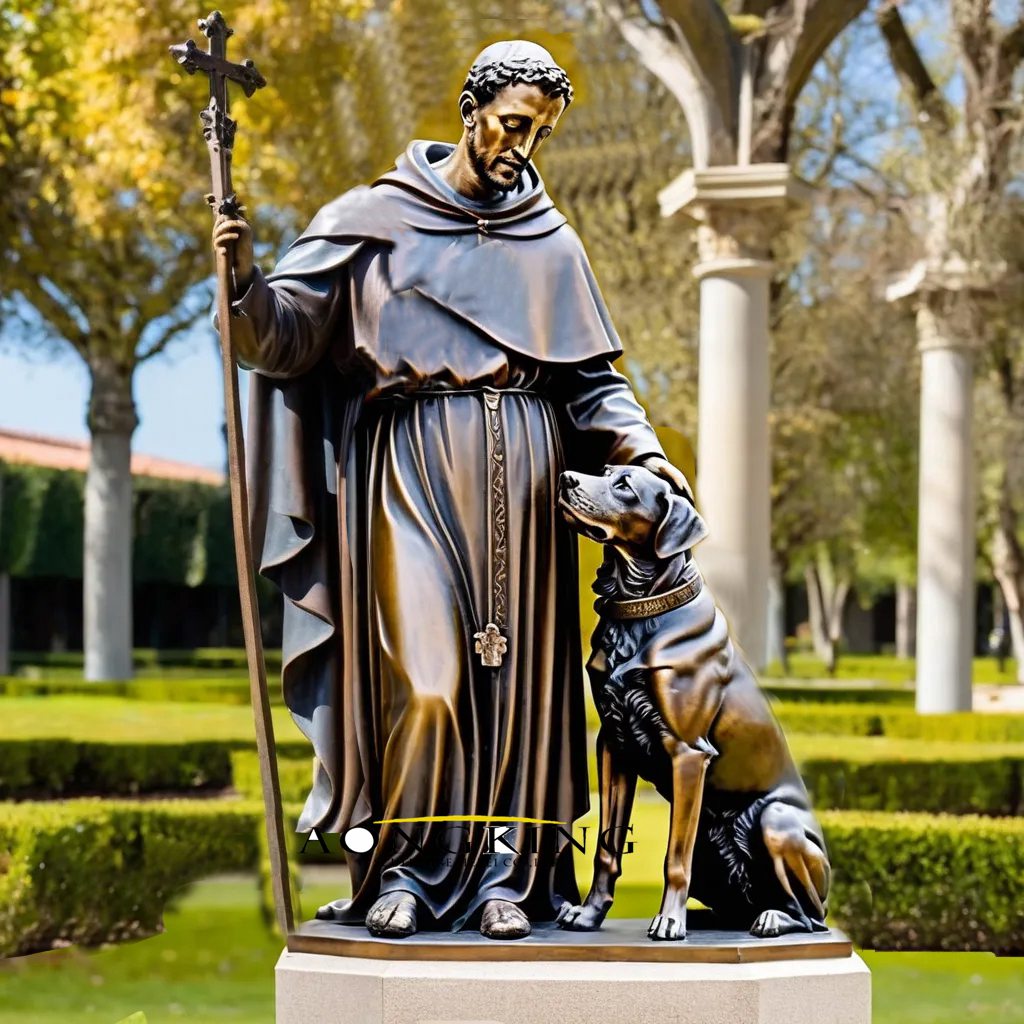
Saint Dominic, Priest
on Saturday of week 18 in Ordinary Time


St Dominic's in Brick, NJ, altar formerly from Asbury Park, which had closed.

Readings at Mass

Liturgical Colour: White. Year: A(II).

Readings for the feria

Readings for the memorial

These are the readings for the feria


First reading
Habakkuk 1:12-2:4

If the vision comes slowly, wait: it will come without fail

Are not you, from ancient times the Lord,
my God, my Holy One, who never dies?
O Lord, you have made this people an instrument of justice,
set it firm as a rock in order to punish.
Your eyes are too pure to rest on wickedness,
you cannot look on at tyranny.
Why do you look on while men are treacherous,
and stay silent while the evil man swallows a better man than he?
You treat mankind like fishes in the sea,
like creeping, masterless things.
A people, these, who catch all on their hook,
who draw them with their net,
in their dragnet gather them,
and so, triumphantly, rejoice.
At this, they offer a sacrifice to their net,
and burn incense to their dragnet,
for providing them with luxury
and lavish food.
Are they then to empty their net unceasingly,
slaughtering nations without pity?
I will stand on my watchtower,
and take up my post on my battlements,
watching to see what he will say to me,
what answer he will make to my complaints.
Then the Lord answered and said,
‘Write the vision down,
inscribe it on tablets
to be easily read,
since this vision is for its own time only:
eager for its own fulfilment, it does not deceive;
if it comes slowly, wait,
for come it will, without fail.
‘See how he flags, he whose soul is not at rights,
but the upright man will live by his faithfulness.’


Responsorial Psalm
Psalm 9A(9):8-13
You will never forsake those who seek you, O Lord.
The Lord sits enthroned for ever.
  He has set up his throne for judgement;
he will judge the world with justice,
  he will judge the peoples with his truth.
You will never forsake those who seek you, O Lord.
For the oppressed let the Lord be a stronghold,
  a stronghold in times of distress.
Those who know your name will trust you;
  you will never forsake those who seek you.
You will never forsake those who seek you, O Lord.
Sing psalms to the Lord who dwells in Zion.
  Proclaim his mighty works among the peoples,
for the Avenger of blood has remembered them,
  has not forgotten the cry of the poor.
You will never forsake those who seek you, O Lord.

Gospel Acclamationcf.Ep1:17,18
Alleluia, alleluia!
May the Father of our Lord Jesus Christ
enlighten the eyes of our mind,
so that we can see what hope his call holds for us.
Alleluia!
Or:cf.2Tim1:10
Alleluia, alleluia!
Our Saviour Jesus Christ abolished death
and he has proclaimed life through the Good News.
Alleluia!

Gospel
Matthew 17:14-20

If your faith were the size of a mustard seed, the mountain would move

A man came up to Jesus and went down on his knees before him. ‘Lord,’ he said ‘take pity on my son: he is a lunatic and in a wretched state; he is always falling into the fire or into the water. I took him to your disciples and they were unable to cure him.’ ‘Faithless and perverse generation!’ Jesus said in reply ‘How much longer must I be with you? How much longer must I put up with you? Bring him here to me.’ And when Jesus rebuked it the devil came out of the boy who was cured from that moment.
  Then the disciples came privately to Jesus. ‘Why were we unable to cast it out?’ they asked. He answered, ‘Because you have little faith. I tell you solemnly, if your faith were the size of a mustard seed you could say to this mountain, “Move from here to there,” and it would move; nothing would be impossible for you.’

Continue

These are the readings for the memorial


First reading
1 Corinthians 2:1-10

The wisdom that God predestined to be for our glory

Brothers, when I came to you, it was not with any show of oratory or philosophy, but simply to tell you what God had guaranteed. During my stay with you, the only knowledge I claimed to have was about Jesus, and only about him as the crucified Christ. Far from relying on any power of my own, I came among you in great ‘fear and trembling’ and in my speeches and the sermons that I gave, there were none of the arguments that belong to philosophy; only a demonstration of the power of the Spirit. And I did this so that your faith should not depend on human philosophy but on the power of God.
  But still we have a wisdom to offer those who have reached maturity: not a philosophy of our age, it is true, still less of the masters of our age, which are coming to their end. The hidden wisdom of God which we teach in our mysteries is the wisdom that God predestined to be for our glory before the ages began. It is a wisdom that none of the masters of this age have ever known, or they would not have crucified the Lord of Glory; we teach what scripture calls: the things that no eye has seen and no ear has heard, things beyond the mind of man, all that God has prepared for those who love him.
  These are the very things that God has revealed to us through the Spirit.


Responsorial Psalm
Psalm 95(96):1-3,7-8,10
Proclaim the wonders of the Lord among all the peoples.
O sing a new song to the Lord,
  sing to the Lord all the earth.
  O sing to the Lord, bless his name.
Proclaim the wonders of the Lord among all the peoples.
Proclaim his help day by day,
  tell among the nations his glory
  and his wonders among all the peoples.
Proclaim the wonders of the Lord among all the peoples.
Give the Lord, you families of peoples,
  give the Lord glory and power;
  give the Lord the glory of his name.
Proclaim the wonders of the Lord among all the peoples.
Proclaim to the nations: ‘God is king.’
  The world he made firm in its place;
  he will judge the peoples in fairness.
Proclaim the wonders of the Lord among all the peoples.

Gospel AcclamationJn8:12
Alleluia, alleluia!
I am the light of the world, says the Lord;
anyone who follows me will have the light of life.
Alleluia!

GospelLuke 9:57-62

'I will follow you wherever you go'

As Jesus and his disciples travelled along they met a man on the road who said to him, ‘I will follow you wherever you go.’ Jesus answered, ‘Foxes have holes and the birds of the air have nests, but the Son of Man has nowhere to lay his head.’
  Another to whom he said, ‘Follow me’, replied, ‘Let me go and bury my father first.’ But he answered, ‘Leave the dead to bury their dead; your duty is to go and spread the news of the kingdom of God.’
  Another said, ‘I will follow you, sir, but first let me go and say goodbye to my people at home.’ Jesus said to him, ‘Once the hand is laid on the plough, no one who looks back is fit for the kingdom of God.’

Continue

Universalis podcast: The week ahead – from 9 to 15 August

The Assumption. The Divine Comedy: a prologue to a series on the Seven Deadly Sins. (25 minutes)
Episode notes.Play

The readings on this page are from the Jerusalem Bible, which is used at Mass in most of the English-speaking world. The New American Bible readings, which are used at Mass in the United States, are available in the Universalis apps, programs and downloads.

You can also view this page with the Gospel in Greek and English.


TOPICS: Catholic; General Discusssion; Prayer; Worship
KEYWORDS: catholic; lk9; mt17; ordinarytime; prayer

Click here: to donate by Credit Card

Or here: to donate by PayPal

Or by mail to: Free Republic, LLC - PO Box 9771 - Fresno, CA 93794

Thank you very much and God bless you.

For your reading, reflection, faith-sharing, comments, questions, discussion.

1 posted on 08/09/2026 10:09:28 AM PDT by annalex
[ Post Reply | Private Reply | View Replies]

To: All

KEYWORDS: catholic; lk9; mt17; ordinarytime; prayer; Click to Add Keyword


2 posted on 08/09/2026 10:10:39 AM PDT by annalex (fear them not)
[ Post Reply | Private Reply | To 1 | View Replies]

To: nickcarraway; NYer; ELS; Pyro7480; livius; ArrogantBustard; Catholicguy; RobbyS; marshmallow; ...


Alleluia Ping

Please FReepmail me to get on/off the Alleluia Ping List.

catching up with yesterday

3 posted on 08/09/2026 10:12:09 AM PDT by annalex (fear them not)
[ Post Reply | Private Reply | To 2 | View Replies]

To: annalex
Chris Robinson: My Dad [our Jim Robinson] Passed Away Peacefully Monday Night (October 27th) In Our Home.
Jim still needs our prayers. Thread 2
Prayer thread for Salvation's recovery
Pray for Ukraine
Prayer thread for Fidelis' recovery
Update on Jim Robinson's health issues
4 posted on 08/09/2026 10:12:46 AM PDT by annalex (fear them not)
[ Post Reply | Private Reply | To 3 | View Replies]

To: annalex
Matthew
 English: Douay-RheimsLatin: Vulgata ClementinaGreek NT: Byzantine/Majority Text (2000)
 Matthew 17
14And when he was come to the multitude, there came to him a man falling down on his knees before him, saying: Lord, have pity on my son, for he is a lunatic, and suffereth much: for he falleth often into the fire, and often into the water. Et cum venisset ad turbam, accessit ad eum homo genibus provolutus ante eum, dicens : Domine, miserere filio meo, quia lunaticus est, et male patitur : nam sæpe cadit in ignem, et crebro in aquam.και ελθοντων αυτων προς τον οχλον προσηλθεν αυτω ανθρωπος γονυπετων αυτον
1517:14 And when he was come to the multitude, there came to him a man falling down on his knees before him, saying: Lord, have pity on my son, for he is a lunatic, and suffereth much: for he falleth often into the fire, and often into the water. 17:14 Et cum venisset ad turbam, accessit ad eum homo genibus provolutus ante eum, dicens : Domine, miserere filio meo, quia lunaticus est, et male patitur : nam sæpe cadit in ignem, et crebro in aquam.και λεγων κυριε ελεησον μου τον υιον οτι σεληνιαζεται και κακως πασχει πολλακις γαρ πιπτει εις το πυρ και πολλακις εις το υδωρ
1617:15 And I brought him to thy disciples, and they could not cure him. 17:15 Et obtuli eum discipulis tuis, et non potuerunt curare eum.και προσηνεγκα αυτον τοις μαθηταις σου και ουκ ηδυνηθησαν αυτον θεραπευσαι
1717:16 Then Jesus answered and said: O unbelieving and perverse generation, how long shall I be with you? How long shall I suffer you? bring him hither to me. 17:16 Respondens autem Jesus, ait : O generatio incredula, et perversa, quousque ero vobiscum ? usquequo patiar vos ? Afferte huc illum ad me.αποκριθεις δε ο ιησους ειπεν ω γενεα απιστος και διεστραμμενη εως ποτε εσομαι μεθ υμων εως ποτε ανεξομαι υμων φερετε μοι αυτον ωδε
1817:17 And Jesus rebuked him, and the devil went out of him, and the child was cured from that hour. 17:17 Et increpavit illum Jesus, et exiit ab eo dæmonium, et curatus est puer ex illa hora.και επετιμησεν αυτω ο ιησους και εξηλθεν απ αυτου το δαιμονιον και εθεραπευθη ο παις απο της ωρας εκεινης
1917:18 Then came the disciples to Jesus secretly, and said: Why could not we cast him out? 17:18 Tunc accesserunt discipuli ad Jesum secreto, et dixerunt : Quare nos non potuimus ejicere illum ?τοτε προσελθοντες οι μαθηται τω ιησου κατ ιδιαν ειπον δια τι ημεις ουκ ηδυνηθημεν εκβαλειν αυτο
2017:19 Jesus said to them: Because of your unbelief. For, amen I say to you, if you have faith as a grain of mustard seed, you shall say to this mountain, Remove from hence hither, and it shall remove; and nothing shall be impossible to you. 17:19 Dixit illis Jesus : Propter incredulitatem vestram. Amen quippe dico vobis, si habueritis fidem sicut granum sinapis, dicetis monti huic : Transi hinc illuc, et transibit, et nihil impossibile erit vobis.ο δε ιησους ειπεν αυτοις δια την απιστιαν υμων αμην γαρ λεγω υμιν εαν εχητε πιστιν ως κοκκον σιναπεως ερειτε τω ορει τουτω μεταβηθι εντευθεν εκει και μεταβησεται και ουδεν αδυνατησει υμιν
2117:20 But this kind is not cast out but by prayer and fasting. 17:20 Hoc autem genus non ejicitur nisi per orationem et jejunium.τουτο δε το γενος ουκ εκπορευεται ει μη εν προσευχη και νηστεια

(*) Verses 14-15 breakdown differs.

5 posted on 08/09/2026 10:15:33 AM PDT by annalex (fear them not)
[ Post Reply | Private Reply | To 4 | View Replies]

To: annalex

Catena Aurea by St. Thomas Aguinas

17:14–18

14. And when they were come to the multitude, there came to him a certain man, kneeling down to him, and saying,

15. Lord, have mercy on my son: for he is lunatick, and sore vexed: for ofttimes he falleth into the fire, and oft into the water.

16. And I brought him to thy disciples, and they could not cure him.

17. Then Jesus answered and said, O faithless and perverse generation, how long shall I be with you? how long shall I suffer you? bring him hither to me.

18. And Jesus rebuked the devil; and he departed out of him: and the child was cured from that very hour.

ORIGEN. Peter, anxious for such desirable life, and preferring his own benefit to that of many, had said, It is good for us to be here. But since charity seeks not her own, Jesus did not this which seemed good to Peter, but descended to the multitude, as it were from the high mount of His divinity, that He might be of use to such as could not ascend because of the weakness of their souls; whence it is said, And when he was come to the multitude; for if He had not gone to the multitude with His elect disciples, there would not have come near to Him the man of whom it is added, There came to him a man kneeling down, and saying, Lord, have mercy on my son. Consider here, that sometimes those that are themselves the sufferers believe and entreat for their own healing, sometimes others for them, as he who kneels before Him praying for his son, and sometimes the Saviour heals of Himself unasked by any. First, let us see what this means that follows, For he is lunatic, and sore vexed. Let the physicians talk as they list, for they think it no unclean spirit, but some bodily disorder, and say, that the humours in the head are governed in their motions by sympathy with the phases of the moon, whose light is of the nature of humours. But we who believe the Gospel say that it is an unclean spirit that works such disorders in men. The spirit observes the moon’s changes, that it may cheat men into the belief that the moon is the cause of their sufferings, and so prove God’s creation to be evil; as other dæmons lay wait for men following the times and courses of the stars, that they may speak wickedness in high places, calling some stars malignant, others benign; whereas no star was made by God that it should produce evil. In this that is added, For ofttimes he falls into the fire, and oft into the water,

CHRYSOSTOM. is to be noted, that were not man fortified here by Providence, he would long since have perished; for the dæmons who cast him into the fire, and into the water, would have killed him outright, had God not restrained him.

JEROME. In saying, And I brought him to thy disciples, and they could not heal him, he covertly accuses the Apostles, whereas that a cure is impossible is sometimes the effect not of want of power in those that undertake it, but of want of faith in those that are to be healed,

CHRYSOSTOM. See herein also his folly, in that before the multitude he appeals to Jesus against His disciples. But He clears them from shame, inputing their failure to the patient himself; for many things shew that he was weak in faith. But He addresses His reproof not to the man singly, that He may not trouble him, but to the Jews in general. For many of those present, it is likely, had improper thoughts concerning the disciples, and therefore it follows, Jesus answered and said, O faithless and perverse generation, how long shall I be with you, how long shall I suffer you? His How long shall I be with you? shews that death was desired by Him, and that He longed for His withdrawal.

REMIGIUS. It may be known also, that not now for the first time, but of a long time, the Lord had borne the Jews’ stubbornness, whence He says, How long shall I suffer you? because I have now a long while endured your iniquities, and ye are unworthy of My presence.

ORIGEN. Or; Because the disciples could not heal him as being weak in faith, He said to them, O faithless generation, adding perverse, to shew that their perverseness had introduced evil beyond their nature. But I suppose, that because of the perverseness of the whole human race, as it were oppressed with their evil nature, He said, How long shall I be with you?

JEROME. Not that we must think that He was overcome by weariness of them, and that The meek and gentle broke out into words of wrath, but as a physician who might see the sick man acting against his injunctions, would say, How long shall I frequent your chamber? How long throw away the exercise of my skill, while I prescribe one thing, and you do another? That it is the sin, and not the man with whom He is angry, and that in the person of this one man He convicts the Jews of unbelief, is clear from what He adds, Bring him to me.

CHRYSOSTOM. When He had vindicated His disciples, He leads the boy’s father to a cheering hope of believing that he shall be delivered out of this evil and that the father might be led to believe the miracle that was coming, seeing the dæmons was disturbed even when the child was only called;

JEROME. He rebuked him, that is, not the sufferer, but the dæmons.

REMIGIUS. In which deed He left an example to preachers to attack sins, but to assist men.

JEROME. Or, His reproof was to the child, because for his sins he had been seized on by the dæmons.

RABANUS. The lunatic is figuratively one who is hurried into fresh vices every hour, one while is cast into the fire, with which the hearts of the adulterers burn; or again into the waters of pleasures or lusts, which yet have not strength to quench love. (Hos. 7:4, 6.)

AUGUSTINE. (Quæst. Ev. i. 22.) Or the fire pertains to anger, which aims upwards, water to the lusts of the flesh.

ORIGEN. Of the changefulness of the sinner it is said, The fool changes as the moon. (Ecclus. 27:12.) We may see sometimes that an impulse towards good works comes over such, when, lo! again as by a sudden seizure of a spirit they are laid hold of by their passions, and fall from that good state in which they were supposed to stand. Perhaps his father stands for the Angel to whom was allotted the care of this lunatic, praying the Physician of souls, that He would set free his son, who could not be delivered from his suffering by the simple word of Christ’s disciples, because as a deaf person he cannot receive their instruction, and therefore he needs Christ’s word, that henceforth he may not act without reason.

17:19–21

19. Then came the disciples to Jesus apart, and said, Why could not we cast him out?

20. And Jesus said unto them, Because of your unbelief: for verily I say unto you, If ye have faith as a grain of mustard seed, ye shall say unto this mountain, Remove hence to yonder place; and it shall remove; and nothing shall be impossible unto you.

21. Howbeit this kind goeth not out but by prayer and fasting.

CHRYSOSTOM. The disciples had received from the Lord the power over unclean spirits, and when they could not heal the dæmoniac thus brought to them, they seem to have had misgivings lest they had forfeited the grace once given to them; hence their question. And they ask it apart, not out of shame, but because of the unspeakable matter of which they were to ask. Jesus said unto them, Because of your unbelief.

HILARY. The Apostles had believed, yet their faith was imperfect; while the Lord tarried in the mount, and they abode below with the multitude, then faith had become stagnant.

CHRYSOSTOM. Whence it is plain that the disciples’ faith was grown weak, yet not all, for those pillars were there, Peter, and James, and John.

JEROME. This is what the Lord says in another place, Whatsoever ye shall ask in my name believing, ye shall receive. (John 16:23.) Therefore when we receive not, it is not the weakness of Him that gives, but the fault of them that ask. Mat. 21:22.)

CHRYSOSTOM. But it is to be known, that, as ofttimes the faith of him that draweth near to receive supplies the miraculous virtue, so ofttimes the power of those that work the miracle is sufficient even without the faith of those who sought to receive. (Acts 10:4.) Cornelius and his household, by their faith, attracted to them the grace of the Holy Spirit; but the dead man who was cast into the sepulchre of Elisha, was revived solely by virtue of the holy body. (2 Kings 13:21.) It happened that the disciples were then weak in faith, for indeed they were but in an imperfect condition before the cross; wherefore He here tells them, that faith is the mean of miracles, Verily I say unto you, if ye shall have faith as a grain of mustard-seed, ye shall say to this mountain, Remove hence, and it shall remove.

JEROME. Some think that the faith that is compared to a grain of mustard-seed is a little faith, whereas the Apostle says, If I shall have such faith that I could remove mountains. (1 Cor. 13:2.) The faith therefore which is compared to a grain of mustard-seed is a great faith.

GREGORY. (Mor. pref. c. 2.) The mustard-seed, unless it be bruised, does not give out its qualities, so if persecution fall upon a holy man, straightway what had seemed weak and contemptible in him is roused into the heat and fervour of virtue.

ORIGEN. Or, all faith is likened to a grain of mustard-seed, because faith is looked on with contempt by men, and shews as something poor and mean; but when a seed of this kind lights upon a good heart as its soil, it becomes a great tree. The weakness of this lunatic’s faith is yet so great, and Christ is so strong to heal him amidst all his evils, that He likens it to a mountain which cannot be cast out but by the whole faith of him who desires to heal afflictions of this sort.

CHRYSOSTOM. So He not only promises the removal of mountains, but goes beyond, saying, And nothing shall be impossible to you.

RABANUS. For faith gives our minds such a capacity for the heavenly gifts, that whatsoever we will we may easily obtain from a faithful Master.

CHRYSOSTOM. If you shall ask, Where did the Apostles remove mountains? I answer, that they did greater things, bringing many dead to life. It is told also of some saints, who came after the Apostles, that they have in urgent necessity removed mountainsb. But if mountains were not removed in the. Apostles’ time, this was not because they could not, but because they would not, there being no pressing occasion. And the Lord said not that they should do this thing, but that they should have power to do it. Yet it is likely that they did do this, but that it is not written, for indeed not all the miracles that they wrought are written.

JEROME. Or; the mountain is not said of that which we see with the eyes of the body, but signified that spirit which was removed by the Lord out of the lunatic, who is said by the Prophet to be the corrupter of the whole earth,

GLOSS. (interlin.) So that the sense then is, Ye shall say to this mountain, that is to the proud devil, Remove hence, that is from the possessed body into the sea, that is into the depths of hell, and it shall remove, and nothing shall be impossible to you, that is, no sickness shall be incurable.

AUGUSTINE. (ubi sup.) Otherwise; That the disciples in working their miracles should not be lifted up with pride, they are warned rather by the humbleness of their faith, as by a grain of mustard-seed, to take care that they remove all pride of earth, which is signified by the mountain in this place.

RABANUS. But while He teaches the Apostles how the dæmon ought to be cast out, He instructs all in regulation of life; that we may all know that all the heavier inflictions, whether of unclean spirits, or temptations of men, may be removed by fasts and prayers; and that the wrath also of the Lord may be appeased by this remedy alone; whence he adds, Howbeit this kind is not cast out but by prayer and fasting.

CHRYSOSTOM. And this He says not of lunatics in particular, but of the whole class of dæmons. For fast endues with great wisdom, makes a man as an Angel from heaven, and beats down the unseen powers of evil. But there is need of prayer as even still more important. And who prays as he ought, and fasts, had need of little more, and so is not covetous, but ready to almsgiving. For he who fasts, is light and active, and prays wakefully, and quenches his evil lusts, makes God propitious, and humbles his proud stomach. And he who prays with his fasting, has two wings, lighter than the winds themselves. For he is not heavy and wandering in his prayers, (as is the case with many,) but his zeal is as the warmth of fire, and his constancy as the firmness of the earth. Such an one is most able to contend with dæmons, for there is nothing more powerful than a man who prays properly. But if your health be too weak for strict fast, yet is it not for prayer, and if you cannot fast, you can abstain from indulgences. And this is not a little, and not very different from fast.

ORIGEN. If then we shall ever be required to be employed in the healing of those who are suffering any thing of this sort, we shall not adjure them, nor ask them questions, nor even speak, as though the unclean spirit could hear us, but by our fasting and our prayers drive away the evil spirits.

GLOSS. (ord.) Or; This class of dæmons, that is the variety of carnal pleasures, is not overcome unless the spirit be strengthened by prayer, and the flesh enfeebled by fast.

REMIGIUS. Or, fasting is here understood generally as abstinence not from food only, but from all carnal allurements, and sinful passions. In like manner prayer is to be understood in general as consisting in pious and good acts, concerning which the Apostle speaks, Pray without ceasing. (1 Thess. 5:17.)

Catena Aurea Matthew 17


6 posted on 08/09/2026 10:17:24 AM PDT by annalex (fear them not)
[ Post Reply | Private Reply | To 5 | View Replies]

To: annalex


Exorcism of demons whose name is Legion

Gospel of the Healing
AD 1353
Armenia

7 posted on 08/09/2026 10:17:51 AM PDT by annalex (fear them not)
[ Post Reply | Private Reply | To 6 | View Replies]

To: annalex
Luke
 English: Douay-RheimsLatin: Vulgata ClementinaGreek NT: Byzantine/Majority Text (2000)
 Luke 9
57And it came to pass, as they walked in the way, that a certain man said to him: I will follow thee withersoever thou goest. Factum est autem : ambulantibus illis in via, dixit quidam ad illum : Sequar te quocumque ieris.εγενετο δε πορευομενων αυτων εν τη οδω ειπεν τις προς αυτον ακολουθησω σοι οπου αν απερχη κυριε
58Jesus said to him: The foxes have holes, and the birds of the air nests; but the Son of man hath not where to lay his head. Dixit illi Jesus : Vulpes foveas habent, et volucres cæli nidos : Filius autem hominis non habet ubi caput reclinet.και ειπεν αυτω ο ιησους αι αλωπεκες φωλεους εχουσιν και τα πετεινα του ουρανου κατασκηνωσεις ο δε υιος του ανθρωπου ουκ εχει που την κεφαλην κλινη
59But he said to another: Follow me. And he said: Lord, suffer me first to go, and to bury my father. Ait autem ad alterum : Sequere me : ille autem dixit : Domine, permitte mihi primum ire, et sepelire patrem meum.ειπεν δε προς ετερον ακολουθει μοι ο δε ειπεν κυριε επιτρεψον μοι απελθοντι πρωτον θαψαι τον πατερα μου
60And Jesus said to him: Let the dead bury their dead: but go thou, and preach the kingdom of God. Dixitque ei Jesus : Sine ut mortui sepeliant mortuos suos : tu autem vade, et annuntia regnum Dei.ειπεν δε αυτω ο ιησους αφες τους νεκρους θαψαι τους εαυτων νεκρους συ δε απελθων διαγγελλε την βασιλειαν του θεου
61And another said: I will follow thee, Lord; but let me first take my leave of them that are at my house. Et ait alter : Sequar te Domine, sed permitte mihi primum renuntiare his quæ domi sunt.ειπεν δε και ετερος ακολουθησω σοι κυριε πρωτον δε επιτρεψον μοι αποταξασθαι τοις εις τον οικον μου
62Jesus said to him: No man putting his hand to the plough, and looking back, is fit for the kingdom of God. Ait ad illum Jesus : Nemo mittens manum suam ad aratrum, et respiciens retro, aptus est regno Dei.ειπεν δε ο ιησους προς αυτον ουδεις επιβαλων την χειρα αυτου επ αροτρον και βλεπων εις τα οπισω ευθετος εστιν εις την βασιλειαν του θεου

8 posted on 08/09/2026 10:20:22 AM PDT by annalex (fear them not)
[ Post Reply | Private Reply | To 7 | View Replies]

To: annalex

Catena Aurea by St. Thomas Aguinas

9:57–62

57. And it came to pass, that, as they went in the way, a certain man said unto him, Lord, I will follow thee whithersoever thou goest.

58. And Jesus said unto him, Foxes have holes, and birds of the air have nests; but the Son of man hath not where to lay his head.

59. And he said unto another, Follow me. But he said, Lord, suffer me first to go and bury my father.

60. Jesus said unto him, Let the dead bury their dead; but go thou and preach the kingdom of God.

61. And another also said, Lord, I will follow thee; but let me first go bid them farewell, which are at home at my house.

62. And Jesus said unto him, No man, having put his hand to the plough, and looking back, is fit for the kingdom of God.

CYRIL OF ALEXANDRIA. (non occ.) Although the Almighty Lord is bountiful, He does not grant to every one absolutely and indiscriminately heavenly and divine gifts, but to those only who are worthy to receive them, who free themselves and their souls from the stains of wickedness. And this we are taught by the force of the angelic words, And it came to pass, that, us they went in the way, a certain man said unto him, Lord, I will follow thee. First indeed there is much tardiness implied in the manner of his coming. It is next shewn that he is filled with too great presumption. For he sought not to follow Christ simply as several others of the people, but rather caught at the honour of the Apostleship. Whereas Paul says, No one taketh the honour to himself but he that is called of God. (Heb. 5:4.)

ATHANASIUS. (non occ.) He dared also to match himself with the incomprehensible power of the Saviour, saying, I will follow thee whithersoever thou goest; for to follow the Saviour simply to hear His teaching is possible to human nature, as it directs itself towards men, but it is not possible to go with Him wherever He is; for He is incomprehensible, and is not confined by place.

CYRIL OF ALEXANDRIA. In another respect also our Lord deservedly gives him a refusal, for He taught that to follow the Lord, a man must take up his cross, and renounce the affection of this present life. And our Lord finding this lacking in him does not blame him, but corrects him.

It follows, And Jesus says to him, The foxes have holes, &c.

THEOPHYLACT. For having seen our Lord drawing much people to Him, he thought that he received reward from them, and that if he followed our Lord, he might obtain money.

BEDE. Therefore it is said to him, Why do you seek to follow Me for the riches and gain of this world, when so great is My poverty that I have not even a place of rest, and take shelter under another man’s roof.

CHRYSOSTOM. See how our Lord sets forth by his works the poverty which he taught. For him was no table spread, no lights, no house, nor any such thing.

CYRIL OF ALEXANDRIA. Now under a mystical signification He applies the name of foxes and birds of the air to the wicked and crafty powers of evil spirits. As if He said, Since foxes and birds of the air have their abode in thee, how shall Christ rest in thee? What fellowship has light with darkness? (2 Cor. 6:14.)

ATHANASIUS. Or herein our Lord teaches the greatness of His gift, as if He said, All created things may be confined by place, but the Word of God has incomprehensible power. Say not then, I will follow thee whithersoever thou goest. But if thou wouldest be a disciple, cast off 1 foolish things, for it is impossible for him who remains in foolishness to become a disciple of the Word.

AMBROSE. Or, He compares foxes to heretics, because they are indeed a wily animal, and, ever intent upon fraud, commit their robberies by stealth. They let nothing be safe, nothing be at rest, nothing secure, for they hunt their prey into the very abodes of men. The fox again, an animal full of craft, makes no hole for itself, yet likes to lie always concealed in a hole. So the heretics, who know not how to construct a house for themselves, circumscribe and deceive others. This animal is never tamed, nor is it of use to man. Hence the Apostle, A heretic after the first and second admonition reject. (Tit. 3:10.) But the birds of the air, which are frequently brought in to represent spiritual wickedness, build as it were their nests in the breasts of the wicked, and as long as deceit reigns over the affections, the divine principle has no opportunity to take possession. But when a man has proved his heart to be innocent, upon him Christ leans in some measure the weight of His greatness, for by a more abundant shedding of grace He is planted in the breasts of good men. So then it does not seem reasonable that we should think him faithful and simple, who is rejected by the judgment of the Lord, notwithstanding that he promised the service of unwearied attendance; but our Lord cares not for this kind of service, but only purity of affection, nor is his attendance accepted whose sense of duty is not proved. For the hospitality of faith should be given with circumspection, lest while opening the interior of our house to the unbelieving, through our imprudent credulity we fall a snare to the treachery of others. Therefore that you may be aware that God despises not attendance upon him but deceit, He who rejected the deceitful man chose the innocent. For it follows, And he said unto another, Follow me. But He says this to him, whose father He knew to be dead. Hence it follows, But he said, Lord, suffer me first to go and bury my father.

BEDE. He did not refuse the discipleship, but his wish was, having fulfilled the filial duty of burying his father, to follow Christ more freely.

AMBROSE. But the Lord calls those upon whom He has compassion. Hence it follows, And Jesus said, Let the dead bury their dead. Since we have received as a religious duty the burial of the human body, how is it thus that the burial even of a father’s dead body is forbidden, unless you are to understand that human things are to be postponed to divine? It is a good employment, but the hindrance is greater, for he who divides his pursuits, draws down his affections; he who divides his care, delays his advances. We must first set about the things which are most important. For the Apostles also, that they might not be occupied in the office of distributing alms, ordained ministers for the poor.

CHRYSOSTOM. (Hom. 27. in Matt.) But what more necessary than the burial of his father, what more easy, seeing that there would not be much time given to it? We are then hereby taught that it becomes us not to spend even the slightest portion of our time in vain, although we have a thousand things to compel us, nay to prefer spiritual things to even our greatest necessities. For the devil watchfully presses close upon us, wishing to find any opening, and if he causes a slight negligence, he ends in producing a great weakness.

AMBROSE. The performance of a father’s burial is not then prohibited, but the observance of religious duty is preferred to the ties of relationship. The one is left to those in like condition, the other is commanded to those who are left. But how can the dead bury the dead? unless you here understand a twofold death, one a natural death, the other the death of sin. (Rom. 9:11.) There is also a third death, by which we die unto sin, live unto God.

CHRYSOSTOM. (ubi sup.) By thus saying, their dead, he shews that this man’s father was not his dead, for I suppose that the deceased was of the number of the unbelieving.

AMBROSE. Or because the throat of the ungodly is an open sepulchre, their memory is ordered to be forgotten whose services die together with their bodies. Nor is the son recalled from his duty to his father, but the faithful is separated from the communion of the unbelieving; there is no prohibition of duty, but a mystery of religion, that is, that we should have no fellowship with the dead Gentiles.

CYRIL OF ALEXANDRIA. Or else, his father was borne down with years, and he thought he was doing an honourable act in proposing to pay the kind offices which were due to him, according to Exodus, Honour thy father and thy mother. (Exod. 20:12.) Hence when calling him to the ministry of the Gospel, our Lord said, Follow me, he sought for a time of respite, which should suffice for the support of his decrepit father, saying, Permit me first to go and bury my father, not that he asked to bury his deceased father, for Christ would not have hindered the wish to do this, but he said, Bury, that is, support in old age even till death. But the Lord said to him, Let the dead bury their dead. For there were other attendants also bound by the same tie of relationship, but as I consider dead, because they had not yet believed Christ. Learn from this, that our duty to God is to be preferred to our love for our parents, to whom we shew reverence, because through them have we been born. But the God of all, when as yet we were not, brought us into being, our parents were made the ministers of our introduction.

AUGUSTINE. (de Con. Ev. l. ii. c. 23.) Our Lord spoke this to the man to whom He had said, Follow me. But another disciple put himself forward, to whom no one had spoken any thing, saying, I will follow thee, O Lord; but let me first go and bid them farewell who are at home, lest perchance they look for me as they are wont.

CYRIL OF ALEXANDRIA. Now this promise is worthy of our admiration and full of all praise, but to bid farewell to those who are at home, to get leave from them, shews that he was still somehow divided from the Lord, in that he had not yet resolved, to make this venture with his whole heart. For to wish to consult relations who would not agree to his proposal betokens one somewhat wavering. Wherefore our Lord condemns this, saying, No man, having put his hand to the plough, and looking back, is fit for the kingdom of God. He puts his hand to the plough who is ambitious to follow, yet looks back again who seeks an excuse for delay in returning home, and consulting with his friends.

AUGUSTINE. (Serm. 100.) As if he said to him, The East calls thee, and thou turnest to the West.

BEDE.: To put one’s hand to the plough, is also, (as it were by a certain sharp instrument,) by the wood and iron of our Lord’s passion, to wear away the hardness of our heart, and to open it to bring forth the fruits of good works. But if any one, having begun to exercise this, delights to look back with Lot’s wife to the things which he had left, he is deprived of the gift of the kingdom to come.

GREEK EXPOSITOR. (Nilus Monac.) For the frequent looking upon the things which we have forsaken, through the force of habit draws us back to our past way of life. For practice has great power to retain to itself. Is not habit generated of use, and nature of habit? But to get rid of or change nature is difficult; for although when compelled it for a while turns aside, it very rapidly returns to itself.

BEDE. But if the disciple about to follow our Lord is reproved for wishing even to bid farewell at home, what will be done to such as for no advantage-sake frequently visit the houses of those whom they have left in the world?

Catena Aurea Luke 9

9 posted on 08/09/2026 10:21:50 AM PDT by annalex (fear them not)
[ Post Reply | Private Reply | To 8 | View Replies]

To: annalex


Monastery of Christ in the Desert

Abiquiu, New Mexico

10 posted on 08/09/2026 10:22:07 AM PDT by annalex (fear them not)
[ Post Reply | Private Reply | To 9 | View Replies]

To: annalex

Saint of the Day for August 8

(August 8, 1170 – August 6, 1221)


Saint Dominic’s Story

If he hadn’t taken a trip with his bishop, Saint Dominic would probably have remained within the structure of contemplative life; after the trip, he spent the rest of his life being a contemplative in active apostolic work.

Born in old Castile, Spain, Saint Dominic was trained for the priesthood by a priest-uncle, studied the arts and theology, and became a canon of the cathedral at Osma, where there was an attempt to revive the apostolic common life described in Acts of the Apostles.

On a journey through France with his bishop, Dominic came face to face with the then virulent Albigensian heresy at Languedoc. The Albigensians–or Cathari, “the pure ones”–held to two principles—one good, one evil—in the world. All matter is evil—hence they denied the Incarnation and the sacraments. On the same principle, they abstained from procreation and took a minimum of food and drink. The inner circle led what some people regarded as a heroic life of purity and asceticism not shared by ordinary followers.

Saint Dominic sensed the need for the Church to combat this heresy, and was commissioned to be part of the preaching crusade against it. He saw immediately why the preaching crusade was not succeeding: the ordinary people admired and followed the ascetical heroes of the Albigenses. Understandably, they were not impressed by the Catholic preachers who traveled with horse and retinues, stayed at the best inns and had servants. Saint Dominic therefore, with three Cistercians, began itinerant preaching according to the gospel ideal. He continued this work for 10 years, being successful with the ordinary people but not with the leaders.

His fellow preachers gradually became a community, and in 1215 Dominic founded a religious house at Toulouse, the beginning of the Order of Preachers or Dominicans.

Dominic’s ideal, and that of his Order, was to organically link a life with God, study, and prayer in all forms, with a ministry of salvation to people by the word of God. His ideal: contemplata tradere: “to pass on the fruits of contemplation” or “to speak only of God or with God.”


Reflection

The Dominican ideal, like that of all religious communities, is for the imitation, not merely the admiration, of the rest of the Church. The effective combining of contemplation and activity is the vocation of truck driver Smith as well as theologian Aquinas. Acquired contemplation is the tranquil abiding in the presence of God, and is an integral part of any full human life. It must be the wellspring of all Christian activity.


Saint Dominic is the Patron Saint of:

Astronomers
Dominican Republic


franciscanmedia.org
11 posted on 08/09/2026 10:25:06 AM PDT by annalex (fear them not)
[ Post Reply | Private Reply | To 10 | View Replies]

To: annalex

12 posted on 08/09/2026 10:28:25 AM PDT by annalex (fear them not)
[ Post Reply | Private Reply | To 11 | View Replies]

To: annalex

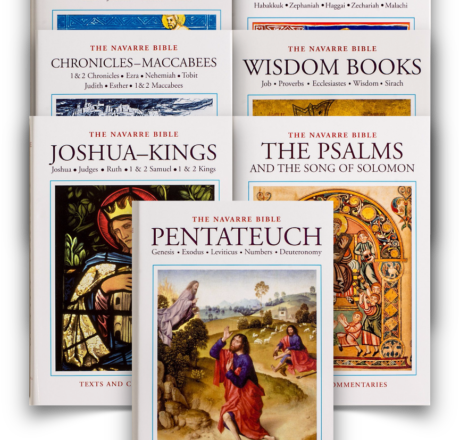
NAVARRE BIBLE COMMENTARY(RSV)

Ad Majorem Dei Gloriam (To the Greater Glory of God)

Today’s First Reading

From: Habakkuk 1:12-2:4

The prophet’s second complaint
--------------------------------------
[12] Art thou not from everlasting,
O Lord my God, my Holy One?
We shall not die.
O Lord, thou hast ordained them as a judgment;
and thou, O Rock, hast established them for chastisement.
[13] Thou who art of purer eyes than to behold evil
and canst not look on wrong,
why dost thou look on faithless men,
and art silent when the wicked swallows up
the man more righteous than he?
[14] For thou makest men like the fish of the sea,
like crawling things that have no ruler.
[15] He brings all of them up with a hook,
he drags them out with his net,
he gathers them in his seine;
so he rejoices and exults.
[16] Therefore he sacrifices to his net
and burns incense to his seine;
for by them he lives in luxury,
and his food is rich.
[17] Is he then to keep on emptying his net,
and mercilessly slaying nations for ever?

[1] I will take my stand to watch,
and station myself on the tower,
and look forth to see what he will say to me,
and what I will answer concerning my complaint.

God’s reply
-----------------
[2] And the Lord answered me:
“Write the vision;
make it plain upon tablets,
so he may run who reads it.
[3] For still the vision awaits its time;
it hastens to the end -- it will not lie.
If it seem slow, wait for it;
it will surely come, it will not delay.
[4] Behold, he whose soul is not upright in him shall fail,
but the righteous shall live by his faith.

*************************************************
Commentary:

1:12-2:1. Here the prophet gives full expression to his confusion.

He admits that God is the sovereign Lord who has raised up the Chaldeans “as a judgment” and “for chastisement” (1:12). The chastisement is valid, but what he does not understand is the method God uses: How is it possible for the Lord, who is the immortal Holy One (1:12), to choose a treacherous and unbelieving nation to carry out the punishment (1:13)? And he then goes on to explain in what this treachery and faithlessness consists. He describes the treachery by using the analogy of fishing: men, the righteous (cf. 1:13), are like fish that are living in their natural habitat, the sea, and the in invader is like the fisherman who catches them with his hook, net and seine (1:15) and then kills them. But this treachery turns into irreligion; for the invader delights in what he does; worse still, he adores what gives him power (1:16-17; cf. 1:11). There may be a reference here to some Eastern peoples who had the custom of offering an annual sacrifice to their sword, taking it as a symbol of their god of war (Herodotus, “History”, 4, 62), but in biblical tradition the seduction of power is often likened to or described as idolatry: “Idolatry not only refers to false pagan worship. It remains a constant temptation to faith. Idolatry consists in divinizing what is not God. Man commits idolatry whenever he honours and reveres a creature in place of God, whether this be gods or demons (for example, satanism), power, pleasure, race, ancestors, the state, money, etc. Jesus says, ‘You cannot serve God and mammon’ (Mt 6:24). Many martyrs died for not adoring ‘the Beast’, refusing even to simulate such worship. Idolatry rejects the unique Lordship of God; it is therefore incompatible with communion with God” (“Catechism of the Catholic Church”, 2113).

But the prophet is a man of faith; even though he does not understand what God is telling him, he continues to listen carefully, because he knows that God will not fail him: “Listen to the words of Habakkuk: I will take my stand to watch, and station myself on the tower, and look forth to see what he will say to me, and what I will answer concerning my complaint. We too, my beloved brothers, should be watchmen, for the day of battle has come. Let us enter into the depths of our hearts, where Christ lives and awaits us. May we refine our spirits and be prudent, never trusting to our own strengths, but concentrating on keeping our watch and weak guard” (St Bernard, “Sermones de diversis”, 5, 4).

2:2-4. As if admitting that the prophet is right, God answers his questions. The first point he makes clear is that when he promises something, it will happen: time may pass, but his word will not pass away unfulfilled (vv. 2-3). And this delay is a test of people’s faithfulness (v. 4).

The last verse here (“Behold ... the righteous shall live by his faith”) is important in both the Jewish and Christian biblical traditions. Some rabbis saw it as a summary of all 613 commandments of the Law; the writers of the Qumran commentary understood it to mean that he who kept the Law would escape the Judgment; and in the New Testament it is quoted on a number of occasions in connexion with the power of faith and the need for fortitude.

However, the verse is difficult to translate; this can be seen in various translations and even in the way the text is quoted in the New Testament. The Letter to the Hebrews 10:38 quotes this passage, working from the Greek translation, to exhort Christians to persevere in the faith they have received: “My righteous one shall live by faith, and if he shrinks back, my soul has no pleasure in him.” Although the author of Hebrews inverts the order of the original, the meaning is unchanged. Similarly, “faith” (“faithfulness”: RSV note d) translates a very common word (“‘emunah”) which means stability, faithfulness, faith. It is a quality of God (Deut 32:4) and also of those who honour him (2 Chron 19:9) and who are righteous in his eyes (Prov 12:22). In Romans 1:17 and Galatians 3:11, St Paul quotes the second part of the Habakkuk verse (“the righteous shall live by his faith”) applied to the individual, to ground his teaching on justification by faith rather than by the works of the Law. St Paul’s use of the verse means that it is very important from a Christian point of view.

St Jerome’s interpretation takes account of both the original audience and the Christian readership: “If your faith is weak and you begin to doubt that what was promised will come about, you will cause my soul great displeasure. But the just man, who believes in my word and never doubts the promises I make, will receive eternal life as his reward [...]. It is clear that these words contain a prophecy of the coming of Christ. The problem they contain will be resolved by him: sin will triumph and punishment be never-ending until He comes” (“Commentarii in Abacuc”, 2, 4). The verse is similar in style to a proverb (or maxim), and can be readily applied to the Christian life. For example, just as the New Testament says of St Joseph that he was a just man (cf. Mt 1:19), the Habakkuk passage can be applied to him as a sign that justice implies faith: “To be just is not simply a matter of obeying rules. Goodness should grow from the inside; it should be deep and vital -- for the just man lives by faith’ (Hab 2:4). These words, which later be- came a frequent subject of St Paul’s meditation, really did apply in the case of St Joseph. He didn’t fulfill the will of God in a routine or perfunctory way; he did it spontaneously and wholeheartedly. For him, the law which every practising Jew lived by was not a code or a cold list of precepts, but an expression of the will of the living God. So he knew how to recognize the Lord’s voice when it came to him so unexpectedly and so surprisingly” (St Josemaria Escrivá, Christ Is Passing By, 41).

13 posted on 08/09/2026 12:25:39 PM PDT by fidelis (Ecce Crucem Domini! Fugite partes adversae! Vicit Leo de tribu Juda, Radix David! Alleluia!)
[ Post Reply | Private Reply | To 12 | View Replies]

Today’s Gospel Reading

From: Matthew 17:14-20

The Curing of an Epileptic Boy
------------------------------
[14] And when they came to the crowd, a man came up to him and kneeling before him said, [15] "Lord, have mercy on my son, for he is an epileptic and he suffers terribly; for often he falls into the fire, and often into the water. [16] And I brought him to your disciples, and they could not heal him." [17] And Jesus answered, "O faithless and perverse generation, how long am I to be with you? How long am I to bear with you? Bring him here to me." [18] And Jesus rebuked him, and the demon came out of him, and the boy was cured instantly. [19] Then the disciples came to Jesus privately and said, "Why could we not cast it out?" [20] He said to them, "Because of your little faith. For truly, I say to you, if you have faith as a grain of mustard seed, you will say to this mountain, 'Move hence to yonder place,' and it will move; and nothing will be impossible to you."

***********************************************************************
Commentary:

14-21. This episode of the curing of the boy shows both Christ's omnipotence and the power of prayer full of faith. Because of his deep union with Christ, a Christian shares, through faith, in God's own omnipotence, to such an extent that Jesus actually says on another occasion, "he who believes in me will also do the works that I do; and greater works than these will he do, because I go to the Father" (Jn 14:12).

Our Lord tells the Apostles that if they had faith they would be able to work miracles, to move mountains. "Moving mountains" was probably a proverbial saying. God would certainly let a believer move a mountain if that were necessary for his glory and for the edification of one's neighbor; however, Christ's promise is fulfilled everyday in a much more exalted way. Some Fathers of the Church (St. Jerome, St. Augustine) say that "a mountain is moved" every time someone is divinely aided to do something which exceed man's natural powers. This clearly happens in the work of our sanctification, which the Paraclete effects in our souls when we are docile to him and receive with faith and love the grace given us in the sacraments: we benefit from the sacraments to a greater or lesser degree depending on the dispositions with which we receive them. Sanctification is something more sublime than moving mountains, and it is something which is happening every day in so many holy souls, even though most people do not notice it.

The Apostles and many saints down the centuries have in fact worked amazing material miracles; but the greatest and most important miracles were, are and will be the miracles of souls dead through sin and ignorance being reborn and developing in the new life of the children of God.

20. Here and in the parable of Matthew 13:31-32 the main force of the comparison lies in the fact that a very small seed--the mustard seed--produces a large shrub up to three meters (ten feet) high: even a very small act of genuine faith can produce surprising results.

14 posted on 08/09/2026 12:25:55 PM PDT by fidelis (Ecce Crucem Domini! Fugite partes adversae! Vicit Leo de tribu Juda, Radix David! Alleluia!)
[ Post Reply | Private Reply | To 13 | View Replies]

Disclaimer: Opinions posted on Free Republic are those of the individual posters and do not necessarily represent the opinion of Free Republic or its management. All materials posted herein are protected by copyright law and the exemption for fair use of copyrighted works.

Free Republic
Browse · Search
Religion
Topics · Post Article

FreeRepublic, LLC, PO BOX 9771, FRESNO, CA 93794
FreeRepublic.com is powered by software copyright 2000-2008 John Robinson