
Posted on 08/07/2026 11:13:40 PM PDT by fidelis
A man came up to Jesus, knelt down before him, and said, “Lord, have pity on my son, who is a lunatic and suffers severely; often he falls into fire, and often into water. I brought him to your disciples, but they could not cure him.” Jesus said in reply, “O faithless and perverse generation, how long will I be with you? How long will I endure you? Bring the boy here to me.” Matthew 17:14–17
Before this encounter, Jesus had sent His disciples out two by two to preach, heal, and cast out demons in His name, preparing the way for His own visits. They returned amazed at how the power of God had worked through them. They preached with authority, commanded demons, and healed the sick.
In today’s Gospel, a man brings his demon-afflicted son to these same disciples for help, but this time they are unable to heal him. Jesus had gone up the mountain with Peter, James, and John where the three apostles witnessed His Transfiguration, while the other nine remained below.
As Jesus returns, He is approached by a desperate father who kneels in reverence and pleads for mercy. The boy is described in Greek as selēniazetai, “moonstruck,” often translated “lunatic,” but more accurately referring to epileptic-like seizures. The word reflects the ancient belief that the moon could influence behavior. However, in this case, the Gospel makes clear the cause is demonic. The violence of the boy’s symptoms—falling into fire and water—underscores the destructive aim of the evil one: to harm and destroy what God has made good.
Jesus’ response is striking: “O faithless and perverse generation, how long will I be with you?” This is a divine lament. His sorrow is not directed solely at the disciples but at the broader spiritual blindness of the people. Though the disciples had previously cast out demons, something had gone wrong this time. Jesus’ words reveal the disciples’ lack of spiritual depth and persevering faith. His frustration flows from love and a longing for His people to grow into the faith they are called to live.
Still, Jesus does not withhold His power. He commands, “Bring the boy here to me,” and with a word, rebukes the demon. The child is cured instantly. What the disciples could not do by their own strength, Jesus accomplishes with ease. He alone delivers from evil, and He does so with divine compassion.
Later, when the disciples ask why they failed, Jesus tells them it was “because of your little faith”—that is, a lack of true trust in God working through them. He then offers a powerful truth: “If you have faith the size of a mustard seed, you will say to this mountain, ‘Move from here to there,’ and it will move. Nothing will be impossible for you.”
Reflect today on the quality and depth of your faith. Do you trust more in God’s power than in your own efforts? Are you willing to surrender your desires so His will may be done through you? Even a mustard seed of humble, trusting, selfless faith can accomplish what seems impossible when it is united to the God for whom nothing is impossible. He wills to do great things through each one of us, if we but let Him. Pray for the faith that moves mountains, for when we see mountains move by allowing God to use us, we will be amazed and humble before His greatness.
God all-powerful, You desire to do great things through us—to move mountains and remove every obstacle to grace—so that Your most glorious and perfect will may be fulfilled. I pray for this depth of faith, so that through me, You may touch many lives and draw me into Your glorious and eternal Kingdom. Jesus, I trust in You.
Please keep in mind that this is a Catholic Caucus/Devotional thread for the purpose of prayerful reflection on the Sacred Scriptures and is closed to debate of any kind. Per FR policy on Religion Caucus threads, off-topic, argumentative, and abusive comments are not allowed and will be submitted to the Mods for deletion. Thanks, and God bless you.
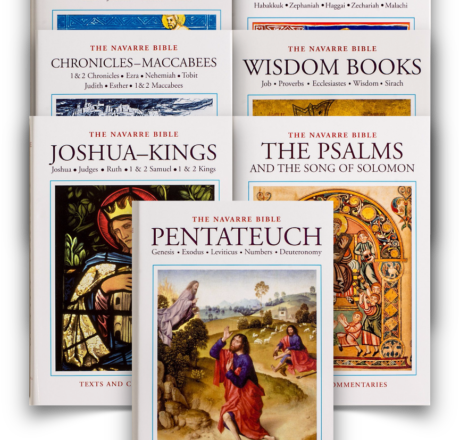
Today’s First Reading
From: Habakkuk 1:12-2:4
The prophet’s second complaint
--------------------------------------
[12] Art thou not from everlasting,
O Lord my God, my Holy One?
We shall not die.
O Lord, thou hast ordained them as a judgment;
and thou, O Rock, hast established them for chastisement.
[13] Thou who art of purer eyes than to behold evil
and canst not look on wrong,
why dost thou look on faithless men,
and art silent when the wicked swallows up
the man more righteous than he?
[14] For thou makest men like the fish of the sea,
like crawling things that have no ruler.
[15] He brings all of them up with a hook,
he drags them out with his net,
he gathers them in his seine;
so he rejoices and exults.
[16] Therefore he sacrifices to his net
and burns incense to his seine;
for by them he lives in luxury,
and his food is rich.
[17] Is he then to keep on emptying his net,
and mercilessly slaying nations for ever?
[1] I will take my stand to watch,
and station myself on the tower,
and look forth to see what he will say to me,
and what I will answer concerning my complaint.
God’s reply
-----------------
[2] And the Lord answered me:
“Write the vision;
make it plain upon tablets,
so he may run who reads it.
[3] For still the vision awaits its time;
it hastens to the end -- it will not lie.
If it seem slow, wait for it;
it will surely come, it will not delay.
[4] Behold, he whose soul is not upright in him shall fail,
but the righteous shall live by his faith.
*************************************************
Commentary:
1:12-2:1. Here the prophet gives full expression to his confusion.
He admits that God is the sovereign Lord who has raised up the Chaldeans “as a judgment” and “for chastisement” (1:12). The chastisement is valid, but what he does not understand is the method God uses: How is it possible for the Lord, who is the immortal Holy One (1:12), to choose a treacherous and unbelieving nation to carry out the punishment (1:13)? And he then goes on to explain in what this treachery and faithlessness consists. He describes the treachery by using the analogy of fishing: men, the righteous (cf. 1:13), are like fish that are living in their natural habitat, the sea, and the in invader is like the fisherman who catches them with his hook, net and seine (1:15) and then kills them. But this treachery turns into irreligion; for the invader delights in what he does; worse still, he adores what gives him power (1:16-17; cf. 1:11). There may be a reference here to some Eastern peoples who had the custom of offering an annual sacrifice to their sword, taking it as a symbol of their god of war (Herodotus, “History”, 4, 62), but in biblical tradition the seduction of power is often likened to or described as idolatry: “Idolatry not only refers to false pagan worship. It remains a constant temptation to faith. Idolatry consists in divinizing what is not God. Man commits idolatry whenever he honours and reveres a creature in place of God, whether this be gods or demons (for example, satanism), power, pleasure, race, ancestors, the state, money, etc. Jesus says, ‘You cannot serve God and mammon’ (Mt 6:24). Many martyrs died for not adoring ‘the Beast’, refusing even to simulate such worship. Idolatry rejects the unique Lordship of God; it is therefore incompatible with communion with God” (“Catechism of the Catholic Church”, 2113).
But the prophet is a man of faith; even though he does not understand what God is telling him, he continues to listen carefully, because he knows that God will not fail him: “Listen to the words of Habakkuk: I will take my stand to watch, and station myself on the tower, and look forth to see what he will say to me, and what I will answer concerning my complaint. We too, my beloved brothers, should be watchmen, for the day of battle has come. Let us enter into the depths of our hearts, where Christ lives and awaits us. May we refine our spirits and be prudent, never trusting to our own strengths, but concentrating on keeping our watch and weak guard” (St Bernard, “Sermones de diversis”, 5, 4).
2:2-4. As if admitting that the prophet is right, God answers his questions. The first point he makes clear is that when he promises something, it will happen: time may pass, but his word will not pass away unfulfilled (vv. 2-3). And this delay is a test of people’s faithfulness (v. 4).
The last verse here (“Behold ... the righteous shall live by his faith”) is important in both the Jewish and Christian biblical traditions. Some rabbis saw it as a summary of all 613 commandments of the Law; the writers of the Qumran commentary understood it to mean that he who kept the Law would escape the Judgment; and in the New Testament it is quoted on a number of occasions in connexion with the power of faith and the need for fortitude.
However, the verse is difficult to translate; this can be seen in various translations and even in the way the text is quoted in the New Testament. The Letter to the Hebrews 10:38 quotes this passage, working from the Greek translation, to exhort Christians to persevere in the faith they have received: “My righteous one shall live by faith, and if he shrinks back, my soul has no pleasure in him.” Although the author of Hebrews inverts the order of the original, the meaning is unchanged. Similarly, “faith” (“faithfulness”: RSV note d) translates a very common word (“‘emunah”) which means stability, faithfulness, faith. It is a quality of God (Deut 32:4) and also of those who honour him (2 Chron 19:9) and who are righteous in his eyes (Prov 12:22). In Romans 1:17 and Galatians 3:11, St Paul quotes the second part of the Habakkuk verse (“the righteous shall live by his faith”) applied to the individual, to ground his teaching on justification by faith rather than by the works of the Law. St Paul’s use of the verse means that it is very important from a Christian point of view.
St Jerome’s interpretation takes account of both the original audience and the Christian readership: “If your faith is weak and you begin to doubt that what was promised will come about, you will cause my soul great displeasure. But the just man, who believes in my word and never doubts the promises I make, will receive eternal life as his reward [...]. It is clear that these words contain a prophecy of the coming of Christ. The problem they contain will be resolved by him: sin will triumph and punishment be never-ending until He comes” (“Commentarii in Abacuc”, 2, 4). The verse is similar in style to a proverb (or maxim), and can be readily applied to the Christian life. For example, just as the New Testament says of St Joseph that he was a just man (cf. Mt 1:19), the Habakkuk passage can be applied to him as a sign that justice implies faith: “To be just is not simply a matter of obeying rules. Goodness should grow from the inside; it should be deep and vital -- for the just man lives by faith’ (Hab 2:4). These words, which later be- came a frequent subject of St Paul’s meditation, really did apply in the case of St Joseph. He didn’t fulfill the will of God in a routine or perfunctory way; he did it spontaneously and wholeheartedly. For him, the law which every practising Jew lived by was not a code or a cold list of precepts, but an expression of the will of the living God. So he knew how to recognize the Lord’s voice when it came to him so unexpectedly and so surprisingly” (St Josemaria Escrivá, Christ Is Passing By, 41).
From: Matthew 17:14-20
The Curing of an Epileptic Boy
------------------------------
[14] And when they came to the crowd, a man came up to him and kneeling before him said, [15] "Lord, have mercy on my son, for he is an epileptic and he suffers terribly; for often he falls into the fire, and often into the water. [16] And I brought him to your disciples, and they could not heal him." [17] And Jesus answered, "O faithless and perverse generation, how long am I to be with you? How long am I to bear with you? Bring him here to me." [18] And Jesus rebuked him, and the demon came out of him, and the boy was cured instantly. [19] Then the disciples came to Jesus privately and said, "Why could we not cast it out?" [20] He said to them, "Because of your little faith. For truly, I say to you, if you have faith as a grain of mustard seed, you will say to this mountain, 'Move hence to yonder place,' and it will move; and nothing will be impossible to you."
***********************************************************************
Commentary:
14-21. This episode of the curing of the boy shows both Christ's omnipotence and the power of prayer full of faith. Because of his deep union with Christ, a Christian shares, through faith, in God's own omnipotence, to such an extent that Jesus actually says on another occasion, "he who believes in me will also do the works that I do; and greater works than these will he do, because I go to the Father" (Jn 14:12).
Our Lord tells the Apostles that if they had faith they would be able to work miracles, to move mountains. "Moving mountains" was probably a proverbial saying. God would certainly let a believer move a mountain if that were necessary for his glory and for the edification of one's neighbor; however, Christ's promise is fulfilled everyday in a much more exalted way. Some Fathers of the Church (St. Jerome, St. Augustine) say that "a mountain is moved" every time someone is divinely aided to do something which exceed man's natural powers. This clearly happens in the work of our sanctification, which the Paraclete effects in our souls when we are docile to him and receive with faith and love the grace given us in the sacraments: we benefit from the sacraments to a greater or lesser degree depending on the dispositions with which we receive them. Sanctification is something more sublime than moving mountains, and it is something which is happening every day in so many holy souls, even though most people do not notice it.
The Apostles and many saints down the centuries have in fact worked amazing material miracles; but the greatest and most important miracles were, are and will be the miracles of souls dead through sin and ignorance being reborn and developing in the new life of the children of God.
20. Here and in the parable of Matthew 13:31-32 the main force of the comparison lies in the fact that a very small seed--the mustard seed--produces a large shrub up to three meters (ten feet) high: even a very small act of genuine faith can produce surprising results.
The Month of August is Dedicated to the Immaculate Heart of Mary

“In the sixth month the angel Gabriel was sent from God to a city of Galilee named Nazareth, to a virgin betrothed to a man whose name was Joseph, of the house of David; and the virgin’s name was Mary. And he came to her and said, “Hail, full of grace, the Lord is with you!”” (Luke 1:26-28)

Pope Leo XIV’s prayer intention for the month of August, 2026:
For evangelization in the city
Let us pray that in large cities often marked by anonymity and loneliness we find new ways to proclaim the Gospel, discovering creative paths to build community.

Disclaimer: Opinions posted on Free Republic are those of the individual posters and do not necessarily represent the opinion of Free Republic or its management. All materials posted herein are protected by copyright law and the exemption for fair use of copyrighted works.

