
Posted on 08/06/2026 10:00:00 PM PDT by fidelis
Jesus said to his disciples, “Whoever wishes to come after me must deny himself, take up his cross, and follow me. For whoever wishes to save his life will lose it, but whoever loses his life for my sake will find it.” Matthew 16:24–25
Today’s Gospel begins with a triple command that forms the foundation of authentic Christian living: We must deny ourselves, take up our cross, and follow Jesus. Let us consider the implications of these commands.
First, it is important to note that Jesus uses the word “must.” This is more than an invitation—it is a divine law, given for our eternal good. The Greek word for “must” is “dei,” a term that carries the connotation of necessity, obligation, and divine appointment. It is frequently used in Scripture to express what is required by God’s saving plan. More than a suggestion or an ideal for devout souls, it is an absolute necessity for all who wish to follow Christ.
Jesus never asks anything of us that He Himself has not already done. Just prior to today’s Gospel, Jesus declared that “the Son of Man must suffer greatly” (Matthew 16:21)—and He did. In the same way, we must deny ourselves, take up our cross, and follow Him. This is the narrow path that leads to life, the only path that conforms us to Christ and brings us to the glory of His Resurrection. To ignore this necessity is to reject the path of true discipleship.
Denying ourselves is, first and foremost, a renunciation of self-centeredness. We must get out of the way so that Christ may reign in us. This means placing God’s will above our preferences, ambitions, and desires. Such self-denial is not an end in itself but is a necessary clearing of the soul, making room for divine love to govern our lives. In Heaven, this purification will be complete, making it easy to choose God’s will alone. But during our earthly pilgrimage, we face a continual interior battle in which we must repeatedly renounce all that is not of God’s will.
Today, Christians rightly venerate the Cross as a sacred image of our salvation. However, in Jesus’ time, the cross was seen only as a brutal Roman instrument of execution—an image of excruciating suffering and utter humiliation. To take up our cross, therefore, is to embrace what naturally repels us, what evokes fear, and what requires courage, sacrifice, and surrender. This embrace also demands supernatural trust. Only God can bring forth good from such suffering. When we understand this and entrust ourselves to Him, we are able to accept—without rebellion—all that He permits: sufferings, trials, sacrifices, and even death itself, uniting these with the redemptive suffering of Christ.
Of the three “musts,” following Jesus might seem the easiest, at least on the surface. Yet true discipleship goes far deeper than simply walking behind Him, being kind, and enjoying life. To follow Christ is to walk in Him, allowing our lives to be conformed to His. It is a lifelong journey of transformation—a participation in His life, death, and resurrection. It requires the daily decision to walk the narrow path of fidelity, humility, and love.
Reflect today on Jesus lovingly telling you what you must do to inherit eternal life. Once we understand the reward, the means become much easier to accept. Deny yourself, take up your cross, and follow Jesus. Do it today and every day of your life and you will find your life alive and glorified in Christ for all eternity.
My selfless and sacrificial Lord, You not only commanded us to deny ourselves and take up our crosses, You first walked that path Yourself, enabling us to follow You as we live in union with You. Free me from every fear of the Cross. Help me to see beyond the immediate hardships it brings, to the glory that awaits those who live a life of sacrifice with You. Jesus, I trust in You.
Please keep in mind that this is a Catholic Caucus/Devotional thread for the purpose of prayerful reflection on the Sacred Scriptures and is closed to debate of any kind. Per FR policy on Religion Caucus threads, off-topic, argumentative, and abusive comments are not allowed and will be submitted to the Mods for deletion. Thanks, and God bless you.
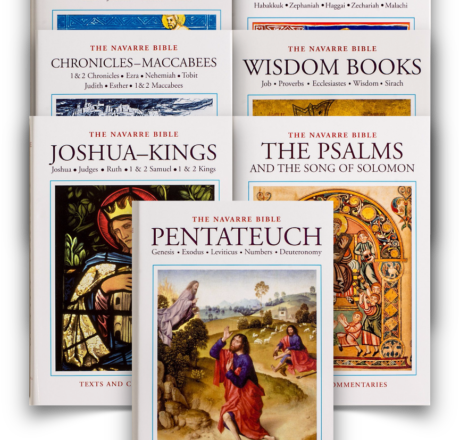
Today’s First Reading
From: Nahum 2:1, 3; 3:1-3, 6-7
The fall of Nineveh interpreted
-------------------------------------
[1] The shatterer has come up against you. Man the ramparts; watch the road; gird your loins; collect all your strength.
[3] The shield of his mighty men is red, his soldiers are clothed in scarlet. The chariots flash like flame when mustered in array; the chargers prance.
Nineveh sentenced for its crimes
-----------------------------------------------
[1] Woe to the bloody city, all full of lies and booty -- no end to the plunder! [2] The crack of whip, and rumble of wheel, galloping horse and bounding chariot! [3] Horsemen charging, flashing sword and glittering spear, hosts of slain, heaps of corpses, dead bodies without end—they stumble over the bodies!
[6] I will throw filth at you and treat you with contempt, and make you a gazing-stock. [7] And all who look on you will shrink from you and say, “Wasted is Nineveh; who will bemoan her? whence shall I seek comforters for her?”
**********************************************
Commentary:
2:1-3:19. A brief introduction explaining the significance of the fall of Nineveh (2:1-2), is followed by a very powerful poem about the assault on and destruction of the Assyrian capital (2:3-3:19); it is interwoven with feelings of joy at the fall of the hated city: astonishment at the scale and nature of the violence; and acknowledgment that there is no appeal against God’s sentence. The poem is very carefully constructed, and follows the logical course of an invasion -- the assault on the city (2:3-13), a description of the crimes that warranted God’s sentence (3:1-7), a comparison with the fate of Thebes (3:8-11), the weakness of Nineveh (its army as well as its fortresses: 3:12-17), and finally an “elegy” for the king of Nineveh (3:18-19).
2:3-4. It is very difficult to capture in translation the full impact of the Hebrew original. The prophet manages to convey the sheer terror and anguish of the Ninevites as the Babylonian army pours through the streets and squares of the great capital of Assyria.
2:7. The “mistress”, literally “she who stands upright”. The original text is not in good condition. The New Vulgate translates it as “the Beautiful” (woman). What is being referred to here apparently is the statue of lshtar, goddess of love and war, much honoured in Nineveh. On seeing the statue destroyed, her devotees and priestesses would make much lamentation.
From: Matthew 16:24-28
Jesus Foretells His Passion and Resurrection (Continuation)
-----------------------------------------------------------
[24] Then Jesus told His disciples, "If any man would come after Me, let him deny himself and take up his cross and follow Me. [25] For whoever would save his life will lose it, and whoever loses his life for my sake will find it. [26] For what will it profit a man, if he gains the whole world and forfeits his life? Or what shall a man give in return for his life? [27] For the Son of Man is to come with His angels in the glory of His Father, and then He will repay every man for what he has done. [28] Truly, I say to you, there are some standing here who will not taste death before they see the Son of Man coming in His Kingdom."
***********************************************************************
Commentary:
24. "Divine love, `poured into our hearts by the Holy Spirit who has been given to us' (Romans 5:5), enables lay people to express concretely in their lives the spirit of the Beatitudes. Following Jesus in His poverty, they feel no depression in want, no pride in plenty; imitating the humble Christ, they are not greedy for vain show (cf. Galatians 5:26). They strive to please God rather than men, always ready to abandon everything for Christ (cf. Luke 14:26) and even to endure persecution in the cause of right (cf. Matthew 5:10), having in mind the Lord's saying? `If any man wants to come after Me, let him deny himself and take up his cross and follow Me'" (Matthew 16:24) ("Apostolicam Actuositatem", 4).
25. A Christian cannot ignore these words of Jesus. He has to risk, to gamble, this present life in order to attain eternal life: "How little a life is to offer to God!" (St J. Escriva, "The Way", 420).
Our Lord's requirement means that we must renounce our own will in order to identify with the will of God and so to ensure that, as St. John of the Cross comments, we do not follow the way of those many people who "would have God will that which they themselves will, and are fretful at having to will that which He wills, and find it repugnant to accommodate their will to that of God. Hence it happens to them that oftentimes they think that that wherein they find not their own will and pleasure is not the will of God; and that, on the other hand, when they themselves find satisfaction, God is satisfied. Thus they measure God by themselves and not themselves by God" ("Dark Night of the Soul", Book 1, Chapter 7, 3).
26-27. Christ's words are crystal-clear: every person has to bear in mind the Last Judgment. Salvation, in other words, is something radically personal: "He will repay every man for what he has done" (verse 27).
Man's goal does not consist in accumulating worldly goods; these are only means to an end; man's last end, his ultimate goal, is God Himself; he possesses God in advance, as it were, here on earth by means of grace, and possesses him fully and forever in Heaven. Jesus shows the route to take to reach this destination--denying oneself (that is, saying no to ease, comfort, selfishness and attachment to temporal goods) and taking up the cross. For no earthly--impermanent--good can compare with the soul's eternal salvation. As St. Thomas expresses it with theological precision, "the least good of grace is superior to the natural good of the entire universe" ("Summa Theologiae", I-II, q. 113, a. 9).
28. Here Jesus is referring not to His Last Coming (which He speaks about in the preceding verse) but to other events which will occur prior to that and which will be a sign of His glorification after death. The Coming He speaks of here may refer firstly to His Resurrection and His appearance thereafter; it could also refer to His Transfiguration, which is itself a manifestation of His glory. This coming of Christ in His Kingdom might also be seen in the destruction of Jerusalem--a sign of the end of the ancient people of Israel as a form of the Kingdom of God and its substitution by the Church, the new Kingdom.
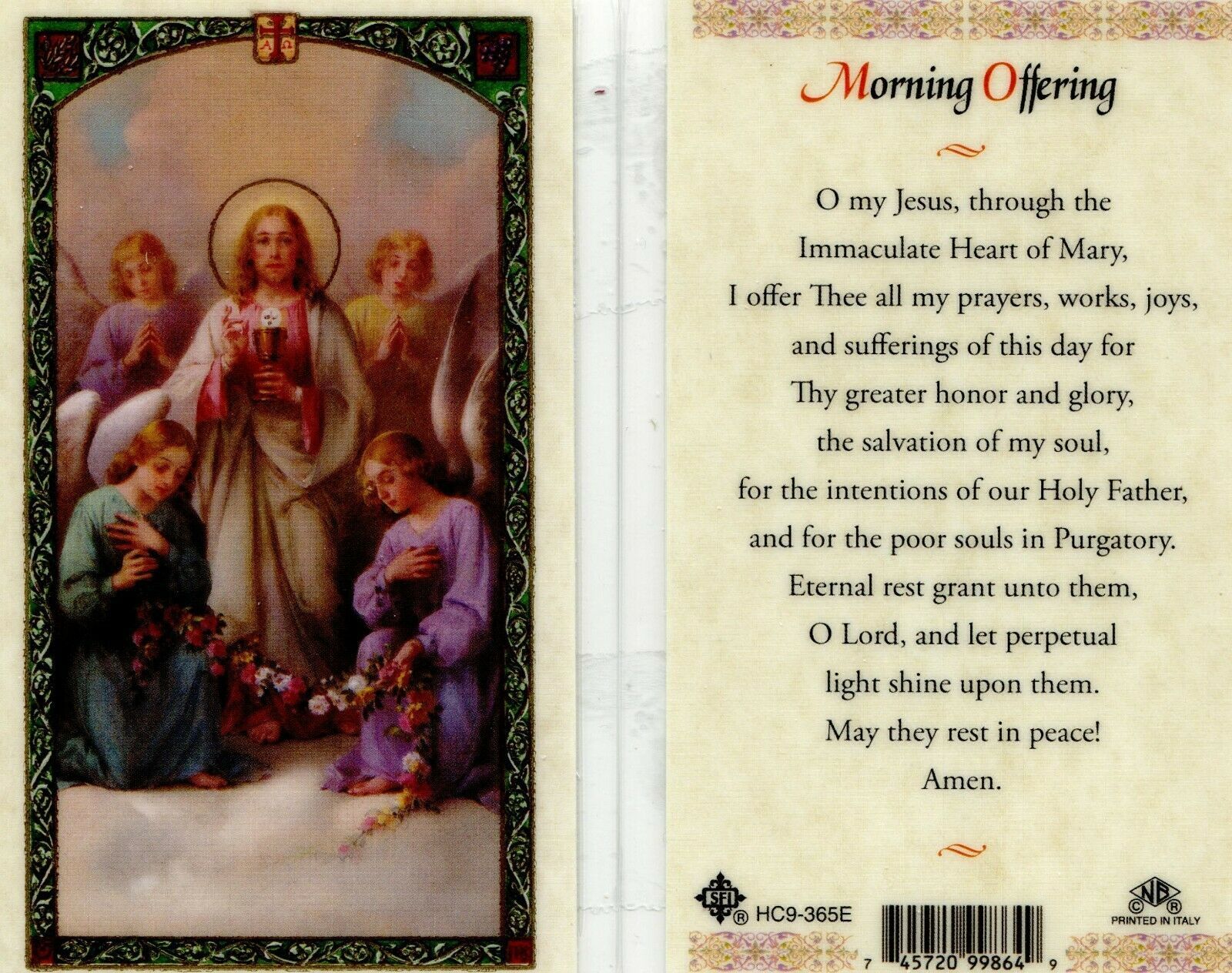
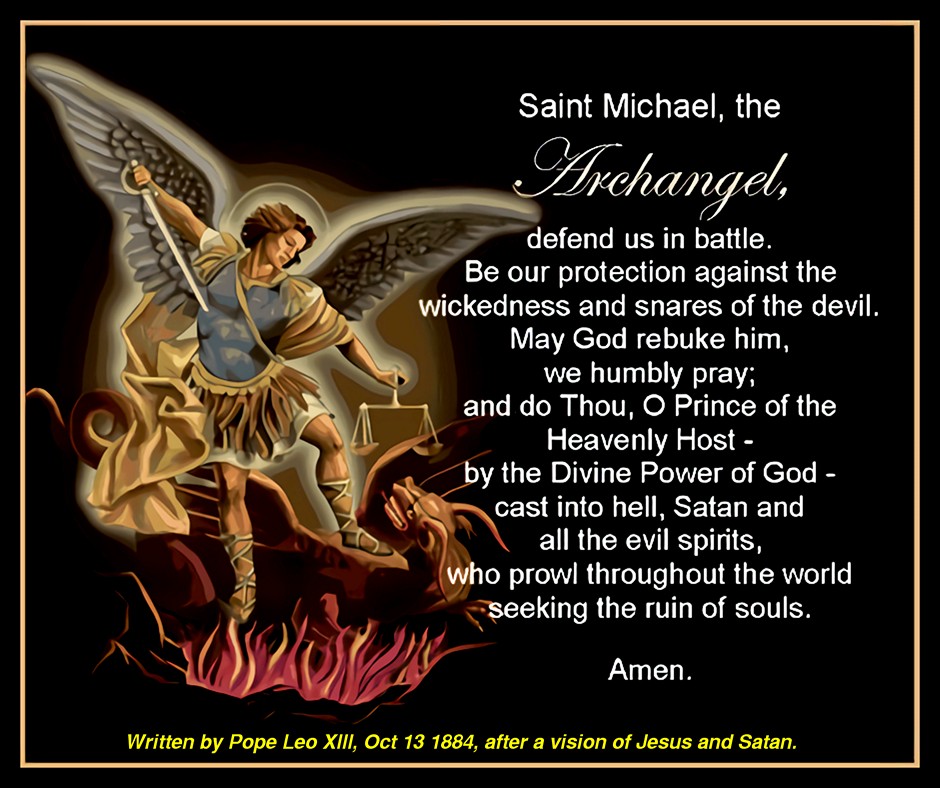
The Month of August is Dedicated to the Immaculate Heart of Mary

“In the sixth month the angel Gabriel was sent from God to a city of Galilee named Nazareth, to a virgin betrothed to a man whose name was Joseph, of the house of David; and the virgin’s name was Mary. And he came to her and said, “Hail, full of grace, the Lord is with you!”” (Luke 1:26-28)

Pope Leo XIV’s prayer intention for the month of August, 2026:
For evangelization in the city
Let us pray that in large cities often marked by anonymity and loneliness we find new ways to proclaim the Gospel, discovering creative paths to build community.

Disclaimer: Opinions posted on Free Republic are those of the individual posters and do not necessarily represent the opinion of Free Republic or its management. All materials posted herein are protected by copyright law and the exemption for fair use of copyrighted works.


