
Posted on 08/02/2026 10:29:09 PM PDT by fidelis
Jesus made the disciples get into the boat and precede him to the other side, while he dismissed the crowds. After doing so, he went up on the mountain by himself to pray. When it was evening he was there alone. Meanwhile the boat, already a few miles offshore, was being tossed about by the waves, for the wind was against it. During the fourth watch of the night, he came toward them, walking on the sea. Matthew 14:22–25
Only God, in His perfect Wisdom, could convey profound spiritual meaning through Jesus’ human actions. Though His miracles reveal His divinity and His teachings articulate divine mysteries, so does every subtle movement He makes—each one working together to prophetically depict the full Gospel. The Church, from her earliest centuries, has come to recognize and contemplate these deeper layers through what is known as the allegorical and spiritual sense of Scripture.
On the surface, today’s Gospel reveals Jesus’ divinity simply through His walking on the water. Yet beneath the surface, other mysteries are unveiled. The mountain, the solitude, the prayer, the storm, the boat, the fear, and Jesus’ words all communicate something of Christ’s saving mission and of our journey through life with Him.
Jesus goes up the mountain alone to pray. In Scripture, mountains are places of divine encounter—Moses and Elijah encountered God on Mount Sinai, and Jesus was transfigured before the disciples on Mount Tabor. In today’s Gospel, the mountain signifies Jesus’ communion and heavenly intercession with the Father. He ascends alone, leaving the disciples behind, just as He would ascend to the Father after the Resurrection—remaining with us spiritually while we, the Church, continue our pilgrimage through the storms of this world.
While Jesus is in prayer, the disciples struggle in the boat, tossed by waves, with the wind against them. The boat represents the Church amid the turmoil of the world. The waves symbolize trials, temptations, and fears that rise without warning. And though Jesus seems physically distant, He is never inattentive. In fact, it is precisely in the hour of greatest distress that He draws near.
Jesus comes to them in the fourth watch of the night—the final and darkest stretch before dawn. This is the hour of the soul’s deepest desolation, when one feels most abandoned, most vulnerable, most helpless. Yet it is also the very moment when divine help arrives. Jesus walks toward them on the sea, using the very waves that threatened to destroy them as the path of His approach. The storm does not hinder Him; He walks above it, showing His authority over chaos and His power to transform even the fiercest trials into a means of His presence.
But the disciples do not recognize Him. They cry out in fear, thinking He is a ghost. This reveals a spiritual truth: In our moments of fear and confusion, we can misperceive even the presence of Christ. When our hearts are unsettled and our faith is shaken, we may not see clearly the One who comes to save us.
Reflect today on any storm in your life in which you feel God is absent and the waves are overwhelming. Imagine Jesus walking toward you on those very waves. Though His presence may not be immediately clear, look with eyes of faith and listen for His voice: “Take courage, it is I; do not be afraid.” Welcome Him in, and trust that His grace is sufficient for every trial and tribulation God permits you to endure.
Most miraculous Lord, You speak to me day and night—through the Scriptures, inspirations, signs, and sacred symbols. Yet too often I fail to perceive Your presence, especially amid the storms of life. Open my eyes to recognize You, even when You come in unexpected ways. Help me to welcome You into the boat of my soul with faith and joy, so that You may bring order to the chaos I endure and fill me with Your abiding peace. Jesus, I trust in You.
Please keep in mind that this is a Catholic Caucus/Devotional thread for the purpose of prayerful reflection on the Sacred Scriptures and is closed to debate of any kind. Per FR policy on Religion Caucus threads, off-topic, argumentative, and abusive comments are not allowed and will be submitted to the Mods for deletion. Thanks, and God bless you.

Today’s First Reading
From: Jeremiah 28:1-17
Dispute with Hananiah
--------------------------------
[1] In that same year, at the beginning of the reign of Zedekiah king of Judah, in the fifth month of the fourth year, Hananiah the son of Azzur, the prophet from Gibeon, spoke to me in the house of the Lord. in the presence of the priests and all the people, saying. [2] "Thus says the Lord of hosts. the God of Israel: I have broken the yoke of the king of Babylon. [3] Within two years I will bring back to this place all the vessels of the Lord's house, which Nebuchadnezzar king of Babylon took away from this place and carried to Babylon. [4] I will also bring back to this place Jeconiah the son of Jehoiakim, king of Judah, and all the exiles from Judah who went to Babylon, says the Lord, for I will break the yoke of the king of Babylon."
[5] Then the prophet Jeremiah spoke to Hananiah the prophet in the presence of the priests and all the people who were standing in the house of the Lord; [6] and the prophet Jeremiah said, "Amen! May the Lord do so; may the Lord make the words which you have prophesied come true, and bring back to this place from Babylon the vessels of the house of the Lord, and all the exiles. [7] Yet hear now this word which I speak in your hearing and in the hearing of all the people. [8] The prophets who preceded you and me from ancient times prophesied war, famine, and pestilence against many countries and great kingdoms. [9] As for the prophet who prophesies peace, when the word of that prophet comes to pass, then it will be known that the Lord has truly sent the prophet."
[10] Then the prophet Hananiah took the yoke-bars from the neck of Jeremiah the prophet, and broke them. [11] And Hananiah spoke in the presence of all the people, saying, "Thus says the Lord: Even so will I break the yoke of Nebuchadnezzar king of Babylon from the neck of all the nations within two years." But Jeremiah the prophet went his way.
[12] Sometime after the prophet Hananiah had broken the yoke-bars from off the neck of Jeremiah the prophet, the word of the Lord came to Jeremiah: [13] Go, tell Hananiah, ‘Thus says the Lord: You have broken wooden bars, but I will make in their place bars of iron. [14] For thus says the Lord of hosts, the God of Israel: I have put upon the neck of all these nations an iron yoke of servitude to Nebuchadnezzar king of Babylon, and they shall serve him, for I have given to him even the beasts of the field.” [15] And Jeremiah the prophet said to the prophet Hananiah, “Listen, Hananiah, the Lord has not sent you, and you have made this people trust in a lie. [16] Therefore thus says the Lord: ‘Behold, I will remove you from the face of the earth. This very year you shall die, because you have uttered rebellion against the Lord.” [17] In that same year, in the seventh month, the prophet Hananiah died.
**************************************************************************
Commentary:
28:1-17. The reaction of the prophets and priests to what they saw as impertinence on Jeremiah's part (27:1-22) is not slow in coming.
Hananiah, claiming that he too is a prophet with a message from the Lord, replies to Jeremiah by saying that very soon -- within two years -- the whole situation will change for the better (v. 3). Jeremiah, in turn, says that he would like nothing better (for he loves his land and his people); but earlier prophets predicted misfortunes, and they occurred; favourable predictions are proven to be the word of God only when and if they come true. Hananiah does not give away. His arrogance (vv. 10-11) leads Jeremiah to repeat his message (vv. 12-14). The onlookers may have taken different sides, but two months later (much less than two years) it will be easy to see who the false prophet was and who the true (vv. 15-17). And the threat contained in the book of Deuteronomy will he carried out: "But the prophet who presumes to speak a word in my name which I have not commanded him to speak, or who speaks in the name of other gods, that same prophet shall die. […] [W]hen a prophet speaks in the name of the Lord, if the word does not come to pass or come true, that is a word which the Lord has not spoken; the prophet has spoken it presumptuously, you need not he afraid of him" (Deut 18:20; cf. Deut 13:6).
This debate in the presence of the people illustrates a problem that often arises in Holy Scripture, and in a way it is a perennial one: How can one know whether someone is truly a prophet sent by the Lord, when a number of prophets preach messages that are mutually incompatible? In ancient Israel, if a prediction came true, then one knew that the prophet was speaking on God's behalf. In the new People of God, the Holy Spirit helps the Church to discern whether a person's message comes from God, that is, whether he or she has a true charism: "These charisms, whether they be the more outstanding or the more simple and widely diffused, are to be received with thanksgiving and consolation for they are perfectly suited to and useful for the needs of the Church. Extraordinary gifts are not to be sought after, nor are the fruits of apostolic labor to be presumptuously expected from their use; but judgment as to their genuineness and proper use belongs to those who are appointed leaders in the Church, to whose special competence it belongs, not indeed to extinguish the Spirit, but to test all things and hold fast to that which is good" (Vatican II, Lumen Gentium, 12).
From: Matthew 14:22-36
Jesus Walks on the Water
------------------------
[22] Then He (Jesus) made the disciples get into the boat and go before Him to the other side, while He dismissed the crowds. [23] And after He had dismissed the crowds He went up into the hills by Himself to pray. When evening came, He was there alone, [24] but the boat by this time was many furlongs distant from the land, beaten by the waves; for the wind was against them. [25] And in the fourth watch of the night He came to them, walking on the sea. [26] But when the disciples saw Him walking on the sea, they were terrified, saying, "It is a ghost!" And they cried out for fear. [27] But immediately He spoke to them, saying, "Take heart, it is I; have no fear."
[28] And Peter answered Him, "Lord, if it is you, bid me come to You on the water." [29] He said, "Come." So Peter got out of the boat and walked on the water and came to Jesus; [30] but when he saw the wind, he was afraid, and beginning to sink he cried out, "Lord, save me." [31] Jesus immediately reached out his hand and caught him, saying to him, "O man of little faith, why did you doubt?" [32] And when they got into boat, the wind ceased. [33] And those in the boat worshipped Him, saying, "Truly You are the son of God."
[34] And when they had crossed over, they came to land at Gennesaret. [35] And when the men of that place recognized Him, they sent round to all the region and brought to Him all that were sick, [36] and besought Him that they might only touch the fringe of His garment; and as many as touched it were made well.
***********************************************************************
Commentary:
22-23. It has been a very full day, like so many others. First, Jesus works many cures (14:14) and then performs the remarkable miracle of the multiplication of the loaves and the fish, a symbol of the future Eucharist. The crowd who have been following Him were avid for food, teaching and consolation. Jesus "had compassion on them" (14:14), curing their sick and giving them the comfort of His teaching and the nourishment of food. He continues to do the same, down the centuries, tending to our needs and comforting us with His word and with the nourishment of His own body. Jesus must have been very moved, realizing the vivifying effect the Blessed Sacrament would have on the lives of Christians--a sacrament which is a mystery of life and faith and love. It is understandable that He should feel the need to spend some hours in private to speak to His Father. Jesus' private prayer, in an interlude between one demanding activity and another, teaches us that every Christian needs to take time out for recollection, to speak to His Father, God. On Jesus' frequent personal prayer see, for example, Mark 1:35; 6:47; Luke 5:16; 16:12. See the notes on Matthew 6:5-6 and Matthew 7:7-11.
24-33: This remarkable episode of Jesus walking on the sea must have made a deep impression on the Apostles. It was one of their outstanding memories of the life they shared with the Master. It is reported not only by St. Matthew, but also by St. Mark (6:45-52), who would have heard about it from St. Peter, and by St. John (6:14-21).
Storms are very frequent on Lake Gennesaret; they cause huge waves and are very dangerous to fishing boats. During His prayer on the hill, Jesus is still mindful of His disciples; He sees them trying to cope with the wind and the waves and comes to their rescue once He has finished praying.
This episode has applications to Christian life. The Church, like the Apostles' boat, also gets into difficulties, and Jesus who watches over His Church comes to its rescue also, after allowing it to wrestle with obstacles and be strengthened in the process. He gives us encouragement: "Take heart, it is I; have no fear" (14:27); and we show our faith and fidelity by striving to keep an even keel, and by calling on His aid when we feel ourselves weakening: "Lord, save me" (14:30), words of St. Peter which every soul uses when he has recourse to Jesus, his Savior. Then our Lord does save us, and we urgently confess our faith: "Truly you are the Son of God" (14:33).
29-31. St. John Chrysostom ("Hom. on St. Matthew", 50) comments that in this episode Jesus taught Peter to realize, from his own experience, that all his strength comes from our Lord and that he could not rely on his own resources, on his own weaknesses and wretchedness. Chrysostom goes as far as to say that "if we fail to play our part, God ceases to help us." Hence the reproach, 'O man of little faith" (14:31). When Peter began to be afraid and to doubt, he started to sink, until again, full of faith, he called out, "Lord, save me."
If at any time we, like Peter, should begin to weaken, we too should try to bring our faith into play and call on Jesus to save us.
34-36. Learning from the faith of these people on the shore of Lake Gennesaret, every Christian should approach the adorable humanity of the Savior. Christ--God and Man--is accessible to us in the sacrament of the Eucharist.
"When you approach the Tabernacle remember that He has been awaiting you for twenty centuries" (St J. Escriva, "The Way", 537).
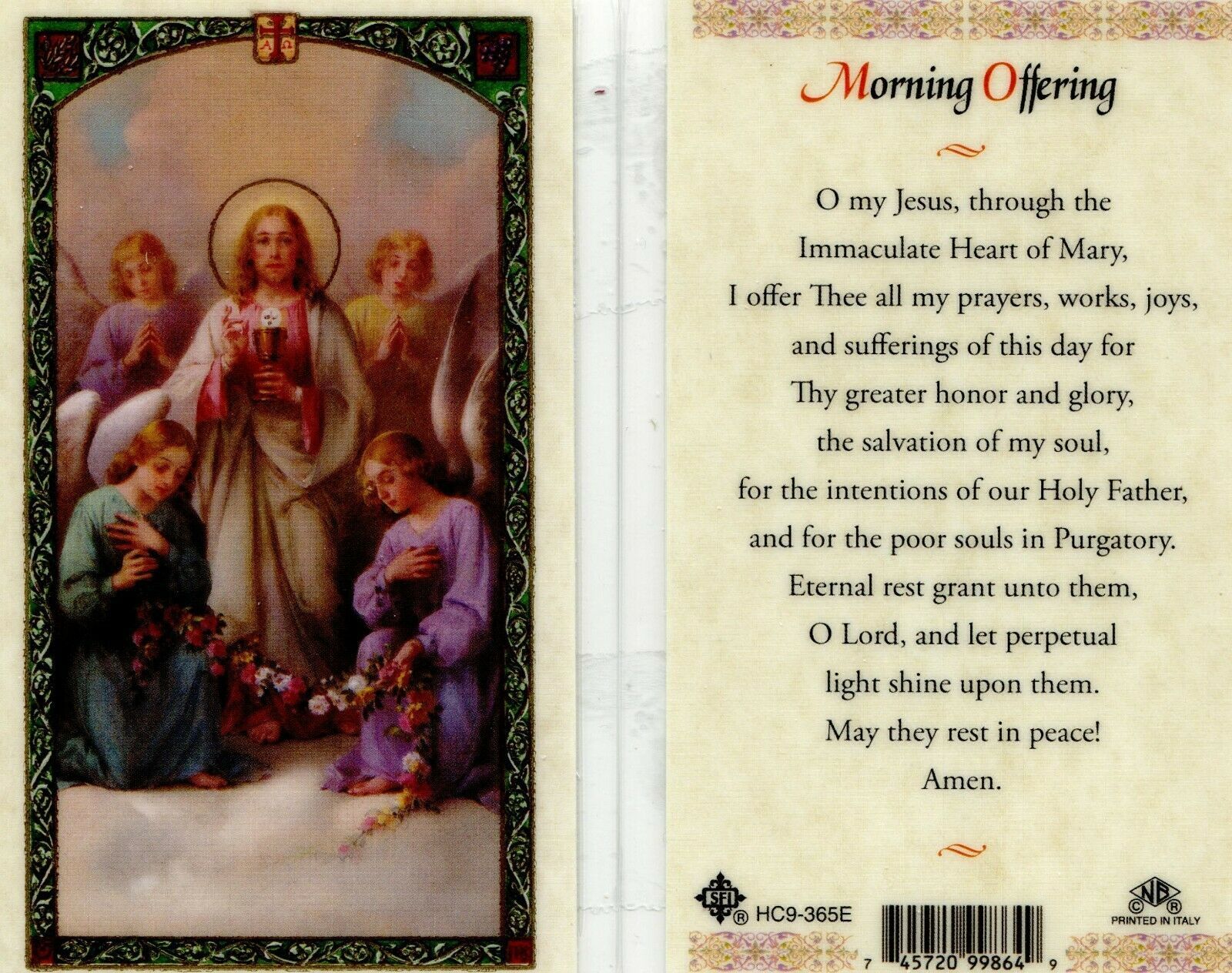
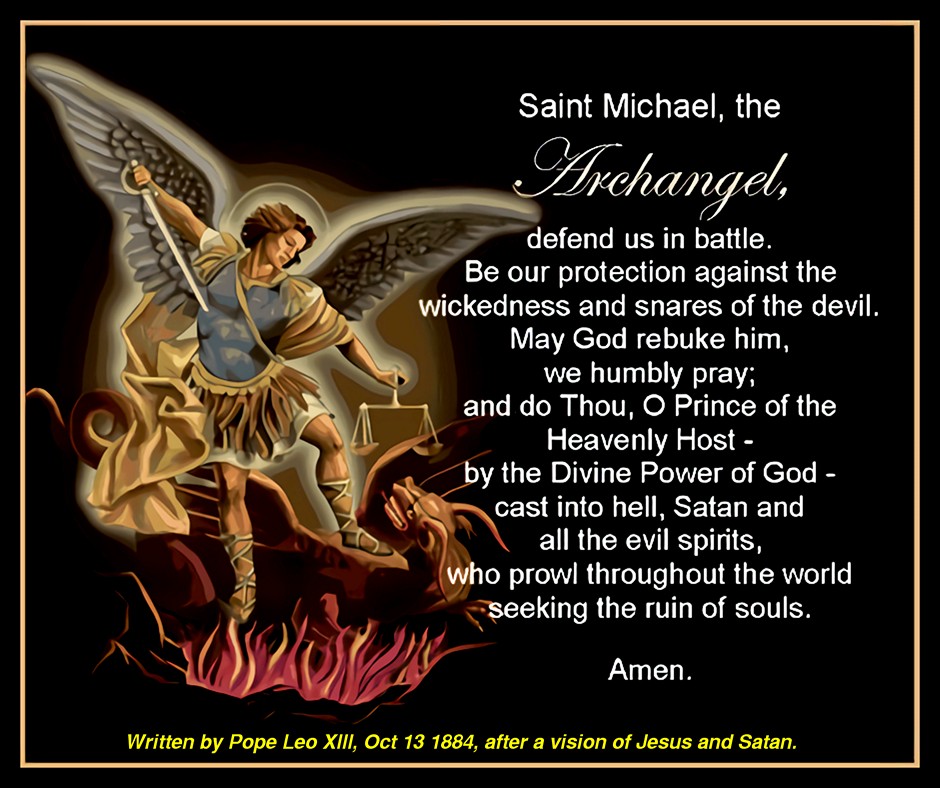
The Month of August is Dedicated to the Immaculate Heart of Mary

“In the sixth month the angel Gabriel was sent from God to a city of Galilee named Nazareth, to a virgin betrothed to a man whose name was Joseph, of the house of David; and the virgin’s name was Mary. And he came to her and said, “Hail, full of grace, the Lord is with you!”” (Luke 1:26-28)

Pope Leo XIV’s prayer intention for the month of August, 2026:
For evangelization in the city
Let us pray that in large cities often marked by anonymity and loneliness we find new ways to proclaim the Gospel, discovering creative paths to build community.

Disclaimer: Opinions posted on Free Republic are those of the individual posters and do not necessarily represent the opinion of Free Republic or its management. All materials posted herein are protected by copyright law and the exemption for fair use of copyrighted works.


