
Posted on 08/01/2026 11:07:21 PM PDT by fidelis
“Five loaves and two fish are all we have here.” Then he said, “Bring them here to me,” and he ordered the crowds to sit down on the grass. Taking the five loaves and the two fish, and looking up to heaven, he said the blessing, broke the loaves, and gave them to the disciples, who in turn gave them to the crowds. They all ate and were satisfied, and they picked up the fragments left over—twelve wicker baskets full. Matthew 14:17–20
In the Gospels of Matthew and Mark, there are two distinct miraculous feedings of large crowds. Today’s Gospel depicts the first one, given primarily to Jewish people near the Sea of Galilee. Five thousand men (not counting women and children) were fed from five loaves and two fish, resulting in twelve baskets left over. This feeding of the five thousand is notably the only miracle of Jesus recorded in all four Gospels, underscoring its significance. Matthew and Mark also recount a second miraculous feeding—this time of four thousand people—in the largely pagan region of the Decapolis, using seven loaves and a few fish, with seven baskets left over.
This first miracle takes place within the context of Jesus’ sorrowful heart, as He mourns the death of His cousin, John the Baptist. Jesus knew that John’s death occurred for the Father’s glory and according to His permissive will. Yet this divine perspective did not eliminate His human sorrow. Holy sorrow is a profound expression of love in the face of suffering.
Because Jesus’ love was perfect, His sorrow was genuine and deep. The depth of His sorrow is evident from His deliberate choice to withdraw by boat to be alone, to fully embrace His grief. It is beautiful to note that Jesus’ divinity does not overshadow or diminish His humanity. Rather, with divine love, He fully accepts John’s death, and with a genuinely human heart, He properly mourns. In Jesus, humanity and divinity intertwine perfectly.
Upon disembarking, Jesus finds that a large crowd has followed Him on foot, anticipating His arrival, hungry for His teachings and miracles. Here we encounter a second revelation of Jesus’ divinity shining through His humanity. Seeing the crowd and perceiving their brokenness, sinfulness, and suffering, “his heart was moved with pity for them, and he cured their sick.” The Greek word translated here as “pity” indicates a deeply felt, visceral compassion. This compassion, divine in origin, flows perfectly through Jesus’ sacred humanity. His compassionate gaze vividly reveals God’s merciful love: Jesus does not merely sympathize; He acts decisively, healing the sick and alleviating their suffering. His divine love compels Him to act for the good of His people.
Reflect today on Jesus’ tender care. He looks upon your needs with the same compassion He showed to the crowds in the wilderness. Consider especially how He desires to feed you daily through the Most Holy Eucharist, the true Bread from Heaven. Bring to Him whatever you have, even if it seems small or insufficient—your struggles, weariness, prayers, and hopes—and trust that in His hands, they will be multiplied for the good of your soul and the souls of others. Let this miraculous feeding stir within you a deeper faith in God’s providence and a more fervent desire for the Eucharist, where Christ Himself is our sustenance, our healing, and our foretaste of eternal joy.
My Eucharistic Lord, the Gift of the Eucharist is beyond my comprehension. Just as the crowds were amazed at the multiplication of the loaves and fish, astonish me with an understanding of the Eucharist and Your providential care that fills my heart with openness and gratitude to You. Jesus, I trust in You.
Please keep in mind that this is a Catholic Caucus/Devotional thread for the purpose of prayerful reflection on the Sacred Scriptures and is closed to debate of any kind. Per FR policy on Religion Caucus threads, off-topic, argumentative, and abusive comments are not allowed and will be submitted to the Mods for deletion. Thanks, and God bless you.
Today’s First Reading
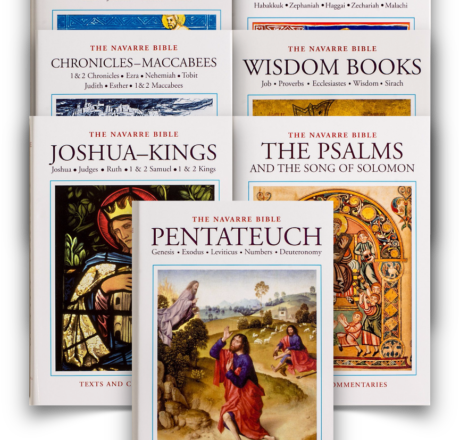
From: Isaiah 55:1-9
Epilogue: Invitation to Partake of the Banquet of the Lord's Covenant
--------------------------------------------------------------------------------------------------
[1] “Ho, every one who thirsts,
come to the waters;
and he who has no money,
come, buy and eat!
Come, buy wine and milk
without money and without price.
[2] Why do you spend your money for
that which is not bread,
and your labour for that which does
not satisfy?
Hearken diligently to me, and eat
what is good,
and delight yourselves in fatness.
[3] lncline your ear, and come to me;
hear, that your soul may live;
and I will make with you an everlasting
covenant,
my steadfast, sure love for David.
*****************************************************
Commentary:
55:1-13. The invitation to the Covenant banquet acts as the epilogue to the second part of the book of Isaiah, and picks up on themes in chapter 40, which is its prologue. The two chapters help to give literary and thematic unity to this part of the book. The oracle in chapter 55 sums up in a way the teachings contained in the preceding chapters -- the invitation to the Covenant banquet (vv. 1-3), reminiscent of that celebrated by Moses at Mount Sinai (Ex 24:5, 11); the renewal of the Covenant with David on Zion (vv. 4-5); the transcendence of God, who is unaffected by the sins of men (vv. 8-9); the power of the word of God (vv. 10-11); and, as a final synthesis, the promise of a new exodus, a sign of God’s everlasting salvation.
These oracles are a call for conversion, a call to take advantage of the salvific gifts so generously offered: “Come to the waters” (v. 1), “Come to me” (v. 3), “Seek the Lord” (v. 6), “Let the wicked forsake his way” (v. 7). Originally, it was a call to those exiled in Babylon to return to Jerusalem; but it is a call that is made at all times, to everyone. The reference to an everlasting Covenant, in keeping with promises made to David (cf. v. 3), can be read by Christians as an invitation to share in the new and eternal Covenant sealed with the Blood of our Lord Jesus Christ, a pledge of salvation for all mankind. In the Eucharist, the banquet of the New Testament, the words of the prophet come true in the complete sense in the words spoken by our Lord when he instituted that sacrament: “Take and eat” (cf. v. 1) the true bread of life, the very finest food, which money cannot buy (vv. 1-3). Therefore, the invitation extended by the prophet is a call to Christians to partake of the Blessed Eucharist. Paul VI, urging the faithful to take part in the Sunday celebration of the Eucharist, wrote: “How could we fail to take part in this encounter, to partake of the banquet that Christ has lovingly prepared for us? Our participation should be dignified and filled with joy. Christ, crucified and glorified, comes among his disciples to draw them all into the power of his resurrection. It is the pinnacle, here on earth, of the Covenant of love between God and his people: the sign and source of Christian joy, the preparation for the eternal banquet in heaven” (Gaudete in Domino, 322). Verses1-11, like 54:5-14, are read in the liturgy of the Easter Vigil, which celebrates Christ’s victory over sin and which invites the faithful to partake of the banquet of the Covenant sealed by his death and resurrection: “On the feasts of the Lord, when the faithful receive the Body of the Son, they proclaim to one another the Good News that the first fruits of life have been given, as when the angel said to Mary Magdalene, ‘Christ is risen!’ Now too are life and resurrection conferred on whoever receives Christ” (“Fanqith, Brevarium iuxta ritum Ecclesiae Antiochenae Syrorum”, in Catechism of the Catholic Church, 1391).
From: Romans 8:35-39
Trust in God
------------
[35] Who shall separate us from the love of Christ? Shall tribulation, or distress, or persecution, or famine, or nakedness, or peril, or sword? [36] As it is written, "For thy sake we are being killed all day long; we are regarded as sheep to be slaughtered." [37] No, in all these things we are more than conquerors through him who loved us. [38] For I am sure that neither death, nor life, nor angels, nor principalities, nor things present, nor things to come, nor powers, [39] nor height, nor depth, nor anything else in all creation, will be able to separate us from the love of God in Christ Jesus our Lord.
***********************************************************************
Commentary:
31-39. The elect will emerge unscathed and victorious from all attacks, dangers and sufferings and will do so not through their own efforts but by virtue of the all-powerful aid of him who has loved them from all eternity and who did not hesitate to have his own Son die for their salvation. It is true that as long as we are on this earth we cannot attain salvation, but we are assured that we will attain it precisely because God will not withhold all the graces we need to obtain this happy outcome: all that is needed is that we desire to receive this divine help. Nothing that happens to us can separate us from the Lord--not fear of death or love of life, not the bad angels or devils, not the princes or the powers of this world, nor the sufferings we undergo or which threaten us nor the worst that might befall us. "Paul himself", St John Chrysostom reminds us, "had to contend with numerous enemies. The barbarians attacked him; his custodians laid traps for him; even the faithful, sometimes in great numbers, rose against him; yet Paul always came out victorious. We should not forget that the Christian who is faithful to the laws of his God will defeat both men and Satan himself" ("Hom. on Rom", 15).
This is the attitude which enables us to live as children of God, who fear neither life nor death: "Our Lord wants us to be in the world and to love the world but without being worldly. Our Lord wants us to remain in this world--which is now so mixed up and where the clamor of lust and disobedience and purposeless rebellion can be heard--to teach people to live with joy [...]. Don't be afraid of the paganized world: our Lord has in fact chosen us to be leaven, salt and light in this world. Don't be worried. The world won't harm you unless you want it to. No enemy of our soul can do anything if we don't consent. And we won't consent, with the grace of God and the protection of our Mother in heaven" (S. Bernal, "Monsignor Josemaria Escriva de Balaguer", p. 213).
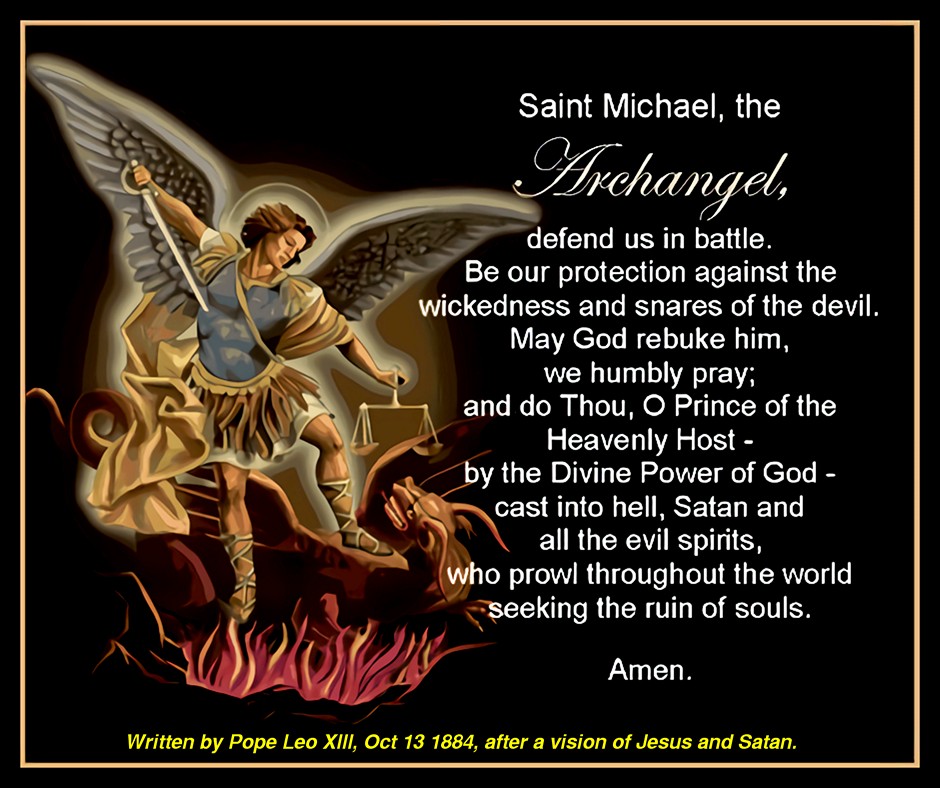
38-39. "Angels", "principalities": names of different angelic hierarchies (cf. Eph 1:21; 3:10); also a possible reference to fallen angels, demons (cf. 1 Cor 15:24; Eph 6:12). "Powers" can mean the same as "angels" and "principalities".
"Height" and "depth" may refer to cosmic forces which, in the culture of that time, were thought to have some influence over the lives of men.
By listing these powerful superior forces (real or imaginary) St Paul is making the point that nothing and nobody, no created thing, is stronger than God's love for us.
From: Matthew 14:13-21
First Miracle of the Loaves and Fish
------------------------------------
[13] Now when Jesus heard this, He withdrew from there in a boat to a lonely place apart. But when the crowds heard it, they followed Him on foot from the towns. [14] As He went ashore He saw a great throng; and He had compassion on them, and healed their sick. [15] When it was evening, the disciples came to Him and said, "This is a lonely place, and the day is now over; send the crowds away to go into the villages and buy food for themselves." [16] Jesus said, "They need not go away; you give them something to eat." [17] They said to Him, "We have only five loaves here and two fish." [18] And He said, "Bring them here to Me." [19] Then He ordered the crowds to sit down on the grass; and taking the five loaves and the two fish He looked up to heaven, and blessed, and broke and gave the loaves to the disciples, and the disciples gave them to the crowds. [20] And they all ate and were satisfied. And they took up twelve baskets full of the broken pieces left over. [21] And those who ate were about five thousand men, besides women and children.
***********************************************************************
Commentary:
14-21. This episode must have occurred in the middle of springtime, because the grass was green (Mark 6:40; John 6:10). In the Near East loaves were usually made very thin, which meant it was easy to break them by hand and distribute them to those at table; this was usually done by the head of the household or the senior person at the meal. Our Lord follows this custom, and the miracle occurs when Jesus breaks the bread. The disciples then distribute it among the crowd. Here again we can see Jesus' desire to have people cooperate with Him.
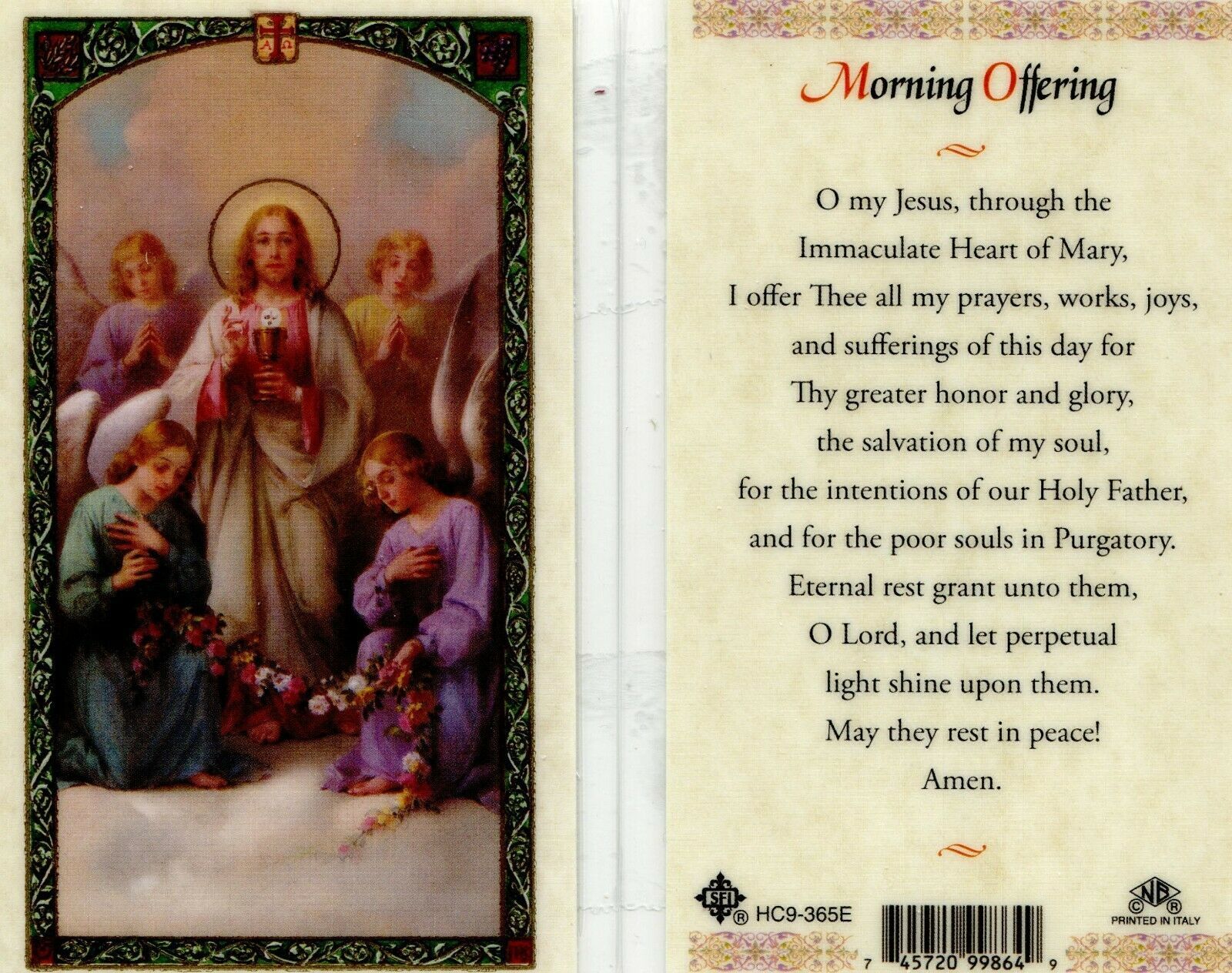
The Month of August is Dedicated to the Immaculate Heart of Mary

“In the sixth month the angel Gabriel was sent from God to a city of Galilee named Nazareth, to a virgin betrothed to a man whose name was Joseph, of the house of David; and the virgin’s name was Mary. And he came to her and said, “Hail, full of grace, the Lord is with you!”” (Luke 1:26-28)

Pope Leo XIV’s prayer intention for the month of August, 2026:
For evangelization in the city
Let us pray that in large cities often marked by anonymity and loneliness we find new ways to proclaim the Gospel, discovering creative paths to build community.

“It is beautiful to note that Jesus’ divinity does not overshadow or diminish His humanity.”
_______
We are so magnificently blessed.
Indeed we are.
Disclaimer: Opinions posted on Free Republic are those of the individual posters and do not necessarily represent the opinion of Free Republic or its management. All materials posted herein are protected by copyright law and the exemption for fair use of copyrighted works.


