
Posted on 07/26/2026 9:42:22 PM PDT by fidelis
Jesus proposed a parable to the crowds. “The Kingdom of heaven is like a mustard seed that a person took and sowed in a field. It is the smallest of all the seeds, yet when full-grown it is the largest of plants. It becomes a large bush, and the birds of the sky come and dwell in its branches.” Matthew 13:31–32
Today’s Gospel presents two brief yet profoundly rich parables—the mustard seed and the leaven—each revealing distinct dimensions of the mystery of the Kingdom of Heaven. Together, they draw our attention to the Kingdom’s humble beginnings and hidden power, which unfold silently yet irresistibly in the world and within the human soul.
Each parable possesses layers of meaning, and the Church Fathers deeply explored these levels. In the Parable of the Mustard Seed, the seed is frequently interpreted as Christ Himself. As “the smallest of all the seeds,” the mustard seed illustrates the hiddenness and apparent insignificance of Christ’s earthly life, from a worldly point of view. He entered the world in obscurity, born in a cave in Bethlehem, fleeing into exile in Egypt, and growing up in the humble village of Nazareth. His divinity—the Eternal Word through whom all things were made—was veiled beneath the lowliness of His humanity.
Even as He hung upon the Cross, His divine majesty was hidden from the eyes of the world. Yet from this seed of self-emptying love—this total descent into poverty and death—sprang forth the triumph of the Resurrection, shattering the bonds of sin and death. In His risen glory, Christ has become the “largest of plants,” and, as the parable says, “the birds of the sky come and dwell in its branches.” This image is often understood as a symbol of the Church, the Mystical Body of Christ, in which the peoples of the earth find shelter, nourishment, and eternal hope.
The mustard seed also represents Christ planted within each soul. When He is sown in the fertile ground of our hearts—through faith, prayer, and the Sacraments—He takes root and grows, transforming our lives from within. Though His presence may begin in us imperceptibly, it has the power to expand beyond all measure, bearing fruit not only in our lives but in the lives of all those we encounter. Ultimately, this growth finds its consummation in the New Heavens and the New Earth, where the Kingdom of God will be fully revealed.
The second parable—the leaven—expresses a similar truth in another form. The leaven is often interpreted as Christ or His grace, working silently and effectively. Mixed into three measures of flour, it gradually transforms the entire batch—symbolizing the hidden work of grace within the soul. Here, Christ is not only among us, but within us, sanctifying every part of our being from the inside out.
Reflect today on the hidden ways in which Christ is at work in your life. Are you attentive to His quiet growth within you? Do you nourish the seed of His presence through prayer and the Sacraments? Trust that, even in small beginnings, God is building His Kingdom—in you, through you, and for His greater glory.
Most glorious King, You desire that Your Kingdom be born within our lives through the grace poured out by Your Passion, Death, and Resurrection. Come to me, Lord, and plant the seed of grace deep within my soul. Let it take root and grow, transforming me according to Your perfect will. Through me, expand Your Kingdom on earth, until the day we behold the fullness of Your eternal Kingdom in glory. Jesus, I trust in You.
Please keep in mind that this is a Catholic Caucus/Devotional thread for the purpose of prayerful reflection on the Sacred Scriptures and is closed to debate of any kind. Per FR policy on Religion Caucus threads, off-topic, argumentative, and abusive comments are not allowed and will be submitted to the Mods for deletion. Thanks, and God bless you.
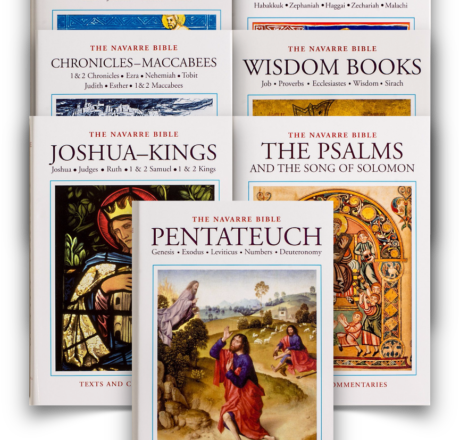
Today’s First Reading
From: Jeremiah 13:1-11
The linen waistcloth entirely spoiled
--------------------------------------------
[1] Thus said the Lord to me, "Go and buy a linen waistcloth, and put it on your loins, and do not dip it in water." [2] So I bought a waistcloth according to the word of the Lord, and put it on my loins. [3] And the word of the Lord came to me a second time, [4] "Take the waistcloth which you have bought, which is up- on your loins, and arise, go to the Euphrates, and hide it there in a cleft of the rock." [5] So I went, and hid it by the Euphrates, as the Lord commanded me. [6] And after many days the Lord said to me, "Arise, go to the Euphrates, and take from there the waistcloth which I commanded you to hide there." [7] Then I went to the Euphrates, and dug, and I took the waistcloth from the place where I had hidden it. And behold, the waistcloth was spoiled; it was good for nothing.
[8] Then the word of the Lord came to me: [9] "Thus says the Lord: Even so will I spoil the pride of Judah and the great pride of Jerusalem. [10] This evil people, who refuse to hear my words, who stubbornly follow their own heart and have gone after other gods to serve them and worship them, shall be like this waist- cloth, which is good for nothing. [11] For as the waistcloth clings to the loins of a man, so I made the whole house of Israel and the whole house of Judah cling to me, says the Lord, that they might be for me a people, a name, a praise, and a glory, but they would not listen.
*****************************************************************
Commentary:
13:1-11. This is the first of Jeremiah's symbolic actions reported in the book. Actions of that sort, sometimes appearing to make sense, have the advantage of catching the audience's attention better than an oracle does. It is not easy to imagine how Jeremiah, in the difficult circumstances of the time, could have twice gone to the Euphrates (about 1000 km. or 570 miles away). Therefore, scholars think that this symbolic action may have been something seen in a vision, or else they interpret it as containing a play on the words Parah, the name of a torrent near Anathoth (cf. Josh 18:23) and "Perath", the word used in Hebrew for the river Euphrates. Anyway, this symbolic action means that Judah, the Lord's decorative loincloth (of the sort worn by priests in the temple), will be corrupted by Babylonian influences and thereby destroyed.
God asked Jeremiah to buy a loincloth and put it on to symbolize that, just as that garment fitted his waist exactly, God wanted the house of Israel and the house of Judah to cling to him (v. 11). The Lord wanted his people to trust in him completely: the word for "clinging" or adhesion often occurs in the book of Deu- teronomy, too, to mean the fidelity due to God (cf. Deut 4:4; 10:20; 11:22; 13:5; 30:20). This "cleaving" to God comes about through faith. "Faith is first of all a personal adherence of man to God. At the same time, and inseparably, it is a free assent to the whole truth that God has revealed. As personal adherence to God and assent to his truth, Christian faith differs from our faith in any human person. It is right and just to entrust oneself wholly to God and to believe absolutely what he says. It would be futile and false to place such faith in a creature (cf. Jer 17:5-6; Ps 40:5; 146:3-4)" (Catechism of the Catholic Church, 150). Jeremiah's symbolic action may help us, then, to see that when someone forsakes God and puts all his trust in created things, be they other people or material things, it spoils that person's heart entirely. The passage also reminds us of what our Lord says in Matthew 5:13 about salt that has lost its taste being "good for nothing" (v. 10).
From: Matthew 13:31-35
The Mustard Seed; The Leaven
--------------------------------------
[31] Another parable He (Jesus) put before them saying, "The Kingdom of Heaven is like a grain of mustard seed which a man took and sowed in his field; [32] it is the smallest of all seeds, but when it has grown it is the greatest of shrubs and becomes a tree, so that the birds of the air come and make nests in its branches."
[33] He told them another parable. "The Kingdom of Heaven is like a leaven which a woman took and hid in three measures of meal, till it was all leavened."
[34] All this Jesus said to the crowds in parables; indeed He said nothing to them without a parable. [35] This was to fulfill what was spoken by the prophet: "I will open my mouth in parables, I will utter what has been hidden since the foundation of the world."
***********************************************************************
Commentary:
31-32. Here, the man is Jesus Christ and the field, the world. The grain of mustard seed is the preaching of the Gospel and the Church, which from very small beginnings will spread throughout the world.
The parable clearly refers to the universal scope and spread of the Kingdom of God: the Church, which embraces all mankind of every kind and condition, in every latitude and in all ages, is forever developing in spite of obstacles, thanks to God's promise and aid.
33. This comparison is taken from everyday experience: just as leaven gradually ferments all the dough, so the Church spreads to convert all nations.
The leaven is also a symbol of the individual Christian. Living in the middle of the world and retaining his Christian quality, he wins souls for Christ by his word and example: "Our calling to be children of God, in the midst of the world, requires us not only to seek our own personal holiness, but also to go out onto all the ways of the earth, to convert them into roadways that will carry souls over all obstacles and lead them to the Lord. As we take part in all temporal activities as ordinary citizens, we are to become leaven acting on the mass" (St. J. Escriva, "Christ Is Passing By", 120).
34-35. Revelation, God's plans, are hidden (cf. Matthew 11:25) from those who are disposed to accept them. The Evangelist wishes to emphasize the need for simplicity and for docility to the Gospel. By recalling Psalm 78:2, he tells us once more, under divine inspiration, that the Old Testament prophecies find their fulfillment in our Lord's preaching.
The Month of July is Dedicated to the Precious of Jesus

“They triumphed over the devil by the blood of the Lamb and by the word of their testimony; they did not love their lives so much as to shrink from death.” (Revelation 12:11)

Pope Leo XIV’s prayer intention for the month of July, 2026:
For respect for human life
Let us pray for the respect and protection of human life in all its stages, recognizing it as a gift from God.

Disclaimer: Opinions posted on Free Republic are those of the individual posters and do not necessarily represent the opinion of Free Republic or its management. All materials posted herein are protected by copyright law and the exemption for fair use of copyrighted works.


