
Posted on 07/25/2026 10:22:52 PM PDT by fidelis
Seventeenth Sunday in Ordinary Time
“The kingdom of heaven is like a treasure buried in a field, which a person finds and hides again, and out of joy goes and sells all that he has and buys that field. Again, the kingdom of heaven is like a merchant searching for fine pearls. When he finds a pearl of great price, he goes and sells all that he has and buys it.” Matthew 13:44–46
In the first parable above, a person unexpectedly discovers a treasure buried in a field. Imagine that you take a metal detector with you while on a hike, simply curious about what might lie beneath the soil. Suddenly, the detector gives a strong signal. Expecting perhaps a rusted can or an old nail, you begin to dig. But as your shovel strikes something solid, you uncover an old chest. With growing anticipation, you lift it from the earth and open it—only to find it brimming with ancient and priceless jewels, gold and silver coins, and other precious items of immense worth.
In the second parable, the merchant is actively searching for a valuable pearl. He knows what he seeks and finally discovers one of exceptional worth—one that eclipses all others. In both cases, however, the response is the same: the man and the merchant each go and sell all they possess to obtain the treasure they have found.
These parables pose two fundamental questions for each of us:
💠Have I discovered the priceless treasure of the Kingdom of Heaven?
💠If I have, am I willing to let go of everything else to attain it?
Like the man who stumbles upon the buried treasure, many people encounter God’s grace in surprising ways—through a moment of prayer, a profound experience at Mass, an act of charity, or even during suffering. Maybe those people were not actively seeking divine treasure, yet in a moment of providence, the veil is lifted, and the beauty of God’s Kingdom is revealed. Once they discover the treasure, their souls realize that nothing else compares. From that point on, they are moved to reorient their entire lives to possess that treasure fully.
The path of the merchant, by contrast, is that of the soul who longs for truth, beauty, and goodness, diligently seeking them out. The one who searches might spend years studying, praying, yearning, and pursuing what is of eternal value. And then—finally—the “pearl” is found. Christ is discovered. The Gospel becomes clear. The longing is fulfilled. Again, everything else is willingly surrendered for the sake of that one Pearl of great price—Jesus Christ.
In both parables, the decision to sell all to gain the treasure is an easy choice. The discovery is so great that everything else the person possesses pales in comparison. But how many people have truly made such a discovery?
Reflect today on this invaluable treasure, waiting to be discovered. Consider where you are on that journey of discovery. Have you heard about the priceless treasure of coming to know, love, and serve God? Have you read about the radical response made by many saints? Have you discovered God for yourself, through prayer and moments of profound enlightenment? If you have not, keep searching—the Kingdom is near. If you have made this discovery, then consider all your attachments, and willingly surrender them to God, acknowledging that nothing is too much to offer to our loving God in exchange for the untold riches of the life of grace to which we are called.
My Lord and King, so often I seek the fleeting treasures of this world, including the illusion of treasures found in sin. Please open my eyes and help me to see You as You truly are—and to recognize the priceless value of Your Kingdom in my life. As I discover this Pearl of Great Price, grant me the courage and wisdom I need to surrender all that You ask of me, so that I may fully attain Your reign in my heart. Jesus, I trust in You.
Please keep in mind that this is a Catholic Caucus/Devotional thread for the purpose of prayerful reflection on the Sacred Scriptures and is closed to debate of any kind. Per FR policy on Religion Caucus threads, off-topic, argumentative, and abusive comments are not allowed and will be submitted to the Mods for deletion. Thanks, and God bless you.
Today’s First Reading
From: 1 Kings 3:4-13
Solomon’s Request of God (Continuation)
--------------------------------------
[4] And the king (Solomon) went to Gibeon to sacrifice there, for that was the great high place; Solomon used to offer a thousand burnt offerings upon that altar. [5] At Gibeon the LORD appeared to Solomon in a dream by night; and God said, “Ask what I shall give you.” [6] And Solomon said, “Thou hast shown great and steadfast love to thy servant David my father, because he walked before thee in faithfulness, in righteousness, and in uprightness of heart toward thee; and thou hast kept for him this great and steadfast love, and hast given him a son to sit on his throne this day. [7] And now, O LORD my God, thou hast made thy servant king in place of David my father, although I am but a little child; I do not know how to go out or come in. [8] And thy servant is in the midst of thy people whom thou hast chosen, a great people, that cannot be numbered or counted for multitude. [9] Give thy servant therefore an understanding mind to govern thy people, that I may discern between good and evil; for who is able to govern this thy great people?”
[10] It pleased the Lord that Solomon had asked this. [11] And God said to him, “Because you have asked this, and have not asked for yourself long life or riches or the life of your enemies, but have asked for yourself understanding to discern what is right, [12] behold, I now do according to your word. Behold, I give you a wise and discerning mind, so that none like you has been before you and none like you shall arise after you. [13] I give you also what you have not asked, both riches and honor, so that no other king shall compare with you, all your days."
***********************************************************************
Commentary:
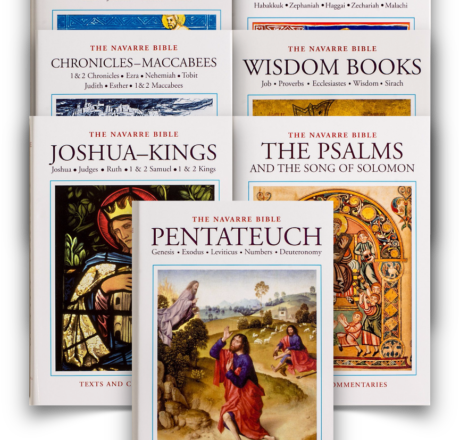
3:1-11:1:43. The reign of Solomon became idealized in the memory of Israel. The sacred writer of 1 and 2 Kings gives him much more space than any other king. First we are shown his wisdom (3:1-5:14), which would become proverbial and would cause wisdom books such as Proverbs, Ecclesiastes and the Book of Wisdom to be attributed to him, and also poetical books such as the Song of Songs and a collection of Psalms. He then goes on to deal with the king’s public works programme (5:15-9:9), especially the building of the temple and its dedication, for that temple would become the center of the religious life of the people. On these two scores Solomon became famous inside and outside Israel, as explained in 9:10-10:29. Finally, with a realism rare among historians of the time, the writer exposes the king’s sins and failings towards the end of his reign (11:1-40).
The reign of Solomon is depicted in these chapters in all its splendor--and all its weakness. The splendor derives from the wisdom with which God endows the king (3:1-5:14) and is to be found in Solomon’s great buildings (especially the temple: 5:15-7:51), in his prayer at the dedication of the temple (8:1-9:9) and in the booming commerce which gives Solomon great prestige and untold wealth (9:10-10:29). The king’s weakness lies in his unfaithfulness to God, for, to please his foreign wives, he introduces the worship of other gods into the country. There are political weaknesses, too: cracks are appearing in the (north-south) union, and enemies exist inside and outside the state (11:1-40).
3:1-5:14. The most important trait of Solomon is his wisdom, to which our Lord refers in the Gospel (cf. Mt 12:45). The sacred writer shows here the source and evidence of that wisdom: it is a gift from God, his answer to the king’s prayer (3:12-14), and it can be seen in the way Solomon administers justice (3:16-28) and in the way that court and kingdom are organized, that is, in the typical functions of a king (4:1-24). The more he acts with wisdom, the wiser he becomes (4:29-34).
3:2-14. The “high places” (v. 2) were altars built in open country, on the top of some hill, and under a shady tree, where Canaanites and Israelites of this period offered sacrifices to the divinity. From the time of King Josiah’s reform in 622 this type of worship was expressly forbidden in case the worship of God should become associated with worship of local gods, baals (cf. 2 Kings 23:4-20).
Gibeon, about 10 km. (6 miles) northwest of Jerusalem, belonged to the tribe of Benjamin (cf. Josh 18:25) and was one of the cities given over to the Levites (cf. Josh 21:17) in which according to Chronicles, the desert tent or tabernacle was kept for a time (cf. 1 Chron 21:29). The fact that the Lord should speak to Solomon here also means that he is confirming him as king of Israel.
Solomon’s request pleases the Lord because it is made with humility (cf. v. 7) and because he asks not for material things but for “an understanding mind” so as to be able to govern well (vv. 9-14). Solomon’s request is an anticipation of the proper order which, according to Christ’s teaching, should be present in prayer of petition: “The one Master and Lord teaches us how and in what order we ought to pray to God for the things we want; since we indicate and express our desires and petitions in, prayer, then we pray properly and well when the order of our petitions matches the right order of desires. True charity teaches us that we ought to dedicate ourselves and all our desires to God; God, the supreme Good, deserves the highest form of love. And God cannot be loved from the heart, exclusively, if his honor and glory are not valued above all other things and creatures; all good things, those we have and those we do not possess, all things that are called good, must be subordinated to the supreme Good from whom they derive their goodness” ("Roman Catechism", 4, 10, 1).
From: Romans 8:26-30
Christians are Children of God (Continuation)
---------------------------------------------
[26] Likewise the Spirit helps us in our weakness; for we do not know how to pray as we ought, but the Spirit himself intercedes for us with sighs too deep for words. [27] And he who searches the hearts of men knows what is the mind of the Spirit, because the Spirit intercedes for the saints according to the will of God.
[28] We know that in everything God works for good with those who love him, who are called according to his purpose. [29] For those whom he foreknew he also predestined to be conformed to the image of his Son, in order that he might be the first-born among many brethren. [30] And those whom he predestined he also called; and those whom he called he also justified; and those whom he justified he also glorified.
***********************************************************************
Commentary:
28. Awareness of God as Father helps us see all the events of our life as orchestrated by the lovable Will of God. Our Father gives us what is best for us and expects us to discover his paternal love in adverse as well as in favorable events. "Notice", St Bernard points out, "that he does not say that things suit our whims but that they work for our good. They serve not caprice but usefulness; not pleasure but salvation; not what we desire but what is good for us. In that sense everything works for our good, even death itself, even sin [...]. Is it not the case that sins do good to him who on their account becomes more humble, more fervent, more solicitous, more on guard, more prudent?" ("De Fallacia Et Brevitate Vitae", 6). If we have this optimistic, hopeful attitude, we will overcome every difficulty we meet: "The whole world seems to be coming down on top of you. Whichever way you turn you find no way out. This time, it is impossible to overcome the difficulties.
"But, have you again forgotten that God is your Father? —all-powerful, infinitely wise, full of mercy. He would never send you anything evil. That thing that is worrying you is good for you, even though those earthbound eyes of yours may not be able to see it now.
"'Omnia in bonum!' Lord, once again and always, may your most wise Will be done!" (St J. Escriva, "The Way of the Cross", IX, 4).
29. Christ is called the "first-born" for many reasons. He is "the first-born of all creation" (Col 1:15) because he is eternally begotten and because "all things were made through him" (Jn 1:3). He is also the new Adam and therefore the head of the human race in the work of redemption (cf. 1 Cor 15:22, 45). He is "the first-born from the dead" (cf. Col 1:18; Rev 1:5) and therefore is the head of all those who have reached heaven and all who are awaiting their future resurrection (1 Cor 15:20, 23). Finally, he is the "first-born among many brethren" because, in the order of grace, he gives us a share in his divine sonship: by means of habitual grace--"sanctifying" grace--we become children of God and brothers and sisters of Jesus Christ. "For, just as God chose to communicate to others his natural goodness, giving them a share in that goodness, so that he might be not only good but also the author of good things; so the Son of God chose to communicate to others a sonship like his own, so that he might be not only a son, but the first-born of many sons" (St Thomas Aquinas, "Commentary on Rom, ad loc.").
This remarkable fact is what leads the Christian to imitate Christ: our divine sonship moves us to reflect the words and gestures of his Only-begotten Son.
"Lord, help me decide to tear off, through penance, this pitiful mask I have fashioned with my wretched doings.... Then, and only then, by following the path of contemplation and atonement, will my life begin to copy faithfully the features of your life. We will find ourselves becoming more and more like you.
"We will be other Christs, Christ himself, 'ipse Christus'" (St J. Escriva, "The Way of the Cross", VI).
From: Matthew 13:44-52
The Hidden Treasure; The Pearl
---------------------------------------
(Jesus said to His disciples,) [44] "The Kingdom of Heaven is like treasure hidden in a field, which a man found and covered up; then in his joy he goes and sells all that he has and buys that field.
[45] "Again, the Kingdom of Heaven is like a merchant in search of fine pearls, [46] who, on finding one pearl of great value, went and sold all that he had and bought it."
[47] "Again, the Kingdom of Heaven is like a net which was thrown into the sea and gathered fish of every kind; [48] when it was full, men drew it ashore and sat down and sorted the good into vessels but threw away the bad. [49] So it will be at the close of the age. The angels will come out and separate the evil from the righteous, [50] and throw them into the furnace of fire; there men will weep and gnash their teeth.
[51] "Have you understood all this?" They said to Him, "Yes." [52] And He said to them, "Therefore every scribe who has been trained for the Kingdom of Heaven is like a householder who brings out of his treasure what is new and what is old."
***********************************************************************
Commentary:
44-46. In these two parables Jesus shows the supreme value of the Kingdom of Heaven, and the attitude people need if they are to attain it. The parables are very alike, but it is interesting to note the differences: the treasure means abundance of gifts; the pearl indicates the beauty of the Kingdom. The treasure is something stumbled upon; the pearl, the result of a lengthy search; but in both instances the finder is filled with joy. Faith, vocation, true wisdom, desire for Heaven, are things which sometimes are discovered suddenly and unexpectedly, and sometimes after much searching (cf. St. Gregory the Great, "In Evangelia Homilae", 11). However, the man's attitude is the same in both parables and is described in the same terms: "he goes and sells all that he has and buys it": detachment, generosity, is indispensable for obtaining the treasure.
"Anyone who understands the Kingdom which Christ proposes realizes that it is worth staking everything to obtain it [...]. The Kingdom of Heaven is difficult to win. No one can be sure of achieving it, but the humble cry of a repentant man can open wide its doors" (St J. Escriva, "Christ Is Passing By", 180).
47. "Fish of every kind": almost all the Greek manuscripts and early translations say "All kinds of things". A dragnet is very long and about two meters wide; when it is extended between two boats it forms double or triple mesh with the result that when it is pulled in it collects all sorts of things in addition to fish--algae, weeds, rubbish, etc.
This parable is rather like the parable of the cockle, but in a fishing context: the net is the Church, the sea the world.
We can easily find in this parable the dogmatic truth of the Judgment: at the end of time God will judge men and separate the good from the bad. It is interesting to note our Lord's repeated references to the last things, especially Judgment and Hell: He emphasizes these truths because of man's great tendency to forget them: "All these things are said to make sure that no one can make the excuse that he does not know about them: this excuse would be valid only if eternal punishment were spoken about in ambiguous terms" (St. Gregory the Great, "In Evangelia Homilae", 11).
52. "Scribe": among the Jews a scribe was a religious teacher, a specialist in sacred Scripture and its application to life. Our Lord here uses this word to refer to the Apostles, who will have the role of teachers in His Church. Thus, the Apostles and their successors, the Bishops, are the "Ecclesia docens", the teaching Church; they have the authority and the mission to teach. The Pope and the Bishops exercise this authority directly and are also helped in this by priests. The other members of the Church form the "Ecclesia discens", the learning Church. However, every disciple of Christ, every Christian who has received Christ's teaching, has a duty to pass this teaching on to others, in language they can understand; therefore, he should make sure he has a good grasp of Christian doctrine. The treasure of Revelation is so rich that it can provide teaching which applies to all times and situations. It is for the word of God to enlighten all ages and situations--not the other way around. Therefore, the Church and its pastors preach, not new things, but a single unchanging truth contained in the treasure of Revelation: for the past two thousand years the Gospel has always been "good news".
The Month of July is Dedicated to the Precious of Jesus

“They triumphed over the devil by the blood of the Lamb and by the word of their testimony; they did not love their lives so much as to shrink from death.” (Revelation 12:11)

Pope Leo XIV’s prayer intention for the month of July, 2026:
For respect for human life
Let us pray for the respect and protection of human life in all its stages, recognizing it as a gift from God.

Disclaimer: Opinions posted on Free Republic are those of the individual posters and do not necessarily represent the opinion of Free Republic or its management. All materials posted herein are protected by copyright law and the exemption for fair use of copyrighted works.


