
Posted on 07/24/2026 12:04:58 AM PDT by fidelis
Jesus said to his disciples: “Hear the parable of the sower. The seed sown on the path is the one who hears the word of the Kingdom without understanding it, and the Evil One comes and steals away what was sown in his heart. The seed sown on rocky ground…” Matthew 13:18–20
After preaching the Parable of the Sower to the crowds and then explaining to His close disciples (likely the Twelve) the purpose of parables, Jesus, in today’s Gospel, offers them an interpretation of the parable. He speaks clearly and personally to them because they are open—their hearts are properly disposed to receive the truth.
The parable reveals four kinds of hearts: hardened, shallow, distracted, and receptive. By presenting these four interior dispositions, with only one being ideal, Jesus shows that becoming receptive to the Word of God takes effort, humility, and grace. The first three types reflect a progression of deepening receptivity, but each falls short. The final type, the good soil, represents the goal to which all hearts are called.
💠The first—represented by seed sown on the path—refers to those whose hearts are so hardened that God’s Word cannot enter. Their ears hear the Word of God—as symbolized by the sower sowing seed on the path—but the soil of their hearts has been trampled by many sins and self-centered habits, so the seed cannot penetrate. As a result, they do not understand the Gospel, nor do they seek to understand. This might even refer to some who attend church, hearing the readings and the homily, yet remain unmoved by the Gospel.
💠The second—represented by seed sown on rocky ground—refers to those whose hearts are shallow. They receive the Word of God with initial joy and enthusiasm, perhaps even with emotion and spiritual fervor. But that joy is not rooted in deep conviction or sustained by persevering faith. When trials come—when faith demands sacrifice, endurance, or courage—they quickly fall away, disillusioned. The root of divine truth never penetrates the deeper layers of the soul. These are those who like the idea of the Gospel but not the cost that comes with living it fully.
💠The third—represented by seed sown among thorns—refers to those whose hearts are distracted. They welcome the Word of God and allow it to take root, but they simultaneously cling to worldly anxieties, attachments, and desires. The thorns—symbolizing wealth, comfort, ambition, and the cares of daily life—choke the Word so that it becomes fruitless. These are the souls who try to live both for God and for the world. They desire Heaven, but they also crave control, pleasure, or security on their own terms. In such soil, the Word struggles to grow and cannot bear lasting fruit.
Reflect today on the progression revealed in this parable. How open is your heart to the Word of God? As a spiritual seed, God’s Word is powerful. When received into a mind filled with faith, and a heart filled with hope and charity, the seed is nurtured and grows. As it grows, authentic transformation takes place. Good fruit becomes evident, and God does great things in and through this holy soul. See yourself on this journey, till the soil, and await God’s Word as it is sown. Receive it with joy, and resolve to nourish that seed so that an abundance of good fruit may be borne from your life—thirty, sixty, or a hundredfold.
My Divine Sower, You sow the seed of Truth generously and abundantly. You are always speaking to me, revealing Your Love and Your perfect Will, yet I am often hardhearted, shallow, or distracted. Please till the soil of my heart and make me receptive to all You reveal, so that my life may bear an abundance of good fruit for Your Kingdom. Jesus, I trust in You.
Please keep in mind that this is a Catholic Caucus/Devotional thread for the purpose of prayerful reflection on the Sacred Scriptures and is closed to debate of any kind. Per FR policy on Religion Caucus threads, off-topic, argumentative, and abusive comments are not allowed and will be submitted to the Mods for deletion. Thanks, and God bless you.
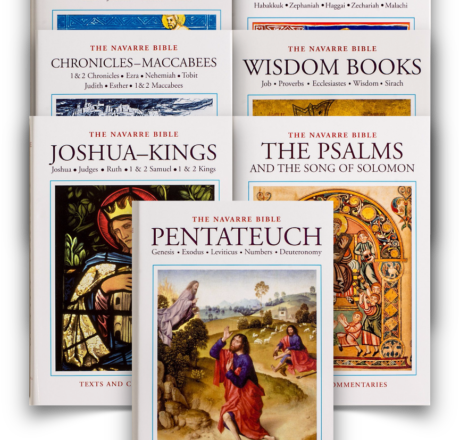
Today’s First Reading
From: Jeremiah 3:14-17
Call to conversion
------------------------
[14] Return, O faithless children, says the LORD;
for I am your master;
I will take you, one from a city and two from a family,
and I will bring you to Zion.
[15] "'And I will give you shepherds after my own heart, who will feed you with Knowledge and understanding. [16] And when you have multiplied and increased in the land, in those days, says the LORD, they shall no more say, "The ark of the covenant of the LORD." It shall not come to mind, or be remembered, or missed; it shall not be made again. [17] At that time Jerusalem shall be called the throne of the LORD, and all nations shall gather to it, to the presence of the LORD in Jerusalem, and they shall no more stubbornly follow their own evil heart.
*************************************
Commentary:
3:14-18. The fall of the city to the armies of Nebuchadnezzar and the deportations that followed (587 BC) marked the depth of Judah's misfortune; her repeated infidelity was the sole cause. Here, as in the previous oracle, the prophet says that God is ready to receive Israel and Judah back, provided they seek his forgiveness (3:12-13).
The oracle is full of hope; the future will never have any reason to hanker after the past. An entirely new situation will be created. Up to this, the ark of the Covenant was considered to be the foremost evidence of God's presence. According to the Bible, the ark was made in the wilderness on Moses' instructions, in line with the Lord's specifications; it was to be the centerpiece of the sanctuary (cf. Ex 25:10-22). The ark stayed with the people all the way to the land of Canaan and, after being kept in various places, it was solemnly placed by Solomon in the temple of Jerusalem. It contained the Covenant that the Lord made with Israel when he brought it out of the land of Egypt (cf. 1 Kings 8:21). With the fall of Jerusalem to Nebuchadnezzar and the looting of the temple, there is no further mention of the ark of the Covenant. That event marks the end of the old situation, Jeremiah's oracle seems to say. In the future it will be the whole city of Jerusalem that evidences the presence of God (vv. 16-17).
As is true of other oracles from Jeremiah, even though in the first instance they refer to the restoration of Judah after the exile, his words have a wider application, reaching out to the renewal that will take place when the Messiah comes. The Covenant to which the ark bore witness has been broken by Israel (cf. 11:6-8), and its place will be taken by a New Covenant to which the hearts of men shall bear witness (cf. 31:31-37) and which will have a new priesthood ("shepherds": v. 15).
From: Matthew 13:1-23
Parable of the Sower (Continued)
--------------------
[18] "Hear then the parable of the sower. [19] When any one hears the Word of the Kingdom and does not understand it, the evil one comes and snatches away what is sown in his heart; this is what was sown along the path. [20] As for what was sown on rocky ground, this is he who hears the Word and immediately receives it with joy; [21] yet he has no root in himself, but endures for a while, and when tribulation or persecution arises on account of the Word, immediately he falls away. [22] As for what was sown among thorns, this is he who hears the Word, but the cares of the world and the delight in riches choke the Word, and it proves unfruitful. [23] As for what was sown on good soil, this is he who hears the Word and understands it; he indeed bears fruit, and yields, in one case a hundredfold, in another sixty, and in another thirty."
*************************************
Commentary: [same as for yesterday’s reading]
3. Chapter 13 of St. Matthew includes as many as seven of Jesus' parables, which is the reason why it is usually called "the parable discourse" or the "parabolic discourse". Because of their similarity of content and setting these parables are often called the "Kingdom parables", and also the "parables of the Lake", because Jesus taught them on the shore of Lake Gennesaret. Jesus uses these elaborate comparisons (parables) to explain certain features of the Kingdom of God which He has come to establish (cf. Matthew 3:2)—it’s tiny, humble origins; its steady growth; its worldwide scope; its salvific force. God calls everyone to salvation but only those attain it who receive God's call with good dispositions and who do not change their attitude; the value of the spiritual benefits the Kingdom brings--so valuable that one should give up everything to obtain them; the fact that good and bad are all mixed together until the harvest time, or the time of God's judgment; the intimate connection between earthly and heavenly aspects of the Kingdom, until it reaches its point of full development at the end of time.
On Jesus' lips, parables are exceptionally effective. By using parables He keeps His listeners' attention, whether they are uneducated or not, and by means of the most ordinary things of daily life He sheds light on the deepest supernatural mysteries. He used the parable device in a masterly way; His parables are quite unique; they carry the seal of His personality; through them He has graphically shown us the riches of grace, the life of the Church, the demands of the faith and even the mystery of God's own inner life.
Jesus' teaching continues to provide every generation with light and guidance on moral conduct. By reading and reflecting on His parables one can savor the adorable humanity of the Savior, who showed such kindness to the people who crowded around to hear Him--and who shows the same readiness to listen to our prayers, despite our dullness, and to reply to our healthy curiosity when we try to make out His meaning.
3-8. Anyone who has visited the fertile plain to the west of the Lake of Gennesaret will appreciate Jesus' touching description in the parable of the sower. The plain is crisscrossed by paths; it is streaked with rocky ground, often with the rocks lying just beneath the surface, and with the courses of rivulets, dry for most of the year but still retaining some moisture. Here and there are clumps of large thorn bushes. When the agricultural worker sows seed in this mixed kind of land, he knows that some seed will fare better than others.
9. Jesus did not explain this parable there and then. It was quite usual for parables to be presented in the first instance as a kind of puzzle to gain the listener's attention, excite his curiosity and fix the parable in his memory. It may well be that Jesus wanted to allow his more interested listeners to identify themselves by coming back to hear Him again--as happened with His disciples. The rest--who listened out of idle curiosity or for too human reasons (to see Him work miracles)--would not benefit from hearing a more detailed and deeper explanation of the parable.
10-13. The kind of Kingdom Jesus was going to establish did not suit the Judaism of His time, largely because of the Jew's nationalistic, earthbound idea of the Messiah to come. In His preaching Jesus takes account of the different outlooks of His listeners, as can be seen in the attitudes described in the parable of the sower. If people were well disposed to Him, the enigmatic nature of the parable would stimulate their interest; and Jesus later did give His many disciples a fuller explanation of its meaning; but there was no point in doing this if people were not ready to listen.
Besides, parables--as indeed any type of comparison or analogy—are used to reveal or explain something which is not easy to understand, as was the case with the supernatural things Jesus was explaining. One has to shade one's eyes to see things if the sun is too bright; otherwise, one is blinded and sees nothing. Similarly, parables help to shade supernatural brightness to allow the listener to grasp meaning without being blinded by it.
These verses also raise a very interesting question: how can divine revelation and grace produce such widely differing responses in people? What is at work here is the mystery of divine grace--which is an unmerited gift--and of man's response to this grace. What Jesus says here underlines man's responsibility to be ready to accept God's grace and to respond to it. Jesus' reference to Isaiah (Matthew 13:14-15) is a prophecy of that hardness of heart which is a punishment meted out to those who resist grace.
These verses need to be interpreted in the light of three points: 1) Jesus Christ loved everyone, including people of His own home town: He gave His life in order to save all men; 2) the parable is a literary form designed to get ideas across clearly: its ultimate aim is to teach, not to mislead or obscure; 3) lack of appreciation for divine grace is something blameworthy, which does merit punishment; however, Jesus did not come directly to punish anyone, but rather to save everyone.
12. Jesus is addressing His disciples and explaining to them that, precisely because they have faith in Him and want to have a good grasp of His teaching, they will be given a deeper understanding of divine truths. But those who do not "follow Him" (cf. note on Matthew 4:18-22) will later lose interest in the things of God and will grow ever blinder: it is as if the little they have is being taken away from them.
This verse also helps us understand the meaning of the parable of the sower, a parable which gives a wonderful explanation of the supernatural economy of divine grace: God gives grace, and man freely responds to that grace. The result is that those who respond to grace generously receive additional grace and so grow steadily in grace and holiness; whereas those who reject God's gifts become closed up within themselves; through their selfishness and attachment to sin they eventually lose God's grace entirely. In this verse, then, our Lord gives a clear warning: with the full weight of His divine authority, He exhorts us--without taking away our freedom--to act responsibly: the gifts God keeps sending us should yield fruit; we should make good use of the opportunities for Christian sanctification which are offered us in the course of our lives.
14-15. Only well-disposed people grasp the meaning of God's words. It is not enough just to hear them physically. In the course of Jesus' preaching the prophetic words of Isaiah come true once again.
However, we should not think that not wanting to hear or to understand was something exclusive to certain contemporaries of Jesus; each one of us is at times hard of hearing, hard-hearted and dull-minded in the presence of God's grace and saving word. Moreover, it is not enough to be familiar with the teaching of the Church: it is absolutely necessary to put the faith into practice, with all that that implies, morally and ascetically. Jesus was fixed to the wood of the Cross not only by nails and by the sins of certain Jews but also by our sins—sins committed centuries later but which afflicted the Sacred Humanity of Jesus Christ, who bore the burden of our sins. See the note on Mark 4:11-12.
16-17. In contrast with the closed attitude of many Jews who witnessed Jesus' life but did not believe in Him, the disciples are praised by our Lord for their docility to grace, their openness to recognizing Him as the Messiah and to accepting His teaching.
He calls His disciples blessed, happy. As He says, the prophets and just men and women of the Old Testament had for centuries lived in hope of enjoying one day the peace the future Messiah would bring, but they had died without experiencing this good fortune. Simeon, towards the end of his long life, was filled with joy on seeing the infant Jesus when He was presented in the temple: "He took Him up in his arms and blessed God and said, `Lord now lettest Thou Thy servant depart in peace, according to Thy word; for mine eyes have seen Thy salvation'" (Luke 2:28-30). During our Lord's public life, His disciples were fortunate enough to see and be on close terms with Him; later they would recall that incomparable gift, and one of them would begin his first letter in these words: "That which was from the beginning, which we have heard, which we have seen with our own eyes, which we have looked upon and touched with our hands, concerning the word of life; [...] that which we have seen and heard we proclaim also to you, so that you may have fellowship with us; and our fellowship is with the Father and with His Son Jesus Christ. And we are writing this that our [or: your] joy may be complete (1 John 1:1-4).
This exceptional good fortune was, obviously, not theirs but of special merit: God planned it; it was He who decided that the time had come for the Old Testament prophecies to be fulfilled. In any event, God gives every soul opportunities to meet Him: each of us has to be sensitive enough to grasp them and not let them pass. There were many men and women in Palestine who saw and heard the incarnate Son of God but did not have the spiritual sensitivity to see in Him what the Apostles and disciples saw.
19. He does not understand because he does not love--not because he is not clever enough: lack of love opens the door of the soul to the devil.
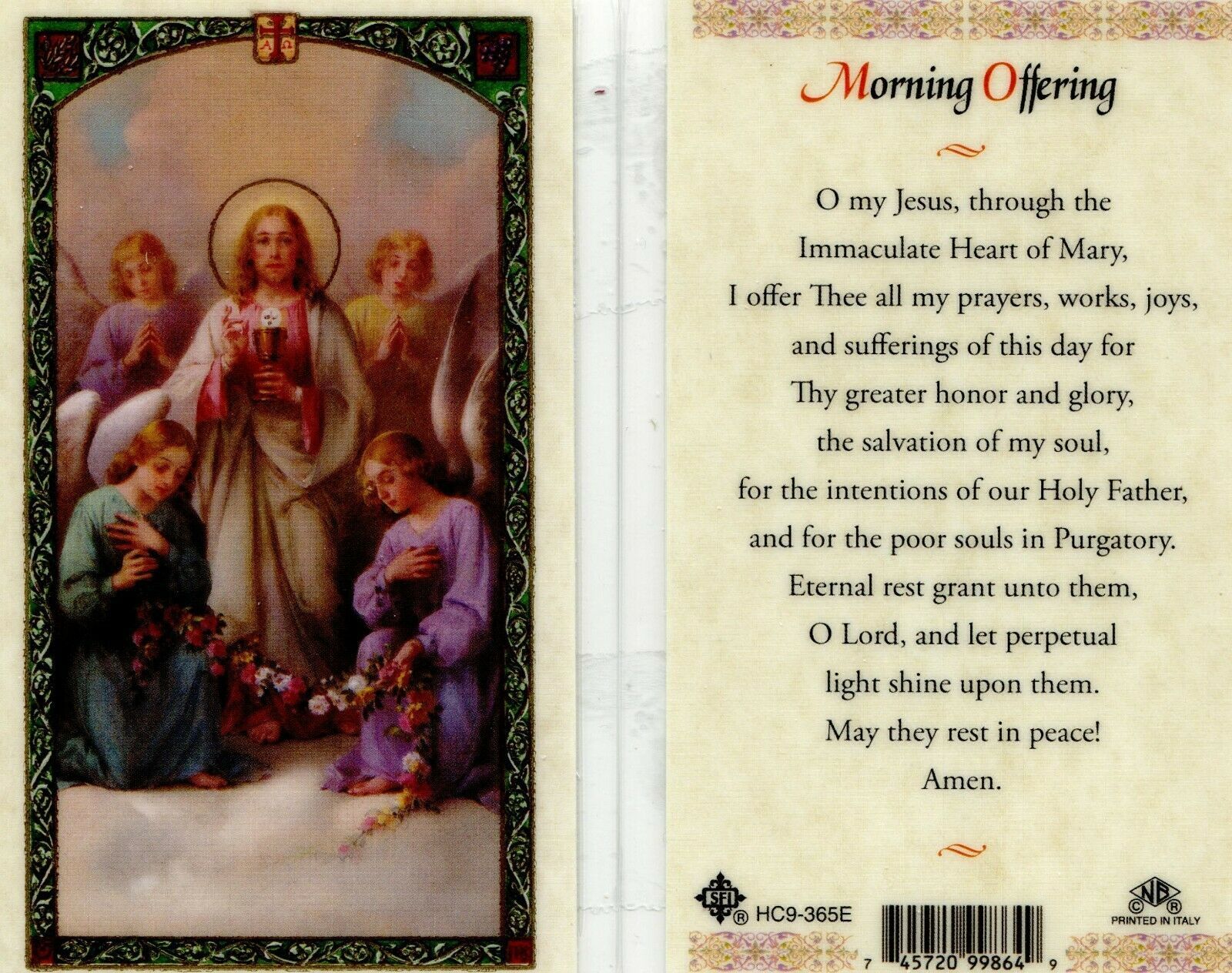

The Month of July is Dedicated to the Precious of Jesus

“They triumphed over the devil by the blood of the Lamb and by the word of their testimony; they did not love their lives so much as to shrink from death.” (Revelation 12:11)

Pope Leo XIV’s prayer intention for the month of July, 2026:
For respect for human life
Let us pray for the respect and protection of human life in all its stages, recognizing it as a gift from God.
Disclaimer: Opinions posted on Free Republic are those of the individual posters and do not necessarily represent the opinion of Free Republic or its management. All materials posted herein are protected by copyright law and the exemption for fair use of copyrighted works.


