
Posted on 07/22/2026 10:19:49 PM PDT by fidelis
The disciples approached Jesus and said, “Why do you speak to the crowd in parables?” He said to them in reply, “Because knowledge of the mysteries of the Kingdom of heaven has been granted to you, but to them it has not been granted. To anyone who has, more will be given and he will grow rich; from anyone who has not, even what he has will be taken away. This is why I speak to them in parables, because they look but do not see and hear but do not listen or understand.” Matthew 13:10–13
Have you ever looked but failed to truly see? Or heard something without really listening or understanding? Jesus’ words teach us that seeing is more than the use of our eyes, and listening is more than the mere act of hearing. The mysteries of the Kingdom are not grasped through sensory perception; they require a deeper interior awareness. Seeing, listening, and understanding demand a receptive heart—a heart attuned to grace.
When the heart is attuned to grace, the mind becomes capable of perceiving life from God’s perspective. This is the gift of Wisdom. Wisdom is the pinnacle of the intellectual gifts, perfecting knowledge, understanding, and counsel by ordering them toward divine truth. Thus, a person who truly sees and listens perceives, not just information, but God’s Eternal Truth. The veil is lifted, and the mysteries of faith come into focus. This interior illumination produces peace, amazement, and a profound sense of gratitude.
Parables are like sacred veils, at once concealing and revealing divine mysteries. For those who are humble, docile to the Holy Spirit, and eager for truth, parables become radiant windows into the heart of God. They are like floodgates, pouring divine light into the soul and drawing it to the very threshold of eternal mysteries. Does the floodgate of divine light pour truth into your mind and grace into your will?
For the proud or indifferent, however, the veil remains drawn—but not without purpose. Jesus does not arbitrarily withhold the divine mysteries from those whose hearts are hardened. Rather, the parable, in veiling the truth, invites the soul to seek more deeply. It stirs a holy curiosity and awakens spiritual desire. It is as if Jesus presents a sacred gift, wrapped in a beautiful veil. He sets it down, says, “This is for you, but don’t peek,” and then smiles and walks away. The hiddenness of the truth is not a rejection; it is an invitation.
Even before this moment, Jesus had already begun to lift the veil. In the Parable of the Sower, just preceding today’s Gospel, He cast seed upon the hearts of His listeners. Some received it attentively, understood it, and were filled with interior consolation as divine light shone within them. Others might have enjoyed the story and found it interesting, but failed to grasp its deeper meaning. Of these, Jesus quotes the prophet Isaiah, saying, in part: “Gross is the heart of this people, they will hardly hear with their ears, they have closed their eyes…” (Matthew 13:15).
Reflect today on the disposition of your own heart. Are you truly open to the deeper truths of God? Do you seek to understand, or are you content merely to hear? Ask the Lord to lift the sacred veil from your eyes and ears so that you may behold the mysteries of His Kingdom with clarity and awe. Let His Word penetrate your soul like seed falling on rich soil. And if you discover areas of dullness or resistance within, do not be discouraged. Christ continues to sow generously. All He asks is that you receive His Word with humility and allow it to take root.
Lord of Eternal Truth, You desire to lift the veil and reveal to me the profound and glorious Mysteries of the Kingdom of Heaven. Please give me eyes to see, ears to hear, and a heart open to understanding. Flood me with the light of Your Truth and strengthen me to respond to that Truth with all my being. Jesus, I trust in You.
Please keep in mind that this is a Catholic Caucus/Devotional thread for the purpose of prayerful reflection on the Sacred Scriptures and is closed to debate of any kind. Per FR policy on Religion Caucus threads, off-topic, argumentative, and abusive comments are not allowed and will be submitted to the Mods for deletion. Thanks, and God bless you.
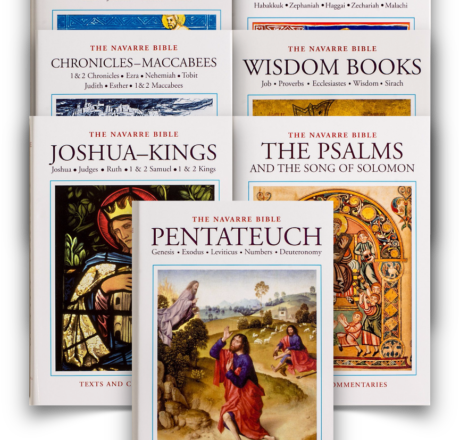
Today’s First Reading
From: Jeremiah 2:1-3, 7-8, 12-13
When Israel was devout, it had nothing to fear
----------------------------------------------------------
[1] The word of the Lord came to me, saying, [2] “Go and proclaim in the hearing of Jerusalem, Thus says the Lord,
I remember the devotion of your youth, your love as a bride, how you followed me in the wilderness, in a land not sown. [3] Israel was holy to the Lord, the first fruits of his harvest. All who ate of it became guilty; evil came upon them, says the Lord.”
[7] And I brought you into a plentiful land to enjoy its fruits and its good things. But when you came in you defiled my land, and made my heritage an abomination. [8] The priests did not say, ‘Where is the Lord?’ Those who handle the law did not know me; the rulers transgressed against me; the prophets prophesied by Baal, and went after things that do not profit.
[12] Be appalled. O heavens, at this, be shocked, be utterly desolate, says the Lord, [13] for my people have committed two evils: they have forsaken me, the fountain of living waters, and hewed out cisterns for themselves, broken cisterns, that can hold no water.
********************************************
Commentary:
2:1-25:38. Most of the oracles are in verse in this part of the book, but there are some prose passages. It is possible that the scroll containing the earliest oracles (which was burnt in 605 by order of King Jehoiakim: cf. 36:2l-23) was made up largely of the poems found in this part (2:1-25:38). They would have been arranged in some sort of thematic order with an eye, too, on chronology.
In the first ten chapters, the oracles turn on the two great themes of the two introductory visions. Firstly, in connexion with the vision of the root of almond (1:11-12), we get a summary of the sins that the prophet has noticed in his role as watchman: Israel and Judah have forsaken the Lord; therefore they must be chastised. God has been faithful, but the people have rejected him; this wrong must be righted without delay--unless there is a genuine change of heart (2:1-4:4). Secondly, in connexion with the vision of the boiling pot facing away from the north (1:13-19), we get oracles threatening destruction from that quarter (4:5-10:25).
>From chapter 11 on, prose passages appear with greater frequency, and Jeremiah’s symbolic actions begin to have a higher profile. The prophet has personal experience of suffering, and his cries for help epitomize the way the people feel when they are struck down by misfortune in punishment for their sins (11:1-20:18). This part of the book ends with a severe indictment of those who ought to have given leadership but failed to do so (21:1-25:38).
All of this first part of the book is a severe warning to the people of Jerusalem and the entire kingdom of Judah. Even so, divine mercy can still be discerned: there is a prospect of forgiveness and salvation.
2:1-4:4. The oracles contained in this section were spoken early in Jeremiah’s ministry, during the reign of Josiah, and possibly before that king set in train his religious reform (for nowhere does Jeremiah refer to it). This means that they would date from the period 627-622 BC. The difference is clearly drawn (3:6-11) between Israel, the Northern kingdom, whose capital was Samaria, and which had fallen to Assyria in 722, and Judah, the Southern kingdom, whose capital was Jerusalem. Assyria had been in control of Israel for some one hundred years, but now it was in decline; and Josiah, king of Judah, was trying to re-establish national unity on all levels – social, political and religious. His efforts would culminate in the great religious reform that began in 622 and which sought to centralize all ritual religious worship in Jerusalem.
The oracles in this section are set in this historical background. The earliest, those conserved in verse form, were spoken by Jeremiah himself and exude the vitality and pain of someone who was an eyewitness. The passages that now appear in prose may well have been added later, when the book was being rewritten after the first manuscript was burned (cf. 36:21-23). These oracles are a warning about sin, about the punishment that it draws down, and about the need for personal conversion in order to attain salvation. The text as it now stands makes it clear that the misfortune that overtook the people of Israel was due to their unfaithfulness to God (2:1-37). Even so, the Lord calls all to conversion; if they respond, he will restore peace and unity to the people (3:1-4:4).
2:1-37. The oracles in this chapter follow the pattern of pleadings used in the ancient Middle East when pacts or alliances were broken. First, the accused party and the witnesses are apprised of the subject of the dispute used. Then the benefits enjoyed by the accused are spelt out; he, for his part, should have adhered to what he agreed in the covenant. This is followed by a list of charges, often couched in the form of questions: and then at the end comes a demand for immediate action to be taken to set things right. If no agreement is arrived at, a declaration of war inevitably follows.
The word of the Lord here is not that of a judge but of one of the two parties who made the Covenant and has been deceived by the unfaithfulness of the other. The prophet begins by reminding the people of all the benefits they received from God during the time that they were faithful to him. In the early days, as they made their way through the wilderness, they had a loving relationship with the Lord, and he took care of them (vv. 1-3); he rescued them from Egypt and brought them to the land promised to them as their inheritance (cf. Hos 1-3). However, instead of staying true to the Lord, the Israelites forsook him and fell lower than other nations (symbolized here by the peoples of the Aegean, “the coasts of Cyprus”, and the Arab lands, “Kedar”: v. 10). Their religion centered on a personal God who took provident care of his followers, yet they turned their backs on him to worship Baal and other gods, who are quite worthless (vv. 6-7). They may form alliances with earthly powers in the hope of getting help, but to no avail.
Even the language that Jeremiah uses shows that Israel has been distancing itself from God (he is upbraiding Israel, to have Judah react). In the opening verses he addresses his people using the familiar form of the word “you” (vv. 2-3), then he changes to the formal “you” (vv. 4-10), and eventually uses the third person (vv. 11-15). Only in the second part of these oracles does the familiar form return, when he reproves the people, to get them to mend their ways (v. 16-37).
The metaphor of the leaking cisterns (v. 13) conveys very well just how ineffective are Israel’s pacts with foreign nations. In Jeremiah’s time, there was a lot of debate about whether or not to make alliances with Assyria or Egypt to ensure survival in the face of hostile foreign powers. The prophet regards such pacts as being of no real use, but he also points to the danger of idolatry that may arise through contact with foreigners. Hence the sarcasm in vv. 16-18: Memphis and Tahpanhes, were two cities on the Lower Nile; “the Euphrates”: literally, “River” (no definite article) in Hebrew. The people’s fascination with the waters and lands of Egypt and Assyria indicates the pull exercised by those great powers on Israel. God had taken care of his people, he had given them a beautiful land of their own, yet Israel had turned away from him and gone after idols -- infidelity leading to idolatry (vv. 4-27). Yet Israel will not acknowledge that it has done wrong, so the Lord accuses the people of their sins and warns them that if they don’t change they will be brought low (vv. 28-37).
2:13. The image of the broken cisterns that cannot hold water is used again and again in Christian writing as an example of the condition of man when, instead of trusting in the Lord, he relies on himself or on earthly things. St Irenaeus of Lyons, for example, advises us to look for really solid support: “Where the Church is, there is the Spirit of God: and where the Spirit is. there is the Church and all grace. The Spirit is truth. Those who are not possessed of the Spirit are not suckled at their mother’s breast to give them life, nor do they draw from the living waters that flow from the body of Christ: they hewed out cisterns for themselves, broken cisterns, and drink stagnant water. They abandon the faith of the Church and are no longer protected; they reject the Spirit and are not enlightened. Having departed from the way of truth, they are overcome by every error; they can find no sure footing. Their beliefs change from one moment to the next, and they never come to any conclusion because they would rather be the masters of words than followers of the truth. They do not build on rock, but on sand” (“Adversus haereses”, 3, 24, 1-2).
For his part, St John of the Cross applies the image to those who neglect God in their insatiable desire for possessions. “Their appetite grows and their thirst increases the further they find themselves from the only source that can satisfy them, who is God. God himself said of them through Jeremiah his prophet: they have forsaken me, the fountain of living waters, and hewed out cisterns for themselves, broken cisterns, that can hold no water. What they drink in created things cannot satisfy their thirst, but only increases it. They sin in a thousand ways through their love for created things, and do themselves incalculable harm” (“Ascent of Mount Carmel”, 3, 19, 7).
From: Matthew 13:10-17
Parable of the Sower
--------------------
[10] Then the disciples came and said to Him (Jesus), "Why do You speak to them in parables?" [11] And He answered them, "To you it has been given to know the secrets of the Kingdom of Heaven, but to them it has not been given. [12] For to him who has will more be given, and he will have abundance; but from him who has not, even what he has will be taken away. [13] This is why I speak to them in parables, because seeing they do not see, and hearing they do not hear, nor do they understand. [14] With them indeed is fulfilled the prophecy of Isaiah which says: `You shall indeed hear but never understand, and you shall indeed see but never perceive. [15] For this people's heart has grown dull, and their ears are heavy of hearing, and their eyes they have closed, lest they should perceive with their eyes, and hear with their ears, and understand with their heart, and turn for me to heal them.'
[16] But blessed are your eyes, for they see, and your ears, for they hear. [17] Truly, I say to you, many prophets and righteous men longed to see what you see, and did not see it, and to hear what you hear, and did not hear it."
*************************************
Commentary:
3. Chapter 13 of St. Matthew includes as many as seven of Jesus' parables, which is the reason why it is usually called "the parable discourse" or the "parabolic discourse". Because of their similarity of content and setting these parables are often called the "Kingdom parables", and also the "parables of the Lake", because Jesus taught them on the shore of Lake Gennesaret. Jesus uses these elaborate comparisons (parables) to explain certain features of the Kingdom of God which He has come to establish (cf. Matthew 3:2)--its tiny, humble origins; its steady growth; its worldwide scope; its salvific force. God calls everyone to salvation but only those attain it who receive God's call with good dispositions and who do not change their attitude; the value of the spiritual benefits the Kingdom brings--so valuable that one should give up everything to obtain them; the fact that good and bad are all mixed together until the harvest time, or the time of God's judgment; the intimate connection between earthly and heavenly aspects of the Kingdom, until it reaches its point of full development at the end of time.
On Jesus' lips, parables are exceptionally effective. By using parables He keeps His listeners' attention, whether they are uneducated or not, and by means of the most ordinary things of daily life He sheds light on the deepest supernatural mysteries. He used the parable device in a masterly way; His parables are quite unique; they carry the seal of His personality; through them He has graphically shown us the riches of grace, the life of the Church, the demands of the faith and even the mystery of God's own inner life.
Jesus' teaching continues to provide every generation with light and guidance on moral conduct. By reading and reflecting on His parables one can savor the adorable humanity of the Savior, who showed such kindness to the people who crowded around to hear Him--and who shows the same readiness to listen to our prayers, despite our dullness, and to reply to our healthy curiosity when we try to make out His meaning.
10-13. The kind of Kingdom Jesus was going to establish did not suit the Judaism of His time, largely because of the Jew's nationalistic, earthbound idea of the Messiah to come. In His preaching Jesus takes account of the different outlooks of His listeners, as can be seen in the attitudes described in the parable of the sower. If people were well disposed to Him, the enigmatic nature of the parable would stimulate their interest; and Jesus later did give His many disciples a fuller explanation of its meaning; but there was no point in doing this if people were not ready to listen.
Besides, parables--as indeed any type of comparison or analogy—are used to reveal or explain something which is not easy to understand, as was the case with the supernatural things Jesus was explaining. One has to shade one's eyes to see things if the sun is too bright; otherwise, one is blinded and sees nothing. Similarly, parables help to shade supernatural brightness to allow the listener to grasp meaning without being blinded by it.
These verses also raise a very interesting question: how can divine revelation and grace produce such widely differing responses in people? What is at work here is the mystery of divine grace--which is an unmerited gift--and of man's response to this grace. What Jesus says here underlines man's responsibility to be ready to accept God's grace and to respond to it. Jesus' reference to Isaiah (Matthew 13:14-15) is a prophecy of that hardness of heart which is a punishment meted out to those who resist grace.
These verses need to be interpreted in the light of three points: 1) Jesus Christ loved everyone, including people of His own home town: He gave His life in order to save all men; 2) the parable is a literary form designed to get ideas across clearly: its ultimate aim is to teach, not to mislead or obscure; 3) lack of appreciation for divine grace is something blameworthy, which does merit punishment; however, Jesus did not come directly to punish anyone, but rather to save everyone.
12. Jesus is addressing His disciples and explaining to them that, precisely because they have faith in Him and want to have a good grasp of His teaching, they will be given a deeper understanding of divine truths. But those who do not "follow Him" (cf. note on Matthew 4:18-22) will later lose interest in the things of God and will grow ever blinder: it is as if the little they have is being taken away from them.
This verse also helps us understand the meaning of the parable of the sower, a parable which gives a wonderful explanation of the supernatural economy of divine grace: God gives grace, and man freely responds to that grace. The result is that those who respond to grace generously receive additional grace and so grow steadily in grace and holiness; whereas those who reject God's gifts become closed up within themselves; through their selfishness and attachment to sin they eventually lose God's grace entirely. In this verse, then, our Lord gives a clear warning: with the full weight of His divine authority, He exhorts us--without taking away our freedom--to act responsibly: the gifts God keeps sending us should yield fruit; we should make good use of the opportunities for Christian sanctification which are offered us in the course of our lives.
14-15. Only well-disposed people grasp the meaning of God's words. It is not enough just to hear them physically. In the course of Jesus' preaching the prophetic words of Isaiah come true once again.
However, we should not think that not wanting to hear or to understand was something exclusive to certain contemporaries of Jesus; each one of us is at times hard of hearing, hard-hearted and dull-minded in the presence of God's grace and saving word. Moreover, it is not enough to be familiar with the teaching of the Church: it is absolutely necessary to put the faith into practice, with all that that implies, morally and ascetically. Jesus was fixed to the wood of the Cross not only by nails and by the sins of certain Jews but also by our sins—sins committed centuries later but which afflicted the Sacred Humanity of Jesus Christ, who bore the burden of our sins. See the note on Mark 4:11-12.
16-17. In contrast with the closed attitude of many Jews who witnessed Jesus' life but did not believe in Him, the disciples are praised by our Lord for their docility to grace, their openness to recognizing Him as the Messiah and to accepting His teaching.
He calls His disciples blessed, happy. As He says, the prophets and just men and women of the Old Testament had for centuries lived in hope of enjoying one day the peace the future Messiah would bring, but they had died without experiencing this good fortune. Simeon, towards the end of his long life, was filled with joy on seeing the infant Jesus when He was presented in the temple: "He took Him up in his arms and blessed God and said, `Lord now lettest Thou Thy servant depart in peace, according to Thy word; for mine eyes have seen Thy salvation'" (Luke 2:28-30). During our Lord's public life, His disciples were fortunate enough to see and be on close terms with Him; later they would recall that incomparable gift, and one of them would begin his first letter in these words: "That which was from the beginning, which we have heard, which we have seen with our own eyes, which we have looked upon and touched with our hands, concerning the word of life; [...] that which we have seen and heard we proclaim also to you, so that you may have fellowship with us; and our fellowship is with the Father and with His Son Jesus Christ. And we are writing this that our [or: your] joy may be complete (1 John 1:1-4).
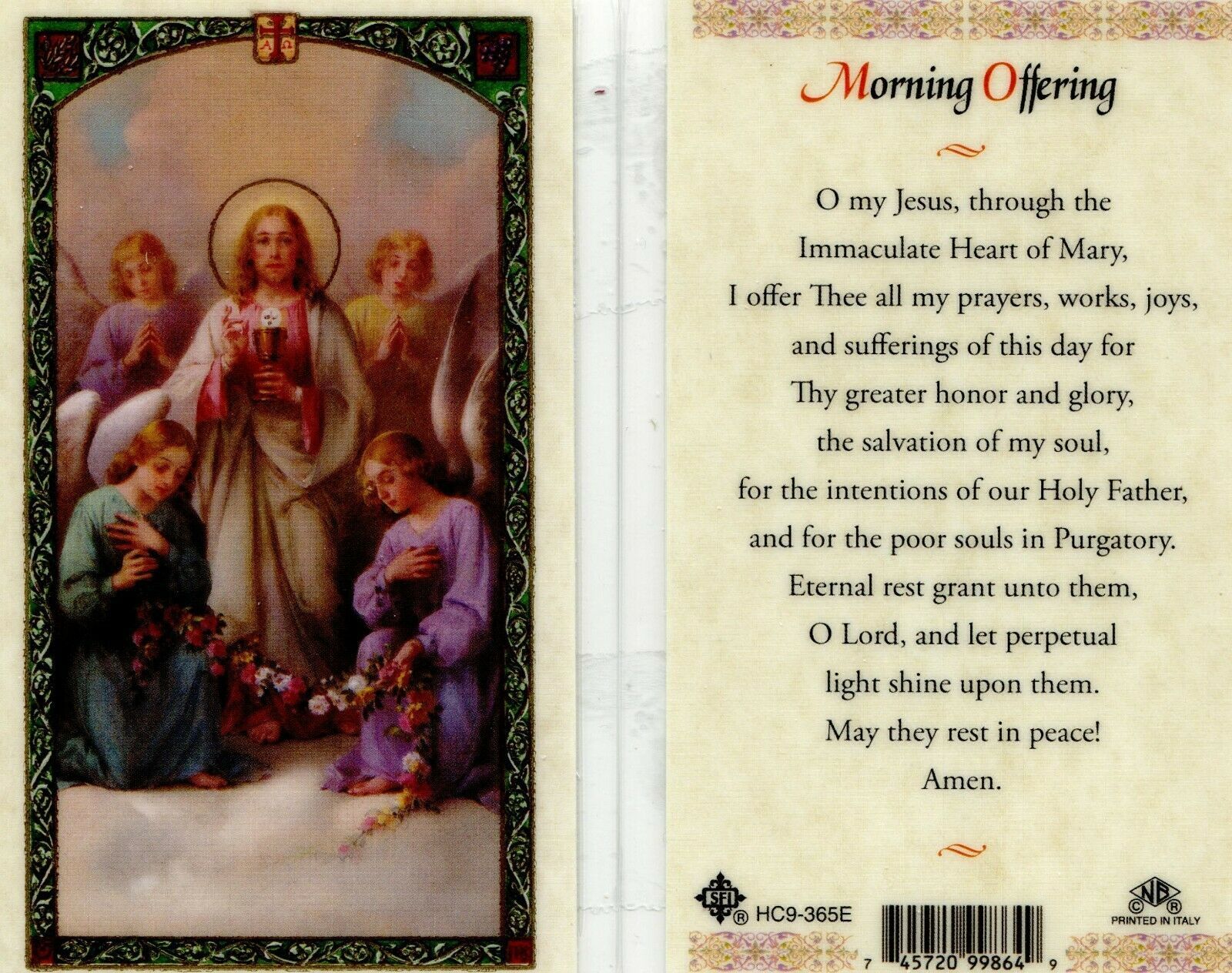
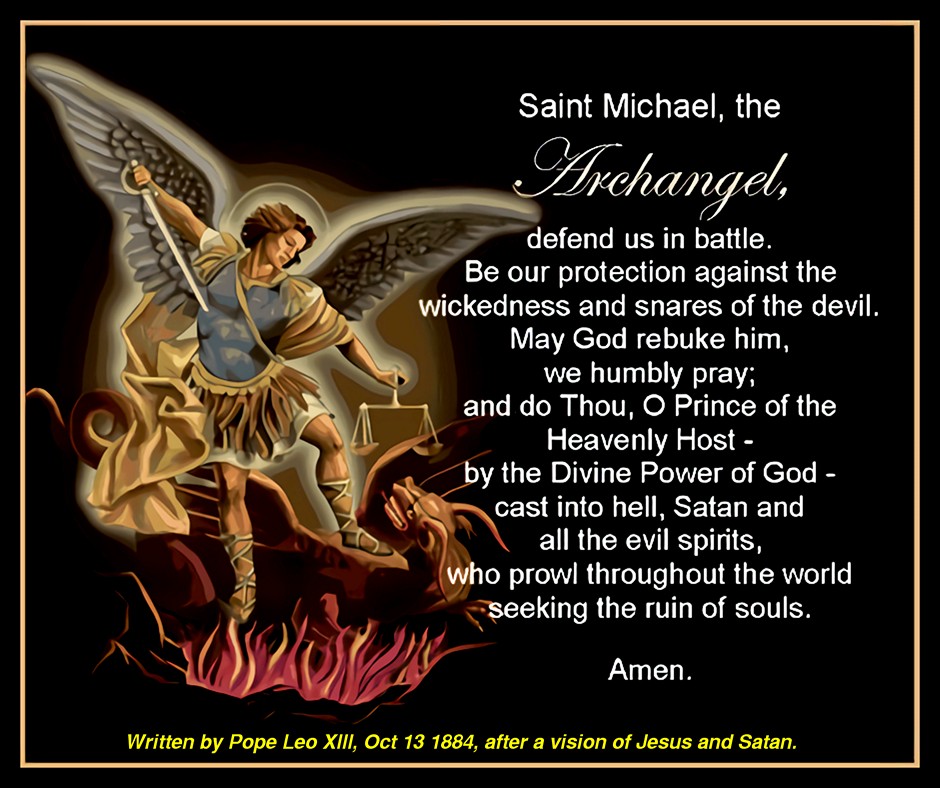
The Month of July is Dedicated to the Precious of Jesus

“They triumphed over the devil by the blood of the Lamb and by the word of their testimony; they did not love their lives so much as to shrink from death.” (Revelation 12:11)

Pope Leo XIV’s prayer intention for the month of July, 2026:
For respect for human life
Let us pray for the respect and protection of human life in all its stages, recognizing it as a gift from God.

Disclaimer: Opinions posted on Free Republic are those of the individual posters and do not necessarily represent the opinion of Free Republic or its management. All materials posted herein are protected by copyright law and the exemption for fair use of copyrighted works.

