
Posted on 07/19/2026 10:37:56 PM PDT by fidelis
Some of the scribes and Pharisees said to Jesus, “Teacher, we wish to see a sign from you.” He said to them in reply, “An evil and unfaithful generation seeks a sign, but no sign will be given it except the sign of Jonah the prophet.” Matthew 12:38–39
Imagine if Jesus had responded differently to the scribes and Pharisees, saying, “Yes, I will perform a sign right now. Whatever you ask of Me, I will do.” Suppose they then asked Him to part the Sea of Galilee—just as Moses parted the Red Sea—and walk through on dry land, and Jesus fulfilled their request. Would that have been enough for them? Most likely not. The problem was not a lack of miracles, or even dramatic ones. The real issue was the hardness of their hearts, which closed them off to the transforming and supernatural gift of faith.
Had Jesus done this, they might have been temporarily impressed. They might even have professed belief that He was the Messiah and the Son of God—but not through faith. And there lies the deeper problem. Believing in Jesus’ divinity solely because of witnessing a miracle requires no faith. They would have seen the proof with their eyes but not received it into their hearts.
The supernatural gift of faith is far greater and more certain than anything we see. Faith leads to a conviction so deep that it transforms the soul. Countless saints have endured persecution, clung to the truth, and embraced martyrdom for this gift. But if one believes merely because of external signs—like parting the Sea of Galilee—then that belief remains shallow, always dependent on more visible proof rather than rooted in divine revelation.
Now consider an exaggerated scenario. Suppose you walk past a street preacher who declares himself to be the Son of God. You respond, “Prove it.” The man levitates, spins in the air, and lifts the cars on the street with a single command. He descends and says, “Worship me.” What would you do? Would such a spectacle bring about a true conversion of heart and lead you into divine worship?
Now imagine a real scenario. You are praying alone in a church. Your heart is open to God, and you express your deepest love for Him. Suddenly, the Holy Spirit enters your soul—convicting you of the Father’s will, illuminating your mind, and strengthening your resolve. You rise from prayer with clarity, courage, and peace.
Though the first scenario is unreal, it serves as a useful contrast. Its proof is external and sensational. Though extraordinary, many might suspect a demonic deception or illusion. It is unlikely to move the heart to true conversion. Rather, it would stir curiosity, not commitment—an appetite for signs, not surrender.
In the second, the proof is entirely interior, which is unquestionably greater. When God speaks within the depths of the soul and the soul responds with surrender, life is truly transformed. That encounter becomes a fountain of divine peace, strength, and love, satisfying the heart more deeply than any external sign ever could.
Reflect today on your own heart. Why do you believe in God? Why do you profess Jesus as your Lord and Savior? Has faith truly taken hold of you? Have you heard God speak within and responded with surrender? If so, then this is the transforming power of faith at work. Pray for this gift—that it may take deeper root and grow stronger each day—so that, unlike the scribes and Pharisees, the gift of faith will be the only sign from Heaven you need.
My miraculous Lord, though You performed many signs and wonders to strengthen the faith of those who believed, You withheld such signs from those who rejected the gift of faith, calling them instead to interior conversion. Strengthen my faith—not by external wonders, but by speaking to me in the depths of my soul. May Your grace take hold of me, transform me, and sustain me. Jesus, I trust in You.
Please keep in mind that this is a Catholic Caucus/Devotional thread for the purpose of prayerful reflection on the Sacred Scriptures and is closed to debate of any kind. Per FR policy on Religion Caucus threads, off-topic, argumentative, and abusive comments are not allowed and will be submitted to the Mods for deletion. Thanks, and God bless you.
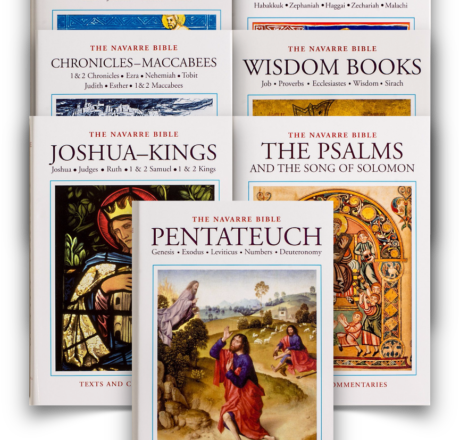
Today’s First Reading
From: Micah 6:1-4, 6-8
The Lord hands down his sentence
------------------------------------------
[1] Hear what the Lord says: Arise, plead your case before the mountains, and let the hills hear your voice. [2] Hear, you mountains, the controversy of the Lord, and you enduring foundations of the earth; for the LORD has a controversy with his people, and he will contend with Israel. [3] O my people, what have I done to you? In what have I wearied you? Answer me! [4] For I brought you up from the land of Egypt, and redeemed you from the house of bondage; and I sent before you Moses, Aaron, and Miriam.
Formal religion is not enough
------------------------------------------
[6] With what shall I come before the Lord, and bow myself before God on high? Shall I come before him with burnt offerings, with calves a year old? [7] Will the Lord be pleased with thousands of rams, with ten thousands of rivers of oil? Shall I give my first-born for my transgression, the fruit of my body for the sin of my soul?” [8] He has showed you, O man, what is good; and what does the Lord require of you but to do justice, and to love kindness, and to walk humbly with your God?
********************************************************************
Commentary:
6:1-7:7. This is the third part of the book. As we have seen, the book oscillates between reproaches and messages of encouragement. This part is of the former type. The book began by taking Israel and Judah to task and by announcing their sentence (1:2-3:12); then came an augury of an eschatological restoration of the kingdom of God, with the coming of the Messiah and the salvation of the “remnant” (4:1-5:15). Now (6:1-7:7) the people are again condemned for their unjust and immoral behaviour. But the last verse (7:7) shows us that the prophet trusts in God and is confident that he will be heard. As in 4:l-5, this confidence on Micah’s part is an earnest of what is said in the final verses of the book (7:8-20), where one sees fulfilled all the hopes placed in the future.
The faults for which the prophet criticizes the people are infidelity and ingratitude towards the Lord (6:1-15) and a lack of virtue (6:6-8), particularly injustice (6:9-16), which has led to despair and betrayal (7:1-6).
6:1-5. Here begins the arraignment of Israel in the style of a court case (rib) in which the Lord and Israel speak. The rib is a literary form found quite frequently in prophetical writings (cf. Is 3:13-15; 5:3-7; Hos 4:1-3; etc.) It depicts a public trial or debate in which the Lord is the plaintiff (v. 2) and the world around (hills, mountains) is the witness (vv. 1-2). The drama of the scene lies in the fact that the people being addressed are at one and the same time the defendants (v. 2) and those who are expected to give judgment. Given the case made in the oracle, anyone present must agree with the prophet that the thing to do is to try to know the “saving acts of the Lord” (v. 5). The points made by God through the prophet involve basically an appeal to the very origin of the people of Israel and what the Lord did for them: he appeals to the basic elements of Israelite faith (cf. Deut 5:15). Similar arguments should also impress the Christian: “Christian soul, always remember your dignity, and having been invited to partake of the divine nature, do not fall hack by your behaviour into your past sinfulness. Be mindful of what head and body you are a member. Remember that you were freed from darkness and led into the light of the kingdom of God” (“St Leo the Great”, Sermones, 21, 3).
This message (especially vv. 3-4) is very familiar to Christians because it is used in the Reproaches sung during the Adoration of the Cross on Good Friday. That chant combines the Micah text with short paragraphs taken from the Trisagium (an ancient liturgical hymn in honour of the Blessed Trinity), from Isaiah 5:1-5, and from events connected with the exodus from Egypt (updated in the liturgy by linking them to episodes in the passion of our Lord). That part of the Good Friday liturgy serves to remind Christians and people in general of their ingratitude towards God (as shown by their sins) -- God whose love and generosity are unbounded. It invites us to acknowledge our sins and helps to get us ready (collectively and personally) for conversion. When a Christian kisses the cross of Christ, he can apply the prophet’s words to himself -- as if Jesus were speaking them to him, for, as St Francis of Assisi says, “The demons alone did not crucify him; you helped them to crucify him, and to crucify him still, by falling into error and sin” (“Admonitiones”, 5, 3; cf. “Catechism of the Catholic Church”, 598). The liturgy of the Adoration of the Cross is an excellent way of taking to heart Micah’s oracle.
6:6-8. These verses are a kind of summary of what true religion is; it is not only a matter of formal religious worship: it involves obedience towards God which in turn means practising justice and charity towards one’s neighbour (v. 8). Verse 7 alludes to the abominable Canaanite practice of sacrificing children to the God Moloch and to the Baals -- a practice roundly condemned elsewhere in the Bible: “In his days Hiel of Bethel built Jericho; he laid its foundation at the cost of Abiram his first-born, and set up its gates at the cost of his youngest son Segub” (1 Kings 16:34; cf. Lev 20:2; Deut 12:31; etc.). It could he that these sins from the Northern kingdom were finding their way into Judah (cf. 6:16), as 2 Kings 16:3 suggests and as Jeremiah asserts: “[the kings of Judah] have filled this place with the blood of innocents, and have built the high places of Baal to burn their sons in the fire as burnt offerings to Baal” (Jer 19:4-5).
From: Matthew 12:38-42
The Sign of Jonah
-----------------
[38] Then some of the scribes and Pharisees said to him (Jesus), "Teacher, we wish to see a sign from you." [39] But he answered them, "An evil and adulterous generation seeks for a sign; but no sign shall be given to it except the sign of the prophet Jonah. [40] For as Jonah was three days and three nights in the belly of the whale, so will the Son of man be three days and three nights in the heart of the earth. [41] The men of Nineveh will arise at the judgment with this generation and condemn it; for they repented at the preaching of Jonah, and behold, something greater than Jonah is here. [42] The queen of the South will arise at the judgment with this generation and condemn it; for she came from the ends of the earth to hear the wisdom of Solomon, and behold, something greater than Solomon is here."
***********************************************************************
Commentary:
39-40. This sign the Jews were asking for would have been a miracle or some other prodigy; they wanted Jesus, incongruously, to confirm his preaching--given with such simplicity--by dramatic signs. Our Lord replies by announcing the mystery of his death and resurrection, using the parallel of the case of Jonah: "No sign shall be given to it except the sign of the prophet Jonah." Jesus' glorious resurrection is the "sign" "par excellence", the decisive proof of the divine character of his person, of his mission and of his teaching.
When St. Paul (1 Cor 14:3-4) confesses that Jesus Christ "was raised on the third day in accordance with the scriptures" (words which later found their way into the Nicene-Constantinopolitan Creed, the Creed used in the Mass), he must have had this passage particularly in mind. We can see another allusion to Jonah in the words our Lord spoke shortly before his ascension: "Thus it is written, that the Christ should suffer and on the third day rise from the dead" (Lk 24:45-46).
41-42. Nineveh was a city in Mesopotamia (modern Iraq) to which the prophet Jonah was sent. The Ninevites did penance (Jn 3:6-9) because they recognized the prophet and accepted his message; whereas Jerusalem does not wish to recognize Jesus, of whom Jonah was merely a figure. The queen of the South was the queen of Sheba in southwestern Arabia, who visited Solomon (1 Kings 10:1-10) and was in awe of the wisdom with which God had endowed the King of Israel. Jesus is also prefigured in Solomon, whom Jewish tradition saw as the epitome of the wise man. Jesus' reproach is accentuated by the example of pagan converts, and gives us a glimpse of the universal scope of Christianity, which will take root among the Gentiles.
There is a certain irony in what Jesus says about "something greater" than Jonah or Solomon having coming: really, he is infinitely greater, but Jesus prefers to tone down the difference between himself and any figure, no matter how important, in the Old Testament.
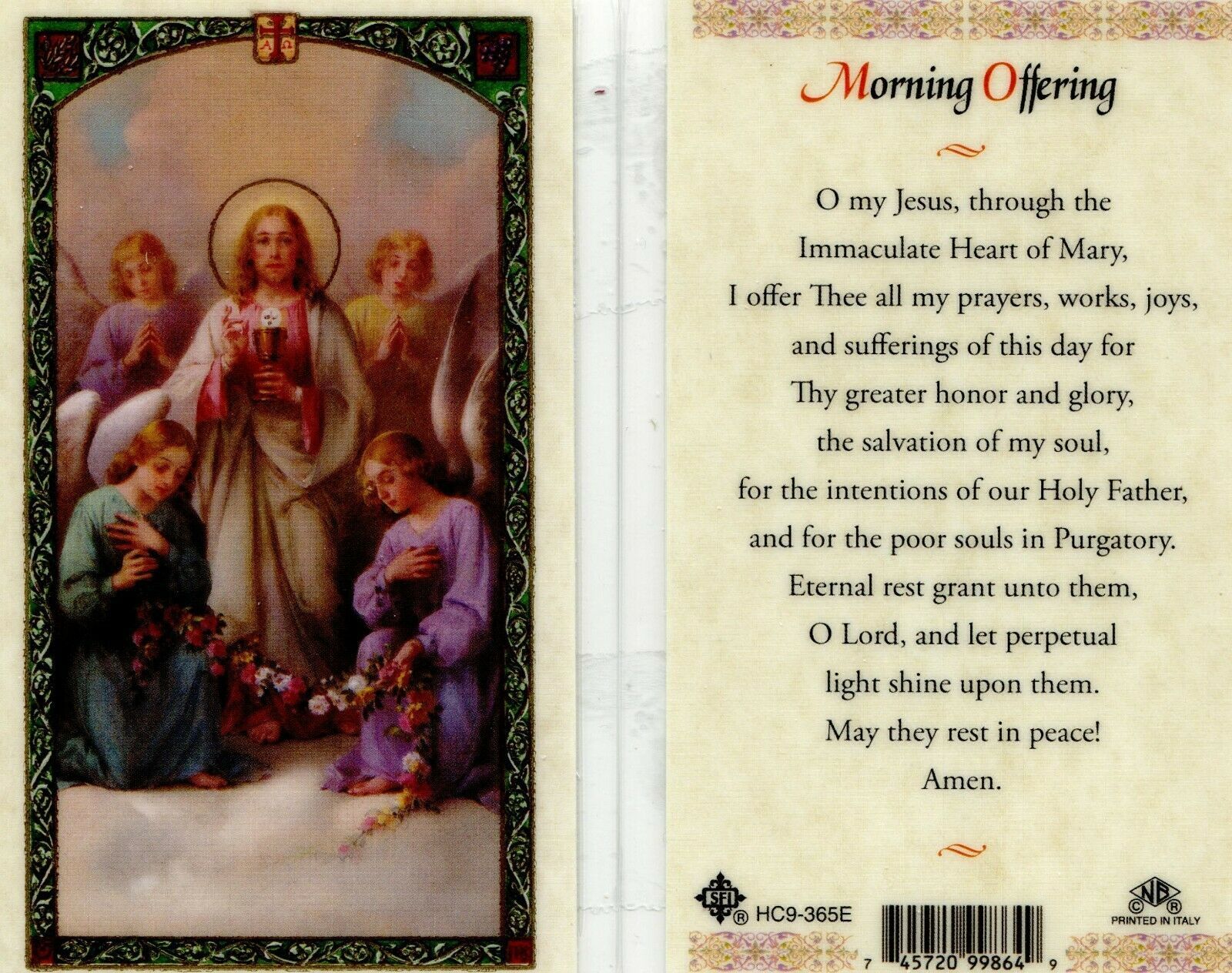
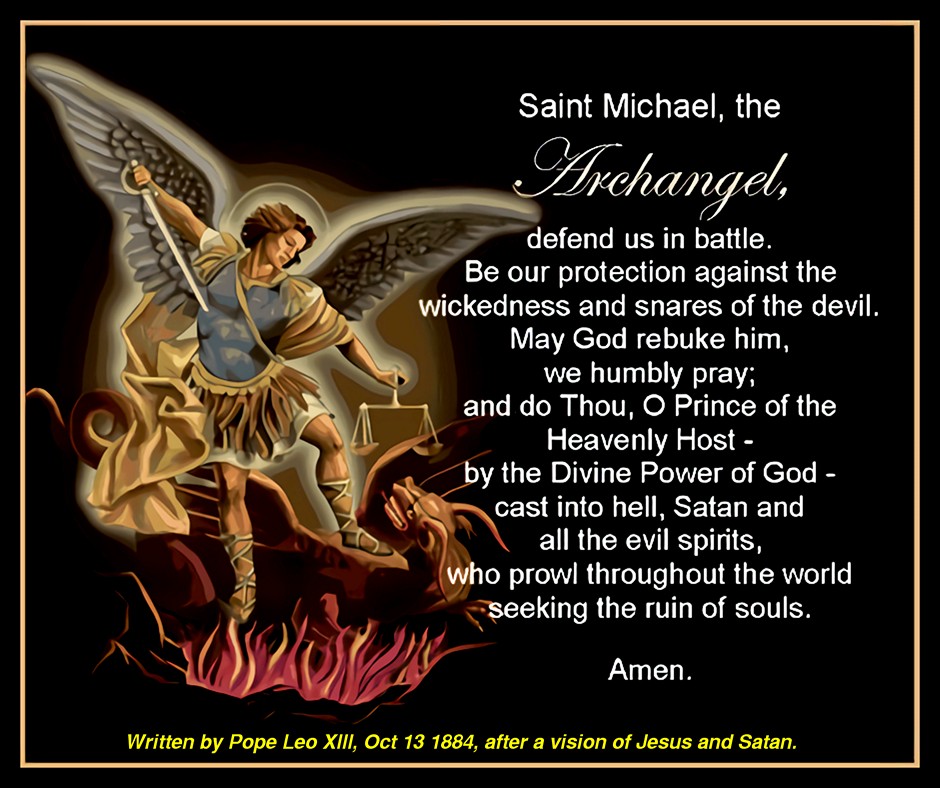
The Month of July is Dedicated to the Precious of Jesus

“They triumphed over the devil by the blood of the Lamb and by the word of their testimony; they did not love their lives so much as to shrink from death.” (Revelation 12:11)

Pope Leo XIV’s prayer intention for the month of July, 2026:
For respect for human life
Let us pray for the respect and protection of human life in all its stages, recognizing it as a gift from God.

Disclaimer: Opinions posted on Free Republic are those of the individual posters and do not necessarily represent the opinion of Free Republic or its management. All materials posted herein are protected by copyright law and the exemption for fair use of copyrighted works.


