
Posted on 07/18/2026 10:28:37 PM PDT by fidelis
Sixteenth Sunday in Ordinary Time
He spoke to them another parable. “The kingdom of heaven is like yeast that a woman took and mixed with three measures of wheat flour until the whole batch was leavened.” Matthew 13:33
Yeast is small—invisible once it is worked into the dough. And yet, its influence is pervasive and powerful. This simple image—yeast worked into three measures of flour, causing it to slowly rise—reveals that the Kingdom of Heaven is built quietly, almost imperceptibly, from within. Like leaven silently transforming dough from the inside, so too does God’s grace operate—hidden yet active—in the heart, in the Church, and in the world.
Patiently watching dough rise can be a small wonder, especially for children. In this brief parable, the yeast symbolizes the Word of God, and the wheat flour, the human soul. When God’s Word is welcomed by faith, it possesses the power to transform the entire soul. Just as yeast elevates and expands flour into bread, so God’s Word elevates human nature and conforms it to Himself. How awe-inspiring it is to behold the gradual transformation of a soul animated by divine grace!
Saint Augustine offers several interpretations of the “three measures” of wheat flour. He suggests they can represent the threefold interior life of the human person: heart, soul, and mind (cf. Matthew 22:37); or the three degrees of fruitfulness described in the parable of the sower—“a hundredfold, sixtyfold, and thirtyfold” (cf. Matthew 13:23); or even the three righteous men mentioned in Ezekiel—Noah, Daniel, and Job (cf. Ezekiel 14:14), each representing a distinct path of fidelity under trial. Each of these interpretations reveals how God’s transforming Word is at work not only in the individual soul, but within the Church and throughout all humanity.
Though “three measures” might not sound like much, it was in fact a substantial amount. According to ancient Jewish and Roman measurements, three measures (or satons) could equal nearly fifty pounds of flour—enough to feed more than a hundred people. The parable, therefore, is about abundance—the superabundant fruitfulness of God’s Word when it is thoroughly received—penetrating deeply into the individual soul, the Church, and society. Like leaven in dough, this transformation takes time. Though not immediate, it is steady, enduring, and complete.
Reflect today on the quiet ways God is at work within you, within the Church, and throughout the world. Though you might not always perceive the movement of grace, trust that it is active—like yeast in dough—gently transforming, sanctifying, and preparing hearts for the glory to come.
Resist the temptation to measure your spiritual growth by visible signs or immediate results. Instead, remain faithful to prayer, attentive to the Word, and docile to the promptings of the Holy Spirit. God’s Kingdom unfolds in time, and its rising is certain. Even when the world seems overwhelmed by sin or division, remember that the leaven is at work. The final loaf is being prepared for the eternal banquet—and you are being made ready, one hidden grace at a time, until you are fully prepared to share in the joy of the eternal feast.
Most Holy Word of God, speak to me, enter my heart, and transform me by Your grace. Send forth Your Word into Your Church on earth. Make Her holy, that She may reflect the beauty and strength of the Body of Christ. Use me and all the members of Your Body to witness to the world—especially to those who do not yet know You—so that they may be drawn into the wonder and awe of Your transforming power and come to partake in the superabundant Banquet to which we are all called. Jesus, I trust in You.
Please keep in mind that this is a Catholic Caucus/Devotional thread for the purpose of prayerful reflection on the Sacred Scriptures and is closed to debate of any kind. Per FR policy on Religion Caucus threads, off-topic, argumentative, and abusive comments are not allowed and will be submitted to the Mods for deletion. Thanks, and God bless you.
First Reading:
From: Wisdom 12:13, 16-19
God, Just and Forbearing (Continuation)
---------------------------------------
[13] "For neither is there any god besides thee, whose care is for all men, to whom thou shouldst prove that thou hast not judged unjustly; [16] For thy strength is the source of righteousness, and thy sovereignty over all causes thee to spare all. [17] For thou dost show thy strength when men doubt the completeness of thy power, and dost rebuke any insolence among those who know it. [18] Thou who art sovereign in strength dost judge with mildness, and with great forbearance thou dost govern us; for thou hast power to act whenever thou dost choose. [19] Through such works thou has taught thy people that the righteous man must be kind, and thou hast filled thy sons with good hope, because thou givest repentance for sins.
***********************************************************************
Commentary:
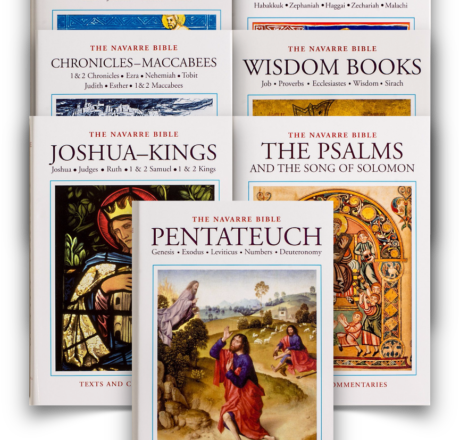
12:12-27. This passage is imbued with very solid faith in the goodness and power of God, who is the only God, almighty, and has to account to no one for what he does (vv. l2-14. Here the book of Wisdom connects up with sapiential tradition (cf. Job 9) and with prophecy (cf. e.g. Is 45:9-13; Jer 18: 5-11). His all-embracing power does not make God an unjust tyrant: on the contrary, God is always righteous (vv. 15-17). Nor is his justice in any sense at odds with his mercy and kindness. He shows this in his dealings with Israel, especially, but also in his dealings with mankind at large, whose evil actions he punishes gently, to give people a chance to change (vv. 18-25). However, he will indeed punish those who are obdurate in their unbelief and wickedness (vv. 26-27). We find the same teaching in the New Testament (cf. e.g., Mt 16:15-16).
From: Romans 8:26-27
Christians are Children of God (Continuation)
---------------------------------------------
[26] Likewise the Spirit helps us in our weakness; for we do not know how to pray as we ought, but the Spirit himself intercedes for us with sighs too deep for words. [27] And he who searches the hearts of men knows what is the mind of the Spirit, because the Spirit intercedes for the saints according to the will of God.
***********************************************************************
Commentary:
None
From: Matthew 13:24-30
The Parable of the Weeds
------------------------
[24] Another parable he (Jesus) put before them, saying, "The kingdom of heaven may be compared to a man who sowed good seed in his field; [25] but while men were sleeping, his enemy came and sowed weeds among the wheat, and went away. [26] So when the plants came up and bore grain, then the weeds appeared also. [27] And the servants of the householder came and said to him, 'Sir, did you not sow good seed in your field? How then has it weeds?' [28] He said to them, 'An enemy has done this.' The servants said to him, 'Then do you want us to go and gather them?' [29] But he said, 'No; lest in gathering the weeds you root up the wheat along with them. [30] Let both grow together until the harvest; and at harvest time I will tell the reapers, Gather the weeds first and bind them in bundles to be burned, but gather the wheat into my barn.'"
The Mustard Seed; The Leaven
----------------------------
[31] Another parable He (Jesus) put before them saying, "The Kingdom of Heaven is like a grain of mustard seed which a man took and sowed in his field; [32] it is the smallest of all seeds, but when it has grown it is the greatest of shrubs and becomes a tree, so that the birds of the air come and make nests in its branches."
[33] He told them another parable. "The Kingdom of Heaven is like a leaven which a woman took and hid in three measures of meal, till it was all leavened."
[34] All this Jesus said to the crowds in parables; indeed He said nothing to them without a parable. [35] This was to fulfill what was spoken by the prophet: "I will open my mouth in parables, I will utter what has been hidden since the foundation of the world."
The Parable of the Weeds Explained
----------------------------------
[36] Then He (Jesus) left the crowds and went into the house. And His disciples came to Him, saying, "Explain to us the parable of the weeds of the field." [37] He answered, "He who sows the good seed is the Son of Man; [38] the field is the world, and the good seed means the sons of the Kingdom; the weeds are the sons of the evil one, [39] and the enemy who sowed them is the devil; the harvest is the close of the age, and the reapers are angels. [40] Just as the weeds are gathered and burned with fire, so will it be at the close of the age. [41] The Son of Man will send His angels, and they will gather out of His Kingdom all causes of sin and evildoers, [42] and throw them out into the furnace of fire; there men will weep and gnash their teeth. [43] Then the righteous will shine like the sun in the Kingdom of their Father. He who has ears, let him hear."
***********************************************************************
Commentary:
24-25. "The situation is clear: the field is fertile and the seed is good; the Lord of the field has scattered the seed at the right moment and with great skill. He even has watchmen to make sure that the field is protected. If, afterwards, there are weeds among the wheat, it is because men have failed to respond, because they--and Christians in particular--have fallen asleep and allowed the enemy to approach" (St J. Escriva, "Christ Is Passing By", 123).
25. This weed--cockle--looks very like wheat and can easily be mistaken for it until the ears appear. If it gets ground up with wheat it contaminates the flour and any bread made from that flour causes severe nausea when eaten. In the East personal vengeance sometimes took the form of sowing cockle among an enemy's wheat. Roman law prescribed penalties for this crime.
28. "When the careless servants ask the Lord why weeds have grown in his field, the explanation is obvious: 'inimicus homo hoc fecit: an enemy has done this.' We Christians should have been on guard to make sure that the good things placed in this world by the Creator were developed in the service of truth and good. But we have fallen asleep--a sad thing, that sluggishness of our heart while the enemy and all those who serve him worked incessantly. You can see how the weeds have grown abundantly everywhere" (St J. Escriva, "Christ Is Passing By", 123).
29-30. The end of this parable gives a symbolic explanation of why God allows evil to have its way for a time--and for its ultimate extirpation. Evil is to run its course on earth until the end of time; therefore, we should not be scandalized by the presence of evil in the world. It will be obliterated not in this life, but after death; at the Judgment (the harvest) the good will go to Heaven and the bad to Hell.
31-32. Here, the man is Jesus Christ and the field, the world. The grain of mustard seed is the preaching of the Gospel and the Church, which from very small beginnings will spread throughout the world.
The parable clearly refers to the universal scope and spread of the Kingdom of God: the Church, which embraces all mankind of every kind and condition, in every latitude and in all ages, is forever developing in spite of obstacles, thanks to God's promise and aid.
33. This comparison is taken from everyday experience: just as leaven gradually ferments all the dough, so the Church spreads to convert all nations.
The leaven is also a symbol of the individual Christian. Living in the middle of the world and retaining his Christian quality, he wins souls for Christ by his word and example: "Our calling to be children of God, in the midst of the world, requires us not only to seek our own personal holiness, but also to go out onto all the ways of the earth, to convert them into roadways that will carry souls over all obstacles and lead them to the Lord. As we take part in all temporal activities as ordinary citizens, we are to become leaven acting on the mass" (St J. Escriva, "Christ Is Passing By", 120).
34-35. Revelation, God's plans, are hidden (cf. Matthew 11:25) from those who are disposed to accept them. The Evangelist wishes to emphasize the need for simplicity and for docility to the Gospel. By recalling Psalm 78:2, he tells us once more, under divine inspiration, that the Old Testament prophecies find their fulfillment in our Lord's preaching.
36-43. While making its way on earth, the Church is composed of good and bad people, just men and sinners: they are mixed in with one another until the harvest time, the end of the world, when the Son of Man, in His capacity as Judge of the living and the dead, will divide the good from the bad at the Last Judgment--the former going to eternal glory, the inheritance of the saints; the latter, to the eternal fire of Hell. Although the just and the sinners are now side by side, the Church has the right and the duty to exclude those who cause scandal, especially those who attack its doctrine and unity; this is can do through ecclesiastical excommunication and other canonical penalties. However, excommunication has a medicinal and pastoral function—to correct those who are obstinate in error, and to protect others from them.
The Month of July is Dedicated to the Precious of Jesus

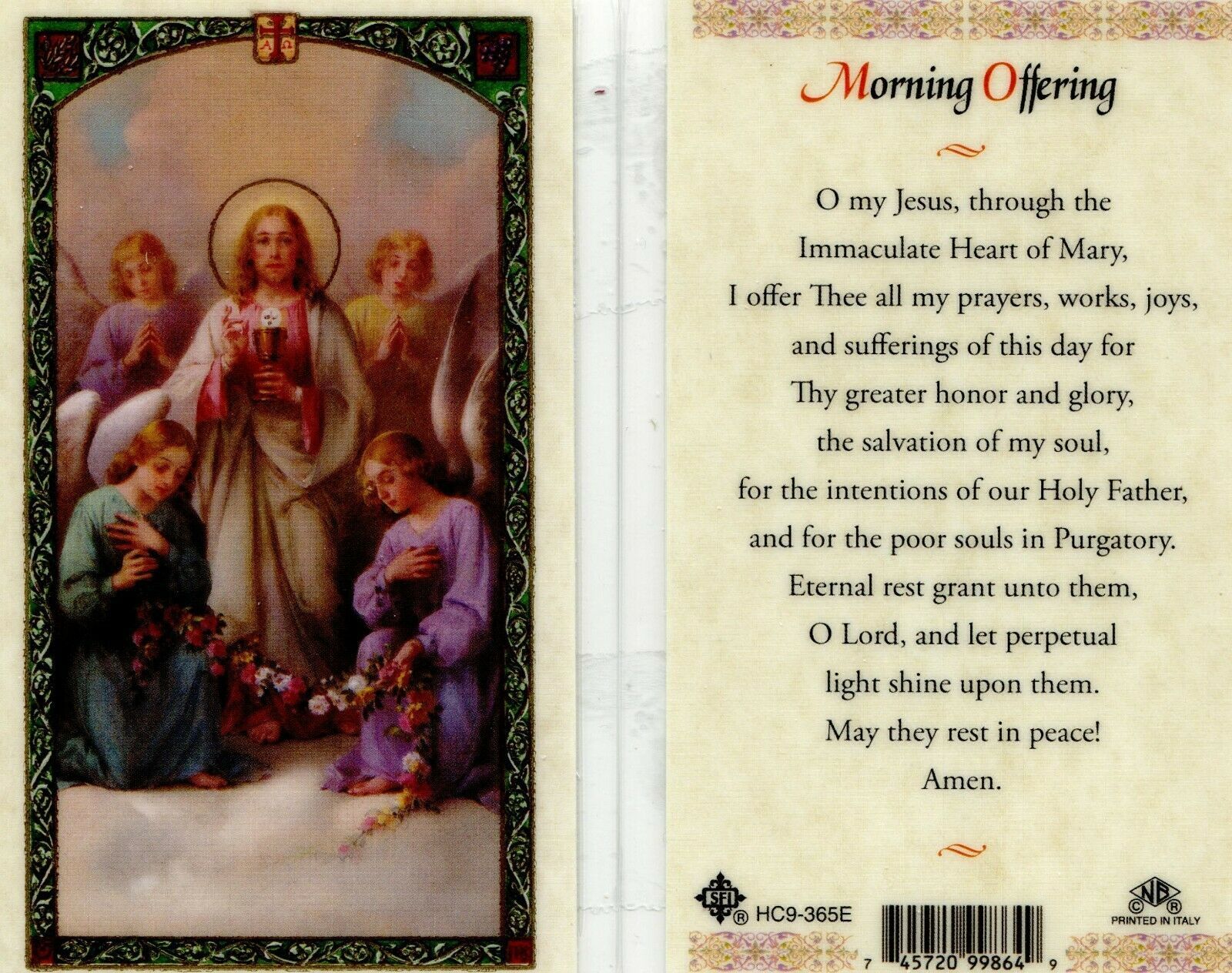
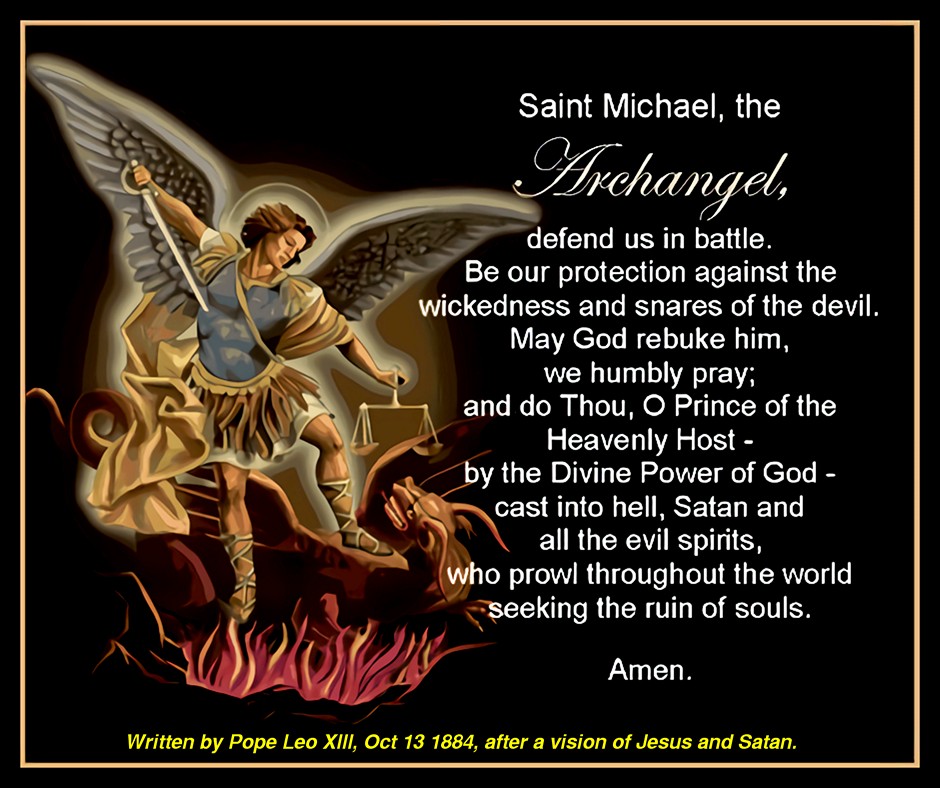
“They triumphed over the devil by the blood of the Lamb and by the word of their testimony; they did not love their lives so much as to shrink from death.” (Revelation 12:11)

Pope Leo XIV’s prayer intention for the month of July, 2026:
For respect for human life
Let us pray for the respect and protection of human life in all its stages, recognizing it as a gift from God.

Disclaimer: Opinions posted on Free Republic are those of the individual posters and do not necessarily represent the opinion of Free Republic or its management. All materials posted herein are protected by copyright law and the exemption for fair use of copyrighted works.


