Free Republic
Browse · Search
Religion
Topics · Post Article

Skip to comments.

Catholic Caucus: Daily Mass Readings 15-July-2026
Universalis/Jerusalem Bible ^

Posted on 07/15/2026 5:20:19 AM PDT by annalex

15 July 2026

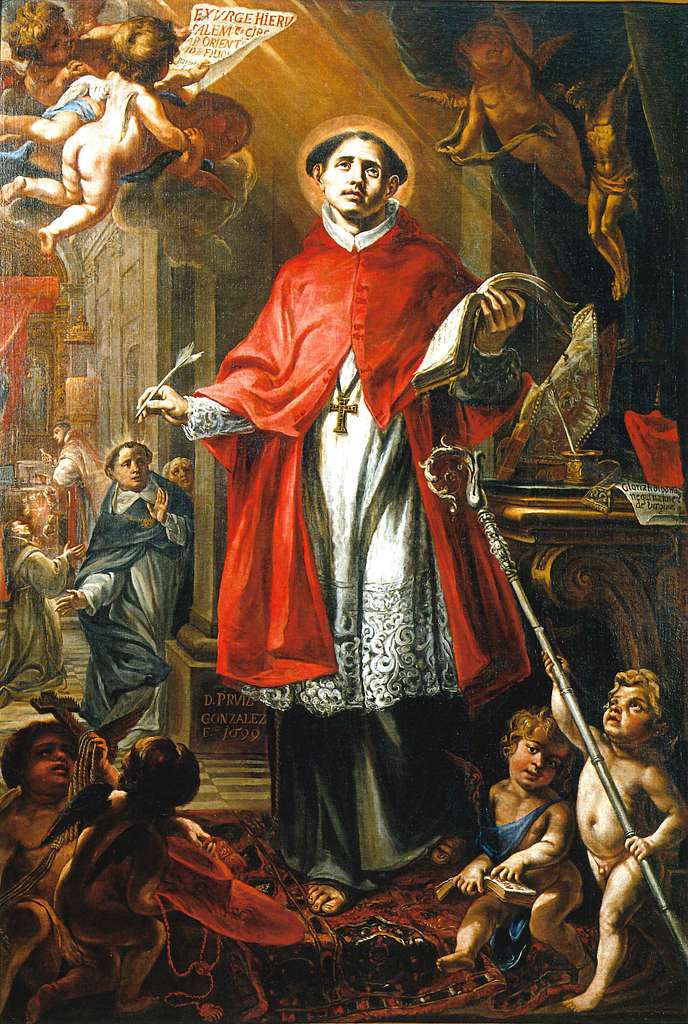
Saint Bonaventure, Bishop, Doctor
on Wednesday of week 15 in Ordinary Time


St. Bonaventure - Plymouth, MA

Readings at Mass

Liturgical Colour: White. Year: A(II).

Readings for the feria

Readings for the memorial

These are the readings for the feria


First reading
Isaiah 10:5-7,13-16

Assyria's arrogance and coming ruin

The Lord of hosts says this:
Woe to Assyria, the rod of my anger,
the club brandished by me in my fury!
I sent him against a godless nation;
I gave him commission against a people that provokes me,
to pillage and to plunder freely
and to stamp down like the mud in the streets.
But he did not intend this,
his heart did not plan it so.
No, in his heart was to destroy,
to go on cutting nations to pieces without limit.
For he has said:
‘By the strength of my own arm I have done this
and by my own intelligence, for understanding is mine;
I have pushed back the frontiers of peoples
and plundered their treasures.
I have brought their inhabitants down to the dust.
As if they were a bird’s nest, my hand has seized
the riches of the peoples.
As people pick up deserted eggs
I have picked up the whole earth,
with not a wing fluttering,
not a beak opening, not a chirp.’
Does the axe claim more credit than the man who wields it,
or the saw more strength than the man who handles it?
It would be like the cudgel controlling the man who raises it,
or the club moving what is not made of wood!
And so the Lord of Hosts is going to send
a wasting sickness on his stout warriors;
beneath his plenty, a burning will burn
like a consuming fire.


Responsorial Psalm
Psalm 93(94):5-10,14-15
The Lord will not abandon his people.
They crush your people, Lord,
  they afflict the ones you have chosen
They kill the widow and the stranger
  and murder the fatherless child.
The Lord will not abandon his people.
And they say: ‘The Lord does not see;
  the God of Jacob pays no heed.’
Mark this, most senseless of people;
  fools, when will you understand?
The Lord will not abandon his people.
Can he who made the ear, not hear?
  Can he who formed the eye, not see?
Will he who trains nations not punish?
  Will he who teaches men, not have knowledge?
The Lord will not abandon his people.
The Lord will not abandon his people
  nor forsake those who are his own;
for judgement shall again be just
  and all true hearts shall uphold it.
The Lord will not abandon his people.

Gospel AcclamationMt11:25
Alleluia, alleluia!
Blessed are you, Father,
Lord of heaven and earth,,
for revealing the mysteries of the kingdom
to mere children.
Alleluia!

Gospel
Matthew 11:25-27

You have hidden these things from the wise and revealed them to little children

Jesus exclaimed, ‘I bless you, Father, Lord of heaven and of earth, for hiding these things from the learned and the clever and revealing them to mere children. Yes, Father, for that is what it pleased you to do. Everything has been entrusted to me by my Father; and no one knows the Son except the Father, just as no one knows the Father except the Son and those to whom the Son chooses to reveal him.’

Continue

These are the readings for the memorial


First reading
Ephesians 3:14-19

May Christ live in your hearts through faith

I pray, kneeling before the Father, from whom every family, whether spiritual or natural, takes its name:
  Out of his infinite glory, may he give you the power through his Spirit for your hidden self to grow strong, so that Christ may live in your hearts through faith, and then, planted in love and built on love, you will with all the saints have strength to grasp the breadth and the length, the height and the depth; until, knowing the love of Christ, which is beyond all knowledge, you are filled with the utter fullness of God.


Responsorial Psalm
Psalm 118(119):9-14
Lord, teach me your statutes.
How shall the young remain sinless?
  By obeying your word.
I have sought you with all my heart;
  let me not stray from your commands.
Lord, teach me your statutes.
I treasure your promise in my heart
  lest I sin against you.
Blessed are you, O Lord;
  teach me your statutes.
Lord, teach me your statutes.
With my tongue I have recounted
  the decrees of your lips.
I rejoiced to do your will
  as though all riches were mine.
Lord, teach me your statutes.

Gospel AcclamationMt23:9,10
Alleluia, alleluia!
You have only one Father,
  and he is in heaven;
you have only one Teacher,
  the Christ.
Alleluia!

GospelMatthew 23:8-12

The greatest among you must be your servant

Jesus said to his disciples, ‘You must not allow yourselves to be called Rabbi, since you have only one master, and you are all brothers. You must call no one on earth your father, since you have only one Father, and he is in heaven. Nor must you allow yourselves to be called teachers, for you have only one Teacher, the Christ. The greatest among you must be your servant. Anyone who exalts himself will be humbled, and anyone who humbles himself will exalted.’

Continue

Christian Art

Illustration

Each day, The Christian Art website gives a picture and reflection on the Gospel of the day.

The readings on this page are from the Jerusalem Bible, which is used at Mass in most of the English-speaking world. The New American Bible readings, which are used at Mass in the United States, are available in the Universalis apps, programs and downloads.

You can also view this page with the Gospel in Greek and English.


TOPICS: Catholic; General Discusssion; Prayer; Worship
KEYWORDS: catholic; mt11; mt23; ordinarytime; prayer

Click here: to donate by Credit Card

Or here: to donate by PayPal

Or by mail to: Free Republic, LLC - PO Box 9771 - Fresno, CA 93794

Thank you very much and God bless you.

For your reading, reflection, faith-sharing, comments, questions, discussion.

1 posted on 07/15/2026 5:20:19 AM PDT by annalex
[ Post Reply | Private Reply | View Replies]

To: All

KEYWORDS: catholic; mt11; mt23; ordinarytime; prayer


2 posted on 07/15/2026 5:21:17 AM PDT by annalex (fear them not)
[ Post Reply | Private Reply | To 1 | View Replies]

To: nickcarraway; NYer; ELS; Pyro7480; livius; ArrogantBustard; Catholicguy; RobbyS; marshmallow; ...


Alleluia Ping

Please FReepmail me to get on/off the Alleluia Ping List.


3 posted on 07/15/2026 5:22:22 AM PDT by annalex (fear them not)
[ Post Reply | Private Reply | To 2 | View Replies]

To: annalex
Chris Robinson: My Dad [our Jim Robinson] Passed Away Peacefully Monday Night (October 27th) In Our Home.
Jim still needs our prayers. Thread 2
Prayer thread for Salvation's recovery
Pray for Ukraine
Prayer thread for Fidelis' recovery
Update on Jim Robinson's health issues
4 posted on 07/15/2026 5:23:02 AM PDT by annalex (fear them not)
[ Post Reply | Private Reply | To 3 | View Replies]

To: annalex
Matthew
 English: Douay-RheimsLatin: Vulgata ClementinaGreek NT: Byzantine/Majority Text (2000)
 Matthew 11
25At that time Jesus answered and said: I confess to thee, O Father, Lord of heaven and earth, because thou hast hid these things from the wise and prudent, and hast revealed them to the little ones. In illo tempore respondens Jesus dixit : Confiteor tibi, Pater, Domine cæli et terræ, quia abscondisti hæc a sapientibus, et prudentibus, et revelasti ea parvulis.εν εκεινω τω καιρω αποκριθεις ο ιησους ειπεν εξομολογουμαι σοι πατερ κυριε του ουρανου και της γης οτι απεκρυψας ταυτα απο σοφων και συνετων και απεκαλυψας αυτα νηπιοις
26Yea, Father; for so hath it seemed good in thy sight. Ita Pater : quoniam sic fuit placitum ante te.ναι ο πατηρ οτι ουτως εγενετο ευδοκια εμπροσθεν σου
27All things are delivered to me by my Father. And no one knoweth the Son, but the Father: neither doth any one know the Father, but the Son, and he to whom it shall please the Son to reveal him. Omnia mihi tradita sunt a Patre meo. Et nemo novit Filium, nisi Pater : neque Patrem quis novit, nisi Filius, et cui voluerit Filius revelare.παντα μοι παρεδοθη υπο του πατρος μου και ουδεις επιγινωσκει τον υιον ει μη ο πατηρ ουδε τον πατερα τις επιγινωσκει ει μη ο υιος και ω εαν βουληται ο υιος αποκαλυψαι

5 posted on 07/15/2026 5:27:14 AM PDT by annalex (fear them not)
[ Post Reply | Private Reply | To 4 | View Replies]

To: annalex

Catena Aurea by St. Thomas Aguinas

11:25–26

25. At that time Jesus answered and said, I thank thee, O Father, Lord of heaven and earth, because thou hast hid these things from the wise and prudent, and hast revealed them unto babes.

26. Even so, Father: for so it seemed good in thy sight.

GLOSS. (non occ.) Because the Lord knew that many would doubt respecting the foregoing matter, namely, that the Jews would not receive Christ whom the Gentile world has so willingly received, He here makes answer to their thoughts; And Jesus answered and said, I confess unto thee, Father, Lord of heaven and earth.

GLOSS. (ord.) That is, Who makest of heaven, or leavest in earthliness, whom Thou wilt. Or literally,

AUGUSTINE. (Serm. 67. 1.) If Christ, from whom all sin is far, said, I confess, confession is not proper for the sinner only, but sometimes also for him that gives thanks. We may confess either by praising God, or by accusing ourselves. When He said, I confess unto thee, it is, I praise Thee, not I accuse Myself.

JEROME. Let those hear who falsely argue, that the Saviour was not born but created, how He calls His Father Lord of heaven and earth. For if He be a creature, and the creature can call its Maker Father, it was surely foolish here to address Him as Lord of heaven and earth, and not of Him (Christ) likewise. He gives thanks that His coming has opened to the Apostles sacraments, which the Scribes and Pharisees knew not, who seemed to themselves wise, and understanding in their own eyes; That thou hast hid these things from the wise and understanding, and hast revealed them unto babes.

AUGUSTINE. (Serm. 67. 5.) That the wise and understanding are to be taken as the proud, Himself opens to us when He says, and hast revealed them unto babes; for who are babes but the humble?

GREGORY. (Mor. xxvii. 13.) He says not’ to the foolish,’ but to babes, shewing that He condemns pride, not understanding.

CHRYSOSTOM. (Horn. xxxviii.) Or when He says, The wise, He does not speak of true wisdom, but of that which the Scribes and Pharisees seemed to have by their speech. Wherefore He said not, ‘And hast revealed them to the foolish,’ but, to babes, that is, uneducated, or simple; teaching us in all things to keep ourselves from pride, and to seek humility.

HILARY. The hidden things of heavenly words and their power are hid from the wise, and revealed to the babes; babes, that is, in malice, not in understanding; hid from the wise because of their presumption of their own wisdom, not because of their wisdom.

CHRYSOSTOM. That it is revealed to the one is matter of joy, that it is hid from the other not of joy, but of sorrow; He does not therefore joy on this account, but He joys that these have known what the wise have not known.

HILARY. The justice of this the Lord confirms by the sentence of the Father’s will, that they who disdain to be made babes in God, should become fools in their own wisdom; and therefore He adds, Even so, Father; for so it seemed good before thee.

GREGORY. (Mor. xxv. 14.) In which words we have a lesson of humility, that we should not rashly presume to discuss the counsels of heaven concerning the calling of some, and the rejection of others shewing that that cannot be unrighteous which is willed by Him that is righteous.

JEROME. In these words moreover He speaks to the Father with the desire of one petitioning, that His mercy begun in the Apostles might be completed in them.

CHRYSOSTOM. These things which the Lord spoke to His disciples, made them more zealous. As afterwards they thought great things of themselves, because they cast out dæmons, therefore He here reproves them; for what they had, was by revelation, not by their own efforts. The Scribes who esteemed themselves wise and understanding were excluded because of them-pride, and therefore He says, Since on this account the mysteries of God were hid from them, fear ye, and abide as babes, for this it is that has made you partakers in the revelation. But as when Paul says, God gave them, over to a reprobate mind, (Rom. 1:28), he does not mean that God did this, but they who gave Him cause, so here, Thou hast hid these things from the wise and understanding. And wherefore were they hid from them? Hear Paul speaking, Seeking to set up their own righteousness, they were not subject to the righteousness of God (Rom. 10:3.)

11:27

27. All things are delivered unto me of my Father: and no man knoweth the Son, but the Father; neither knoweth any man the Father, save the Son, and he to whomsoever the Son will reveal him.

CHRYSOSTOM. Because He had said, I confess unto thee, Father, because thou hast hid these things from the wise, that you should not suppose that He thus thanks the Father as though He Himself was excluded from this power, He adds, All things are committed to me by my Father. Hearing the words are committed, do not admit suspicion of any thing human, for He uses this word that you may not think there be two gods unbegotten. For at the time that He was begotten He was Lord of all.

JEROME. For if we conceive of this thing according to our weakness, when he who receives begins to have, he who gives begins to be without. Or when He says, All things are committed to him, He may mean, not the heaven and earth and the elements, and the rest of the things which He created and made, but those who through the Son have access to the Father.

HILARY. Or that we may not think that there is any thing less in Him than in God, therefore He says this.

AUGUSTINE. (cont. Maximin. ii. 12.) For if He has aught less in His power than the Father has, then all that the Father has, are not His; for by begetting Him the Father gave power to the Son, as by begetting Him He gave all things which He has in His substance to Him whom He begot of His substance.

HILARY. And also in the mutual knowledge between the Father and the Son, He teaches us that there is nothing in the Son beyond what was in the Father, for it follows, And none knoweth the Son but the Father, nor does any man know the Father but the Son.

CHRYSOSTOM. By this that He only knows the Father, He shews covertly that He is of one substance with the Father. As though He had said, What wonder if I be Lord of all, when I have somewhat yet greater, namely to know the Father and to be of the same substance with Him?

HILARY. For this mutual knowledge proclaims that they are of one substance, since He that should know the Son, should know the Father also in the Son, since all things were delivered to Him by the Father.

CHRYSOSTOM. When He says, Neither does any know the Father but the Son, He does not mean that all men are altogether ignorant of Him; but that none knows Him with that knowledge wherewith He knows Him; which may also be said of the Son. For it is not said of some unknown God (i. e. who was not the Creator.) as Marcion declares.

AUGUSTINE. (De Trin. i. 8.) And because their substance is inseparable, it is enough sometimes to name the Father, sometimes the Son, nor is it possible to separate from either His Spirit, who is especially called the Spirit of truth.

JEROME. Let the heretic Eunomius therefore blush hereat who claims to himself such a knowledge of the Father and the Son, as they have one of anothera. But if he argues from what follows, and props up his madness by that, And he to whom the Son will reveal him, it is one thing to know what you know by equality with God, another to know it by His vouchsafing to reveal it.

AUGUSTINE. (De Trin. vii. 3.) The Father is revealed by the Son, that is, by His Word. For if the temporal and transitory word which we utter both shews itself, and what we wish to convey, how much more the Word of God by which all things were made, which so shews the Father as He is Father, because itself is the same and in the same manner as the Father.

AUGUSTINE. (Quæst. Ev. i. 1.) When He said, None knoweth the Son but the Father, He did not add, And he to whom the Father will reveal the Son. But when He said, None knoweth the Father but the Son, He added, And he to whom the Son will reveal him. But this must not be so understood as though the Son could be known by none but by the Father only; while the Father may be known not only by the Son, but also by those to whom the Son shall reveal Him. But it is rather expressed thus, that we may understand that both the Father and the Son Himself are revealed by the Son, inasmuch as He is the light of our mind; and what is afterwards added, And he to whom the Son will reveal, is to be understood as spoken of the Son as well as the Father, and to refer to the whole of what had been said. For the Father declares Himself by His Word, but the Word declares not only that which is intended to be declared by it, but in declaring this declares itself.

CHRYSOSTOM. If then He reveals the Father, He reveals Himself also. But the one he omits as a thing manifest, but mentions the other because there might be a doubt concerning it. Herein also He instructs us that He is so one with the Father, that it is not possible for any to come to the Father, but through the Son. For this had above all things given offence, that He seemed to be against God, and therefore He strove by all means to overthrow this notion.

Catena Aurea Matthew 11

6 posted on 07/15/2026 5:31:21 AM PDT by annalex (fear them not)
[ Post Reply | Private Reply | To 5 | View Replies]

To: annalex


Adoration of the Trinity

Vicente López y Portaña

1791-92
Oil on canvas, 112 x 80 cm
Private collection

7 posted on 07/15/2026 5:31:43 AM PDT by annalex (fear them not)
[ Post Reply | Private Reply | To 6 | View Replies]

To: annalex
Matthew
 English: Douay-RheimsLatin: Vulgata ClementinaGreek NT: Byzantine/Majority Text (2000)
 Matthew 23
8But be not you called Rabbi. For one is your master; and all you are brethren. Vos autem nolite vocari Rabbi : unus est enim magister vester, omnes autem vos fratres estis.υμεις δε μη κληθητε ραββι εις γαρ εστιν υμων ο καθηγητης ο χριστος παντες δε υμεις αδελφοι εστε
9And call none your father upon earth; for one is your father, who is in heaven. Et patrem nolite vocare vobis super terram : unus est enim pater vester qui in cælis est.και πατερα μη καλεσητε υμων επι της γης εις γαρ εστιν ο πατηρ υμων ο εν τοις ουρανοις
10Neither be ye called masters; for one is you master, Christ. Nec vocemini magistri : quia magister vester unus est, Christus.μηδε κληθητε καθηγηται εις γαρ υμων εστιν ο καθηγητης ο χριστος
11He that is the greatest among you shall be your servant. Qui major est vestrum, erit minister vester.ο δε μειζων υμων εσται υμων διακονος
12And whosoever shall exalt himself shall be humbled: and he that shall humble himself shall be exalted. Qui autem se exaltaverit, humiliabitur : et qui se humiliaverit, exaltabitur.οστις δε υψωσει εαυτον ταπεινωθησεται και οστις ταπεινωσει εαυτον υψωθησεται

8 posted on 07/15/2026 5:33:37 AM PDT by annalex (fear them not)
[ Post Reply | Private Reply | To 7 | View Replies]

To: annalex

Catena Aurea by St. Thomas Aguinas

23:5–12

5. But all their works they do for to be seen of men: they make broad their phylacteries, and enlarge the borders of their garments,

6. And love the uppermost rooms at feasts, and the chief seats in the synagogues,

7. And greetings in the markets, and to be called of men, Rabbi, Rabbi.

8. But be not ye called Rabbi: for one is your Master, even Christ; and all ye are brethren.

9. And call no man your father upon the earth: for one is your Father, which is in heaven.

10. Neither be ye called masters: for one is your Master, even Christ.

11. But he that is greatest among you shall be your servant.

12. And whosoever shall exalt himself shall be abased; and he that shall humble himself shall be exalted.

CHRYSOSTOM. The Lord had charged the Scribes and Pharisees with harshness and neglect; He now brings forward their vain-glory, which made them depart from God.

PSEUDO-CHRYSOSTOM. Every substance breeds in itself that which destroys it, as wood the worm, and garments the moth; so the Devil strives to corrupt the ministry of the Priests, who are ordained for the edification of holiness, endeavouring that this good, while it is done to be seen of men, should be turned into evil. Take away this fault from the clergy, and you will have no further labour in their reform, for of this it comes that a clergyman who has sinned can hardly perform penance. Also the Lord here points out the cause why they could not believe in Christ, because nearly all they did was in order to be seen of men; for he whose desire is for earthly glory from men, cannot believe on Christ who preaches things heavenly. I have read one who interprets this place thus. In Moses’ seat, that is, in the rank and degree instituted by Moses, the Scribes and Pharisees are seated unworthily, forasmuch as they preached to others the Law which foretold Christ’s coming, but themselves did not receive Him when come. For this cause He exhorts the people to hear the Law which they preached, that is, to believe in Christ who was preached by the Law, but not to follow the Scribes and Pharisees in their disbelief of Him. And He shews the reason why they preached the coming of Christ out of the Law, yet did not believe on Him; namely, because they did not preach that Christ should come through any desire of His coming, but that they might be seen by men to be doctors of the Law.

ORIGEN. And their works likewise they do to be seen of men, using outward circumcision, taking away actual leaven out of their houses, and doing such like things. But Christ’s disciples fulfil the Law in things secret, being Jews inwardly, as the Apostle speaks. (Rom. 2:29.)

CHRYSOSTOM. Note the intensive force of the words of His reproofs. He says not merely that they do their works to be seen of men, but added, all their works. And not only in great things but in some things trivial they were vainglorious, They make broad their phylacteries and enlarge the borders of their garments.

JEROME. For the Lord, when He had given the commandments of the Law through Moses, added at the end, And thou shalt bind them for a sign upon thine hand, and they shall be ever before thine eyes; (Deut. 6:8.) the meaning of which is, Let my precepts be in thine hand so as to be fulfilled in thy works; let them be before thine eyes so as that thou shalt meditate upon them day and night. This the Pharisees misinterpreting, wrote on parchments the Decalogue of Moses, that is, the Ten Commandments, and folding them up, tied them on their forehead, so making them a crown for their head, that they should be always before their eyes. Moses had in another place given command that they should make fringes of blue in the borders of their garments, to distinguish the people of Israel (Numb. 15:39.); that as in their bodies circumcision, so in their garments the fringe, might discriminate the Jewish nation. But these superstitious teachers, catching at popular favour, and making gain of silly women, made broad hems, and fastened them with sharp pins, that as they walked or sat they might be pricked, and by such monitors be recalled to the duties of God’s ministry. This embroidery then of the Decalogue they called phylacteries, that is, conservatories, because those who wore them, wore them for their own protection and security. So little did the Pharisees understand that they were to be worn on the heart and not on the body; for in equal degree may cases and chests be said to have books, which assuredly have not the knowledge of God.

PSEUDO-CHRYSOSTOM. But after their example do many invent Hebrew names of Angels, and write them, and bind them on themselves, and they seem dreadful to such as are without understanding. Others again wear round their neck a portion of the Gospel written out. But is not the Gospel read every day in the Church, and heard by all? Those therefore who receive no profit from the Gospel sounded in their ears, how shall the having them hung about their neck save them? Further, wherein is the virtue of the Gospel? in the shape of its letters, or in the understanding its meaning? If in the characters, you do well to hang them round your neck; if in their meaning, they are of more profit when laid up in the heart, than hung round the neck. But others explain this place thus, That they made broad their teachings concerning special observances, as phylacteries, or preservatives of salvation, preaching them continually to the people. And the broad fringes of their garments they explain of the same undue stress upon such commandments.

JEROME. Seeing they thus make broad their phylacteries, and make them broad fringes, desiring to have glory of men, they are convicted also in other things; For they love the uppermost rooms at feasts, and the chief seats in the synagogues.

RABANUS. It should be noted, that He does not forbid those to whom this belongs by right of rank to be saluted in the forum, or to sit or recline in the highest room; but those who unduly desire these things, whether they obtain them or not, these He enjoins the believers to shun as wicked.

PSEUDO-CHRYSOSTOM. For He rebukes not those who recline in the highest place, but those who love such places, blaming the will not the deed. For to no purpose does he humble himself in place who exalts himself in heart. For some vain men hearing that it was a commendable thing to seat himself in the lowest place, chooses so to do; and thus not only does not put away the vanity of his heart, but adds this additional vain ostentation of his humility, as one who would be thought righteous and humble. For many proud men take the lowest place in their bodies, but in haughtiness of heart think themselves to be seated among the highest; and there are many humble men who, placed among the highest, are inwardly in their own esteem among the lowest.

CHRYSOSTOM. Observe where vain glory governed them, to wit, in the synagogues, whither they entered to guide others. It had been tolerable to have felt thus at feasts, notwithstanding that a doctor ought to be had in honour in all places alike, and not in the Churches only. But if it be blameworthy to love such things, how wrong is it to seek to attain them?

PSEUDO-CHRYSOSTOM. They love the first salutations, first, that is, not in time only, before others; but in tone, that we should say with a loud voice, Hail, Rabbi; and in body that we should bow low our head; and in place, that the salutation should be in public.

RABANUS. And herein they are not without fault, that the same men should be concerned in the litigations of the forum, who in the synagogue in Moses’ seat, seek to be called Rabbi by men.

PSEUDO-CHRYSOSTOM. That is, they wish to be called, not to be such; they desire the name, and neglect the duties.

ORIGEN. And in the Church of Christ are found some who take to themselves the uppermost places, that is, become deacons; next they aspire to the chief seats of those that are called presbyters; and some intrigue to be styled among men Bishop, that is, to be called Rabbi. But Christ’s disciple loves the uppermost place indeed, but at the spiritual banquet, where he may feed on the choicer morsels of spiritual food, for, with the Apostles who sit upon twelve thrones, he loves the chief seats, and hastes by his good works to render himself worthy of such seats; and he also loves salutations made in the heavenly market-place, that is, in the heavenly congregations of the primitive. But the righteous man would be called Rabbi, neither by man, nor by any other, because there is One Master of all men.

CHRYSOSTOM. Or otherwise; Of the foregoing things with which He had charged the Pharisees, He now passes over many as of no weight, and such as His disciples needed not to be instructed in; but that which was the cause of all evils, namely, ambition of the master’s seat, that He insists upon to instruct His disciples.

PSEUDO-CHRYSOSTOM. Be not ye called Rabbi, that ye take not to yourselves what belongs to God. And call not others Rabbi, that ye pay not to men a divine honour. For One is the Master of all, who instructs all men by nature. For if man were taught by man, all men would learn that have teachers; but seeing it is not man that teaches, but God, many are taught, but few learn. Man cannot by teaching impart an understanding to man, but that understanding which is given by God man calls forth

HILARY. And that the disciples may ever remember that they are the children of one parent, and that by their new birth they have passed the limits of their earthly origin.

JEROME. (cont. Helvid. 15.) All men may be called brethren in affection, which is of two kinds, general and particular. Particular, by which all Christians are brethren; general, by which all men being born of one Father are bound together by like tie of kindred.

PSEUDO-CHRYSOSTOM. And call no man your Father upon earth; because in this world though man begets man, yet there is one Father who created all men. For we have not beginning of life from our parents, but we have our life transmitted through them.a

ORIGEN. But who calls no man father upon earth? He who in every action done as before God, says, Our Father, which art in Heaven.

GLOSS. (non occ.) Because it was clear who was the Father of all, by this which was said, Which art in Heaven, He would teach them who was the Master of all, and therefore repeats the same command concerning a master, Neither be ye called masters; for one is your Master, even Christ.

CHRYSOSTOM. Not that when Christ is here said to be our Master, the Father is excluded, as neither when God is said to be our Father, is Christ excluded, Who is the Father of men.

JEROME. It is a difficulty that the Apostle against this command calls himself the teacher of the Gentiles; and that in monasteries in their common conversation, they call one another, Father. It is to be cleared thus. It is one thing to be father or master by nature, another by sufferance. Thus when we call any man our father, we do it to shew respect to his age, not as regarding him as the author of our being. We also call men ‘Master,’ from resemblance to a real master; and, not to use tedious repetition, as the One God and One Son, who are by nature, do not preclude us from calling others gods and sons by adoption, so the One Father and One Master, do not preclude us from speaking of other fathers and masters by an abuse of the terms.

CHRYSOSTOM. Not only does the Lord forbid us to seek supremacy, but would lead His hearer to the very opposite; He that is greatest among you shall be your servant.

ORIGEN. Or otherwise; And if one minister the divine word, knowing that it is Christ that makes it to be fruitful, such a one professes himself a minister and not a master; whence it follows, He that is greatest among you, let him be your servant. As Christ Himself, who was in truth our Master, professed Himself a minister, saying, I am in the midst of you as one that ministers. (Luke 22:27.) And well does He conclude this prohibition of all vain-glory with the words, And whosoever shall exalt himself shall be abased; and he that shall humble himself shall be exalted.

REMIGIUS. Which means that every one who thinks highly of his own deserts, shall be humbled before God; and every one who humbles himself concerning his good deeds, shall be exalted with God.

Catena Aurea Matthew 23


9 posted on 07/15/2026 5:35:09 AM PDT by annalex (fear them not)
[ Post Reply | Private Reply | To 8 | View Replies]

To: annalex


Christ at the Column (detail)

15th century

Stone
Church of St Nizier, Troye, France

10 posted on 07/15/2026 5:35:50 AM PDT by annalex (fear them not)
[ Post Reply | Private Reply | To 9 | View Replies]

To: annalex

Saint of the Day for July 15

(1221 – July 15, 1274)


Saint Bonaventure’s Story

Perhaps not a household name for most people, Saint Bonaventure, nevertheless, played an important role in both the medieval Church and the history of the Franciscan Order. A senior faculty member at the University of Paris, Saint Bonaventure certainly captured the hearts of his students through his academic skills and insights. But more importantly, he captured their hearts through his Franciscan love for Jesus and the Church. Like his model, Saint Francis, Jesus was the center of everything—his teaching, his administration, his writing, and his life. So much so, that he was given the title “Seraphic Doctor.”

Born in Bagnoregio in 1221, Saint Bonaventure was baptized John, but received the name Bonaventure when he became a Franciscan at the age of 22. Little is known about his childhood, but we do know that his parents were Giovanni di Fidanza and Maria Ritell. It seems that his father was a physician and a man of means. While Saint Francis died about five years after the saint’s birth, he is credited with healing Bonaventure as a boy of a serious illness.

Saint Bonaventure’s teaching career came to a halt when the Friars elected him to serve as their General Minister. His 17 years of service were not easy as the Order was embroiled in conflicts over the interpretation of poverty. Some friars even ended up in heresy saying that Saint Francis and his community were inaugurating the era of the Holy Spirit which was to replace Jesus, the Church, and Scripture. But because he was a man of prayer and a good administrator, Saint Bonaventure managed to structure the Order through effective legislation.

But more importantly, he offered the Friars an organized spirituality based on the vision and insights of Saint Francis. Always a Franciscan at heart and a mystical writer, Bonaventure managed to unite the pastoral, practical aspects of life with the doctrines of the Church. Thus, there is a noticeable warmth to his teachings and writings that make him very appealing.

Shortly before he ended his service as General Minister, Pope Gregory X created him a Cardinal and appointed him bishop of Albano. But a little over a year later, while participating in the Second Council of Lyon, Saint Bonaventure died suddenly on July 15, 1274. There is a theory that he was poisoned.

Saint Bonaventure left behind a structured and renewed Franciscan Order and a body of work all of which glorifies his major love—Jesus.


Reflection

Bonaventure so united holiness and theological knowledge that he rose to the heights of mysticism while remaining a very active preacher and teacher, one beloved by all who met him. To know him was to love him; to read him is still for us today to meet a true Franciscan and a gentleman.


franciscanmedia.org
11 posted on 07/15/2026 5:39:23 AM PDT by annalex (fear them not)
[ Post Reply | Private Reply | To 10 | View Replies]

To: annalex

12 posted on 07/15/2026 5:42:10 AM PDT by annalex (fear them not)
[ Post Reply | Private Reply | To 11 | View Replies]

To: annalex

NAVARRE BIBLE COMMENTARY(RSV)

Ad Majorem Dei Gloriam (To the Greater Glory of God)

Today’s First Reading

From: Isaiah 10:5-7, 13b-16

Assyria condemned
-----------------------------
[5] Ah, Assyria, the rod of my anger, the staff of my fury! [6] Against a godless nation I send him, andagainst the people of my wrath I command him, to take spoil and seize plunder, and to tread them down like the mire of the streets. [7] But he does not so intend, and his mind does not so think; but it is in his mind to destroy, and to cut off nations not a few;

[13b] “I have removed the boundaries of peoples, and have plundered their treasures; like a bull I have brought down those who sat on thrones. [14] My hand has found like a nest the wealth of the peoples; and as men gather eggs that have been forsaken so I have gathered all the earth; and there was none that moved a wing, or opened the mouth, or chirped.”

[15] Shall the axe vaunt itself over him who hews with it, or the saw magnify itself against him who wields it? As if a rod should wield him who lifts it, or as if a staff should lift him who is not wood! [16] Therefore the Lord, the Lord of hosts, will send wasting sickness among his stout warriors, and under his glory a burning will be kindled, like the burning of fire.

**************************************************************************
Commentary:

10:5-19. The prophet sees the Assyrians’ doings as evidence of God’s control over the fate of nations: Assyria is the rod that the Lord uses to punish his people for their unfaithfulness (cf. vv. 5-6). The Catechism of the Catholic Church uses this passage from Isaiah, and others from Holy Scripture, to point out that “we see the Holy Spirit, the principal author of Sacred Scripture, often attributing actions to God without mentioning any secondary causes. This is not a ‘primitive mode of speech’, but a profound way of recalling God’s primacy and absolute Lordship over history and the world (cf. Is 10:5-15; 45:5-7; Deut 32:39; Sir 11:14)” (no. 304). However, Assyria went beyond its brief, by treating Judah the same way it did pagan nations: it did not realize that its strength was on loan from God, and it took pride in its own might: v. 9 carries a list of important cities captured by the Assyrians (vv. 7-I I). So, in due course, God will judge and humble their pride (vv. 12-18); Assyria will be reduced to a shadow of its former glory.

There is a call here to acknowledge that God is Lord of human affairs, and to be docile to his purposes (cf. vv. 15-16). The sin of pride is denounced, for it involves arrogating to oneself what belongs to God, and putting oneself in God’s place. Therefore, reading the spiritual meaning of the passage, Origen notices that it applies to every sinner: “Every evildoer makes an idol of what he desires, and serves his sin; by melting down the work of a craftsman’s hands and sculpting the idol in secret, he becomes subject to its curse. We make many idols in the depths of our hearts when we sin” (“Homiliae in Isaiam”, 8, 1).

13 posted on 07/15/2026 9:05:11 AM PDT by fidelis (Ecce Crucem Domini! Fugite partes adversae! Vicit Leo de tribu Juda, Radix David! Alleluia!)
[ Post Reply | Private Reply | To 12 | View Replies]

Today’s Gospel Reading

From: Matthew 11:25-27

Jesus Thanks His Father
-----------------------
[25] At that time Jesus declared, "I thank Thee, Father, Lord of Heaven and earth, that Thou hast hidden these things from the wise and understanding and revealed them to babes; [26] yea, Father, for such was Thy gracious will. [27] All things have been delivered to Me by My Father; and no one knows the Son except the Father, and no one knows the Father except the Son and any one to whom the Son chooses to reveal Him.”

***********************************************************************
Commentary:

25-26. The wise and understanding of this world, that is, those who rely on their own judgment, cannot accept the revelation which Christ has brought us. Supernatural outlook is always connected with humility. A humble person, who gives himself little importance, sees; a person who is full of self-esteem fails to perceive supernatural things.

27. Here Jesus formally reveals His divinity. Our knowledge of a person shows our intimacy with Him, according to the principle given by St. Paul: "For what person knows a man's thoughts except the spirit of the man which is in him?" (1 Corinthians 2:11). The Son knows the Father by the same knowledge as that by which the Father knows the Son. This identity of knowledge implies oneness of nature; that is to say, Jesus is God just as the Father is God.

14 posted on 07/15/2026 9:05:33 AM PDT by fidelis (Ecce Crucem Domini! Fugite partes adversae! Vicit Leo de tribu Juda, Radix David! Alleluia!)
[ Post Reply | Private Reply | To 13 | View Replies]

Click here to go to the My Catholic Life! Devotional thread for a meditation on today’s Gospel Reading.

15 posted on 07/15/2026 9:06:53 AM PDT by fidelis (Ecce Crucem Domini! Fugite partes adversae! Vicit Leo de tribu Juda, Radix David! Alleluia!)
[ Post Reply | Private Reply | To 14 | View Replies]

Disclaimer: Opinions posted on Free Republic are those of the individual posters and do not necessarily represent the opinion of Free Republic or its management. All materials posted herein are protected by copyright law and the exemption for fair use of copyrighted works.

Free Republic
Browse · Search
Religion
Topics · Post Article

FreeRepublic, LLC, PO BOX 9771, FRESNO, CA 93794
FreeRepublic.com is powered by software copyright 2000-2008 John Robinson