
Posted on 07/12/2026 10:32:29 PM PDT by fidelis
Jesus said to his Apostles: “Do not think that I have come to bring peace upon the earth. I have come to bring not peace but the sword. For I have come to set a man against his father, a daughter against her mother, and a daughter-in-law against her mother-in-law; and one’s enemies will be those of his household.” Matthew 10:34–36
At first glance, this Gospel sounds like a mistake. Did Jesus really say this? He certainly did. Understanding this passage requires a deep and clear awareness of Christ’s mission. He came to bring the true and lasting peace that comes only through adherence to the fullness of truth and cooperation with the fullness of grace.
Note that this teaching was not delivered to the crowds but to the Twelve. Jesus often spoke to the crowds in parables, gently nourishing them with truths they could gradually grasp. But to the Twelve, He spoke with increasing clarity and depth. Today’s Gospel is one such instance.
This passage comes from what is sometimes referred to as the Missionary Discourse, in which Jesus prepares His Apostles for the upheaval their mission will bring—first as they go out two by two to the towns of Israel, and later, after the Ascension, when they are sent to the ends of the earth.
At first, Jesus’ words seem jarring, even paradoxical, coming from Him who is the Prince of Peace. But when we grasp their meaning, we discover the “tough love” this Gospel both encourages and demands.
We all desire peace, especially within our families and communities, but peace is multifaceted and can have different meanings. On a superficial level, peace simply means the absence of conflict. While such tranquility has its place, Jesus came to offer a far greater and more enduring peace: the peace of shalom.
Shalom, the Hebrew word for “peace,” signifies far more than the absence of strife. It encompasses the fullness of harmony, justice, and blessing that flow from a right relationship with God. It is a peace rooted in truth and communion with Him. Ironically, true peace can provoke division, especially when the Gospel confronts the sins and falsehoods people are unwilling to abandon. The “sword” our Lord brings is not for destruction, but for purification. It cuts away what is false so that the peace of shalom may take root.
The sword Christ promises is the Truth: the living and active Word of God, “sharper than any two-edged sword” (Hebrews 4:12). It cuts through deception, pierces the heart, and forces a choice—a decisive turning toward or away from Him. God directs that sword at each of us, and through us, toward others. Even familial bonds will be tested and purified by the Gospel. Sometimes that purification results in visible division. But often, such division is necessary to bring about a deeper and more lasting unity in God’s truth.
Reflect today on the kind of peace you seek in your own life. Are there areas in which you’ve settled for comfort rather than truth? Have you avoided necessary spiritual conflict for fear of tension, even when it might have led to growth or reconciliation? Pray for the courage to welcome the “sword” of God’s Word—not to cause division, but to purify—so that the peace of shalom may take root more deeply in your heart, your relationships, and your mission.
Prince of True Peace, You did not come to bring superficial peace to the world, but to bring the Sword of Truth—Your Word—that purifies and heals, so that true unity may be found. Pierce my heart with Your Word, O Lord. Cleanse me of all that separates me from You, and make me an instrument of Your purifying truth for those to whom I am sent. Jesus, I trust in You.
Please keep in mind that this is a Catholic Caucus/Devotional thread for the purpose of prayerful reflection on the Sacred Scriptures and is closed to debate of any kind. Per FR policy on Religion Caucus threads, off-topic, argumentative, and abusive comments are not allowed and will be submitted to the Mods for deletion. Thanks, and God bless you.
Today’s First Reading
From: Isaiah 1:10-17
Religion Without Soul
---------------------
[10] Hear the word of the LORD, you rulers of Sodom!
Give ear to the teaching of our God, you people of Gomorrah!
[11] “What to me is the multitude of your sacrifices?
says the Lord;
I have had enough of burnt offerings of rams
and the fat of fed beasts;
I do not delight in the blood of bulls,
or of lambs, or of he-goats.
[12] “When you come to appear before me,
who requires of you
this trampling of my courts?
[13] Bring no more vain offerings;
incense is an abomination to me.
New moon and sabbath and the calling of assemblies –
I cannot endure iniquity and solemn assembly.
[14] Your new moons and your appointed feasts
my soul hates;
[15] When you spread forth your hands,
I will hide my eyes from you;
even though you make many prayers,
I will not listen;
your hands are full of blood.
Call to Conversion
------------------
[16] Wash yourselves; make yourselves clean; remove the evil of your doings from before my eyes; cease to do evil, [17] learn to do good; seek justice, correct oppression; defend the fatherless, plead for the widow.
***********************************************************************
Commentary:
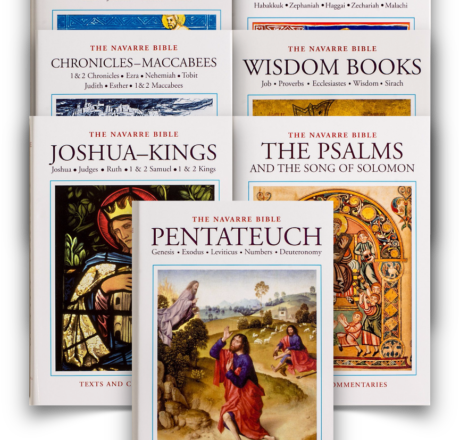
1:2-39:8. The first part of the book of Isaiah is usually described as “First Isaiah”. It includes prophetic passages that have as their background the threat posed by the Assyrians to Judah and Jerusalem during the second half of the eighth century BC. At the start and conclusion of this part, Jerusalem is referred to as a “besieged city” and as “overthrown by aliens” (l:7-8; 36:1ff).
The sacred text links the people of Judah’s distress and uneasiness with the fact that they have distanced themselves from God; they live without reference to him, forgetful of all he has done for them. The future looks bleak, for there is no sign of their heeding the prophet’s call to conversion. However, there is still some cause for hope, for a remnant of Israel has kept faith with God, and from it a new, reformed people will emerge. In various ways a contrast is drawn between those (like King Ahaz: cf. 7:1-17) who clearly do not put their trust in God, relying only on human prudence to deal with the situation, and others (like King Hezekiah: 36:1-38:22) who have recourse to the Lord and make every effort to remedy things; they are confident that God will come to their aid and deliver them from danger.
The first part of the book contains prophetic passages that differ in style and origin. The oldest of them reflect the fear caused by the sheer might of Assyria, which is depicted as a rod or staff wielded by the Lord in his anger (cf. 10:5). All nations in the region felt threatened by Assyria, whose armies reached the very gates of Jerusalem when Sennacherib besieged the city. (That siege marks the end of this part of the book.)
These words of prophecy fall into six sections. The first deals with the threat hanging over Israel and Judah (1:2-12:6); and the second contains oracles to do with foreign nations (13:1-23:18). The third, which in away contains the theological basis of all the teaching found in First Isaiah, and which is known as the “Apocalypse of Isaiah”, deals with the sentence passed on the nations by the Lord (he is supreme, and nothing escapes his justice); still, the light of salvation is always on the horizon (24:1-27:13). Then we hear more about the misfortunes that threaten Jerusalem on account of its sins -- and further reason to hope that all is not lost (28:1-33:24). After returning to the theme of divine judgment and rallying the people to hope in salvation, in a section known as the “little Apocalypse” (34:1-35:10), First Isaiah ends with a narrative section dealing with the havoc caused in Judah by Sennacherib’s forces, although, for a while at least, a small remnant is spared -- those who take refuge in Jerusalem alongside Hezekiah the king (36:1-39:8).
1:2-12:6. Isaiah’s ministry as a prophet must have begun in the years prior to the war, when the kingdoms of Syria and Ephraim (Israel), with Egypt’s encouragement, joined forces and took to the field in campaigns aimed at stemming the advance of the Assyrians. The kings of Syria and Israel tried to persuade Ahaz of Judah to join their alliance. Ahaz refused to get involved and, instead, sought to ingratiate himself with Assyria in order to save his country. In 734 BC Assyria overran Syria, most of Israel and the Lebanon, the Philistine coast and the Transjordan, and in the years that followed it consolidated its grip on the region. After the fall of Samaria (722 BC), much of the population of Israel was deported and replaced by foreigners.
The kingdom of Judah was not invaded, but it was forced to pay heavy tribute and became a state dependent on Assyria. At the cost of many concessions, an uneasy peace prevailed. Religious life and the rule of law deteriorated. This was the background to the earliest of the oracles contained in these twelve chapters. The section begins with a general denunciation of the forsaking of the Lord; no specific events are mentioned. It is a time of crisis, with Judah laid waste and Jerusalem under siege (1:2-20); clearly there is need for a call to conversion, to atone for sins and infidelities (1:21-31). After a few verses that strike a note of hope (in time, Jerusalem will be raised on high), there follow oracles that describe how the people have been laid low on account of their pride (2:6-22). However, amid all the uncleanness, a seed of beauty remains, offering hopes of rebirth (3:1-4:6). One could say that the core of the whole section is the “Song of the vineyard” (5:1-7), a lovely allegory about the care that the Lord lavishes on his people, and about their failure to appreciate it.
After this we begin to find references to specific times in what is called the “Book of lmmanuel” (7:1-12:6), which begins with an account of the calling of Isaiah, whom the Lord has commissioned to explain the meaning of what is happening and to show that there are grounds for hope (6:1-13). In line with this, the prophet approaches Ahaz to encourage him to trust in the Lord (7:1-17) in the face of threatened invasion (7:18-25). Assyria is about to close in on Israel and Judah (8:1-22), but there is still hope of deliverance (8:23-9:6). Punishment does await Israel and Judah (9:7-10:4), but Assyria will not escape it either (10:5-19). Meanwhile, the “remnant” of Israel will grow in its appreciation of the Lord and will find peace (10:20-11:9). The section ends with a song of joy and praise to the Lord for saving and renewing his people (11:10-12:6).
1:2-31. The first oracles are couched in the language of a lawsuit (rib). This is a style of writing often found in the prophetical literature of Israel. which shares similar modes of expression with other writings of the ancient Middle East (see the note on Is 1:10-20). However, other people resort to that legal style when they seek to justify the punishment inflicted on a vassal by an aggrieved overlord, whereas when prophetical texts denounce a fault it is in order to evince an immediate change of heart. The Lord takes no pleasure in punishing people; he very much wants to forgive transgressors and reestablish friendship with them.
The passage begins by calling on heaven and earth to see how wickedly the people have acted, and by accusing them of forsaking the Lord (vv. 2-3). It then inveighs against those who have turned away from the Lord and show no inclination to react, even though misfortune has overtaken them (vv. 4-9), and it denounces the hypocrisy of a people that goes through the motions of religious worship without having the right dispositions (vv. 10-15). A call to conversion follows (vv. 16-17). The Lord is ready to argue his point against his people, to reward them if they mend their ways or punish them if they persist in their sins (vv. 18-20). They are in a bad way, such is their sinfulness (vv. 21-23). Their punishment will be very harsh; so they should respond now and be faithful, as they were in earlier times (vv. 24-31).
This oracle brings in all the main theological themes found in the history of the chosen people of the Old Testament -- their divine election; God’s offer of a Covenant; the people’s transgression of the Covenant; God’s punishment for their infidelity. Even so, it shows that theirs is a merciful God, ever ready to forgive offences; he never turns his back on those whom he has loved.
From: Matthew 10:34-11:1
Jesus' Instructions to the Apostles (Continuation)
--------------------------------------------------
(Jesus said to His disciples) [34] "Do not think that I have come to bring peace on earth; I have not come to bring peace, but a sword. [35] For I have come to set a man against his father, and a daughter against her mother, and a daughter-in-law against her mother-in-law; [36] and a man's foes will be those of his own household. [37] He who loves father or mother more than Me is not worthy of Me; and he who loves son or daughter more than Me is not worthy of Me; [38] and he who does not take his cross and follow Me is not worthy of Me. [39] He who finds his life will lose it, and he who loses his life for My sake will find it.
[40] He who receives you receives Me, and he who receives Me receives Him who sent Me. [41] He who receives a prophet because he is a prophet shall receive a prophet's reward, and he who receives a righteous man because he is a righteous man shall receive a righteous man's reward. [42] And whoever gives to one of these little ones even a cup of cold water because he is a disciple, truly, I say to you, he shall not lose his reward."
The Mission of John the Baptist. Jesus' Reply
----------------------------------------------
[1] And when Jesus had finished instructing His twelve disciples, He went on from there to teach and preach in their cities.
***********************************************************************
Commentary:
34-37. Our Lord has not come to bring a false and earthly peace—the sort of tranquility the self-seeking person yearns for; He wants us to struggle against our own passions and against sin and its effects. The sword He equips us with for this struggle is, in the words of Scripture, "the sword of the Spirit which is the word of God" (Ephesians 6:17), "lively and active, sharper than any two-edged sword, piercing to the division of soul and spirit, of joints and marrow, and discerning the thoughts and intentions of the heart" (Hebrews 4:12).
The word of God in fact leads to these divisions mentioned here. It can lead, even within families, to those who embrace the faith being regarded as enemies by relatives who resist the word of truth. This is why our Lord goes on (verse 37) to say that nothing should come between Him and His disciple--not even father, mother, son or daughter: any and every obstacle (cf. Matthew 5:29-30) must be avoided.
Obviously these words of Jesus do not set up any opposition between the first and fourth commandments (love for God above all things and love for one's parents): He is simply indicating the order of priorities. We should love God with all our strength (cf. Matthew 22:37), and make a serious effort to be saints; and we should also love and respect—in theory and in practice—the parents God has given us; they have generously cooperated with the creative power of God in bringing us into the world and there is so much that we owe them. But love for our parents should not come before love of God; usually there is no reason why these two loves should clash, but if that should happen, we should be quite clear in our mind and in heart about what Jesus says here. He has in fact given us an example to follow on this point: "How is it that you sought Me? Did you not know that I must be in My Father's house?" (Luke 2:49)—His reply when, as a youth, Mary and Joseph found Him in the Temple of Jerusalem after a long search. This event in our Lord's life is a guideline for every Christian —parent or child. Children should learn from it that their affection for their parents should never come before their love for God, particularly when our Creator asks us to follow Him in a way which implies special self-giving on our part; parents should take the lesson that their children belong to God in the first place, and therefore He has a right to do with them what He wishes, even if this involves sacrifice, even heroic sacrifice. This teaching of our Lord asks us to be generous and to let God have His way. In fact, however, God never lets Himself be outdone in generosity. Jesus has promised a hundredfold gain, even in this life, and later on eternal life (cf. Matthew 19:29), to those who readily respond to His will.
38-39. The teaching contained in the preceding verses is summed up in these two succinct sentences. Following Christ, doing what He asks, means risking this present life to gain eternal life.
"People who are constantly concerned with themselves, who act above all for their own satisfaction, endanger their eternal salvation and cannot avoid being unhappy even in this life. Only if a person forgets himself and gives himself to God and to others, in marriage as well as in any other aspect of life, can he be happy on this earth, with a happiness that is a preparation for, and a foretaste of, the joy of Heaven" (St. J. Escriva, "Christ Is Passing By", 24). Clearly, Christian life is based on self-denial: there is no Christianity without the Cross.
40. To encourage the Apostles and to persuade others to receive them, our Lord affirms that there is an intimate solidarity, or even a kind of identity, between Himself and His disciples. God in Christ, Christ in the Apostles: this is the bridge between Heaven and earth. (cf. 1 Corinthians 3:21-23).
41-42. A prophet's mission is not essentially one of announcing future events; his main role is that of communicating the word of God (cf. Jeremiah 11:2; Isaiah 1:2). The righteous man, the just man, is he who obeys the Law of God and follows His paths (cf. Genesis 6:9; Isaiah 3:10). Here Jesus tells us that everyone who humbly listens to and welcomes prophets and righteous men, recognizing God in them, will receive the reward of a prophet and a righteous man. The very fact of generously receiving God's friends will gain one the reward that they obtain. Similarly, if we should see God in the least of His disciples (verse 42), even if they do not seem very important, they are important, because they are envoys of God and of His Son. That is why he who gives them a glass of cold water--an alms, or any small service--will receive a reward, for he has shown generosity to our Lord Himself (cf. Matthew 25:40).
1. In chapters 11 and 12 the Gospel records the obduracy of the Jewish leaders toward Jesus, despite hearing His teaching (chapter 5-7) and seeing the miracles which bear witness to the divine nature of His person and His doctrine (chapters 8 and 9).
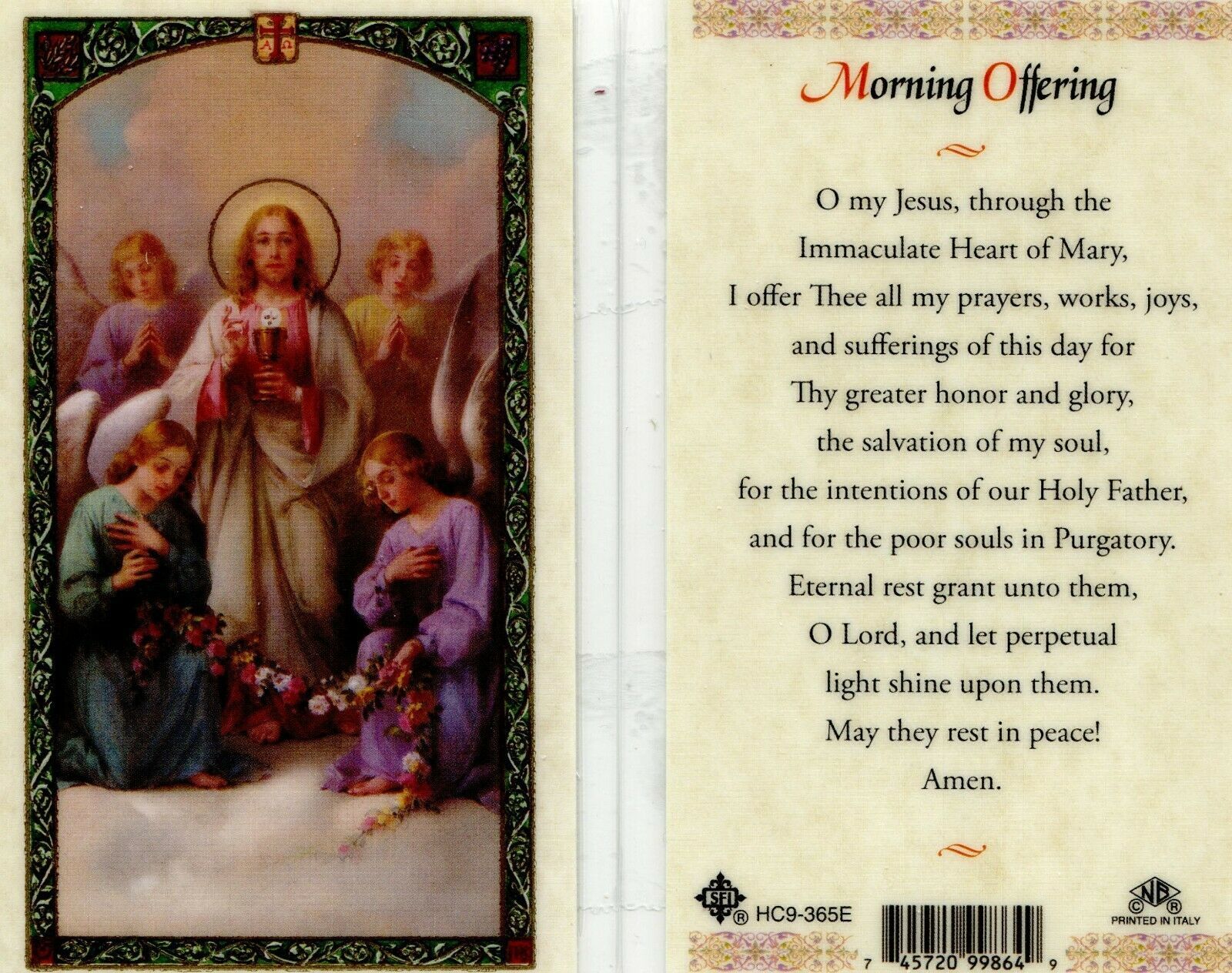
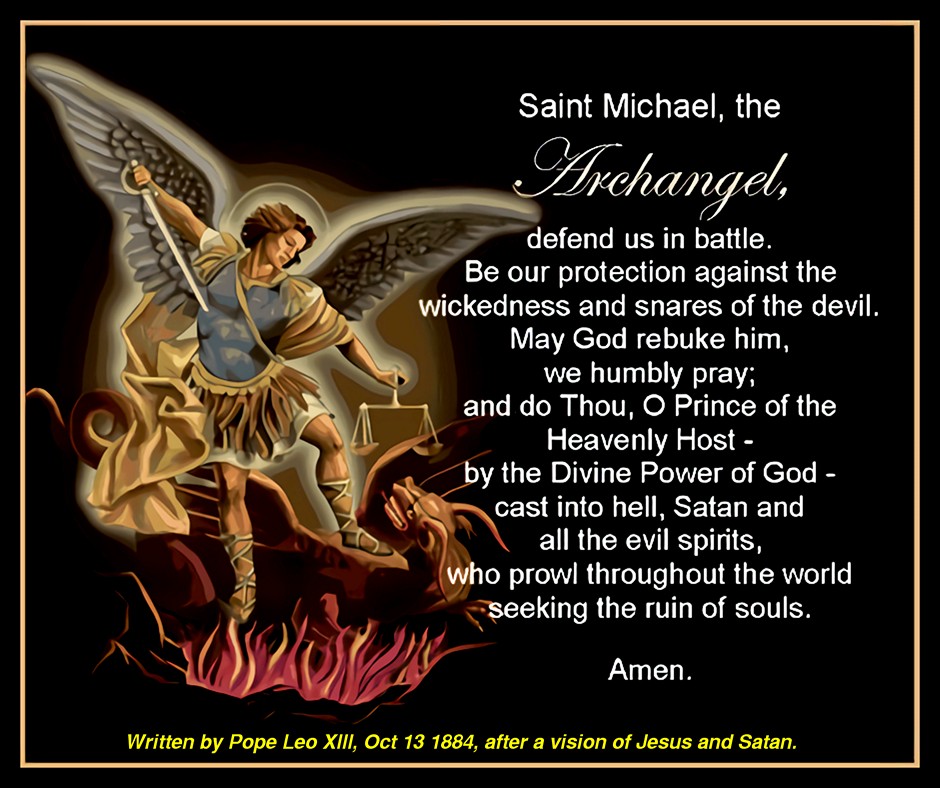
The Month of July is Dedicated to the Precious of Jesus

“They triumphed over the devil by the blood of the Lamb and by the word of their testimony; they did not love their lives so much as to shrink from death.” (Revelation 12:11)

Pope Leo XIV’s prayer intention for the month of July, 2026:
For respect for human life
Let us pray for the respect and protection of human life in all its stages, recognizing it as a gift from God.

Disclaimer: Opinions posted on Free Republic are those of the individual posters and do not necessarily represent the opinion of Free Republic or its management. All materials posted herein are protected by copyright law and the exemption for fair use of copyrighted works.


