
Posted on 07/11/2026 10:01:57 PM PDT by fidelis
Fifteenth Sunday in Ordinary Time
“A sower went out to sow. And as he sowed, some seed fell on the path, and birds came and ate it up…” Matthew 13:3–4
In today’s Gospel, the Parable of the Sower is delivered from a boat, as Jesus addresses a large crowd along the shoreline. Jesus uses the natural acoustics of the water to carry His voice to the eager multitude who came to hear Him. Their earnestness offers us an opportunity for self-examination: Am I among that crowd, attentively listening as God speaks to me today? Do I go out of my way to seek, listen, and respond to the Word of God?
A parable is a method that both reveals and conceals. It reveals divine truth to those who are humble and receptive, and conceals that same truth from those whose hearts are closed. The truths of the Kingdom are not concepts that can be quickly grasped. They are divine mysteries that must enter the soul and be pondered and nourished. Only the spiritually docile can penetrate their depths and allow God’s Word to transform their lives.
The Sower is Christ. The seed is the Word of God, and the soil represents the human heart, in all its various conditions of readiness and receptivity. Some souls await God’s Word like freshly tilled, moist, and fertilized soil. As soon as the seed enters, it begins to grow rapidly—until fully grown and producing good fruit.
Other souls are less receptive. Like the path, some hearts are hardened, stubborn, refusing to receive divine truth. The Word is heard, but not truly received. The enemy snatches it away before it can penetrate.
Hearts that are like rocky ground are those who initially receive the Word with joy but lack perseverance. When trials come, they fall away. They may attend Mass, read Scripture, or begin with fervor, but without deep interior conversion rooted in prayer, they cannot endure the heat of testing.
The thorny heart is the divided heart, where the Word of God is mixed with anxieties, riches, and pleasures. The Gospel is heard—perhaps even cherished—but it is suffocated by worldly attachments, ambition, or fear. Earthly anxieties and the fascination of riches are thorns that smother the soul and prevent it from growing.
The good news is that God, the Divine Sower, is not passive. He sows the seed Himself—personally, directly, and abundantly. He is not like a remote monarch seated on a distant throne, waiting for us to come to Him. No—God always takes the initiative. He goes forth like the sower, casting His seed upon us even before we ask.
The seed comes to us in two essential ways: truth and grace. As truth, God’s Word enlightens the intellect to know His eternal mysteries. As grace, God’s Word strengthens the will to embrace and live those truths with faith and charity.
Reflect today on God’s generous and continuous sowing in your soul. He never ceases speaking to you, calling to you, and planting His Word within you. How receptive are you? Which soil best describes your soul? It’s never too late to respond in this life. God’s Word can grow rapidly within us when our souls are fertile and receptive. Remove the rocks, cut down the thorns, and till the hardened path, so that the abundant seed will make its way into your heart.
Divine Sower, You ceaselessly send forth Your truth and grace to enlighten and strengthen us in the mission of building Your Kingdom. Please till the soil of my heart and make it fertile, so that Your Word may take root in me, growing and producing an abundance of good fruit. Jesus, I trust in You.
Please keep in mind that this is a Catholic Caucus/Devotional thread for the purpose of prayerful reflection on the Sacred Scriptures and is closed to debate of any kind. Per FR policy on Religion Caucus threads, off-topic, argumentative, and abusive comments are not allowed and will be submitted to the Mods for deletion. Thanks, and God bless you.
NOTE: I had to try to reconstruct the ping list because somehow it got lost. If you feel you should or should not be on this list, please let me know and I will either add you back to it, or take you off. Thanks for your patience!
First Reading:
From: Isaiah 55:10-11
Epilogue: Invitation to Partake of the Banquet of the Lord's Covenant
----------------------------------------------------------------------
[10] For as the rain and the snow come down from heaven, and return not thither but water the earth, making it bring forth and sprout, giving seed to the sower and bread to the eater, [11] so shall my word be that goes forth from my mouth; it shall not return to me empty, but it shall accomplish that which I purpose, and prosper in the thing for which I sent it.
*********************************
Commentary:
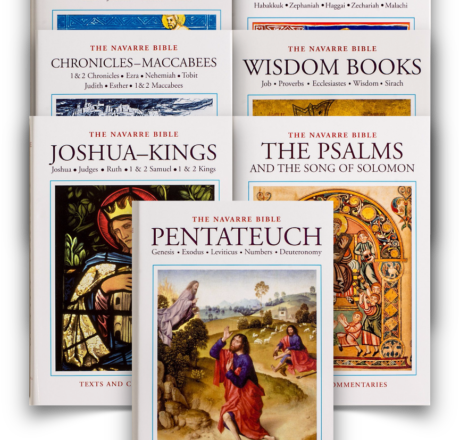
55:10-11. The prophet uses comparisons that are particularly meaningful to those who live in the arid countries of the East, to describe how very powerful the word of God is: it actually delivers the salvation that it promises. The personified word of God (cf. 'Ms 8:4; 9:9-10; 18:14-15) is a figure of the incarnation of Jesus Christ, the eternal Word of the Father, who comes down to save mankind. "The Word of God, he says, will not return to him empty and barren; rather, it will flourish in all things, nourished by the good deeds of those who obey and fulfill his teachings. The word is fulfilled when it is put into practice; if it is not put into practice, it remains barren and withered and starved. Listen carefully, then, when he tells of the food that nourishes him: 'My food is to do the will of him who sent me' (Jn 4:34)" (St Bernard, "In Cantica Canticorum", 71, 12-13).
From: Romans 8:18-23
Christians are Children of God (Continuation)
---------------------------------------------
[18] I consider that the sufferings of this present time are not worth comparing with the glory that is to be revealed to us.
[19] For the creation waits with eager longing for the revealing of the sons of God; [20] for the creation was subjected to futility, not of its own will but by the will of him who subjected it in hope; [21] because the creation itself will be set free from its bondage to decay and obtain the glorious liberty of the children of God. [22] We know that the whole creation has been groaning in travail together until now; [23] and not only the creation, but we ourselves, who have the first fruits of the Spirit, groan inwardly as we wait for adoption as sons, the redemption of our bodies.
***********************************************************************
Commentary:
18. "Who is there then", St Cyprian comments, "who will not strive to attain so great a glory, by making himself God's friend, to rejoice immediately with Christ, to receive the divine rewards after the pains and sufferings of this life? If it is glorious for soldiers of this world to return to their fatherland victorious after defeating the enemy, how much greater and more pleasing glory will there not be, once the devil is overcome, to return victorious to heaven [...]; to bear with one the trophies of victory [...]; to sit at God's side when he comes to judge, to be a co-heir with Christ, to be made equal to the angels and to enjoy with the Patriarchs, with the Apostles and with the Prophets the possession of the Kingdom of heaven [...]. A spirit secure in these supernatural thoughts stays strong and firm, and is unmoved by the attacks of demons and the threats of this world, a spirit strengthened by a solid and confident faith in the future [...]. It leaves here with dignity and confidence, rejoicing in one moment to close its eyes which looked on men and the world, and to see God and Christ! [...]. These are the thoughts the mind should have, this is how it ought to reflect, night and day. If persecution finds God's soldier prepared in this manner, there will be no power capable of overcoming a spirit so equipped for the struggle" ("Epist. ad Fortunatum", 13).
19-21. To make his point more vividly St Paul, in a metaphor, depicts the whole of creation, the material universe, as a living person, groaning in pain impatiently waiting for a future event, raising its head, straining to see something appear on the horizon.
The material world is indeed, through God's design, linked to man and his destiny. "Sacred Scripture teaches that man was created 'in the image of God,' as able to know and love his Creator, and as set by him over all earthly creatures that he might rule them, and make use of them, while glorifying God" (Vatican II, "Gaudium Et Spes", 12). The futility to which creation is subject is not so much corruption and death as the disorder resulting from sin. According to God's plan material things should be resources which enable man to attain the ultimate goal of his existence. By using them in a disordered way, disconnecting them from God, man turns them into instruments of sin, which therefore are subject to the consequences of sin.
"Are we of the twentieth century not convinced of the overpoweringly eloquent words of the Apostle of the Gentiles concerning the 'creation (that) has been groaning in travail together until now' and 'waits with eager longing for the revealing of the sons of God', the creation that' was subjected to futility'? Does not the previously unknown immense progress--which has taken place especially in the course of this century--in the field of man's dominion over the world itself reveal—to a previously unknown degree--that manifold subjection 'to futility'? [...] The world of the previously unattained conquests of science and technology--is it not also the world 'groaning in travail' that 'waits with eager longing for the revealing of the sons of God'?" (John Paul II, "Redemptor Hominis", 8).
Reestablishment of the order willed by God, bringing the whole world to fulfill its true purpose, is the particular mission of the Holy Spirit, the Giver of Life, the true Lord of history: "'The arm of the Lord has not been shortened.' God is no less powerful today than he was in other times; his love for man is no less true. Our faith teaches us that all creation, the movement of the earth and the other heavenly bodies, the good actions of creatures and all the good that has been achieved in history, in short everything, comes from God and is directed toward him.
"The action of the Holy Spirit may pass unnoticed because God does not reveal to us his plans, and because man's sin obscures the divine gifts. But faith tells us that God is always acting. He has created us and maintains us in existence, and he is leading all creation by his grace towards the glorious freedom of the children of God" (St J. Escriva, "Christ Is Passing By", 130).
From: Matthew 13:1-23
Parable of the Sower
--------------------
[1] That same day Jesus went out of the house and sat beside the sea. [2] And great crowds gathered about Him, so that He got into a boat and sat there; and the whole crowd stood on the beach. [3] And He told them many things in parables, saying: "A sower went out to sow. [4] And as he sowed, some seeds fell along the path, and the birds came and devoured them. [5] Other seeds fell on rocky ground, where they had not much soil, and immediately they sprang up, since they had no depth of soil, [6] but when the sun rose they were scorched; and since they had no root they withered away. [7] Other seeds fell upon thorns, and the thorns grew up and choked them. [8] Other seeds fell on good soil and brought forth grain, some a hundredfold, some sixty, some thirty. [9] He who has ears, let him hear."
[10] Then the disciples came and said to Him (Jesus), "Why do You speak to them in parables?" [11] And He answered them, "To you it has been given to know the secrets of the Kingdom of Heaven, but to them it has not been given. [12] For to him who has will more be given, and he will have abundance; but from him who has not, even what he has will be taken away. [13] This is why I speak to them in parables, because seeing they do not see, and hearing they do not hear, nor do they understand. [14] With them indeed is fulfilled the prophecy of Isaiah which says: `You shall indeed hear but never understand, and you shall indeed see but never perceive. [15] For this people's heart has grown dull, and their ears are heavy of hearing, and their eyes they have closed, lest they should perceive with their eyes, and hear with their ears, and understand with their heart, and turn for me to heal them.'
[16] But blessed are your eyes, for they see, and your ears, for they hear. [17] Truly, I say to you, many prophets and righteous men longed to see what you see, and did not see it, and to hear what you hear, and did not hear it."
[18] "Hear then the parable of the sower. [19] When any one hears the Word of the Kingdom and does not understand it, the evil one comes and snatches away what is sown in his heart; this is what was sown along the path. [20] As for what was sown on rocky ground, this is he who hears the Word and immediately receives it with joy; [21] yet he has no root in himself, but endures for a while, and when tribulation or persecution arises on account of the Word, immediately he falls away. [22] As for what was sown among thorns, this is he who hears the Word, but the cares of the world and the delight in riches choke the Word, and it proves unfruitful. [23] As for what was sown on good soil, this is he who hears the Word and understands it; he indeed bears fruit, and yields, in one case a hundredfold, in another sixty, and in another thirty."
***********************************************************************
Commentary:
3. Chapter 13 of St. Matthew includes as many as seven of Jesus' parables, which is the reason why it is usually called "the parable discourse" or the "parabolic discourse". Because of their similarity of content and setting these parables are often called the "Kingdom parables", and also the "parables of the Lake", because Jesus taught them on the shore of Lake Gennesaret. Jesus uses these elaborate comparisons (parables) to explain certain features of the Kingdom of God which He has come to establish (cf. Matthew 3:2)--its tiny, humble origins; its steady growth; its worldwide scope; its salvific force. God calls everyone to salvation but only those attain it who receive God's call with good dispositions and who do not change their attitude; the value of the spiritual benefits the Kingdom brings--so valuable that one should give up everything to obtain them; the fact that good and bad are all mixed together until the harvest time, or the time of God's judgment; the intimate connection between earthly and heavenly aspects of the Kingdom, until it reaches its point of full development at the end of time.
On Jesus' lips, parables are exceptionally effective. By using parables He keeps His listeners' attention, whether they are uneducated or not, and by means of the most ordinary things of daily life He sheds light on the deepest supernatural mysteries. He used the parable device in a masterly way; His parables are quite unique; they carry the seal of His personality; through them He has graphically shown us the riches of grace, the life of the Church, the demands of the faith and even the mystery of God's own inner life.
Jesus' teaching continues to provide every generation with light and guidance on moral conduct. By reading and reflecting on His parables one can savor the adorable humanity of the Savior, who showed such kindness to the people who crowded around to hear Him--and who shows the same readiness to listen to our prayers, despite our dullness, and to reply to our healthy curiosity when we try to make out His meaning.
3-8. Anyone who has visited the fertile plain to the west of the Lake of Gennesaret will appreciate Jesus' touching description in the parable of the sower. The plain is crisscrossed by paths; it is streaked with rocky ground, often with the rocks lying just beneath the surface, and with the courses of rivulets, dry for most of the year but still retaining some moisture. Here and there are clumps of large thorn bushes. When the agricultural worker sows seed in this mixed kind of land, he knows that some seed will fare better than others.
9. Jesus did not explain this parable there and then. It was quite usual for parables to be presented in the first instance as a kind of puzzle to gain the listener's attention, excite his curiosity and fix the parable in his memory. It may well be that Jesus wanted to allow his more interested listeners to identify themselves by coming back to hear Him again--as happened with His disciples. The rest--who listened out of idle curiosity or for too human reasons (to see Him work miracles)--would not benefit from hearing a more detailed and deeper explanation of the parable.
10-13. The kind of Kingdom Jesus was going to establish did not suit the Judaism of His time, largely because of the Jew's nationalistic, earthbound idea of the Messiah to come. In His preaching Jesus takes account of the different outlooks of His listeners, as can be seen in the attitudes described in the parable of the sower. If people were well disposed to Him, the enigmatic nature of the parable would stimulate their interest; and Jesus later did give His many disciples a fuller explanation of its meaning; but there was no point in doing this if people were not ready to listen.
Besides, parables--as indeed any type of comparison or analogy—are used to reveal or explain something which is not easy to understand, as was the case with the supernatural things Jesus was explaining. One has to shade one's eyes to see things if the sun is too bright; otherwise, one is blinded and sees nothing. Similarly, parables help to shade supernatural brightness to allow the listener to grasp meaning without being blinded by it.
These verses also raise a very interesting question: how can divine revelation and grace produce such widely differing responses in people? What is at work here is the mystery of divine grace--which is an unmerited gift--and of man's response to this grace. What Jesus says here underlines man's responsibility to be ready to accept God's grace and to respond to it. Jesus' reference to Isaiah (Matthew 13:14-15) is a prophecy of that hardness of heart which is a punishment meted out to those who resist grace.
These verses need to be interpreted in the light of three points: 1) Jesus Christ loved everyone, including people of His own home town: He gave His life in order to save all men; 2) the parable is a literary form designed to get ideas across clearly: its ultimate aim is to teach, not to mislead or obscure; 3) lack of appreciation for divine grace is something blameworthy, which does merit punishment; however, Jesus did not come directly to punish anyone, but rather to save everyone.
12. Jesus is addressing His disciples and explaining to them that, precisely because they have faith in Him and want to have a good grasp of His teaching, they will be given a deeper understanding of divine truths. But those who do not "follow Him" (cf. note on Matthew 4:18-22) will later lose interest in the things of God and will grow ever blinder: it is as if the little they have is being taken away from them.
This verse also helps us understand the meaning of the parable of the sower, a parable which gives a wonderful explanation of the supernatural economy of divine grace: God gives grace, and man freely responds to that grace. The result is that those who respond to grace generously receive additional grace and so grow steadily in grace and holiness; whereas those who reject God's gifts become closed up within themselves; through their selfishness and attachment to sin they eventually lose God's grace entirely. In this verse, then, our Lord gives a clear warning: with the full weight of His divine authority He exhorts us--without taking away our freedom--to act responsibly: the gifts God keeps sending us should yield fruit; we should make good use of the opportunities for Christian sanctification which are offered us in the course of our lives.
14-15. Only well-disposed people grasp the meaning of God's words. It is not enough just to hear them physically. In the course of Jesus' preaching the prophetic words of Isaiah come true once again.
However, we should not think that not wanting to hear or to understand was something exclusive to certain contemporaries of Jesus; each one of us is at times hard of hearing, hard-hearted and dull-minded in the presence of God's grace and saving word. Moreover, it is not enough to be familiar with the teaching of the Church: it is absolutely necessary to put the faith into practice, with all that that implies, morally and ascetically. Jesus was fixed to the wood of the Cross not only by nails and by the sins of certain Jews but also by our sins—sins committed centuries later but which afflicted the Sacred Humanity of Jesus Christ, who bore the burden of our sins. See the note on Mark 4:11-12.
16-17. In contrast with the closed attitude of many Jews who witnessed Jesus' life but did not believe in Him, the disciples are praised by our Lord for their docility to grace, their openness to recognizing Him as the Messiah and to accepting His teaching.
He calls His disciples blessed, happy. As He says, the prophets and just men and women of the Old Testament had for centuries lived in hope of enjoying one day the peace the future Messiah would bring, but they had died without experiencing this good fortune. Simeon, towards the end of his long life, was filled with joy on seeing the infant Jesus when He was presented in the temple: "He took Him up in his arms and blessed God and said, `Lord now lettest Thou Thy servant depart in peace, according to Thy word; for mine eyes have seen Thy salvation'" (Luke 2:28-30). During our Lord's public life, His disciples were fortunate enough to see and be on close terms with Him; later they would recall that incomparable gift, and one of them would begin his first letter in these words: "That which was from the beginning, which we have heard, which we have seen with our own eyes, which we have looked upon and touched with our hands, concerning the word of life; [...] that which we have seen and heard we proclaim also to you, so that you may have fellowship with us; and our fellowship is with the Father and with His Son Jesus Christ. And we are writing this that our [or: your] joy may be complete (1 John 1:1-4).
This exceptional good fortune was, obviously, not theirs but of special merit: God planned it; it was He who decided that the time had come for the Old Testament prophecies to be fulfilled. In any event, God gives every soul opportunity to meet Him: each of us has to be sensitive enough to grasp them and not let them pass. There were many men and women in Palestine who saw and heard the incarnate Son of God but did not have the spiritual sensitivity to see in Him what the Apostles and disciples saw.
19. He does not understand because he does not love--not because he is not clever enough: lack of love opens the door of the soul to the devil.
The Month of July is Dedicated to the Precious of Jesus

“They triumphed over the devil by the blood of the Lamb and by the word of their testimony; they did not love their lives so much as to shrink from death.” (Revelation 12:11)

Pope Leo XIV’s prayer intention for the month of July, 2026:
For respect for human life
Let us pray for the respect and protection of human life in all its stages, recognizing it as a gift from God.

Disclaimer: Opinions posted on Free Republic are those of the individual posters and do not necessarily represent the opinion of Free Republic or its management. All materials posted herein are protected by copyright law and the exemption for fair use of copyrighted works.


