
Posted on 07/10/2026 9:10:55 PM PDT by fidelis
Memorial of Saint Benedict, Abbot
Jesus said to his Apostles: “No disciple is above his teacher, no slave above his master. It is enough for the disciple that he become like his teacher, for the slave that he become like his master. If they have called the master of the house Beelzebul, how much more those of his household!” Matthew 10:24–25
In Old Testament times, disciples learned from rabbis, often becoming teachers themselves who would pass on and further develop the traditions they received. But in today’s Gospel, Jesus profoundly redefines this relationship. Unlike the other rabbis, Jesus is not another wise teacher in a long line of learned men. He is the definitive and perfect Teacher—Wisdom incarnate, the very Word of God made flesh.
Jesus’ disciples can never surpass nor even equal Him in wisdom, holiness, or understanding. Instead, their calling—and ours—is to become perfectly conformed to Christ, humbly imitating His life, sharing in His mission, and even suffering alongside Him. If Christ faced misunderstanding, slander, and rejection, His followers must expect no less.
Despite being Wisdom Incarnate, many religious leaders of Israel rejected Him, even accusing Him of acting by the power of Beelzebul. Jesus warned His disciples to expect similar treatment. If the Master was subjected to such unjust accusations, His disciples would inevitably face even greater opposition.
This sobering truth was not meant to discourage His Apostles but to prepare them spiritually. Jesus foresaw the fierce resistance and trials they would encounter after His Ascension. Indeed, following Pentecost, the Apostles faced precisely the persecution, misunderstanding, and martyrdom Christ foretold. Yet strengthened by the Holy Spirit, they courageously persevered, faithfully imitating their Master even unto death.
In our own lives, we must also accept that authentic fidelity to Christ often invites resistance, misunderstanding, and even suffering. When that happens, we must never despair nor feel abandoned. Christ Himself has walked this path before us. Instead, we are called to imitate our Teacher with humble courage, trusting that our conformity to Him is our greatest reward. By remaining steadfast, we bear witness as true disciples of Christ who find their deepest joy, not in surpassing Christ, but in becoming like Him in love, humility, and sacrifice.
At times, we might mistakenly assume that greater faithfulness to Christ should lead to the removal of hardships. On an interior level, this is indeed true: The closer we draw to Christ, the deeper our inner peace becomes. However, externally, this is often not the case. The martyrdom the Apostles experienced was anything but peaceful on a bodily level.
Reflect today on any trials that test your faith. Rather than praying for exterior peace, pray for interior strength to face every trial with grace and confidence. Nothing can steal away the deep and abiding interior peace Christ wants to bestow as we engage the world with apostolic zeal. Do not be discouraged by rejection or circumstances beyond your control. Jesus prophesied this. Imitate Jesus instead, laying down your life sacrificially with Him, knowing that if the Master was attacked, so will we, His disciples, be.
Teacher of all teachers, I am forever Your disciple, relying entirely upon Your wisdom and strength. Send me forth with the courage of the Apostles to fulfill Your divine mission. When I encounter difficulties, opposition, or persecution, grant me Your peace and confidence, knowing that I, Your disciple, should expect nothing more than You, my Master, lovingly endured. Jesus, I trust in You.
Please keep in mind that this is a Catholic Caucus/Devotional thread for the purpose of prayerful reflection on the Sacred Scriptures and is closed to debate of any kind. Per FR policy on Religion Caucus threads, off-topic, argumentative, and abusive comments are not allowed and will be submitted to the Mods for deletion. Thanks, and God bless you.
NOTE: I had to try to reconstruct the ping list because somehow it got lost. If you feel you should or should not be on this list, please let me know and I will either add you back to it, or take you off. Thanks for your patience!
Today’s First Reading
From: Isaiah 6:1-8
The Lord calls Isaiah
------------------------------
[1] In the year that King Uzziah died I saw the Lord sitting upon a throne, high and lifted up; and his train filled the temple. [2a] Above him stood the seraphim. [3] And one called to another and said:
"Holy, holy, holy is the Lord of hosts;
the whole earth is full of his glory."
[4] And the foundations of the thresholds shook at the voice of him who called, and the house was filled with smoke. [5] And I said: "Woe is me! For I am lost; for I am a man of unclean lips, and I dwell in the midst of a people of unclean lips; for my eyes have seen the King, the Lord of hosts!"
[6] Then flew one of the seraphim to me, having in his hand a burning coal which he had taken with tongs from the altar. [7] And he touched my mouth, and said: "Behold, this has touched your lips; your guilt is taken away, and your sin forgiven." [8] And I heard the voice of the Lord saying, "Whom shall I send, and who will go for us?" Then I said, "Here am I! Send me."
**************************************************************************
Commentary:
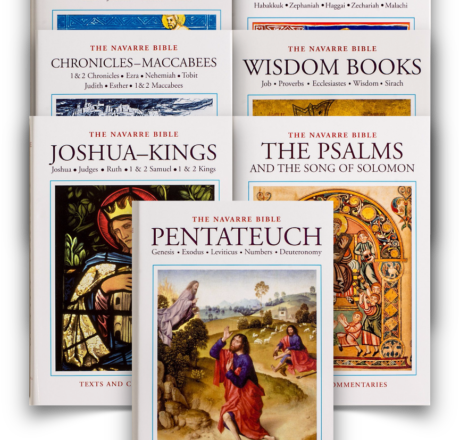
6:1-13. As an introduction to what is called the "Book of Immanuel" (7:1-12:6) we get this account of how the Lord called Isaiah to be a prophet, sending him to his people at the time of the Syrian-Ephraimite coalition to explain to them what is going on and how they should act. The account begins with a theophany (vv. 1-4), which is one of the key points in this book's message. God manifests himself seated in the manner of eastern kings, surrounded by his angelic court (the "seraphim"), who extol the holiness of the Lord: he clearly is Lord of all. In this vision, God is depicted as the thrice holy (v. 3), the highest form of superlative available in Hebrew. Being holy implies standing apart -- standing above everything else. God stands far above all other beings and he is their creator. In Hebrew "holy includes the idea of "sacred". It means that God has none of the limitations and imperfections that created beings have. The holiness and majesty of God fill Isaiah with a sense of his own uncleanness and that of his people (v. 5). Typically, visions of God in biblical history induce feelings of fear in the seer; we even see this in the angel's announcement to Mary (cf. Lk 1:30): "Do not be afraid, Mary, for you have found favour with God." "Faced with God's fascinating and mysterious presence, man discovers his own insignificance. Before the burning bush, Moses takes off his sandals and veils his face (cf. Ex 3:5-6) in the presence of God's holiness. Before the glory of the thrice-holy God, Isaiah cries out: 'Woe is me! I am lost; for I am a man of unclean lips' (Is 6:5). Before the divine signs wrought by Jesus, Peter exclaims: 'Depart from me, for I am a sinful man, O Lord' (Lk 5:8). But because God is holy, he can forgive the man who realizes that he is a sinner before him: 'I will not execute my fierce anger . . . for I am God and not man, the Holy One in your midst (Hos 11:9)'" (Catechism of the Catholic Church, 208). Isaiah is cleansed and consoled as soon as he humbly acknowledges his unworthiness and insignificance before God (vv. 6-7). His instinctive sense of fear is immediately replaced by a generous and trusting response on the prophet's part: he is ready to do what God wants (v. 8). "In their 'one to one' encounters with God the prophets draw light and strength for their mission. Their prayer is not flight from this unfaithful world, but rather attentiveness to the Word of God. At times their prayer is an argument or a complaint, but it is always an intercession that awaits and prepares for the intervention of the Saviour God, the Lord of history (cf. Amos 7:2, 5; Is 6:5, 8, 11; Jer 1:6; 15:15-18; 20:7-18)" (Catechism of the Catholic Church, 2584). Finally, the Lord entrusts him with his mission. The message he is to deliver is hard-hitting and full of paradoxes (vv. 9-10). The task given him is not, as one might at first think, to render the people incapable of hearing and understanding the word of God that could move their hearts. It is, rather, to tell them that if they fail to listen to the word of God, their hearts will be blinded: they will not be able to see things right and, because of that, the sinner will feel no need to take stock of his position and be converted. The Synoptic Gospels interpret Jesus' preaching as a fulfillment of what is said here in vv. 9-10 (Mt 13:13-15; Mk 4:11-12). The Gospel of St John sees these same words as anticipating what will happen to those who reject Jesus' message: "Therefore they could not believe. For Isaiah again said, 'He has blinded their eyes and hardened their heart, lest they should see with their eyes and perceive with their heart, and turn for me to heal them.' Isaiah said this because he saw his glory and spoke of him" (Jn 12:27-41). And St Paul also uses vv. 9-10 to reproach the Jews of Rome for rejecting the Good News of salvation in Christ which he is proclaiming to them (cf. Acts 28:23-28). The people's hardness of heart will merit severe punishment; cities and houses will he laid waste, but all will not be lost: a holy seed will remain and from it the tree will grow back again (v. 11-13). These verses carry a message for people in all ages. Isaiah approaches God in all humility, showing him every reverence, and at the same time he puts his trust in God. For his part, the Lord cleanses his chosen ones and sends them out to help in his work of salvation. Origen, who commented on this passage a number of times, points out: "May burning coals he brought from the altar of heaven to burn my lips. If the burning coals of the Lord touch my lips, they will he purified; and when they are purified and cleansed of all sin, […] my mouth will he opened to the Word of God and I will not utter another impure word [...]. The seraphim who was sent to purify the prophet's lips did not purify the lips of the people […]; therefore, they continued to live in sin, and now they deny the Lord Jesus Christ and curse him from their unclean mouths. For my part, I pray that the seraphim will come to cleanse my lips (Homiliae in Isaiam, 1, 4). All we need is the same humble docility that Isaiah had: "Having received the grace God, he did not want it to be a gift granted to him to no avail, without being put to work in everything that needed to he done. Seeing the seraphim and the Lord of hosts seated on high, on his throne of glory, he said: 'Woe me ...'. By speaking thus and making himself 'unworthy', he received the help of God because He took in account his humility" (ibid., 6:2). And St John Chrysostom, commenting on Isaiah's response to God, says that the prophet shows readiness to carry out his mission to the people because "since the saints are friends of God, they, too, love all men dearly" (In Isaiam, 6, 5).
From: Matthew 10:24-33
Jesus' Instructions to the Apostles (Continuation)
--------------------------------------------------
(Jesus said to His disciples,) [24] "A disciple is not above his teacher, nor a servant above his master; [25] it is enough for the disciple to be like his teacher, and the servant like his master. If they have called the master of the house Beelzebul, how much more will they malign those of his household.
[26] "So have no fear of them; for nothing is covered that will not be revealed, or hidden that will not be known. [27] What I tell you in the dark, utter in the light; and what you hear whispered, proclaim upon the housetops. [28] And do not fear those who kill the body but cannot kill the soul; rather fear Him who can destroy both soul and body in hell. [29] Are not two sparrows sold for a penny? And not one of them will fall to the ground without your Father's will. [30] But even the hairs of your head are all numbered. [31] Fear not, therefore; you are of more value than many sparrows. [32] So every one who acknowledges Me before men, I also will acknowledge before My Father who is in heaven; [33] but whoever denies Me before men, I also will deny before My Father who is in heaven."
***********************************************************************
Commentary:
24-25. Jesus uses these two proverbs to hint at the future that awaits His disciples: their greatest glory will consist in imitating the Master, being identified with Him, even if this means being despised and persecuted as He was before them: His example is what guides a Christian; as He Himself said, "I am the Way, the Truth, and the Life" (John 14:6).
Beelzebul (cf. Luke 11:15) was the name of the idol of the ancient Philistine city of Ekron. The Jews later used the word to describe the devil or the prince of devils (cf. Matthew 12:24), and their hatred of Jesus led them to the extreme of applying it to Him.
To equip them for the persecution and misunderstanding which Christians will suffer (John 15:18), Jesus encourages them by promising to stay close to them. Towards the end of His life He will call them His friends (John 15:15) and little children (John 13:33).
26-27. Jesus tells His disciples not to be afraid of calumny and detraction. A day will come when everyone will come to know the whole truth about everyone else, their real intentions, the true dispositions of their souls. In the meantime, those who belong to God may be misrepresented by those who resort to lies, out of malice or passion. These are the hidden things which will be made known.
Christ also tells the Apostles to speak out clearly. Jesus' divine teaching method led Him to speak to the crowds in parables so that they came to discover His true personality by easy stages. After the coming of the Holy Spirit (cf. Acts 1:8), the Apostles would have to preach from the rooftops about what Jesus had taught them.
We too have to make Christ's doctrine known in its entirety, without any ambiguity, without being influenced by false prudence or fear of the consequences.
28. Using this and other Gospel texts (Matthew 5:22, 29; 18:9; Mark 9:43, 45, 47; Luke 12:5), the Church teaches that hell exists; there those who die in mortal sin suffer eternal punishment (cf. "St. Pius V Catechism", I, 6, 3), in a manner not known to us in this life (cf. St. Teresa of Avila, "Life", Chapter 32). See notes on Luke 16:19-31.
Therefore, out Lord warns His disciples against false fear. We should not fear those who can only kill the body. Only God can cast body and soul into hell. Therefore God is the only one we should fear and respect; He is our Prince and Supreme Judge--not men. The martyrs have obeyed this precept of the Lord in the fullest way, well aware that eternal life is worth much more than earthly life.
29-31. An "as" (translated here as "penny") was a small coin of very little value. Christ uses it to illustrate how much God loves His creatures. As St. Jerome says ("Comm. in Matth.", 10:29-31): "If little birds, which are of such little value, still come under the providence and care of God, how is it that you, who, given the nature of your soul, are immortal, can fear that you are not looked after carefully by Him whom you respect as your Father?" Jesus again teaches us about the fatherly providence of God, which He spoke about at length in the Sermon on the Mount (cf. Matthew 6:19-34).
32-33. Here Jesus tells us that public confession of our faith in Him--whatever the consequences--is an indispensable condition for eternal salvation. After the Judgment, Christ will welcome those who have given testimony of their faith and condemn those whom fear caused to be ashamed of Him (cf. Matthew 7:23; 25:41; Revelation 21:8). The Church honors as "confessors" those Saints who have not gone physical martyrdom but whose lives bore witness to the Catholic faith. Although every Christian should be ready to die for his faith, most Christians are called to be confessors of the faith.
The Month of July is Dedicated to the Precious of Jesus

“They triumphed over the devil by the blood of the Lamb and by the word of their testimony; they did not love their lives so much as to shrink from death.” (Revelation 12:11)

Pope Leo XIV’s prayer intention for the month of July, 2026:
For respect for human life
Let us pray for the respect and protection of human life in all its stages, recognizing it as a gift from God.

Today’s First Reading
From: Isaiah 6:1-8
The Lord calls Isaiah
------------------------------
[1] In the year that King Uzziah died I saw the Lord sitting upon a throne, high and lifted up; and his train filled the temple. [2a] Above him stood the seraphim. [3] And one called to another and said:
"Holy, holy, holy is the Lord of hosts;
the whole earth is full of his glory."
[4] And the foundations of the thresholds shook at the voice of him who called, and the house was filled with smoke. [5] And I said: "Woe is me! For I am lost; for I am a man of unclean lips, and I dwell in the midst of a people of unclean lips; for my eyes have seen the King, the Lord of hosts!"
[6] Then flew one of the seraphim to me, having in his hand a burning coal which he had taken with tongs from the altar. [7] And he touched my mouth, and said: "Behold, this has touched your lips; your guilt is taken away, and your sin forgiven." [8] And I heard the voice of the Lord saying, "Whom shall I send, and who will go for us?" Then I said, "Here am I! Send me."
**************************************************************************
Commentary:
6:1-13. As an introduction to what is called the "Book of Immanuel" (7:1-12:6) we get this account of how the Lord called Isaiah to be a prophet, sending him to his people at the time of the Syrian-Ephraimite coalition to explain to them what is going on and how they should act.
The account begins with a theophany (vv. 1-4), which is one of the key points in this book's message. God manifests himself seated in the manner of eastern kings, surrounded by his angelic court (the "seraphim"), who extol the holiness of the Lord: he clearly is Lord of all. In this vision, God is depicted as the thrice holy (v. 3), the highest form of superlative available in Hebrew. Being holy implies standing apart -- standing above everything else. God stands far above all other beings and he is their creator. In Hebrew "holy includes the idea of "sacred". It means that God has none of the limitations and imperfections that created beings have.
The holiness and majesty of God fill Isaiah with a sense of his own uncleanness and that of his people (v. 5). Typically, visions of God in biblical history induce feelings of fear in the seer; we even see this in the angel's announcement to Mary (cf. Lk 1:30): "Do not be afraid, Mary, for you have found favour with God."
"Faced with God's fascinating and mysterious presence, man discovers his own insignificance. Before the burning bush, Moses takes off his sandals and veils his face (cf. Ex 3:5-6) in the presence of God's holiness. Before the glory of the thrice-holy God, Isaiah cries out: 'Woe is me! I am lost; for I am a man of unclean lips' (Is 6:5). Before the divine signs wrought by Jesus, Peter exclaims: 'Depart from me, for I am a sinful man, O Lord' (Lk 5:8). But because God is holy, he can forgive the man who realizes that he is a sinner before him: 'I will not execute my fierce anger . . . for I am God and not man, the Holy One in your midst (Hos 11:9)'" (Catechism of the Catholic Church, 208).
Isaiah is cleansed and consoled as soon as he humbly acknowledges his unworthiness and insignificance before God (vv. 6-7). His instinctive sense of fear is immediately replaced by a generous and trusting response on the prophet's part: he is ready to do what God wants (v. 8). "In their 'one to one' encounters with God the prophets draw light and strength for their mission. Their prayer is not flight from this unfaithful world, but rather attentiveness to the Word of God. At times their prayer is an argument or a complaint, but it is always an intercession that awaits and prepares for the intervention of the Saviour God, the Lord of history (cf. Amos 7:2, 5; Is 6:5, 8, 11; Jer 1:6; 15:15-18; 20:7-18)" (Catechism of the Catholic Church, 2584).
Finally, the Lord entrusts him with his mission. The message he is to deliver is hard-hitting and full of paradoxes (vv. 9-10). The task given him is not, as one might at first think, to render the people incapable of hearing and understanding the word of God that could move their hearts. It is, rather, to tell them that if they fail to listen to the word of God, their hearts will be blinded: they will not be able to see things right and, because of that, the sinner will feel no need to take stock of his position and be converted. The Synoptic Gospels interpret Jesus' preaching as a fulfillment of what is said here in vv. 9-10 (Mt 13:13-15; Mk 4:11-12). The Gospel of St John sees these same words as anticipating what will happen to those who reject Jesus' message: "Therefore they could not believe. For Isaiah again said, 'He has blinded their eyes and hardened their heart, lest they should see with their eyes and perceive with their heart, and turn for me to heal them.' Isaiah said this because he saw his glory and spoke of him" (Jn 12:27-41). And St Paul also uses vv. 9-10 to reproach the Jews of Rome for rejecting the Good News of salvation in Christ which he is proclaiming to them (cf. Acts 28:23-28).
The people's hardness of heart will merit severe punishment; cities and houses will he laid waste, but all will not be lost: a holy seed will remain and from it the tree will grow back again (v. 11-13). These verses carry a message for people in all ages. Isaiah approaches God in all humility, showing him every reverence, and at the same time he puts his trust in God. For his part, the Lord cleanses his chosen ones and sends them out to help in his work of salvation. Origen, who commented on this passage a number of times, points out: "May burning coals he brought from the altar of heaven to burn my lips. If the burning coals of the Lord touch my lips, they will he purified; and when they are purified and cleansed of all sin, […] my mouth will he opened to the Word of God and I will not utter another impure word [...]. The seraphim who was sent to purify the prophet's lips did not purify the lips of the people […]; therefore, they continued to live in sin, and now they deny the Lord Jesus Christ and curse him from their unclean mouths. For my part, I pray that the seraphim will come to cleanse my lips (Homiliae in Isaiam, 1, 4). All we need is the same humble docility that Isaiah had: "Having received the grace God, he did not want it to be a gift granted to him to no avail, without being put to work in everything that needed to he done. Seeing the seraphim and the Lord of hosts seated on high, on his throne of glory, he said: 'Woe me ...'. By speaking thus and making himself 'unworthy', he received the help of God because He took in account his humility" (ibid., 6:2). And St John Chrysostom, commenting on Isaiah's response to God, says that the prophet shows readiness to carry out his mission to the people because "since the saints are friends of God, they, too, love all men dearly" (In Isaiam, 6, 5).
Disclaimer: Opinions posted on Free Republic are those of the individual posters and do not necessarily represent the opinion of Free Republic or its management. All materials posted herein are protected by copyright law and the exemption for fair use of copyrighted works.

