
Posted on 07/08/2026 11:05:38 PM PDT by fidelis
Jesus said to his Apostles: “As you go, make this proclamation: ‘The Kingdom of heaven is at hand.’ Cure the sick, raise the dead, cleanse the lepers, drive out demons. Without cost you have received; without cost you are to give.” Matthew 10:7–8
And they were off! After choosing Twelve of His disciples and naming them Apostles—that is, those who are sent—Jesus sends them out, two by two, into the towns and villages of Israel, places where He Himself would later come. They go before Him, preparing hearts to receive the fullness of the Gospel when the Lord Himself arrives.
At this stage, their mission is directed solely “to the lost sheep of the house of Israel” (Matthew 10:6). They are not to go into pagan or Samaritan regions—not yet. Only after the Passion, Resurrection, and the outpouring of the Holy Spirit at Pentecost will they go to the ends of the earth, empowered to “make disciples of all nations” (Matthew 28:19). This first mission, therefore, is a foretaste—a seed of the universal mission that will blossom in the early Church and continue through missionary efforts today.
In this twofold sending—first to Israel, then to all nations—we glimpse the pattern of the spiritual life: God first works inwardly, forming and healing the soul, and then sends it outward in love. Our evangelization must arise from an interior communion with Christ, deepened by grace and empowered by the Holy Spirit. Just as the Apostles could not be sent to the world until Pentecost, neither can we bear lasting fruit unless we, too, are first transformed by His Spirit.
Consider this twofold process in your life. The Apostles’ first mission can be likened to our calling to witness to the faith within our homes—to spouses, children, relatives, and close friends. But just as the Twelve had to be formed by Christ before proclaiming His Kingdom, we, too, must be formed in the school of grace. The Apostles were first called, taught, shown signs and wonders, drawn to deeper faith, and only then prepared for this first mission.
Likewise, before we can effectively evangelize even within our families, our own conversion must be sincere. For example, parents hand on the faith to their children not merely by teaching doctrine, but by living a faith that is visibly alive. Daily prayer, faithful attendance at Mass, and a genuine love for Christ in the home form the atmosphere in which grace can flourish.
This must flow from an interior transformation—similar to the Apostles, who left everything to follow Jesus and were gradually conformed to His mind and heart.
That the Apostles were sufficiently prepared to proclaim the Kingdom is evident in Jesus’ words as He sends them forth. To “cure the sick, raise the dead, cleanse the lepers, drive out demons,” and to give freely what they themselves had received, reveals that they had already been entrusted with much. Their transformation was not yet complete, but it was real. And Christ, knowing their weaknesses, still entrusted them with His power—because their hearts were open and receptive to grace.
Reflect today on this first mission upon which Jesus sent His Apostles. See in their example your own calling: to be formed interiorly by grace so that you become a living witness to the Kingdom of God within you. Begin with those closest to you and, from there, remain attentive to the ways the Holy Spirit leads you to bring the Gospel even farther. As with the Apostles, trust that your response to grace will bear fruit in ways fully known only to God.
My Lord and King, You desire that Your Kingdom be proclaimed to the ends of the earth. Please first establish Your Kingdom in my soul, conforming me to Your reign. From there, please use me as an instrument of Your grace for those closest to me and to all to whom You wish to send me. Jesus, I trust in You.
Please keep in mind that this is a Catholic Caucus/Devotional thread for the purpose of prayerful reflection on the Sacred Scriptures and is closed to debate of any kind. Per FR policy on Religion Caucus threads, off-topic, argumentative, and abusive comments are not allowed and will be submitted to the Mods for deletion. Thanks, and God bless you.
NOTE: I had to try to reconstruct the ping list today because somehow it got lost. If you feel you should or should not be on this list, please let me know and I will either add you back to it, or take you off. Thanks for your patience!
The Month of July is Dedicated to the Precious of Jesus

“They triumphed over the devil by the blood of the Lamb and by the word of their testimony; they did not love their lives so much as to shrink from death.” (Revelation 12:11)

Pope Leo XIV’s prayer intention for the month of July, 2026:
For respect for human life
Let us pray for the respect and protection of human life in all its stages, recognizing it as a gift from God.

Today’s First Reading
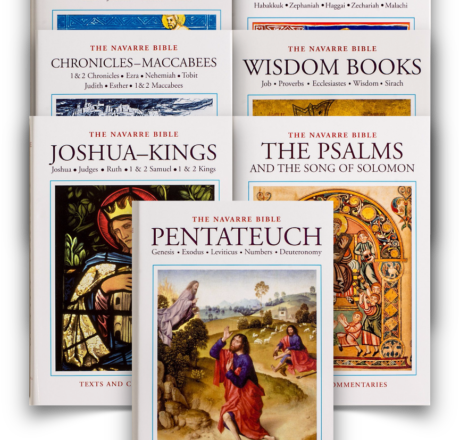
From: Hosea 11:1-4, 8e-9
When Israel was a child
-----------------------------
[1] When Israel was a child, I loved him, and out of Egypt I called my son.
[2] The more l called them, the more they went from me; they kept sacrificing to the Baals, and burning incense to idols.
[3] Yet it was I who taught Ephraim to walk, I took them up in my arms; but they did not know that I healed them. [4] I led them with cords of compassion, with the bands of love, and I became to them as one who eases the yoke on their jaws, and I bent down to them and fed them.
[8ab] How can I give you up, O Ephraim! How can I hand you over, O Israel! [8e] My heart recoils within me, my compassion grows warm and tender.
[9] I will not execute my fierce anger, I will not again destroy Ephraim; for I am God and not man, the Holy One in your midst, and I will not come to destroy.
************************************************************
Commentary:
11:1-11. The second part of the hook of Hosea ends with this very touching passage summing up, once again, the relationship between God and his people: the Lord is faithful, whereas Israel is not; but the Lord, true to his nature (v. 9), proclaims that he will bless Israel once more. The Christian reader will immediately notice in v. 1 a line that is applied to Jesus in the New Testament (Mt 2: 15).
What is new about this poem is the fact that whereas previously God’s faithfulness was described as being like that of a husband, here God is depicted as a father: "God’s love for Israel is compared to a father’s love for his son (Hos 11:11). His love for his people is stronger than a mothers for her children. God loves his people more than a bridegroom his beloved (Is 62:4-5); his love will be victorious over even the worst infidelities and will extend to his most precious gift: 'God so loved the world that he gave his only Son’ (Jn 3:16)" (Catechism of the Catholic Church, 219).
With the exception of v. 10, the oracle is placed on the lips of the Lord, to underscore God’s relationship with his people. From the very first (v. 1), the Lord loved Israel as his own son, and from the first Israel rebelled (v. 2); the Lord reared him (v. 3), showing every sign of attention (v. 4: literally "cords of man" as distinct from the reins used for animals), but Israel is bent on forsaking his Lord (v. 7). Then, in a burst of anger, the Lord decides to chastise his people; they shall become slaves once more (vv. 5-6). But this anger does not last long, because, "even when the Lord is exasperated by the infidelity of his people and thinks of finishing with it, it is still his tenderness and generous love for those who are his own which overcomes his anger" (John Paul II, Dives in misericordia, 4).
This oracle shows the full extent of God’s paternal affection. In the opening chapters God’s love for Israel was compared with the distraught, impassioned love of a husband for his unfaithful wife; here it is depicted as a father’s love for his son: he cannot not love him, even if the son proves ungrateful. The very thought of abandoning Israel breaks God’s heart (cf. v. 8). What the prophet is doing here is telling us something about God’s "psychology": God’s love for his people, and ultimately for every human being, exceeds human loves -- parental and spousal (these, in fact, are only partial reflections of divine love): "God is pure spirit in which there is no place for the difference between the sexes. But the respective 'perfections’ of a man and woman reflect something of the infinite perfection of God: those of a mother and those of a father and husband" (“Catechism of the Catholic Church,” 370).
This oracle of salvation is rounded off by the final verses. God forgives Israel; it is only right that he should: he is God (v. 9). The wonderful thing about this passage is that God’s forgiveness comes before Israel’s conversion: his initial love, and the later reconciliation, are initiatives of God. Conversion (vv. 11-12) stems from God’s prior love.
St Matthew’s Gospel (2:15) sees the prophecy in Hosea 11:1 being fulfilled in the flight into Egypt and subsequent return: according to the evangelist, Jesus, in his life, embodies the history of his people, and in him God fulfils his ancient promises to renew the people of Israel.
From: Matthew 10:7-15
The Calling and First Mission of the Apostles (Continuation)
------------------------------------------------------------
(Jesus said to His disciples,) [7] "And preach as you go, saying, ‘The Kingdom of Heaven is at hand.' [8] Heal the sick, raise the dead, cleanse lepers, cast out demons. You received without pay, give without pay. [9] Take no gold, nor silver, nor copper in your belts, [10]no bag for your journey, nor two tunics, nor sandals, nor a staff; for the laborer deserves his food. [11] And whatever town or village you enter, find out who is worthy in it, and stay with him until you depart. [12] As you enter the house, salute it. [13] And if the house is worthy, let your peace come upon it; but if it is not worthy, let your peace return to you. [14] And if any one will not receive you or listen to your words, shake off the dust from your feet as you leave that house or town. [15] Truly, I say to you, it shall be more tolerable on the day of judgment for the land of Sodom and Gomorrah than for that town."
***********************************************************************
Commentary:
7-8. Previously, the prophets, when speaking of the messianic times, had used imagery suited to the people's spiritual immaturity. Now, Jesus, in sending His Apostles to proclaim that the promised Kingdom of God is imminent, lays stress on its spiritual dimension. The power mentioned in verse 8 are the very sign of the Kingdom of God or the reign of the Messiah proclaimed by the prophets. At first (chapters 8 and 9) it is Jesus who exercises these messianic powers; now He gives them to His disciples as proof that His mission is divine (Isaiah 35:5-6; 40:9; 52:7; 61:1).
9. "Belts": twin belts, stitched together leaving space where coins and other small, heavy objects could be secreted and carried.
9-10. Jesus urges His disciples to set out on their mission without delay. They should not be worried about material or human equipment: God will make up any shortfall. This holy audacity in setting about God's work is to be found throughout the history of the Church: if Christians had bided their time, waiting until they had the necessary material resources, many, many souls would never have received the light of Christ. Once a Christian is clear in his mind about what God wants him to do, he should not stay at home checking to see if he has the wherewithal to do it. "In your apostolic undertakings you are right--it's your duty--to consider what means the world can offer you (2 + 2 = 4), but don't forget—ever! —that, fortunately, your calculations must include another term: God + 2 + 2..." (St J. Escriva, "The Way", 471).
However, that being said, we should not try to force God's hand, to have Him do something exceptional, when in fact we can meet needs by our own efforts and work. This means that Christians should generously support those who, because they are totally dedicated to the spiritual welfare of their brethren, have no time left over to provide for themselves: in this connection see Jesus' promise in Matthew 10:40-42.
11-15. "Peace" was, and still is, the normal Jewish form of greeting. On the Apostles' lips it is meant to have a deeper meaning--to be a sign of God's blessing which Jesus' disciples, who are His envoys, pour out on those who receive them. The commandment our Lord gives here affects not only this specific mission; it is a kind of prophecy which applies to all times. His messenger does not become discouraged if His word is not well received. He knows that God's blessing is never ineffective (cf. Isaiah 55:11), and that every generous effort a Christian makes will always produce fruit. The word spoken in apostolate always brings with it the grace of conversion: "Many of those who heard the word believed; and the number of the men came to about five thousand" (Acts 4:4; cf. 10:44; Romans 10:17).
Man should listen to this word of the Gospel and believe in it (Acts 13:48; 15:7). If he accepts it and stays faithful to it his soul is consoled, he obtains peace (Acts 8:39) and salvation (Acts 11:4-18). But if he rejects it, he is not free from blame and God will judge him for shutting out the grace he was offered.
Disclaimer: Opinions posted on Free Republic are those of the individual posters and do not necessarily represent the opinion of Free Republic or its management. All materials posted herein are protected by copyright law and the exemption for fair use of copyrighted works.

