
Posted on 07/07/2026 10:38:59 PM PDT by fidelis
Jesus summoned his Twelve disciples and gave them authority over unclean spirits to drive them out and to cure every disease and every illness. The names of the Twelve Apostles are these… Matthew 10:1–2
Imagine being one of the Twelve. When each of them first encountered our Lord, he could never have imagined what would unfold. Eleven of them would become the foundation upon which the Messiah built His Church.
Their words and actions have been recorded and proclaimed throughout the world and will continue to be until the end of time. By God’s will, they preached far and wide with divine authority. They celebrated the Holy Eucharist, transforming mere bread and wine into the Most Holy Body and Blood, Soul and Divinity, of the Lamb of God. Through the laying on of hands, they imparted the Holy Spirit in fullness. They worked miracles in Jesus’ name, and most of them bore final witness to Christ by the shedding of their blood.
The reason their lives were so fruitful for God’s Kingdom is because they were chosen and sent by the Son of God. It was not their idea. They didn’t construct their own plan for eternal salvation. They did not map out their futures and execute a vision according to their own will. Instead, they felt the gravity of the mission for which they were chosen and acted when sent by the Savior. Their obedience to the divine will opened the floodgates of Divine Mercy, and grace poured forth upon the world.
When you consider your own life, what are your goals and ambitions? What plans have you made for the future? If we want to imitate the fruitfulness of the Apostles, then we are invited to discern for what God has chosen us and to be prepared to respond with generous obedience when He sends us.
It’s easy to come up with our own plans in life. We might want to save up money, succeed at work, have a family, form friendships, retire at a certain age, and enjoy many good things. Though all these can be good and might well be part of God’s plan, we must not presume upon His will. With humility, we must continually seek His guidance, remain open to His promptings, and surrender our plans to the providence of the One who knows what will truly bear fruit for eternity.
Reflecting on the radical change of life to which Jesus called the Twelve invites us to consider whether Jesus also desires a radical change in our own lives. Certainly, some aspects of our lives are good and holy. If married with children, God’s will surely includes loving and caring for one’s family.
Within every vocation, however, there are ways in which we might be called to a new depth of conversion—a radical life of loving, serving, and building the Kingdom of God in ways we never imagined possible.
By analogy, consider a person living in poverty who suddenly wins the largest lottery in history. Imagine, further, that the person is quite worldly. Such a fortune would radically change the direction of that person’s life—likely not for the better.
Reflect today on the spiritual truth that God has chosen you for some holy and sacred mission. It might not be glorious in the eyes of the world, but it will be glorious in Heaven. Be open. Beg for His grace. Accept your mission. Go wherever He sends you, knowing that you cannot, now, fathom all that God has in store for you.
Most glorious God, You have chosen me for some definite purpose. You have called me by name and desire to send me forth to build up Your Kingdom on earth. I accept my calling and open myself to the abundance of grace You wish to bestow so that I may fulfill Your perfect will, doing unfathomable good for Your Kingdom to come. Jesus, I trust in You.
Please keep in mind that this is a Catholic Caucus/Devotional thread for the purpose of prayerful reflection on the Sacred Scriptures and is closed to debate of any kind. Per FR policy on Religion Caucus threads, off-topic, argumentative, and abusive comments are not allowed and will be submitted to the Mods for deletion. Thanks, and God bless you.
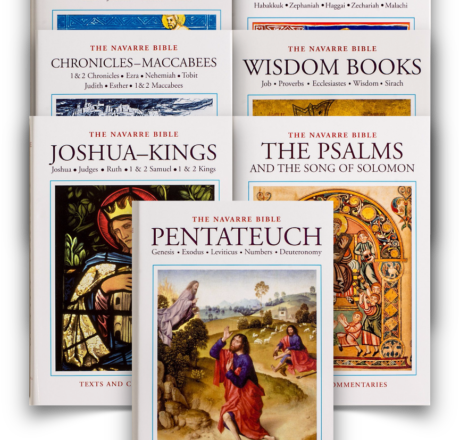
Today’s First Reading
From: Hosea 10:1-3, 7-8, 12
Israel’s idolatry
----------------------
[1] Israel is a luxuriant vine that yields its fruit. The more his fruit increased the more altars he built; as his country improved, he improved his pillars. [2] Their heart is false; now they must bear their guilt. The Lord will break down their altars, and destroy their pillars. [3] For now they will say: “We have no king, for we fear not the Lord, and a king, what could he do for us?”
[7] Samaria’s king shall perish, like a chip on the face of the waters. [8] The high places of Aven, the sin of Israel, shall be destroyed. Thorn and thistle shall grow upon their altars; and they shall say to the mountains, Cover us, and to the hills, Fall upon us.
Israel reproached for its pride
------------------------------------------
[12] Sow for yourselves righteousness, reap the fruit of steadfast love; break up your fallow ground, for it is the time to seek the Lord, that he may come and rain salvation upon you.
****************************************************************
Commentary:
10:1-15. Verses 1-2 summarize the underlying point in the passage: the wealthier Israel becomes, the more corrupt she is. The verbs “to increase” (v. 1) and “to bear guilt” (v. 2) are in direct contrast to one another. The “We have no king” (v. 3) and the king’s being “like a chip on the face of the waters” (v. 7) refer to the instability of the monarchy in the Northern kingdom: the period between 747 (when Jeroboam II died) to 721 (when Samaria fell to the Assyrians) saw a succession of six kings, who were puppets of Assyria or were assassinated by usurpers. Hosea is quite right when he says they had no king to rule them. The results of this anarchy are mentioned in vv. 4-8 -- lots of empty talk, contracts with no substance to them, unjust legal decisions; and the result of it all will he that Assyria will destroy Israel’s altars, the monarchy will perish, and the people will despair. Verses 9-10 probably hark back to the war when all the tribes turned on the tribe of Benjamin to avenge the crime committed at Gibe-ah (cf. Judg 19:1-20:48). Hosea must have regarded that crime and the war it led to (in which the tribe of Benjamin was almost wiped out) as an archetype of the infamy and cruelty that became so prevalent in later years. Verse 8 is quoted by our Lord when He meets the women of Jerusalem on his way to Calvary (cf. Lk 23:20), and also in Revelation 6:16, in the scene where the sixth seal is opened. The whole passage is a reminder that material progress can also have negative consequences: “Holy Scripture teaches the human family what the experience of the ages confirms --that while human progress is a great advantage to man, it brings with it a strong temptation. For when the order of values is jumbled. and bad is mixed with the good, individuals and groups pay heed solely to their own interests, and not to those of others” (Vatican II, Gaudium et spes, 37).
The second stanza comprises a parable (vv.11-13) which recalls the first days of Israel, the years in the wilderness, as being a golden age the stanza continues (vv. 13-15) with a passage that reveals how disappointed God feels; there are references here to recent events -- the siege of Beth-arbel by Shalman, a Moabite king (v. 14) and unlawful cults at Bethel (v. 15; note w). The underlying theme is that of the whole book: the people put their trust in their own resources (cf. v. 13), neglecting to seek the Lord (cf. v. 12).
From: Matthew 10:1-7
The Calling and First Mission of the Apostles
---------------------------------------------
[1] And He called to Him His twelve disciples and gave them authority over unclean spirits, to cast them out, and to heal every disease and every infirmity. [2] The names of the twelve apostles are these: first, Simon, who is called Peter, and Andrew, his brother; James the son of Zebedee, and John his brother; [3] Philip and Bartholomew; Thomas and Matthew the tax collector; James the son of Alphaeus, and Thaddaeus; [4] Simon the Cananaean, and Judas Iscariot, who betrayed Him.
[5] These twelve Jesus sent out, charging them, "Go nowhere among the Gentiles, and enter no town of the Samaritans, [6] but go rather to the lost sheep of the house of Israel. [7] And preach as you go, saying, `The Kingdom of Heaven is at hand.'
***********************************************************************
Commentary:
1-4. Jesus calls His twelve Apostles after recommending to them to pray to the Lord to send laborers into His harvest (cf. Matthew 9:38). Christians' apostolic action should always, then, be preceded and accompanied by a life of constant prayer: apostolate is a divine affair, not a merely human one. Our Lord starts His Church by calling twelve men to be, as it were, twelve patriarchs of the new people of God, the Church. This new people is established not by physical but by spiritual generation. The names of those Apostles are specifically mentioned here. They were not scholarly, powerful or important people: they were average, ordinary people who responded faithfully to the grace of their calling--all of them, that is, except Judas Iscariot. Even before His death and resurrection Jesus confers on them the power to cast out unclean spirits and cure illnesses--as an earnest of and as training for the saving mission which He will entrust to them.
The Church reveres these first Christians in a very special way and is proud to carry on their supernatural mission, and to be faithful to the witness they bore to the teaching of Christ. The true Church is absent unless there is uninterrupted apostolic succession and identification with the spirit which the Apostles made their own.
"Apostle": this word means "sent"; Jesus sent them out to preach His Kingdom and pass on His teaching.
The Second Vatican Council, in line with Vatican I, "confesses" and "declares" that the Church has a hierarchical structure: "The Lord Jesus, having prayed at length to the Father, called to Himself those whom He willed and appointed twelve to be with Him, whom He might send to preach the Kingdom of God (cf. Mark 3:13-19: Matthew 10:1-10). These Apostles (cf. Luke 6:13) He constituted in the form of a college or permanent assembly, at the head of which He placed Peter, chosen from among them (cf. John 21:15-17). He sent them first of all to the children of Israel and then to all peoples (cf. Romans 1:16), so that, sharing in His power, they might make all peoples His disciples and sanctify and govern them (cf. Matthew 28:16-20; Mark 16:15; Luke 24:45-48; John 20:21-23) and thus spread the Church and, administering it under the guidance of the Lord, shepherd it all days until the end of the world (cf. Matthew 28:28)" ("Lumen Gentium", 19).
1. In this chapter St. Matthew describes how Jesus, with a view to the spreading of the Kingdom of God which He inaugurates, decides to establish a Church, which He does by giving special powers and training to these twelve men who are its seed.
5-15. After revealing His intention to found the Church by choosing the Twelve (verses 1-4), in the present passage He shows that He intends to start training these first Apostles. In other words, from early on in His public ministry He began to lay the foundations of His Church.
Everyone needs doctrinal and apostolic training to follow his Christian calling. The Church has a duty to teach, and the faithful have a parallel duty to make that teaching their own. Therefore, every Christian should avail of the facilities for training which the Church offers him--which will vary according to each person's circumstances.
5-6. In His plan of salvation God gave certain promises (to Abraham and the patriarchs), a Covenant and a Law (the Law of Moses), and sent the prophets. The Messiah would be born into this chosen people, which explains why the Messiah and the Kingdom of God were to be preached to the house of Israel before being preached to the Gentiles. Therefore, in their early apprenticeship, Jesus restricts the Apostles' area of activity to the Jews, without this taking from the world-wide scope of the Church's mission. As we will see, much later on He charges them to "go and make disciples of all nations" (Matthew 28:19); "Go into all the world and preach the Gospel to the whole creation" (Mark 16:15). The Apostles also, in the early days of the spread of the Church, usually sought out the Jewish community in any new city they entered, and preached first to them (cf. Acts 13:46).
7-8. Previously, the prophets, when speaking of the messianic times, had used imagery suited to the people's spiritual immaturity. Now, Jesus, in sending His Apostles to proclaim that the promised Kingdom of God is imminent, lays stress on its spiritual dimension. The powers mentioned in verse 8 are the very sign of the Kingdom of God or the reign of the Messiah proclaimed by the prophets. At first (chapters 8 and 9) it is Jesus who exercises these messianic powers; now He gives them to His disciples as proof that His mission is divine (Isaiah 35:5-6; 40:9; 52:7; 61:1).
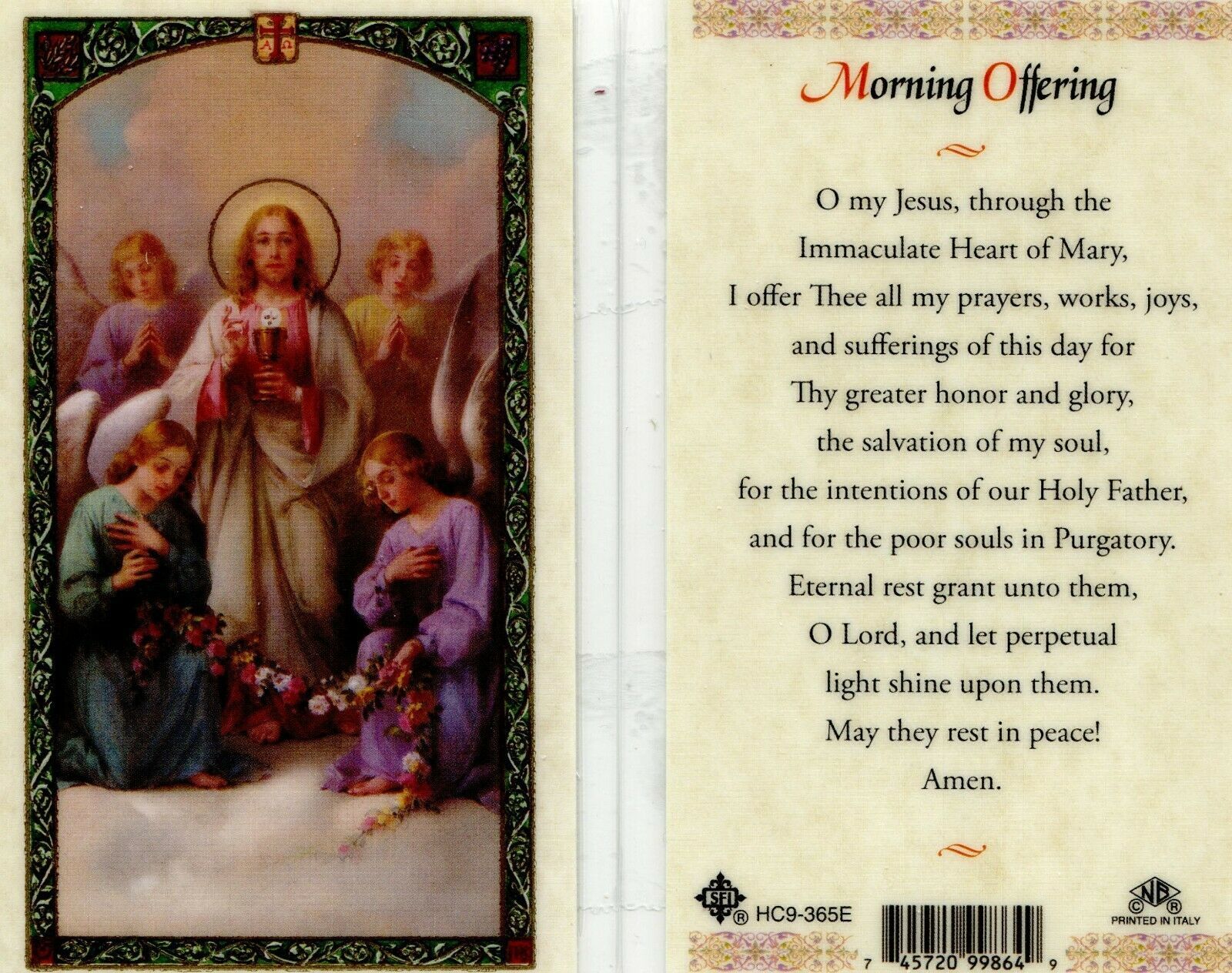
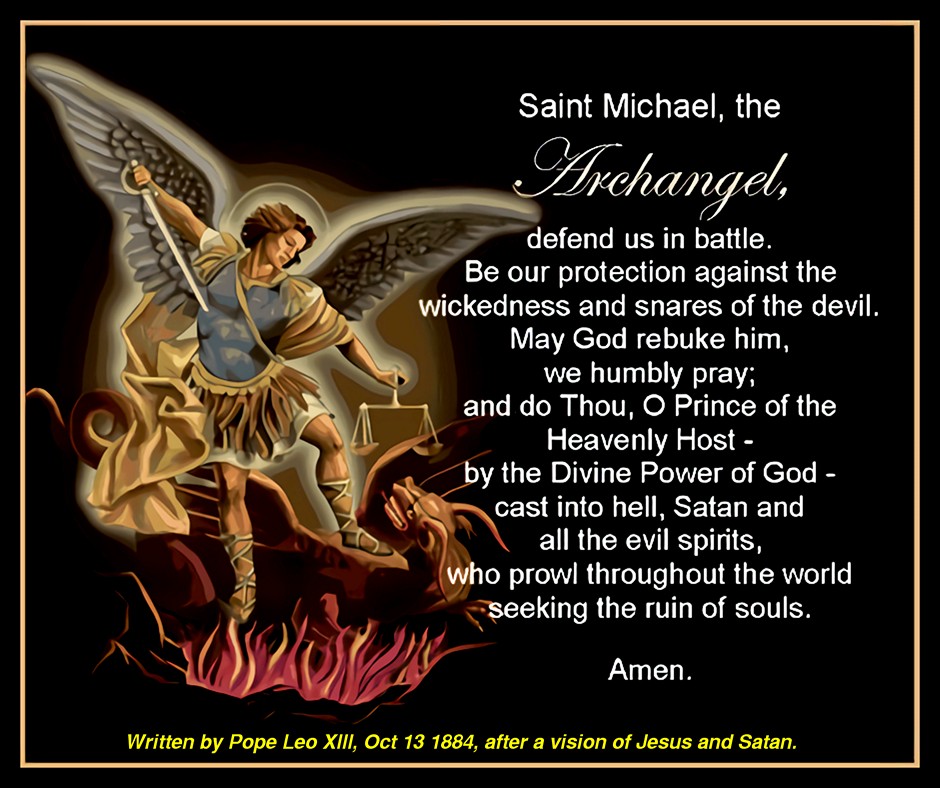
The Month of July is Dedicated to the Precious of Jesus

“They triumphed over the devil by the blood of the Lamb and by the word of their testimony; they did not love their lives so much as to shrink from death.” (Revelation 12:11)

Pope Leo XIV’s prayer intention for the month of July, 2026:
For respect for human life
Let us pray for the respect and protection of human life in all its stages, recognizing it as a gift from God.

Disclaimer: Opinions posted on Free Republic are those of the individual posters and do not necessarily represent the opinion of Free Republic or its management. All materials posted herein are protected by copyright law and the exemption for fair use of copyrighted works.


