
Posted on 07/05/2026 10:11:05 PM PDT by fidelis
While Jesus was speaking, an official came forward, knelt down before him, and said, “My daughter has just died. But come, lay your hand on her, and she will live.” Jesus rose and followed him, and so did his disciples. A woman suffering hemorrhages for twelve years came up behind him and touched the tassel on his cloak. She said to herself, “If only I can touch his cloak, I shall be cured.” Matthew 9:18–21
Call to mind one of the most painful and difficult moments in your life. Perhaps you endured a serious illness or the illness of a loved one. Perhaps you suffered a deep humiliation or walked with someone close to you through his or her humiliation. Maybe you lost a job, faced mounting bills, and felt helpless. Suffering comes in many forms, and God only permits such trials because, in His wisdom, He perceives a greater good that can come through our patient endurance—if we place all our hope and trust in Him.
In today’s Gospel, we meet two unrelated individuals, each burdened with intense suffering. First, a father kneels before Jesus and sorrowfully announces that his daughter has just died. In a remarkable act of faith, he pleads with Jesus to come and lay His hand on her, confident that she will live again. As Jesus proceeds with him, a woman who has suffered silently for twelve years from a hemorrhage approaches from behind and touches the tassel of His cloak, believing that even such a simple act will bring her healing.
The sudden death of a beloved daughter and twelve years of physical and emotional anguish are heavy crosses. Though our own trials may differ, we are invited to see ourselves in both of these suffering souls, especially during times of great hardship.
The grieving father likely also felt powerlessness. He who had lovingly provided for his daughter from birth—feeding her, protecting her, guiding her—now stands helpless before death, a force he cannot overcome. Or so it seems.
The woman with hemorrhages suffered both the physical toll of her affliction and also the social and spiritual isolation imposed by the Mosaic Law. According to Levitical law, her continual bleeding rendered her ritually unclean and cut her off from public worship and communal life. Because her bleeding was constant, so too was her separation—a painful, unending exile. There was nothing she could do to fix her condition. Or was there?
In the face of suffering, each of us must choose: Either we turn to God in radical faith and surrender, or we fall into despair, resentment, and rebellion. Suffering rarely leaves us indifferent—it either purifies or hardens the heart. That is why every trial poses a question to us: Will I respond in faith or retreat into bitterness?
Both of these suffering souls refused to surrender to despair. Instead, they turned to Jesus with bold and humble faith—one publicly kneeling, the other quietly reaching out. In both cases, their trust was met with Divine Mercy.
Reflect today on the consoling truth that no suffering is too deep, no exile too long, no loss too final for Christ. Whether your wounds are fresh or old, whether you can cry out or can only whisper a prayer in silence, reach for Him. Kneel before Him. Touch the hem of His garment in faith through prayer, the Sacraments, and trustful surrender. He will not turn away. He sees your pain, and if you let Him, He will enter into it, speak words of courage, and raise you up.
My empathetic Lord, You see the sufferings of Your people, and Your Heart is moved with compassion for us. When trials arise in my life, help me to see them as gifts—opportunities to step out of my indifference and trust wholeheartedly in You. I believe that You will never permit me to endure anything for which Your grace is not sufficient. Jesus, I do trust in You.
Please keep in mind that this is a Catholic Caucus/Devotional thread for the purpose of prayerful reflection on the Sacred Scriptures and is closed to debate of any kind. Per FR policy on Religion Caucus threads, off-topic, argumentative, and abusive comments are not allowed and will be submitted to the Mods for deletion. Thanks, and God bless you.
Today’s First Reading
From: Hosea 2:16b, 17b, 21-22 (New American Bible)
Hosea 2:14b, 15b-16, 19-20 (Revised Standard Version & New Vulgate)
Restoration and a New Covenant (Continuation)
---------------------------------------------------------
(Thus says the LORD, "I will) [14b] bring her into the wilderness, and speak tenderly to her. [15b] And there she shall answer as in the days of her youth, as at the time when she came out of the land of Egypt. [16] “And in that day, says the LORD, you will call me, ‘My husband,’ and no longer will you call me, ‘My Ba′al.’
[19] And I will betroth you to me for ever; I will betroth you to me in righteousness and in justice, in steadfast love, and in mercy. [20] I will betroth you to me in faithfulness; and you shall know the LORD."
***********************************************************************
Commentary:
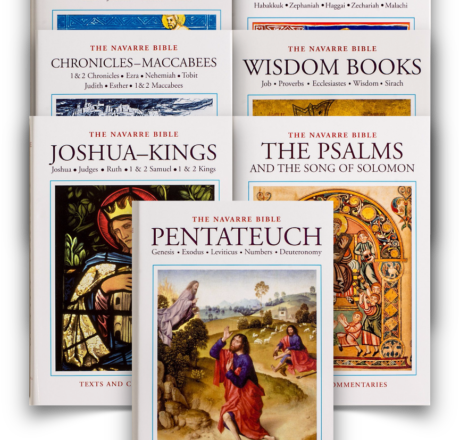
2:2-23. This long poem contains the key to the book of Hosea. It explains the symbolism of the account of the poet's marriage contained in these three chapters; and it sums up the content and form of the oracles in the later part of the book. The poem begins (v. 2) with a complaint by Hosea about his wife (and therefore by God about his people); and it ends with the prospect of rehabilitation and blessing (vv. 14-23); the second and third parts in the book also begin with a charge laid by the Lord against his people (4:1; 12:2), and end with a promise of salvation. The message of these verses is perfectly clear. Like the prophet's wife, Israel has prostituted herself by worshipping other gods. The Lord spies on her and punishes her, to get her to return to him (vv. 2-13). But so great is his love for Israel that, despite her infidelity, he decides to woo her all over again, to draw her to himself, and thereby to embark on a new relationship with her in which all will be wonderful and there will never again be infidelity (vv. 14-23). This passage contains very rich teaching about the nature of God: the initiative is always his; he is not indifferent to the infidelity of his followers; if he watches what they do and punishes them, he does so to encourage them to come back to him. Moreover, if that does not work, he has another approach to fall back on: he can start again from the beginning; he can renew his relationships with his faithful and with all creation. The imagery used to describe the rehabilitation of Israel (vv. 14-23) is very rich and full of meaning; meditation on this passage helps the reader to appreciate what God is really like.
The first part of the poem (vv. 2-13) begins with some words of complaint about the unfaithful wife who has left her husband and become a prostitute. However, the reader very soon sees that what is being said here also applies to Israel and the Lord. From v. 8 onwards, the perspective is slightly different: the dominant theme is the relationship between God and Israel, although the reader is also aware of the husband-wife relationship. In this way the sacred writer ensures that the reader can see the symbolism of the message; the whole story, the imagery, carries a message about the Lord and his people. The best example of the author's method is in the opening words (vv. 2-3), which summarize the passage. They declare that the marriage is over ("she is not my wife, and I am not her husband": v.2) and give the reason why ("harlotry" and "adultery" in v. 2 mean the adornments, tattoos, amulets etc. worn by prostitutes and loose women: cf. Gen 38:15; Prov 7:10); there is also a reference to the way in which an adulterous wife was shunned (v. 3): stripping the woman of her garments is known to have formed part of the punishment of her crime according to some laws in force in the ancient East (cf. Is 47:2-3; Jer 13:22; Ezek 16:37-39; etc.). But then he moves directly onto the symbolic plane of God and Israel: the Israelites pay homage to the Canaanite fertility gods, yet there is only one God, the Creator of heaven and earth, who sends rain and makes things fertile. That God is the Lord: he can turn Israel into a parched land (v. 3). So, the faults that the prophet is condemning here are religious ones. He reproves the Israelites for their feast days in honor of Canaanite gods (vv. 11; 14); they think they ought to thank the Baals for bread and water and the produce of the earth (vv. 5, 9, 12), whereas all these things come in fact from the one God and Lord (v. 8).
The second part of the poem (vv. 14-23) speaks very directly about God and his people. It proclaims that a time of salvation is coming which will see the faithfulness of Old fully restored, stronger than ever. It begins (vv. 14-15) by nostalgically recalling the secluded life that they enjoyed together in the wilderness, during the exodus from Egypt--depicted here as a sort of golden age in which the Lord was his people's only God (v. 14; cf. 11:1-4; Amos 5:25). That is why it mentions the Valley of Achor (v. 15), which, being near Jericho, was the access route to the promised land. It was the scene of a sin of infidelity, which God punished (cf. Josh 7:24-26); hence its name, which means misadventure, misfortune; but because it is the only route into the holy land, the Lord now calls it a "door of hope".
The text goes on (vv. 16-23) to describe the new Covenant that will be made "on that day" (vv. 16, 18, 21). The passage deals with two distinct themes: where the second person is used (vv. 16, 19-20), the spousal covenant is being described; where it is in the third person (vv. 17-18; 21-23), it is describing the effects that that covenant will have on the whole land. The first condition of the spousal covenant is that Israel will call her God "My husband" and not "My Baal" (v. 16). Baal is a word that can mean god, and also lord or husband. In wanting to be called "My husband", the Lord is rejecting any type of mixing of religions: the God of Israel is not one more god like the Baals; he is the only God there is. This exclusiveness in the area of married love, which transfers over into the Covenant, spelt out in vv. 19-20: it will last forever, it will be made in "righteousness and in justice", that is; God will provide special protection to Israel (cf. Mic 6:5; Jer 23:6), and it will be in "steadfast love, and in mercy": the words that the text uses are "hesed" and "rahamim", taking in, then, all the nuances of faithful love (cf. the note on ls 49:15).
Later verses uses the third person (vv. 17-18,21-23) to describe the consequences that will flow from this renewed Covenant: all creation will enjoy the peace of Eden (v. 18), and the land of Israel will benefit most of all (vv. 21-23). Perhaps the most significant thing here is the use of the verb "to answer": when Israel "answers" (cf. v. 15) God's love, the heavens will answer the earth, and the earth will answer its fruits (vv. 21-22). What this means is that nothing will be barren, there will be no desire that goes unsatisfied; a proof of this is the new change of names (v. 23): names implying indictment are replaced by names of salvation.
From: Matthew 9:18-26
The Raising of Jairus' Daughter
-------------------------------
[18] While He (Jesus) was speaking to them, behold, a ruler came in and knelt before Him, saying, "My daughter has just died; but come and lay Your hand on her, and she will live." [19] And Jesus rose and followed him, with His disciples.
The Curing of the Woman with a Hemorrhage
-----------------------------------------
[20] And behold, a woman who had suffered from a hemorrhage for twelve years came up behind Him and touched the fringe of His garment; [21] for she said to herself, "If I only touch His garment, I shall be made well." [22] Jesus turned, and seeing her He said, "Take heart, daughter; your faith has made you well." And instantly the woman was made well. [23] And when Jesus came to the ruler's house, and saw the flute players, and the crowd making a tumult, [24] He said, "Depart; for the girl is not dead but sleeping." And they laughed at Him. [25] But when the crowd had been put outside, He went in and took her by the hand, and the girl arose. [26] And the report of this went through all that district.
***********************************************************************
Commentary:
18-26. Here are two miracles which occur almost simultaneously. From parallel passages in Mark (5:21-43) and Luke (8:40-56) we know that the "ruler" (of the synagogue) referred to here was called Jairus. The Gospels report Jesus raising three people to life--this girl, the son of the widow of Nain, and Lazarus. In each case the identity of the person is clearly given.
This account shows us, once again, the role faith plays in Jesus' saving actions. In the case of the woman with the hemorrhage, we should note that Jesus is won over by her sincerity and faith: she does not let obstacles get in her way. Similarly, Jairus does not care what people will say; a prominent person in his city, he humbles himself before Jesus for all to see.
18. "Knelt before Him": the eastern way of showing respect to God or to important people. In the liturgy, especially in the presence of the Blessed Eucharist, reverences are a legitimate and appropriate external sign of internal faith and adoration.
23. "The flute players": engaged to provide music at wakes and funerals.
24. "Depart, for the girl is not dead, but sleeping": Jesus says the same thing about Lazarus: "Our friend Lazarus has fallen asleep, but I go to awaken him" (John 11:11).
Although Jesus speaks of sleep, there is no question of the girl—or Lazarus, later--not being dead. For our Lord there is only one true death--that of eternal punishment (cf. Matthew 10:28).
The Month of July is Dedicated to the Precious of Jesus

“They triumphed over the devil by the blood of the Lamb and by the word of their testimony; they did not love their lives so much as to shrink from death.” (Revelation 12:11)

Pope Leo XIV’s prayer intention for the month of July, 2026:
For respect for human life
Let us pray for the respect and protection of human life in all its stages, recognizing it as a gift from God.

Disclaimer: Opinions posted on Free Republic are those of the individual posters and do not necessarily represent the opinion of Free Republic or its management. All materials posted herein are protected by copyright law and the exemption for fair use of copyrighted works.


