
Posted on 07/02/2026 10:55:01 PM PDT by fidelis
Feast of Saint Thomas, Apostle
Thomas, called Didymus, one of the Twelve, was not with them when Jesus came. So the other disciples said to him, “We have seen the Lord.” But Thomas said to them, “Unless I see the mark of the nails in his hands and put my finger into the nailmarks and put my hand into his side, I will not believe.” John 20:24–25
Though Saint Thomas is best remembered for doubting Jesus’ Resurrection, God used him in glorious ways. Because God is all-powerful, even Thomas’ doubt was transformed into a source of grace for the Church and a model of true faith and conversion. In Thomas, we see the journey from doubt to faith, from absence to confession, from fear to peace—an invitation for each of us to make the same journey.
Saint Thomas, called Didymus—meaning “Twin”—was not present when the risen Christ first appeared to the assembled Apostles. His absence was no accident but part of God’s providential plan. When the other disciples testified, “We have seen the Lord,” Thomas struggled to believe. His absence symbolizes the effect of isolation from the Church or from an active life of prayer, which can leave us vulnerable to doubt and disbelief. His heart demanded tangible proof: “Unless I see the mark of the nails… I will not believe.” In this, Thomas articulates a cry that echoes in every human heart: we long for certainty, yet struggle to trust without the proof we demand.
One week later—on the day now celebrated as Divine Mercy Sunday—Jesus once again entered the locked room and stood among them, radiating peace: “Peace be with you.” His first words were directed not to the whole group, but to Thomas, addressing his wounded faith with tender love: “Put your finger here and see my hands… bring your hand and put it into my side.” Jesus does not shame Thomas; He invites him. He invites him to touch the very wounds that conquered death, to enter into the mystery of Divine Mercy not only intellectually, but physically and spiritually.
After being confronted by the Living Christ, Thomas is transformed. In that pivotal moment, he prays one of the greatest confessions of faith in all of Scripture: “My Lord and my God!” With profound clarity, he proclaims the divinity of Christ. The doubting disciple becomes the believing Apostle, who will later be sent forth to bear witness to the ends of the earth.
Thomas’ journey invites us to reflect on our own. Like Thomas, we are sometimes absent from encounters with the risen Lord. Failure to pray daily, to attend Mass faithfully, to confess our sins, to nourish our souls through spiritual reading, adoration, retreats, or parish missions can isolate us from Christ and diminish our faith. Absence from these means of grace can open the door to spiritual doubt and weakness.
Reflect today on Thomas being absent from Jesus’ first Resurrection appearance on Easter Sunday. Try to feel his disappointment and doubt. Thomas carried those feelings for an entire week until Jesus appeared again. See yourself in him by identifying any times you have felt the same. Then move forward to the moment, one week later, when Thomas was present as Jesus appeared to them. With him, listen to Jesus invite you to touch His wounds. Profess with Thomas, “My Lord and my God!” Repeat that prayer and try to sense Thomas’ newfound passionate belief. It is that belief our Lord desires from all of us who do not see with our eyes but come to know Him in our spirit.
My Lord and my God! I do believe in You and profess that belief with all my heart. When I struggle with my faith, when I falter, or when I become distracted from my life of prayer and devotion, please remind me of Saint Thomas. Place his words repeatedly on my lips so that I may continuously cry out with him, “My Lord and my God!” Saint Thomas, pray for us. Jesus, I trust in You.
Please keep in mind that this is a Catholic Caucus/Devotional thread for the purpose of prayerful reflection on the Sacred Scriptures and is closed to debate of any kind. Per FR policy on Religion Caucus threads, off-topic, argumentative, and abusive comments are not allowed and will be submitted to the Mods for deletion. Thanks, and God bless you.
The Month of July is Dedicated to the Precious of Jesus

“They triumphed over the devil by the blood of the Lamb and by the word of their testimony; they did not love their lives so much as to shrink from death.” (Revelation 12:11)

Pope Leo XIV’s prayer intention for the month of July, 2026:
For respect for human life
Let us pray for the respect and protection of human life in all its stages, recognizing it as a gift from God.

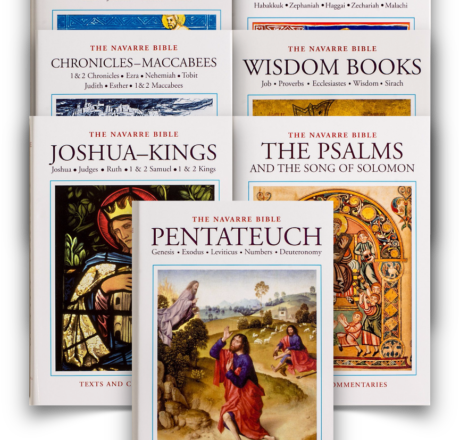
Today’s First Reading
From: Ephesians 2:19-22
Reconciliation of Jews and Gentiles in Christ (Continuation)
--------------------------------------------------------------------------
[19] So then you are no longer strangers and sojourners, but you are fellow citizens with the saints and members of the household of God, [20] built upon the foundation of the apostles and prophets, Christ Jesus himself being the cornerstone, [21] in whom the whole structure is joined together and grows into a holy temple in the Lord; [22] in whom you also are built into it for a dwelling place of God in the Spirit.
***********************************************************
Commentary:
11-22. What is the significance of the calling of the Gentiles to the Church? Their previous situation, separated from Christ (vv. 11-12), has undergone radical change as a result of the Redemption Christ achieved on the Cross: that action has, on the one hand, brought the two peoples together (made peace between them: vv. 13-15) and, on the other, it has reconciled them with God, whose enemy each was (vv. 16- 18). The Redemption has given rise to the Church, which St Paul here describes as a holy temple built on the foundation of the apostles and prophets (vv. 19-22).
19. After describing the Redemption wrought by Christ and applied in the Church by the Holy Spirit, St Paul arrives at this conclusion: the Gentiles are no longer strangers; they belong to Christ's Church.
In the new Israel (the Church) privileges based on race, culture or nationality cease to apply. No baptized person, be he Jew or Greek, slave or free man, can be regarded as an outsider or stranger in the new people of God. All have proper citizenship papers. The Apostle explains this by using two images: The Church is the city of saints, and God's family or household (cf. 1 Tim 3:15). The two images are complementary: everyone has a family, and everyone is a citizen. In the family context, the members are united by paternal, filial and fraternal links, and love presides; family life has a special privacy. But as a citizen one is acting in a public capacity; public affairs and business must be conducted in a manner that is in keeping with laws designed to ensure that justice is respected. The Church has some of the characteristics of a family, and some of those of a polity (cf. St Thomas Aquinas, "Commentary on Eph, ad loc.").
The head of the Church is Christ himself, and in his Church are assembled the children of God, who are to live as brothers and sisters, united by love. Grace, faith, hope, charity and the action of the Holy Spirit are invisible realities which forge the links bringing together all the members of the Church, which is moreover something very visible, ruled by the successor of Peter and by the other bishops (cf. Vatican II, "Lumen Gentium", 8), and governed by laws--divine and ecclesiastical--which are to be obeyed.
20-22. To better explain the Church, the Apostle links the image of "the household of God" to that of God's temple and "building" (cf. 1 Cor. 3:9). Up to this he has spoken of the Church mainly as the body of Christ (v. 16). This image and that of a building are connected: our Lord said, "Destroy this temple and in three days I will raise it up" (Jn 2:19), and St John goes on to explain that he was speaking "of the temple of his body" (Jn 2:21). If the physical body of Christ is the true temple of God because Christ is the Son of God, the Church can also be seen as God's true temple, because it is the mystical body of Christ.
The Church is the temple of God. "Jesus Christ is, then, the foundation stone of the new temple of God. Rejected, discarded, left to one side, and done to death--then as now--the Father made him and continues to make him the firm immovable basis of the new work of building. This he does through his glorious resurrection [...].
"The new temple, Christ's body, which is spiritual and invisible, is constructed by each and every baptized person on the living cornerstone, Christ, to the degree that they adhere to him and 'grow' in him towards 'the fullness of Christ'. In this temple and by means of it, the 'dwelling place of God in the Spirit', he is glorified, by virtue of the 'holy priesthood' which offers spiritual sacrifices (1 Pet 2:5), and his kingdom is established in the world.
"The apex of the new temple reaches into heaven, while, on earth, Christ, the cornerstone, sustains it by means of the foundation he himself has chosen and laid down--'the apostles and prophets' (Eph 2:20) and their successors, that is, in the first place, the college of bishops and the 'rock', Peter (Mt 16: 18)" (John Paul II, "Homily at Orcasitas, Madrid", 3 November 1981).
Christ Jesus is the stone: this indicates his strength; and he is the cornerstone because in him the two peoples, Jews and Gentiles, are joined together (cf. St Thomas Aquinas, "Commentary on Eph, ad loc".). The Church is founded on this strong, stable bedrock; this cornerstone is what gives it its solidity. St Augustine expresses his faith in the perennial endurance of the Church in these words: "The Church will shake if its foundation shakes, but can Christ shake? As long as Christ does not shake, so shall the Church never weaken until the end of time" ("Enarrationes in Psalmos", 103).
Every faithful Christian, every living stone of this temple of God, must stay fixed on the solid cornerstone of Christ by cooperating in his or her own sanctification. The Church grows "when Christ is, after a manner, built into the souls of men and grows in them, and when souls also are built into Christ and grow in him; so that on this earth of our exile a great temple is daily in course of building, in which the divine majesty receives due and acceptable worship" (Pius XII, "Mediator Dei", 6).
Disclaimer: Opinions posted on Free Republic are those of the individual posters and do not necessarily represent the opinion of Free Republic or its management. All materials posted herein are protected by copyright law and the exemption for fair use of copyrighted works.


