
Posted on 06/29/2026 9:44:05 PM PDT by fidelis
As Jesus got into a boat, his disciples followed him. Suddenly a violent storm came up on the sea, so that the boat was being swamped by waves; but he was asleep. They came and woke him, saying, “Lord, save us! We are perishing!” He said to them, “Why are you terrified, O you of little faith?” Then he got up, rebuked the winds and the sea, and there was great calm. Matthew 8:23–26
While we should understand Jesus’ teachings and actions in a literal sense, the Early Church Fathers also point to a deeper, symbolic meaning—what is known as the Spiritual Sense of Scripture. As the inspired Word of God, the Gospels contain limitless depth and wisdom. The message found in Jesus’ words and actions can be applied to any part of our lives and answer any questions we struggle with.
One such question is how we deal with the storms of life. Some storms come upon us externally, through illness, persecution, or unforeseen trials. When a storm sets in, we often react with fear and anxiety. When the storm is of our own making, such as from sin, the trial is often more severe. Though fear and anxiety are often the ill effects of life’s storms, another more deadly fruit can also arise: the anger that leads to vengeance.
In his preaching on this passage, Saint Augustine offers such an insight: “You have heard an insult—it is the wind; you feel anger—it is the wave. When the wind blows and the waves rise, the ship is in danger; so too, when insults stir your heart, your soul is tossed about and put at risk” (Sermon 63 on the New Testament, 2).
Because we live and interact with sinful people every day, we will inevitably experience the “wind” of an insult which can lead to the “wave” of angry feelings. When that happens, the question is: What am I going to do with that angry feeling? Augustine warns that insults, which stir up anger, pose a real spiritual danger. He continues: “If, upon hearing an insult, you desire vengeance, the storm swells within you. And behold, if you take vengeance, you may think you have triumphed—but in rejoicing over another’s harm, you have suffered shipwreck yourself.”
At some point, we have all allowed a storm to swell within us by seeking vengeance, which inevitably leads to our downfall. When anger gives way to irrational arguments, judgment, condemnation, or passive aggression—such as the “silent treatment”—our “boat” begins to sink.
Just as the wind and waves battered the Apostles, leading them to fear, so too does anger batter us, driving us toward vengeance and making things worse. In such moments, there is only one remedy: to cry out with the Apostles, “Lord, save us! We are perishing!”
What a perfect prayer in the midst of a trial that is turning into a storm! Had the Apostles ignored the presence of the Son of God—who was with them, asleep, awaiting their call—the storm would have continued, and they might have been shipwrecked. But they cried out, seeing that things were getting out of control.
Reflect today on any initial “wind” that tempts you toward anger. Choose to forgive and offer mercy in return. If a storm is already brewing in your heart, cry out to Jesus as the Apostles did. Though at times it might seem as if our Lord is asleep, He is always with you. Reject fear and anger the moment they begin to stir; but if they do arise, call upon Him in faith: “Lord, save me! I am perishing!” He will calm the storm.
My sleeping Lord, I know that You are always with me, calling me to faith and obedience to Your Word. Strengthen me in moments of temptation, that I may remain faithful and choose mercy over vengeance. When storms arise from my sin, forgive me, Lord, and calm the tempest within, healing the wounds caused by my lack of faith. Jesus, I trust in You.
Please keep in mind that this is a Catholic Caucus/Devotional thread for the purpose of prayerful reflection on the Sacred Scriptures and is closed to debate of any kind. Per FR policy on Religion Caucus threads, off-topic, argumentative, and abusive comments are not allowed and will be submitted to the Mods for deletion. Thanks, and God bless you.
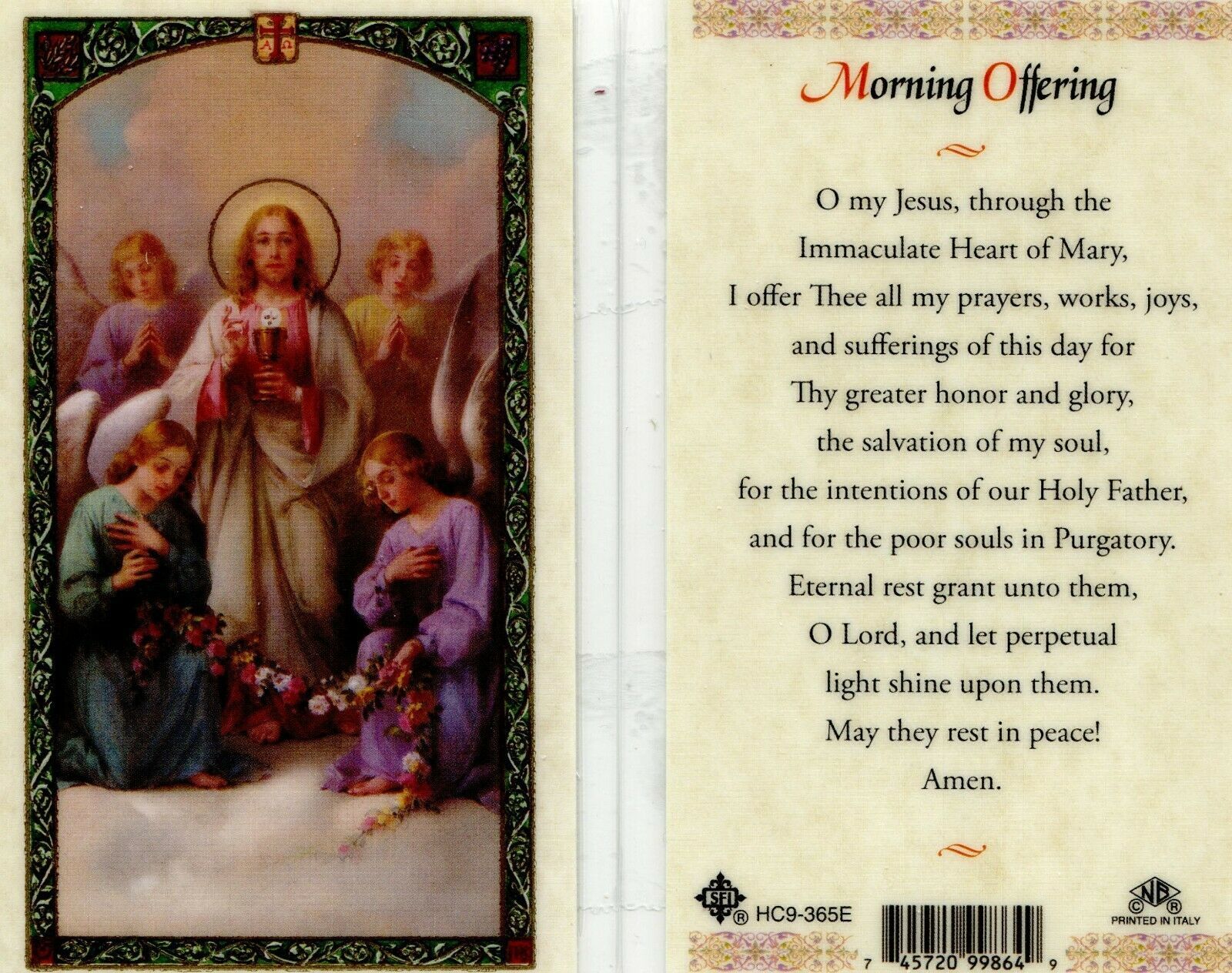
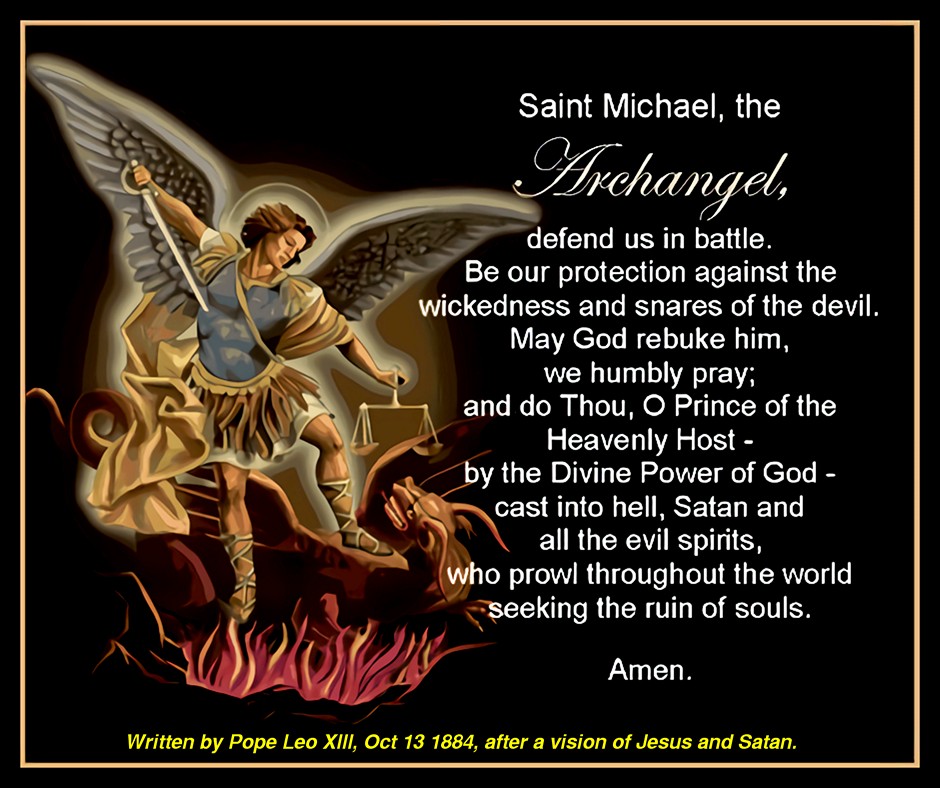
The Month of June is Dedicated to the Sacred Heart of Jesus

“Come to me, all who labor and are heavy laden, and I will give you rest. Take my yoke upon you, and learn from me; for I am gentle and lowly in heart, and you will find rest for your souls. For my yoke is easy, and my burden is light.” (Matthew 11:28-30)

Pope Leo XIV’s prayer intention for the month of May, 2026:
For the values of sports
Let us pray that sports be an instrument of peace, encounter, and dialogue among cultures and nations, and that they promote values such as respect, solidarity, and personal growth.

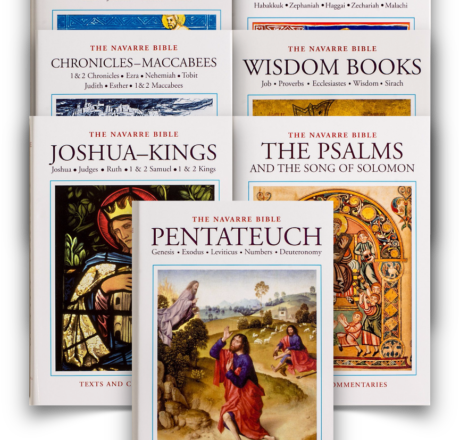
Today’s First Reading
From: Amos 3:1-8, 4:11-12
Election and punishment of Israel
-----------------------------------------
[1] Hear this word that the Lord has spoken against you, O people of Israel, against the whole family which I brought up out of the land of Egypt: [2] “You only have I known of all the families of the earth; therefore I will punish you for all your iniquities.
The prophet, a messenger of the Lord
----------------------------------------------
[3] Do two walk together, unless they have made an appointment? [4] Does a lion roar in the forest, when he has no prey? Does a young lion cry out from his den, if he has taken nothing? [5] Does a bird fall in a snare on the earth, when there is no trap for it? Does a snare spring up from the ground. when it has taken nothing? [6] Is a trumpet blown in a city, and the people are not afraid? Does evil befall a city, unless the Lord has done it’? [7] Surely the Lord God does nothing, without revealing his secret to his servants the prophets. [8] The lion has roared; who will not fear? The Lord God has spoken; who can but prophesy?”
The Lord’s warnings have gone unheeded
---------------------------------------------------
[11] I overthrew some of you, as when God overthrew Sodom and Gomorrah, and you were as a brand plucked out of the burning: yet you did not return to me,” says the Lord.
[12] Therefore thus I will do to you, O Israel; because I will do this to you, prepare to meet your God, O Israel!”
**********************************************************************
Commentary:
3:1-6:14. The second (and longest) part of the book contains denunciations of Israel and predictions about how her sins will be punished. It consists of three oracles, each beginning with “Hear this word . . . “ (3:1; 4:1; 5:1), and three others containing the words “O you . . . “or “Woe to you” (5:7, 18; 6:1). In terms of content, all these oracles are a development of the oracle against Israel that closed the previous section (2:6-16).
This part begins with a new interpretation of the meaning of God’s choice of Israel. The oracles are about that election. The Israelites think that their pilgrimages to the popular shrines of Bethel and Gilgal (where they make voluntary offerings and give tithes, 4:4-5, and assemble for festivals, 5:21-25) mean that they have fulfilled their religious duties and are in a good standing before God. They are living in prosperous times: what better proof that God is pleased with them. Material prosperity was more marked in Israel than in Judah, but, still, life was reasonably good under Uzziah. However, this material well-being went hand in hand with social injustice -- oppression of the poor and needy, and a contradiction between formal religious acts and personal morality.
This is the context in which Amos preaches and utters his prophetic denouncements: quite a lot of people are getting richer, but the ranks of the poor are being swelled all the time; the rich and powerful are exploiting the poor, and are refusing them justice; attendance at religious ceremonies in Bethel and Gilgal (schismatic sanctuaries, for the temple of Jerusalem was the only proper place of worship) did not affect people’s hearts; it did not provoke them to resolve to amend their lives; they were deceiving themselves, trusting in God without having grounds for doing so, and believed (wrongly) that they were absolved from their sins.
3:1-8. God’s choice of Israel is very vividly described here. Amos does not use the term “covenant” or “steadfast love” to describe God’s attitude towards Israel (those are terms often found in other prophetical texts); but he does make it clear that the Lord’s commitment to his people is a single-minded one: “You only have I known of all the families of the earth” (v. 2). This election means that Israel has special duties towards God -- and that God takes special care of Israel (cf. v. 3). And so St Jerome comments on the verse as follows: “You only I have known of all the people of the earth; therefore I will visit your iniquities upon you (cf. Amos 3:2): ‘For the Lord disciplines him whom he loves, and chastises every son whom he receives’ (Heb 12:6). God says that I will visit, not ‘I will punish’, for the coming of the Lord is both punishment and cure; and, he says, I will visit all of their iniquities: all shall be chastised and none shall remain uncured” (Commentarii in Amos, 3, 1-2).
A little further on, this teaching is rounded off with a sapiential consideration (vv. 3-8). The Lord addresses Israel by means of his prophets. All events have a cause that one cannot perceive, but they do point to their cause: when two people go walking together it is a sign that they have previously arranged to do so (v. 3); the roar of the lion shows that he has caught his prey or is about to do so (v. 4), etc. So, the conclusion to be drawn is clear (cf. v. 8): if Amos is prophesying, he is doing so because the Lord has spoken and man must take heed. In a way, this verse is a kind of parallel to what Amos says to the priest of Bethel (cf. 7:14-15): it is the Lord who has sent him to prophesy; God is the one who has taken the initiative: “The literal meaning of these words is as follows: If all the animals of the earth are terrified and tremble at the sound of the lion’s roar, how can we not prophesy when the Lord bids us speak and tell the people of the torments that await them?” (St Jerome, Commentarii in Amos, 3, 3-8).
4:6-12. This oracle has a regular rhythm to it -- each of the Lord’s actions ends with the sort of refrain you find in a poem: “... yet you did not return to me, says the Lord” (vv. 6, 8, 9, 10, 11). The actions taken by the Lord (withdrawing food, drought, blight, destruction of cities) are reminiscent of the plagues of Egypt; but, most of all, they demonstrate the Lord’s sovereignty over nature. This is the same message as is contained in the doxologies: God, the Lord of Israel, is the only one who has power over all creation: no Baal, no Canaanite god, has any such power. The point is also made that the punishment sent by God is aimed at bringing about the people’s conversion. When they saw all these awful things happen, the Israelites should have had a change of heart. But they did not: Israel’s sin is that of pride and self-sufficiency; therefore, it is time to get ready for judgment and punishment (v. 12; cf. 3:1).
From: Matthew 8:23-27
The Calming of the Storm
-------------------------------
[23] And when He (Jesus) got into the boat, His disciples followed Him. [24] And behold, there arose a great storm on the sea, so that the boat was being swamped by the waves; but He was asleep. [25] And they went and woke Him, saying, "Save us, Lord; we are perishing." [26] And He said to them, "Why are you afraid, O men of little faith?" Then He rose and rebuked the winds and the sea; and there was a great calm. [27] And the men marvelled, saying, "What sort of man is this, that even winds and sea obey Him?"
***********************************************************************
Commentary:
23-27. This remarkable miracle left a deep impression on Jesus' disciples, as can be seen from the fact that the first three evangelists all report it. Christian Tradition has applied this miracle in various ways to the life of the Church and the experience of the individual soul. From earliest times Christian art and literature have seen the boat as representing the Church, which also has to make its way around hazards which threaten to capsize it. Indeed, very early on, Christians were persecuted in various ways by Jews of their time, and were misunderstood by the public opinion of a pagan society--which also began to persecute them. Jesus' sleeping through the storm has been applied to the fact that sometimes God seems not to come to the Church's rescue during persecution. Following the example of the Apostles in the boat, Christians should seek Jesus' help, borrowing their words, "Save us, Lord; we are perishing". Then, when it seems we can bear it no longer, Jesus shows His power: "He rose and rebuked the winds and the sea; and there was a great calm"--but first rebuking us for being men of little faith. Quite often Gospel accounts are meant to serve as examples to us: they epitomize the future history of the Church and of the individual Christian soul.
Disclaimer: Opinions posted on Free Republic are those of the individual posters and do not necessarily represent the opinion of Free Republic or its management. All materials posted herein are protected by copyright law and the exemption for fair use of copyrighted works.

