
Posted on 06/26/2026 10:35:41 PM PDT by fidelis
When Jesus entered Capernaum, a centurion approached him and appealed to him, saying, “Lord, my servant is lying at home paralyzed, suffering dreadfully.” He said to him, “I will come and cure him.” The centurion said in reply, “Lord, I am not worthy to have you enter under my roof; only say the word and my servant will be healed.” Matthew 8:5–8
From the beginning of time, God continually reached out to humanity, calling them to Himself. After the Great Flood, God established a covenant with Abram—later named Abraham—who responded in faith and obedience. God promised him that his descendants would become a great nation and that “All the families of the earth will find blessing” in him (Genesis 12:3). In today’s Gospel, we see a sign of this promise being fulfilled in the faith of the Roman centurion, a Gentile who recognizes the divine authority of Jesus. His trust in Christ foreshadows the inclusion of all nations in the blessing promised through Abraham.
At the time of Jesus, kindness between Jews and a Roman centurion was virtually unheard of. The Romans had conquered Israel, imposing their rule and extracting heavy taxes from the people. Though the Jews were allowed to continue Temple worship and practice their faith in the synagogues, many harbored deep resentment toward their Roman occupiers, longing for the day when the Messiah would come to liberate them.
When the Messiah did come, however, many of the Jewish people did not recognize Him—perhaps because their expectations were fixed on a powerful military leader who would restore Israel’s national sovereignty. Instead, Jesus came not as a warrior, but as the Lamb of God, bringing a far greater liberation: freedom from sin and death. He understood the deep-seated bitterness toward the Romans but saw beyond earthly conflicts, viewing all people through the lens of divine Wisdom.
Jesus bore no animosity toward the Romans, nor did He seek their political overthrow. Instead, He desired their conversion. While many of the Jews—including the scribes and Pharisees—viewed the Romans as enemies, Jesus extended His compassion even to them, knowing that the promise made to Abraham was not merely for one nation but for all peoples. The centurion’s faith is a sign of this unfolding fulfillment: A Gentile, once an outsider to the covenant, now stands as an example of trust and humility before the Messiah.
Reflect today on the faith of the Roman centurion, whom Jesus praised above all in Israel, saying, “In no one in Israel have I found such faith” (Matthew 8:10). His trust was not based on knowledge of the Law but on a firm belief in Christ’s divine authority. Like him, we must approach Jesus with humility, acknowledging our unworthiness while having absolute confidence in His power to heal and restore our souls. While the centurion’s servant was physically healed, God wills for us whatever draws us closest to Him—whether physical healing or the deeper healing of the soul. Imitate the centurion’s unwavering faith, entrusting yourself to Christ, and He will say to you, “You may go; as you have believed, let it be done for you” (Matthew 8:13).
All-powerful Lord, You can do all things and always will what is best for us. Grant me the faith of the centurion, that I may trust in Your power—not only to heal the body but to restore the soul. May I seek Your will above all else and desire the good of others more than any earthly hope. Jesus, I trust in You.
Please keep in mind that this is a Catholic Caucus/Devotional thread for the purpose of prayerful reflection on the Sacred Scriptures and is closed to debate of any kind. Per FR policy on Religion Caucus threads, off-topic, argumentative, and abusive comments are not allowed and will be submitted to the Mods for deletion. Thanks, and God bless you.
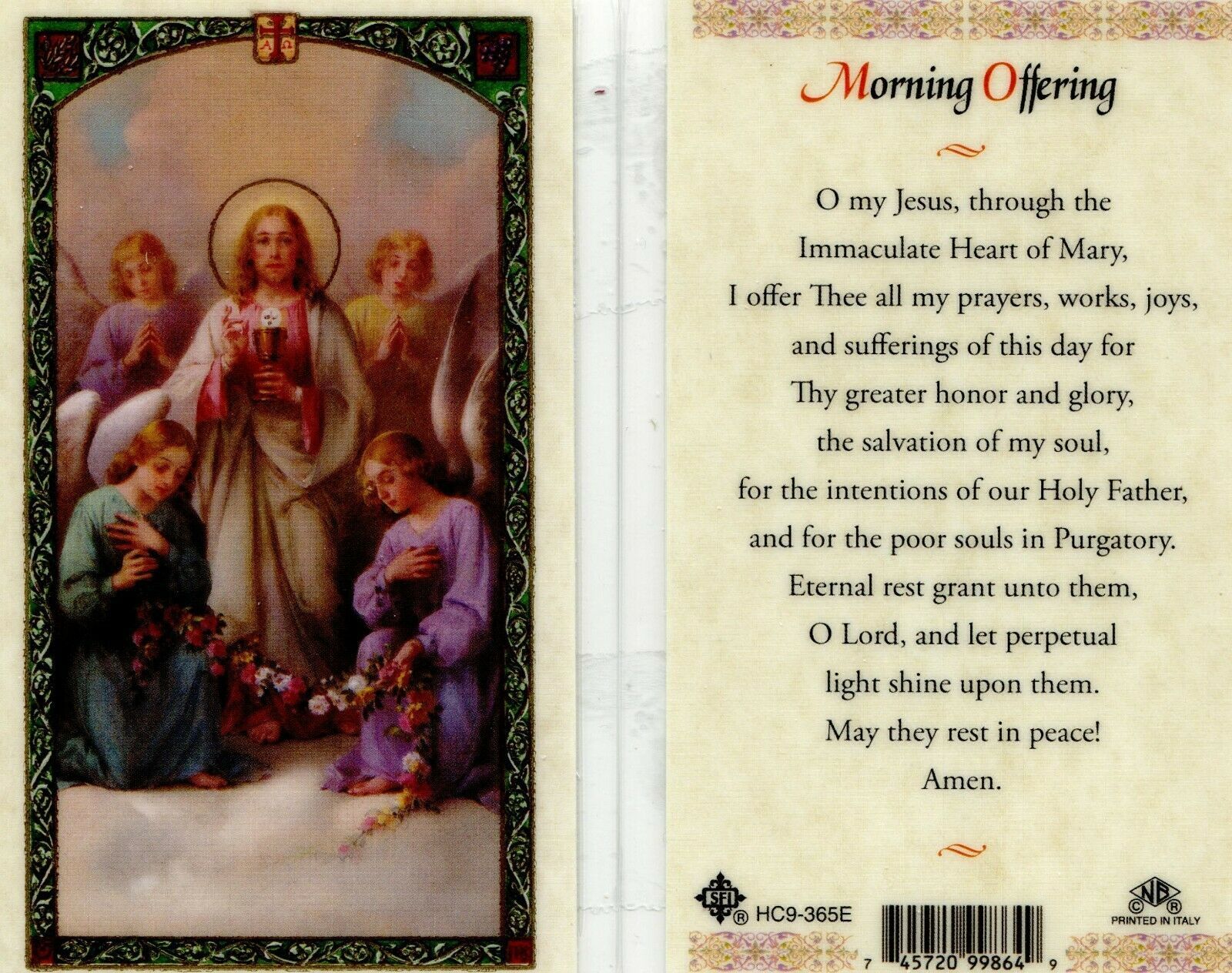
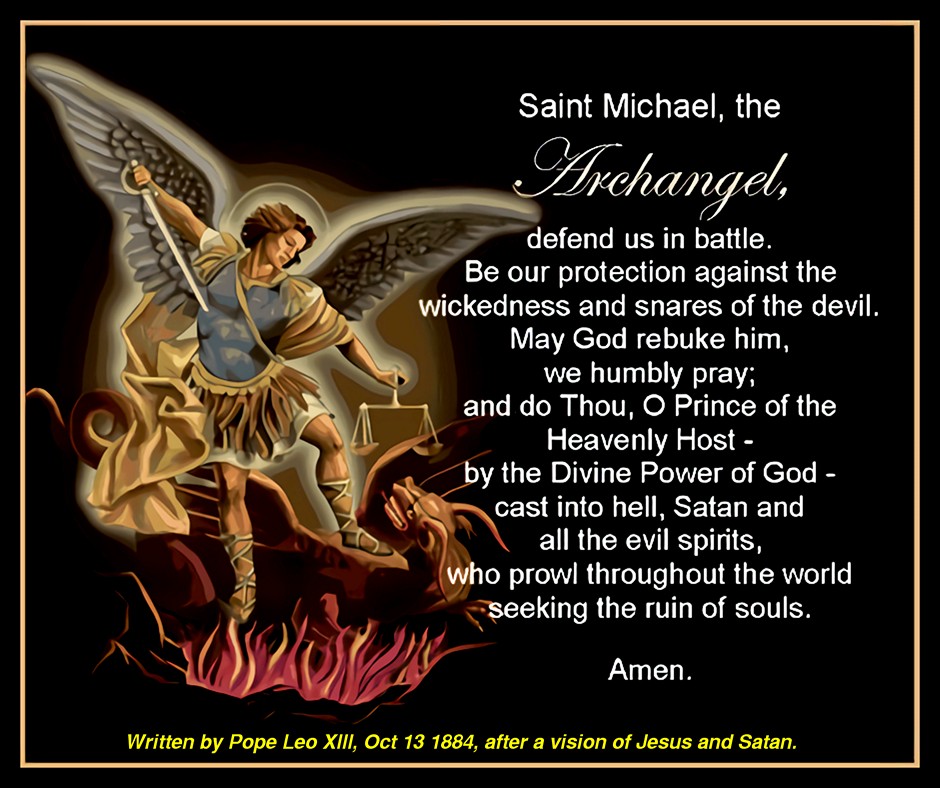
The Month of June is Dedicated to the Sacred Heart of Jesus

“Come to me, all who labor and are heavy laden, and I will give you rest. Take my yoke upon you, and learn from me; for I am gentle and lowly in heart, and you will find rest for your souls. For my yoke is easy, and my burden is light.” (Matthew 11:28-30)

Pope Leo XIV’s prayer intention for the month of May, 2026:
For the values of sports
Let us pray that sports be an instrument of peace, encounter, and dialogue among cultures and nations, and that they promote values such as respect, solidarity, and personal growth.

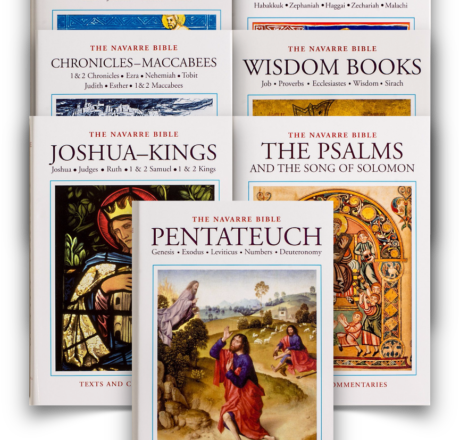
Today’s First Reading
From: Lamentations 2:2, 10-14, 18-19
Second lament: Zion's misfortunes and their causes
------------------------------------------------------------------
[2] The Lord has destroyed without mercy all the habitations of Jacob; in his wrath he has broken down the strongholds of the daughter of Judah: he has brought down to the ground in dishonour the kingdom and its rulers.
[10] The elders of the daughter of Zion sit on the ground in silence; they have cast dust on their heads and put on sackcloth; the maidens of Jerusalem have bowed their heads to the ground.
[11] My eyes are spent with weeping; my soul is in tumult: my heart is poured out in grief because of the destruction of the daughter of my people, because infants and babes faint in the streets of the city.
[12] They cry to their mothers. "Where is bread and wine?" as they faint like wounded men in the streets of the city. as their life is poured out on their mothers' bosom.
[13] What can I say for you, to what compare you, O daughter of Jerusalem? What can I liken to you, that I may comfort you, O virgin daughter of Zion? For vast as the sea is your ruin; who can restore you?
[14] Your prophets have seen for you false and deceptive visions; they have not exposed your iniquity to restore your fortunes, but have seen for you oracles false and misleading.
[18] Cry aloud to the Lord! O daughter of Zion! Let tears stream down like a torrent day and night! Give yourself no rest, your eyes no respite!
[19] Arise, cry out in the night, at the beginning of the watches! Pour out your heart like water before the presence of the Lord! Lift your hands to him for the lives of your children, who faint for hunger at the head of every street.
**********************************************
Commentary:
2:1-22. The second lamentation begins and ends with explicit references to the main reason for all Zion's misfortunes -- the anger of God (vv 1 and 22), that is, his just indignation at the sins of the people. However, the main body of the poem is a meditation containing reflections on the prospects of conversion. St Thomas points out that there are two parts to the poem: "In the first part of the poem, the disgrace of the destruction is lamented (vv. 1-7); in the second part, the grace of God's mercy is implored" (“Postilla super Threnos”, 2).
The poem begins by describing the fall of Jerusalem (vv. 1-9). Using bold imagery, the author describes the defeat of the Jews and the destruction of the temple as something done not so much by the Chaldeans as by the Lord himself, who became "like an enemy" to Israel (v. 5), rejected the temple and its rites (vv. 6-7), and deprived the city of its defences (vv. 8-9). It then goes on to show the reader just how things were in the city at the time -- no law, no princes, no prophets (v. 9), no food (vv. 11-12), nothing but silence and weeping (vv. 10-11). Such being the scene, the inspired writer reproaches Jerusalem on a number of counts (vv. 13-19) -- the apathy of its prophets (v. 14), the city's failure to turn back to God; it has become the object of jeers and mockery. But it must not stay like that; it must be converted to the Lord, by making anguished prayer (vv. 18-19) – prayer like that of the sacred writer (vv. 20-22) which stresses that Israel is still the Lord's chosen people.
Jerusalem's plight, then, is a punishment from God. Still, the severest reproach of all is that addressed to the prophets. The false prophets lulled the people into a false sense of security instead of calling them to conversion (v. 14); as Olympiodorus glosses the text, "they do not tell you the truth by which you would recognize your sins and repent [...]. On the contrary, they read you false prophecies and use vain arguments to drive you further from God" (“Fragmenta in Lamentationes”, 2, 14). On the other hand, the true word of God has been borne out: it is not surprising that v. 17 should be quoted when reminding Church pastors of their responsibilities: "The good pastor should know when to keep silent through discretion and when it is important to speak, so that he will never speak of what should not be said nor fail to speak when it must be said. As indiscreet speech can lead to sin; imprudent silence can leave those who were in need of teaching to wallow in their sin. It often happens that imprudent pastors are afraid to tell the truth openly because they fear that they will lose the respect of their people. The pastor who is afraid to tell his people the truth turns his back on them by his silence. He builds a wall for the house of Israel, to keep out those who would destroy the flock; but when the people have sinned, as is said elsewhere in Scripture: Your prophets have seen for you false and deceptive visions; they have not exposed your iniquity to restore your fortunes (Lam 2:14)" (St Gregory the Great, “Regula pastoralis”, 2, 4).
From: Matthew 8:5-17
The Centurion's Faith
---------------------------
[5] As He (Jesus) entered Capernaum, a centurion came forward to Him, beseeching Him [6] and saying, "Lord, my servant is lying paralyzed at home, in terrible distress." [7] And He said to him, "I will come and heal him." [8] But the centurion answered Him, "Lord, I am not worthy to have You come under my roof; but only say the word, and my servant will be healed. [9] For I am a man under authority, with soldiers under me; and I say to one, `Go,' and he goes, and to another, `Come,' and he comes, and to my slave, `Do this,' and he does it." [10] When Jesus heard him, He marvelled, and said to those who followed Him, "Truly, I say to you, not even in Israel have I found such faith. [11] I tell you, many will come from east and west and sit at table with Abraham, Isaac, and Jacob in the Kingdom of Heaven, [12] while the sons of the kingdom will be thrown into the outer darkness; there men will weep and gnash their teeth." [13] And to the centurion Jesus said, "Go; be it done for you as you have believed." And the servant was healed at that very moment.
A Number of Cures
-----------------
[14] And when Jesus entered Peter's house, He saw his mother-in-law lying sick with fever; [15] He touched her hand, and the fever left her, and she rose and served Him. [16] That evening they brought to Him many who were possessed with demons; and He cast out the spirits with a word, and healed all who were sick. [17] This was to fulfill what was spoken by the prophet Isaiah, "He took our infirmities and bore our diseases."
***********************************************************************
Commentary:
5-11. "Centurion": an officer of the Roman army in control of one hundred men. This man's faith is still an example to us. At the solemn moment when a Christian is about to receive Jesus in the Blessed Sacrament, the Church's liturgy places on his lips and in his heart these words of the centurion, to enliven his faith: Lord, I am not worthy...".
The Jews of this time regarded any Jew who entered a Gentile's house as contracting legal impurity (cf. John 19:28; Acts 11:2-3). This centurion has the deference not to place Jesus in an embarrassing position in the eyes of His fellow Israelites. He shows that he is convinced that Jesus has the power over disease and illness; he suggests that if Jesus just says the word, He will do what is needed without having actually to visit the house; he is reasoning, in a simple, logical way, on the basis of his own professional experience. Jesus avails of this meeting with a Gentile believer to make a solemn prophecy to the effect that His Gospel is addressed to the world at large; all men, of every nation and race, of every age and condition, are called to follow Christ.
14-15. After his body--or soul--is healed, everyone is called to "rise up" from his previous position, to serve Jesus Christ. No laments, no delays; instead one should make oneself immediately available to the Lord.
16-17. The expulsion of evil spirits is one of the main signs of the establishment of the Kingdom of God (cf. Matthew 12:8). Similarly, the healing of diseases, which ultimately are the result of sin, is one of the signs of the "works of the Messiah" proclaimed by the prophets (cf. Isaiah 29:18; 35:5-6).
Just a note to thank you for posting these lessons
in Gods word every single day for us.
You are much appreciated!
Blessings~
Ms.B
Thank you, Ms. B. Even though I enjoy it, and hope it edifies you and others, I hope it also it glorifies Our Lord.
Disclaimer: Opinions posted on Free Republic are those of the individual posters and do not necessarily represent the opinion of Free Republic or its management. All materials posted herein are protected by copyright law and the exemption for fair use of copyrighted works.

