
Posted on 06/25/2026 11:49:02 PM PDT by fidelis
When Jesus came down from the mountain, great crowds followed him. And then a leper approached, did him homage, and said, “Lord, if you wish, you can make me clean.” He stretched out his hand, touched him, and said, “I will do it. Be made clean.” His leprosy was cleansed immediately. Matthew 8:1–3
After leading the Israelites out of Egypt, God gave Moses not only the Ten Commandments but also laws governing daily life, including regulations on ritual purity. Among these were strict laws regarding leprosy, a contagious and incurable disease at the time. Lepers were forbidden to touch anyone, were isolated from the community, barred from worship, and required to cry out “Unclean, unclean” when approaching others. Beyond preventing disease, these laws had a deeper spiritual meaning: leprosy became a symbol of sin, which defiles the soul and separates us from the holiness of God, necessitating divine purification.
In today’s Gospel, Jesus fulfills and transcends the requirements of the Mosaic Law by touching and healing a leper. Under the Law, contact with a leper rendered a person unclean, yet Christ’s divine power reverses this order. The leper’s touch does not defile Jesus; instead, it purifies the leper.
In this miraculous act, Jesus reveals a deeper spiritual reality: it is only through His touch of divine grace that sinners are truly cleansed and restored to communion with God. No longer does impurity separate man from holiness; rather, in Christ, holiness overcomes impurity, offering reconciliation and healing to all who seek Him in faith.
The scene unfolds immediately after Jesus concludes His Sermon on the Mount and descends from the mountain. This imagery echoes Moses descending from Mount Sinai after receiving the Ten Commandments. Yet, while Moses brought down a law written on stone, Jesus, the new and greater Moses, descends not merely as a lawgiver but as the very embodiment of the New Covenant. In Him, the Law is not only taught but fulfilled and perfected. Whereas the Mosaic Law prescribed ritual separation from impurity, Christ now draws near to the unclean, extending the Divine Mercy that alone can fully restore and sanctify.
The leper perfectly models how we ought to approach Jesus and the New Law of grace. He does not demand healing, nor even explicitly ask for it; rather, he simply professes faith in who Jesus is and what He can do: “Lord, if you wish, you can make me clean.” In addressing Jesus as “Lord,” the leper acknowledges His divine authority, recognizing Him not merely as a miracle-worker, but as the One who has dominion over sickness, impurity, and all creation. Furthermore, the leper displays not only trust in Jesus’ power but also surrender to His divine will. He does not presume to dictate the outcome but submits himself entirely to the Lord’s mercy.
Reflect today on this humble leper and the example he sets for perfect prayer. We do not need to convince God to help us; He desires it far more than we do. Call to mind those areas of your life that, like leprosy of old, separate you from God and His Church, leaving you in need of His healing grace. Entrust your wounds to the Lord with humility and trust, laying them before His mercy. Seek Him in prayer and especially in the Sacrament of Reconciliation, and like the leper, you too will hear Him say, “I will do it. Be made clean.”
Lord of perfect mercy, You desire my cleansing far more than I do, and You alone can accomplish it. Like the leper, I profess my faith in You as the New Moses, the Perfect Lawgiver, and the Divine Healer. All that You say and do is holy, restoring my soul and leading me to life. I surrender myself entirely to You—my wounds, my sins, my weaknesses. Let Your will alone be done in me, O Lord, for through Your touch, I find my healing and peace. Jesus, I trust in You.
Please keep in mind that this is a Catholic Caucus/Devotional thread for the purpose of prayerful reflection on the Sacred Scriptures and is closed to debate of any kind. Per FR policy on Religion Caucus threads, off-topic, argumentative, and abusive comments are not allowed and will be submitted to the Mods for deletion. Thanks, and God bless you.
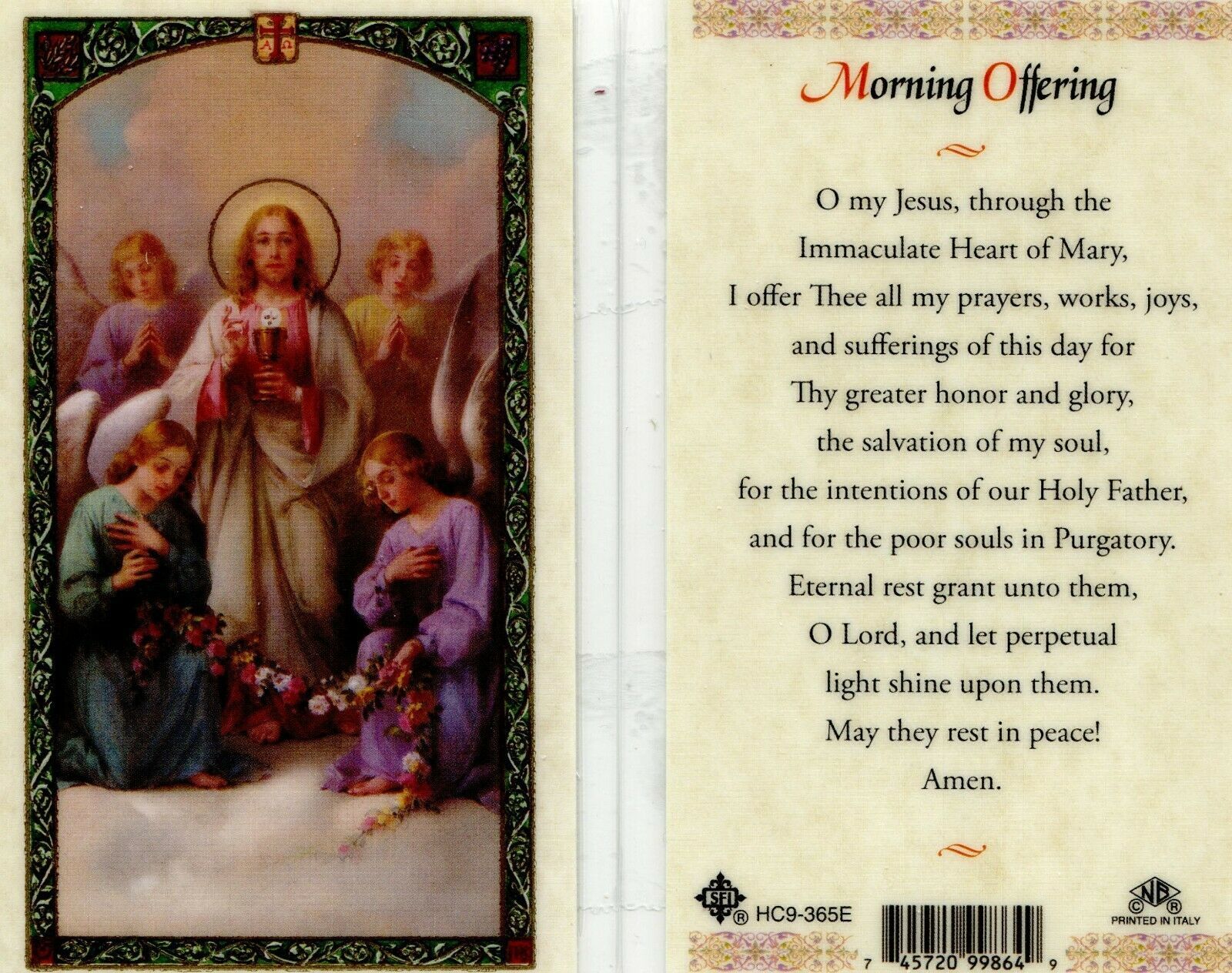
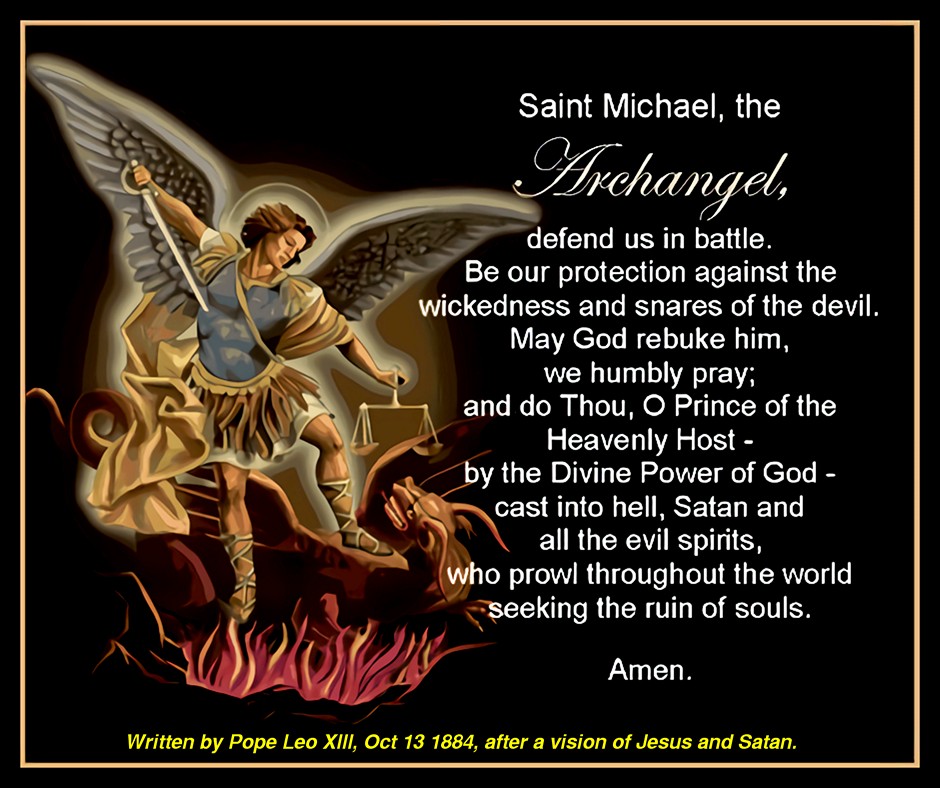
The Month of June is Dedicated to the Sacred Heart of Jesus

“Come to me, all who labor and are heavy laden, and I will give you rest. Take my yoke upon you, and learn from me; for I am gentle and lowly in heart, and you will find rest for your souls. For my yoke is easy, and my burden is light.” (Matthew 11:28-30)

Pope Leo XIV’s prayer intention for the month of May, 2026:
For the values of sports
Let us pray that sports be an instrument of peace, encounter, and dialogue among cultures and nations, and that they promote values such as respect, solidarity, and personal growth.

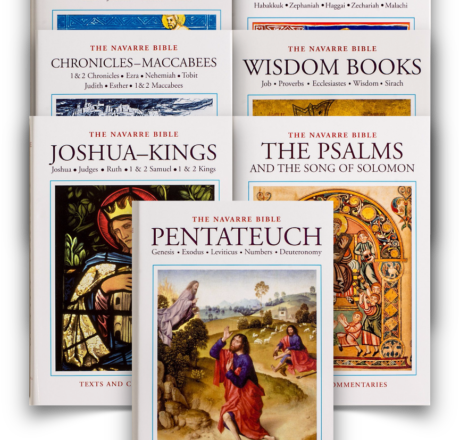
Today’s First Reading
From: 2 Kings 25:1-12
Siege of Jerusalem and capture of Zedekiah
-----------------------------------------------------
[1] And in the ninth year of his reign. in the tenth month, on the tenth day of the month, Nebuchadnezzar king of Babylon came with all his army against Jerusalem, and laid siege to it; and they built siegeworks against it round about. [2] So the city was besieged till the eleventh year of King Zedekiah. [3] 0n the ninth day of the fourth month the famine was so severe in the city that there was no food for the people of the land. [4] Then a breach was made in the city; the king, with all the men of war fled by night by the way of the gate between the two walls, by the king's garden, though the Chaldeans were around the city. And they went in the direction of the Arabah. [5] But the army of the Chaldeans pursued the king, and overtook him in the plains of Jericho; and all his army was scattered from him. [6] Then they captured the king, and brought him up to the king of Babylon at Riblah, who passed sentence upon him. [7] They slew the sons of Zedekiah before his eyes, and put out the eyes of Zedekiah, and bound him in fetters, and took him to Babylon.
Jerusalem is laid waste. The second deportation
----------------------------------------------
[8] In the fifth month, on the seventh day of the month -- which was the nineteenth year of King Nebuchadnezzar, king of Babylon -- Nebuzaradan, the captain of the bodyguard, a servant of the king of Babylon, came to Jerusalem. [9] And he burned the house of the Lord, and the king's house and all the houses of Jerusalem; every great house he burned down. [10] And all the army of the Chaldeans, who were with the captain of the guard, broke down the walls around Jerusalem.
[11] And the rest of the people who were left in the city and the deserters who had deserted to the king of Babylon, together with the rest of the multitude, Nebuzaradan the captain of the guard carried into exile. [12] But the captain of the guard left some of the poorest of the land to be vinedressers and ploughmen.
*******************************************************************************
Commentary:
25:1-21. Three themes stand out in this account of the fall of Jerusalem -- the fate of the king and his sons (vv. 1-7), the despoiling of the temple (vv. 13-17), and the transportation of the inhabitants (vv. 8-12, 18-21). To those deported earlier (cf. 24:14-16) must now he added the people of the land (v. 19). This means that those who remain (estimated at ten or fifteen thousand in all Judah) become great landowners and, perhaps for this very reason, people well disposed towards the Babylonians.
25:1-7. More detailed information about the siege of Jerusalem is provided by the prophets Jeremiah and Ezekiel, who were witnesses of the tragedy (cf. Jer 39:1-10; 52; Ezek 17:11-21). The exact dates of the siege are unclear despite the information given in 2 Kings. Most probably the siege began at the start of 588 and lasted until the summer of 587. At some stage the pharaoh sent assistance to Judah, who was his ally (cf. Ezek 17:15-18; Lam 4:17), causing the Babylonians to raise the siege temporarily (cf. Jer 37:5-11). But once they had defeated the Egyptians, the siege was continued until hunger forced the king and his army to flee (vv. 6-7). Zedekiah could have avoided the terrible punishment that ensued if he had listened to the prophet Jeremiah, who was pressing him to surrender to the Babylonians (cf. Jer 38:14-28).
25:8-21. The fall of Jerusalem and the burning of the temple were events that could never be effaced from Jewish memory: the day was probably 14 August 587.
The objects plundered (vv. 13-17) are those mentioned in 1 Kings 7, which deals with the furnishing of the temple by Solomon. The burning and looting mean that that temple has ceased to be the place chosen by the Lord for his name to dwell (cf. 1 Kings 8:16-29): the glory of the Lord has left it (cf. Ezek 10:18-22). The stage initiated by David and Solomon when the presence of the Lord manifested itself in the temple of Jerusalem has come to an end. All that remains there is ruin and desolation, although from that site prayer will arise to petition the Lord (cf. Ps 74). The author of 2 Kings puts on record the summary execution of some of the priests and army men (vv. 18-21) to show that all is over.
The destruction of the temple shows its transitory character: it is easy now to see that God did not unconditionally commit himself to stay in that place: he expected faithfulness, and did not receive it. Later Jewish tradition will recognize this and, although the temple will he rebuilt after the exile, religious worship will be offered there (cf. Ezra 3:1-13), the conviction will grow, inspired by God, that salvation will reach the people not through the temple but through the fidelity of a servant of the Lord who will obediently take upon himself the punishment warranted by the people's sins (cf. 42:1-9; 52:13-53:12). Jesus Christ will be that suffering servant, and in him the presence of God among men will find a new and enduring temple (cf. 2:11-22). An ancient Christian commentator notes that "those temporal institutions which came into existence as prefigurations of this present reality were only imperfect and partial images and signs of what we now behold before us; once the reality presents itself, its image is eclipsed: just when the king arrives, no one venerates his image and ignores his presence" (“Homilae paschale”).
From: Matthew 7:21-29
Doing the Will of God
---------------------
(Jesus said to His disciples,) [21] "Not every one who says to Me, `Lord, Lord,' shall enter the Kingdom of Heaven, but he who does the will of My Father who is in Heaven. [22] On that day many will say to Me, `Lord, Lord, did we not prophesy in Your name, and cast out demons in Your name, and do many mighty works in Your name?' [23] And then I will declare to them, `I never knew you; depart from Me, you evildoers.'
Building on Rock
----------------
[24] "Every one then who hears these words of Mine and does them will be like a wise man who built his house upon the rock; [25] and the rain fell, and the floods came, and the winds blew and beat upon that house, but it did not fall, because it had been founded on the rock. [26] And every one who hears these words of mine and does not do them will be like a foolish man who built his house upon the sand; [27] and the rain fell, and the floods came, and winds blew and beat against that house, and it fell; and great was the fall of it."
[28] And when Jesus finished these sayings, the crowds were astonished at His teaching, [29] for He taught them as one who had authority, and not as their scribes.
***********************************************************************
Commentary:
21-23. To be genuine, prayer must be accompanied by a persevering effort to do God's will. Similarly, in order to do His will it is not enough to speak about the things of God: there must consistency between what one preaches--what one says--and what one does: "The Kingdom of God does not consist in talk but in power" (1 Corinthians 4:20); "Be doers of the word, and not hearers only, deceiving yourselves" (James 1:22). Christians, "holding loyally to the Gospel, enriched by its resources, and joining forces with all who love and practice justice, have shouldered a weighty task on earth and they must render an account of it to Him who will judge all men on the last day. Not every one who says, `Lord, Lord' will enter the Kingdom of Heaven, but those who do the will of the Father, and who manfully put their hands to the work" (Vatican II, "Gaudium Et Spes", 93).
To enter the Kingdom of Heaven, to be holy, it is not enough, then, to speak eloquently about holiness. One has to practice what one preaches, to produce fruit which accords with one's words. Fray Luis de Leon puts it very graphically: "Notice that to be a good Christian it is not enough just to pray and fast and hear Mass; God must find you faithful, like another Job or Abraham, in times of tribulation" ("Guide for Sinners", Book 1, Part 2, Chapter 21).
Even if a person exercises an ecclesiastical ministry that does not assure his holiness; he needs to practice the virtues he preaches. Besides, we know from experience that any Christian (clerical, religious or lay) who does not strive to act in accordance with the demands of the faith he professes, begins to weaken in his faith and eventually parts company also with the teaching of the Church. Anyone who does not live in accordance with what he says, ends up saying things which are contrary to faith.
The authority with which Jesus speaks in these verses reveals Him as sovereign Judge of the living and the dead. No Old Testament prophet ever spoke with His authority.
22. "That day": a technical formula in biblical language meaning the day of the Judgment of the Lord or the Last Judgment.
23. This passage refers to the Judgment where Jesus will be the Judge. The sacred text uses a verb which means the public proclamation of a truth. Since in this case Jesus Christ is the Judge who makes the declaration, it takes the form of a judicial sentence.
24-27. These verses constitute the positive side of the previous passage. A person who tries to put Christ's teaching into practice, even if he experiences personal difficulties or lives during times of upheaval in the life of the Church or is surrounded by error, will stay firm in the faith, like the wise man who builds his house on rock.
Also, if we are to stay strong in times of difficulty, we need, when things are calm and peaceful, to accept little contradictions with a good grace, to be very refined in our relationship with God and with others, and to perform the duties of our state in life in a spirit of loyalty and abnegation. By acting in this way we are laying down a good foundation, maintaining the edifice of our spiritual life and repairing any cracks which make their appearance.
28-29. Jesus' listeners could clearly see the radical difference between the style of teaching of the scribes and Pharisees, and the conviction and confidence with which Jesus spoke. There is nothing tentative about His words; they leave no room for doubt.
Disclaimer: Opinions posted on Free Republic are those of the individual posters and do not necessarily represent the opinion of Free Republic or its management. All materials posted herein are protected by copyright law and the exemption for fair use of copyrighted works.


