
Posted on 06/24/2026 10:10:06 PM PDT by fidelis
“Not everyone who says to me, ‘Lord, Lord,’ will enter the Kingdom of heaven, but only the one who does the will of my Father in heaven. Many will say to me on that day, ‘Lord, Lord, did we not prophesy in your name? Did we not drive out demons in your name? Did we not do mighty deeds in your name?’ Then I will declare to them solemnly, ‘I never knew you. Depart from me, you evildoers.’” Matthew 7:21–23
Jesus’ words are shocking because they challenge the assumption that prophesying, casting out demons, and performing mighty works in His name guarantee entrance into the Kingdom of Heaven. However, mighty works without obedience and love are insufficient. The passage warns against a distorted discipleship that promotes our own will rather than relying on the interior conversion required to do the will of the Father.
Saint Paul echoes this truth: “And if I have the gift of prophecy and comprehend all mysteries and all knowledge; if I have all faith so as to move mountains but do not have love, I am nothing” (1 Corinthians 13:2). Even the most extraordinary spiritual gifts—prophecy, knowledge, and faith to move mountains—are worthless unless they are animated by the infused virtue of charity, the love that comes from God and enables us to act according to His will.
Jesus’ warning is particularly relevant to those who bear responsibility for preaching, teaching, or guiding others in the faith. Those who work in God’s name can sometimes act according to their own will rather than His. At times, even devout Christians fail to be authentic instruments of God’s pure and perfect will, mistaking their own judgments or desires for His divine guidance.
It is essential that everyone who claims to follow Christ regularly reflect on Jesus’ words. He did not teach this lesson as a mere theoretical warning but because He knew that many of His followers would need it. This passage is not meant to encourage us to judge others within the Church, presuming to identify those who fit His description. Rather, it is a personal exhortation meant for each of us. Jesus preaches these words so that we might examine our own hearts, asking whether we truly seek to do the Father’s will or merely profess faith in name alone.
As a source of self-reflection, consider the words “Lord, Lord.” If you use those words—if you pray and call on God as the Lord of your life—that is a good start; but it is only a start. Many people struggle even to reach that personal level of prayer and attentiveness to God.
Presuming you do pray, how do you pray? Do you list for God the many things you do for Him, expecting Him to be impressed? Do you prophesy in God’s name, meaning you speak about Him to others? Do you cast out demons in God’s name, meaning you combat satan and all evil? Do you do mighty deeds in God’s name, meaning you engage in works that reflect Christian discipleship?
Reflect today on Jesus’ challenging call to listen clearly to His voice alone and then act in accord with His will. Doing so requires us to set aside our own agenda and preconceived notions of what God wants. Serving Christ is not a matter of doing Him favors for which He will be grateful. It’s a matter of unwavering obedience by which we do God’s will alone—nothing less, nothing more, and nothing other. Heed Jesus’ challenge and reexamine how you serve Him. Listen first, then act on what you hear. Doing so will guarantee that your life is built on a solid rock foundation of the faith that leads to the divine gift of charity.
My demanding and just Lord, flood my mind with Your Word, that I may know Your ways. As I listen to Your voice, grant me the courage to act on all You say, never seeking my own will but Yours alone. Use me as You will for Your glory and make me obedient to Your Word, that my life may be built upon the solid foundation of faith and love. Jesus, I trust in You.
Please keep in mind that this is a Catholic Caucus/Devotional thread for the purpose of prayerful reflection on the Sacred Scriptures and is closed to debate of any kind. Per FR policy on Religion Caucus threads, off-topic, argumentative, and abusive comments are not allowed and will be submitted to the Mods for deletion. Thanks, and God bless you.
The Month of June is Dedicated to the Sacred Heart of Jesus

“Come to me, all who labor and are heavy laden, and I will give you rest. Take my yoke upon you, and learn from me; for I am gentle and lowly in heart, and you will find rest for your souls. For my yoke is easy, and my burden is light.” (Matthew 11:28-30)

Pope Leo XIV’s prayer intention for the month of May, 2026:
For the values of sports
Let us pray that sports be an instrument of peace, encounter, and dialogue among cultures and nations, and that they promote values such as respect, solidarity, and personal growth.

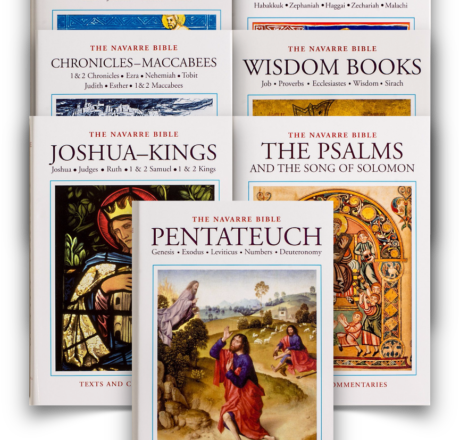
Today’s First Reading
From: 2 Kings 24:8-17
Jehoiakim, king of Judah (608-598)
--------------------------------------------------
[8] Jehoiachin was eighteen years old when he became king, and he reigned three months in Jerusalem. His mother’s name was Nehushta the daughter of Elnathan of Jerusalem. [9] And he did what was evil in the sight of the Lord, according to all that his father had done.
[10] At that time the servants of Nebuchadnezzar king of Babylon came up to Jerusalem, and the city was besieged. [11] And Nebuchadnezzar king of Babylon came to the city, while his servants were besieging it; [12] and Jehoiachin the king of Judah gave himself up to the king of Babylon, himself, and his mother, and his servants, and his princes, and his palace officials. The king of Babylon took his prisoner in the eighth year of his reign, [13] and carried off all the treasures of the house of the Lord, and the treasures of the king’s house, and cut in pieces all the vessels of gold in the temple of the Lord, which Solomon king of Israel had made, as the Lord had foretold. [14] He carried away all Jerusalem, and all the princes, and all the mighty men of valour, ten thousand captives, and all the craftsmen and the smiths; none remained, except the poorest people of the land. [15] And he carried away Jehoiachin to Babylon; the king’s mother, the king’s wives, his officials, and the chief men of the land, he took into captivity from Jerusalem to Babylon. [16] And the king of Babylon brought captive to Babylon all the men of valour, seven thousand, and the craftsmen and the smiths, one thousand, all of them strong and fit for war. [17] And the king of Babylon made Mattaniah, Jehoiachin’s uncle, king in his stead, and changed his name to Zedekiah.
*****************************************************************************
Commentary:
24:8-17. Although repelled by Egypt, Nebuchadnezzar controls the entire region north of the “Brook of Egypt” (v. 7), and in 597 BC his army lays siege to Jerusalem. The death of King Jehoiakim and the succession of his son Jehoiachin do not change the situation. Within three months the new king surrenders and is led captive to Babylon (vv. 12-16) in the eighth year of Nebuchadnezzar reign.
From: Matthew 7:21-29
Doing the Will of God
---------------------
(Jesus said to His disciples,) [21] "Not every one who says to Me, `Lord, Lord,' shall enter the Kingdom of Heaven, but he who does the will of My Father who is in Heaven. [22] On that day many will say to Me, `Lord, Lord, did we not prophesy in Your name, and cast out demons in Your name, and do many mighty works in Your name?' [23] And then I will declare to them, `I never knew you; depart from Me, you evildoers.'
Building on Rock
----------------
[24] "Every one then who hears these words of Mine and does them will be like a wise man who built his house upon the rock; [25] and the rain fell, and the floods came, and the winds blew and beat upon that house, but it did not fall, because it had been founded on the rock. [26] And every one who hears these words of mine and does not do them will be like a foolish man who built his house upon the sand; [27] and the rain fell, and the floods came, and winds blew and beat against that house, and it fell; and great was the fall of it."
[28] And when Jesus finished these sayings, the crowds were astonished at His teaching, [29] for He taught them as one who had authority, and not as their scribes.
***********************************************************************
Commentary:
21-23. To be genuine, prayer must be accompanied by a persevering effort to do God's will. Similarly, in order to do His will it is not enough to speak about the things of God: there must consistency between what one preaches--what one says--and what one does: "The Kingdom of God does not consist in talk but in power" (1 Corinthians 4:20); "Be doers of the word, and not hearers only, deceiving yourselves" (James 1:22). Christians, "holding loyally to the Gospel, enriched by its resources, and joining forces with all who love and practice justice, have shouldered a weighty task on earth and they must render an account of it to Him who will judge all men on the last day. Not every one who says, `Lord, Lord' will enter the Kingdom of Heaven, but those who do the will of the Father, and who manfully put their hands to the work" (Vatican II, "Gaudium Et Spes", 93).
To enter the Kingdom of Heaven, to be holy, it is not enough, then, to speak eloquently about holiness. One has to practice what one preaches, to produce fruit which accords with one's words. Fray Luis de Leon puts it very graphically: "Notice that to be a good Christian it is not enough just to pray and fast and hear Mass; God must find you faithful, like another Job or Abraham, in times of tribulation" ("Guide for Sinners", Book 1, Part 2, Chapter 21).
Even if a person exercises an ecclesiastical ministry that does not assure his holiness; he needs to practice the virtues he preaches. Besides, we know from experience that any Christian (clerical, religious or lay) who does not strive to act in accordance with the demands of the faith he professes, begins to weaken in his faith and eventually parts company also with the teaching of the Church. Anyone who does not live in accordance with what he says, ends up saying things which are contrary to faith.
The authority with which Jesus speaks in these verses reveals Him as sovereign Judge of the living and the dead. No Old Testament prophet ever spoke with His authority.
22. "That day": a technical formula in biblical language meaning the day of the Judgment of the Lord or the Last Judgment.
23. This passage refers to the Judgment where Jesus will be the Judge. The sacred text uses a verb which means the public proclamation of a truth. Since in this case Jesus Christ is the Judge who makes the declaration, it takes the form of a judicial sentence.
24-27. These verses constitute the positive side of the previous passage. A person who tries to put Christ's teaching into practice, even if he experiences personal difficulties or lives during times of upheaval in the life of the Church or is surrounded by error, will stay firm in the faith, like the wise man who builds his house on rock.
Also, if we are to stay strong in times of difficulty, we need, when things are calm and peaceful, to accept little contradictions with a good grace, to be very refined in our relationship with God and with others, and to perform the duties of our state in life in a spirit of loyalty and abnegation. By acting in this way we are laying down a good foundation, maintaining the edifice of our spiritual life and repairing any cracks which make their appearance.
28-29. Jesus' listeners could clearly see the radical difference between the style of teaching of the scribes and Pharisees, and the conviction and confidence with which Jesus spoke. There is nothing tentative about His words; they leave no room for doubt.
Disclaimer: Opinions posted on Free Republic are those of the individual posters and do not necessarily represent the opinion of Free Republic or its management. All materials posted herein are protected by copyright law and the exemption for fair use of copyrighted works.

