
Posted on 06/24/2026 12:17:20 PM PDT by fidelis
When they came on the eighth day to circumcise the child, they were going to call him Zechariah after his father, but his mother said in reply, “No. He will be called John.” But they answered her, “There is no one among your relatives who has this name.” So they made signs, asking his father what he wished him to be called. He asked for a tablet and wrote, “John is his name,” and all were amazed. Luke 1:59–63
The Solemnity of the Nativity of Saint John the Baptist is one of only three birthdays the Church celebrates with a liturgical feast—the others being those of Jesus and the Blessed Virgin Mary. This extraordinary honor reveals the singular role Saint John played in salvation history as the Forerunner who prepared the way for the Lord. Three profound mysteries surrounding John’s birth invite our reflection.
First, Elizabeth’s pregnancy in her old age, after years of barrenness and beyond natural childbearing years, was a deliberate sign of divine intervention and a testimony to God’s power and mercy. Recall that a similar miracle occurred when Sarah conceived Isaac in her old age. Spiritually, Elizabeth represents Israel—and all humanity—trapped in the barrenness of sin. By bringing forth life from her barren womb, God manifests His ability to bring forth new life where human effort fails.
Second, the bestowal of John’s name reveals the divine initiative governing his life and mission. In the biblical tradition, names are rich with meaning, often disclosing a person’s identity and destiny. The name “John,” meaning “The Lord is gracious,” was not chosen by his parents, but was announced by the Archangel Gabriel before his conception (cf. Luke 1:13). When Elizabeth and Zechariah insist upon the name given by God, they demonstrate their obedience to divine revelation over human custom. Their relatives’ confusion—“There is no one among your relatives who has this name”—highlights how this birth breaks from human expectations. John is not to carry on his father’s name or legacy; he is set apart entirely for the mission of preparing the way for the Messiah. In this, we see a lesson for every Christian: Our true identity and mission are not rooted in earthly lineage or human tradition but are given to us by the free and gracious call of God.
As we celebrate the Solemnity of the Nativity of Saint John the Baptist, reflect today not only on John’s unique role in salvation history but also on how God desires to work in our own lives. If you experience moments of barrenness or dryness in your faith, take hope from John’s miraculous birth: God can bring forth new life even from what seems lifeless. As John’s name revealed the graciousness of God, so too are you called to trust in His mercy at work within you. And as Zechariah learned obedience and deeper faith through his silent suffering, pray that you may embrace any hidden trials you endure, allowing them to purify your heart and prepare you to proclaim God’s goodness with renewed joy.
Lord of Wisdom and Love, Your plan for our salvation is perfect and far beyond our understanding. As Your Church celebrates the birth of Saint John the Baptist, grant me a renewed appreciation for his life and mission. May he prepare my heart for You, as he did for Your coming, so that I, like his father Zechariah, may sing Your praises with a loosed tongue. Saint John the Baptist, pray for us. Jesus, I trust in You.
Please keep in mind that this is a Catholic Caucus/Devotional thread for the purpose of prayerful reflection on the Sacred Scriptures and is closed to debate of any kind. Per FR policy on Religion Caucus threads, off-topic, argumentative, and abusive comments are not allowed and will be submitted to the Mods for deletion. Thanks, and God bless you.
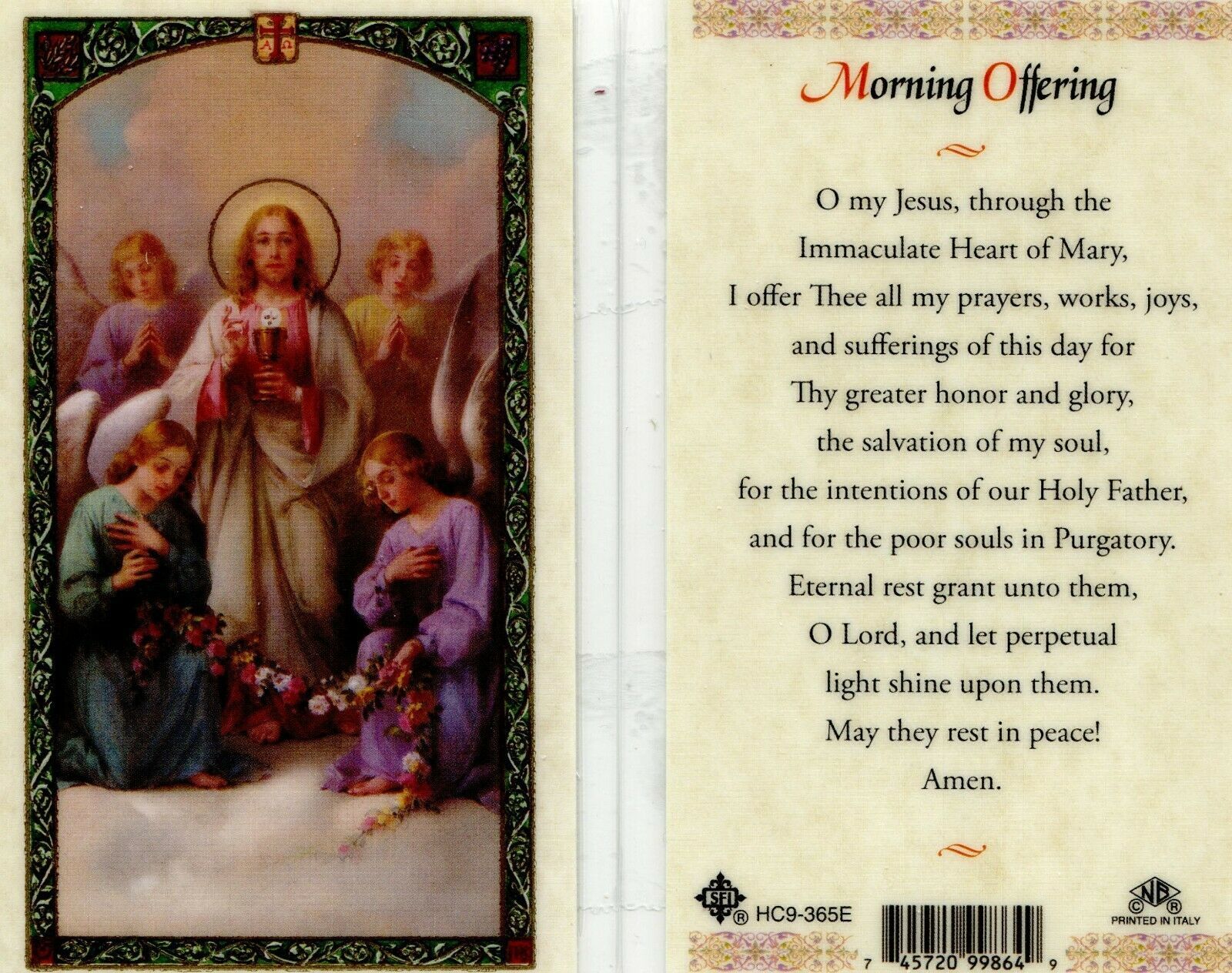
The Month of June is Dedicated to the Sacred Heart of Jesus

“Come to me, all who labor and are heavy laden, and I will give you rest. Take my yoke upon you, and learn from me; for I am gentle and lowly in heart, and you will find rest for your souls. For my yoke is easy, and my burden is light.” (Matthew 11:28-30)

Pope Leo XIV’s prayer intention for the month of May, 2026:
For the values of sports
Let us pray that sports be an instrument of peace, encounter, and dialogue among cultures and nations, and that they promote values such as respect, solidarity, and personal growth.

Today’s First Reading
From: Isaiah 49:1-6
Second Song of the Servant of the Lord
--------------------------------------
[1] Listen to me, O coastlands, and hearken, you peoples from afar. The LORD called me from the womb, from the body of my mother he named my name. [2] He made my mouth like a sharp sword, in the shadow of his hand he hid me; he made me a polished arrow, in his quiver he hid me away. [3] And he said to me, “You are my servant, Israel, in whom I will be glorified." [4] But I said, “I have labored in vain, I have spent my strength for nothing and vanity; yet surely my right is with the LORD, and my recompense with my God?" [5] And now the LORD says, who formed me from the womb to be his servant, to bring Jacob back to him, and that Israel might be gathered to him, for I am honored in the eyes of the LORD, and my God has become my strength--[6] he says: “It is too light a thing that you should be my servant to raise up the tribes of Jacob and to restore the preserved of Israel; I will give you as a light to the nations, that my salvation may reach to the end of the earth."
***********************************************************************
Commentary:
49:1-55:13. Chapter 49 marks the start of the second section of the second part of Isaiah. The first section (40:1-48:22) dealt with the release of the Jews from exile in Babylon on the orders of the Lord, the ruler of the world and of all nations. This second section sings of the restoration of Zion and the renewal of the people.
Almost all the oracles here presuppose that Babylon has fallen and the exiles have returned home (although neither event is explicitly referred to). Nor is there mention of the universal scope of salvation: the focus is mainly on future hopes and on Jerusalem.
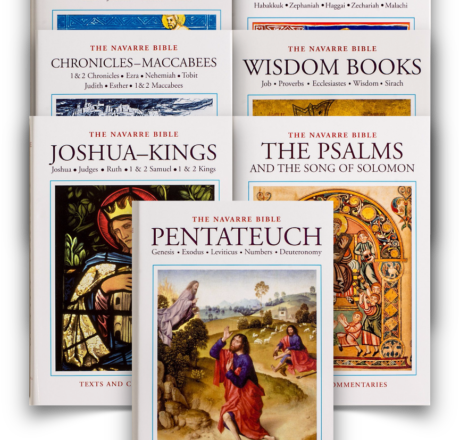
Most of the oracles in this section were probably proclaimed between the years 515 and 500 BC. If that was the case, then they were addressed to a disillusioned people: the enthusiasm that came with the return from exile and the efforts made to rebuild Jerusalem failed to produce the desired results: there are still class differences, greed is plain to see, and huge sectors of society are experiencing poverty. The kind of Jerusalem that the exiles dreamed of had not come about: it bore no relationship to what they were experiencing; nor did it fit the image of Jerusalem found in many texts of the Priestly tradition (cf. “Introduction to the Pentateuch”, in "The Navarre Bible: Pentateuch" (p. 20). These oracles are designed to dispel discouragement and to raise people’s hopes by telling them about the liberator that God is going to send, the servant of the Lord, and by proclaiming that the holy city (now given the sacred name of Zion) will very soon be restored. In fact, the section can be divided into alternating poems on the servant and on Zion: 49:1-13, the "servant" (second oracle); 49:14-50:3, "Zion"; 50:4-11, the "servant", (third oracle and exhortation); 51:17-52:12, Zion; 52:13-53:12, the "servant" (fourth oracle); 54:1-17, "Zion" (Jerusalem). Verses 1-13 of chapter 55 are an exhortation to commit oneself to the new Covenant.
49:1-6. In the first Song of the Servant of the Lord (42:1-9) we meet the “servant” for the first time and we are told of his mission to liberate the exiles. In this second song, the servant himself speaks. He addresses the “coastlands”, “peoples from afar”, and he is conscious of having been chosen by God from his mother’s womb to carry out God’s plans of salvation even in those distant parts (cf. vv. 1-3). Here we are told about two aspects of his mission, which we will hear more about in the oracles that follow. First, he is to play a leading role in the recovery of the tribes and the repatriation of the exiles (v. 5); second, he will extend salvation to the ends of the earth (cf. v. 6).
This poem contains things that the servant has to say about himself (vv. 1-4), and things that God says about the servant (vv. 5-6). The servant is well aware that he was called by God, even from his mother’s womb, (like Jeremiah; cf. Jer 1:5) and has been charged with preaching to the pagan peoples (“the coastlands”) or at least to his compatriots in the diaspora (cf. v. 1; cf. Jer 1:1-10; 25:13-38); he has been endowed with qualities that enable him to speak out, with words that find their mark like arrows, even if that creates divisions (v. 2; cf. Jer 1:10); and also, despite the divine protection given him, he feels depressed and disappointed, as happened to Jeremiah (vv. 3-4; cf. Jer 1:7; :8:18-20). Everything that the servant does is grounded on what the Lord has told him: “You are my servant, Israel” (v. 3). Some commentators are of the view that “Israel” here is a later interpretation, put in to support the collectivist interpretation of the servant that soon became widespread; but there is little evidence to support that: the word “Israel” is missing only in one manuscript, and not an important one at that. The mention of Israel does not argue against the servant’s being an individual rather than a collectivity, for in poetry a person can be addressed by his own name or by his family name. In fact, both in biblical Israel and nowadays we often find people using their place of birth as a surname.
In vv. 5-6 the Lord spells out the servant’s mission: it is to renew the people in such a way that even non-Israelites can see the light and attain salvation. Although the universal mission of the servant is not clearly defined here, for his work is meant to be confined to the tribes of Jacob, still the achievement of this objective (the re-assembling of Israel) will be a kind of light to help the pagan nations see and acknowledge God. The expression “light to the nations”. (v. 6) already occurred in the earlier poem (42:6); there it could be taken in a social sense--to bring about the liberation of the exiles and captives; here, the religious meaning is clear: salvation will spread to all the nations.
To sum up, the servant of the Lord (be he an individual or a collectivity, or more likely both) has been chosen by God, who loves him most specially; he has all the main qualities of a prophet; and he must influence his compatriots so as to enlighten those from outside, and bring them salvation.
The messianic interpretation of the servant figure, based on this second song, was widespread among the Jews of Alexandria who made the Septuagint Greek translation; it was also held by members of the Qumran community and by some authors of the period between the Old and New Testaments (the author of the "Book of Enoch", for example). All these interpreted the servant as standing for the entire people of Israel. Christians, from the beginning, applied the songs of the servant to Jesus, and saw them as finding fulfillment in his life. Thus, although the image of the “sharp sword” (v. 2) refers to the effectiveness of the word of God, in Hebrews 4:12-13 we find it used with reference to Revelation as a whole which is fully and perfectly manifested in Jesus Christ (cf. also Rev 1:16 and 2:12). We find the expression, “light to the nations” or “light to the peoples” being applied by Simeon to Jesus (Lk 2:32). Indeed, in the Acts of the Apostles it is applied to those who, in line with Jesus’ teaching and as cooperators in his work of salvation, are setting out to preach to the Gentiles, as the words Paul and Barnabas speak in the synagogue of Psidian Antioch testify: “It was necessary that the word of God should be spoken first to you. Since you thrust it from you, and judge yourselves unworthy of eternal life, behold, we turn to the Gentiles. For so the Lord has commanded us, saying, ‘I have set you to be a light for the Gentiles, that you may bring salvation to the uttermost parts of the earth” (Acts 13:46-47). Hence the Church sees her mission as spreading the truth about Jesus, the light that enlightens everyone: “The light, of God’s face shines in all its beauty on the countenance of Jesus Christ, ‘the image of the invisible God’ (Col 1:15), the ‘reflection of God’s glory’ (Heb 1:3), ‘full of grace and truth’ (Jn 1:14). Christ is ‘the way, and the truth, and the life’ (Jn 14:6). [...] Jesus Christ, the ‘light of the nations’, shines: upon the face of his Church, which he sends forth to the whole world to proclaim the Gospel to every creature (cf. Mk 16:15). Hence the Church, as the people of God among the nations, while attentive to the new challenges of history and to mankind’s efforts to discover the meaning of life, offers to everyone the answer which comes from the truth about Jesus Christ and his Gospel” (John Paul II, "Veritatis Splendor", 2).
From: Acts 13:22-26
Preaching in the Synagogue of Antioch of Pisidia (Continuation)
---------------------------------------------------------------
(Paul said to the Jews,) [22] "And when He had removed him (King Saul), He raised up David to be their king; of whom He testified and said, "I have found in David the son of Jesse a man after My heart, who will do all My will.' [23] Of this man's posterity God has brought Israel a Savior, Jesus, as He promised. [24] Before His coming John had preached a baptism of repentance to all the people of Israel. [25] And as John was finishing his course, he said, 'What do you suppose that I am? I am not He. No, but after me One is coming, the sandals of whose feet I am not worthy to untie.'
[26] "Brethren, sons of the family of Abraham, and those among you that fear God, to us has been sent the message of this salvation."
***********************************************************************
Commentary:
16-41. Paul's address here is an excellent example of the way he used to present the Gospel to a mixed congregation of Jews and proselytes. He lists the benefits conferred by God on the chosen people from Abraham down to John the Baptism (verses 16-25); he then shows how all the messianic prophecies were fulfilled in Jesus (verses 26-37), and, by way of conclusion, states that justification comes about through faith in Jesus, who died and then rose from the dead (verse 38-41).
This address contains all the main themes of apostolic preaching, that is, God's saving initiative in the history of Israel (verses 17-22); reference to the Precursor (verses 24-25); the proclamation of the Gospel or "kerygma" in the proper sense (verses 26b-31a); mention of Jerusalem (verse 31b); arguments from Sacred Scripture (verses 33-37), complementing apostolic teaching and tradition (verses 38-39); and a final exhortation, eschatological in character, announcing the future (verses 40-41). In many respects this address is like those of St. Peter (cf. 2:14ff; 3:12ff), especially where it proclaims Jesus as Messiah and in its many quotations from Sacred Scripture, chosen to show that the decisive event of the Resurrection confirms Christ's divinity.
Paul gives a general outline of salvation history and then locates Jesus in it as the expected Messiah, the point at which all the various strands in that history meet and all God's promises are fulfilled. He shows that all the steps which lead up to Jesus Christ, even the stage of John the Baptist, are just points on a route. Earlier, provisional elements must now, in Christ, give way to a new, definitive situation.
"You that fear God" (verse 26): see the notes on Acts 2:5-11 and 10:2.
From: Luke 1:57-66, 80
The Birth and Circumcision of John the Baptist
-----------------------------------------------------------
[57] Now the time came for Elizabeth to be delivered, and she gave birth to a son. [58] And her neighbors and kinsfolk heard that the Lord had shown great mercy to her, and they rejoiced with her. [59] And on the eighth day they came to circumcise the child; and they would have named him Zechariah after his father, [60] but his mother said, "Not so; he shall be called John." [61] And they said to her, "None of your kindred is called by this name." [62] And they made signs to his father, inquiring what he would have him called. [63] And he asked for a writing tablet, and wrote, "His name is John." And they all marvelled. [64] And immediately his mouth was opened and his tongue loosed, and he spoke, blessing God. [65] And fear came on all their neighbors. And all these things were talked about through all the hill country of Judea; [66] and all who heard them laid them up in their hearts, saying "What then will this child be?" For the hand of the Lord was with him.
[80] And the child grew and became strong in spirit, and he was in the wilderness till the day of his manifestation to Israel.
***********************************************************************
Commentary:
59. Circumcision was a rite established by God under the Old Covenant to mark out those who belonged to His chosen people: He commanded Abraham to institute circumcision as a sign of the Covenant He had made with him and all his descendants (cf. Genesis 17:10-14), prescribing that it should be done on the eighth day after birth. The rite was performed either at home or in the synagogue, and, in addition to the actual circumcision, the ceremony included prayers and the naming of the child.
With the institution of Christian Baptism the commandment to circumcise ceased to apply. At the Council of Jerusalem (cf. Acts 15:1ff), the Apostles definitely declared that those entering the Church had no need to be circumcised.
St. Paul's explicit teaching on the irrelevance of circumcision in the context of the New Alliance established by Christ is to be found in Galatians 5:2ff; 6:12ff; and Colossians 2:11ff.
60-63. By naming the child John, Zechariah complies with the instructions God sent him through the angel (Luke 1:13).
64. This miraculous event fulfills the prophecy the angel Gabriel made to Zechariah when he announced the conception and birth of the Baptist (Luke 1:19-20). St. Ambrose observes: `With good reason was his tongue loosed, because faith untied what had been tied by disbelief" ("Expositio Evangelii Sec. Lucam. in loc.").
Zechariah's is a case similar to that of St. Thomas, who was reluctant to believe in the resurrection of our Lord, and who believed only when Jesus gave him clear proof (cf. John 20:24-29). For these two men God worked a miracle and won their belief; but normally He requires us to have faith and to obey Him without His working any new miracles. This was why He upbraided Zechariah and punished him, and why He reproached Thomas: "Have you believed because you have seen Me? Blessed are those who have not seen and yet believe" (John 20:29).
80. "Wilderness": this must surely refer to the "Judean wilderness" which stretches from the northwestern shores of the Dead Sea to the hill country of Judea. It is not a sand desert but rather a barren steppe with bushes and basic vegetation which suit bees and grasshoppers or wild locusts. It contains many caves which can provide shelter.
Disclaimer: Opinions posted on Free Republic are those of the individual posters and do not necessarily represent the opinion of Free Republic or its management. All materials posted herein are protected by copyright law and the exemption for fair use of copyrighted works.


