
Posted on 06/19/2026 10:34:11 PM PDT by fidelis
“So do not worry and say, ‘What are we to eat?’ or ‘What are we to drink?’ or ‘What are we to wear?’ All these things the pagans seek. Your heavenly Father knows that you need them all. But seek first the Kingdom of God and his righteousness, and all these things will be given you besides. Do not worry about tomorrow; tomorrow will take care of itself. Sufficient for a day is its own evil.” Matthew 6:31–34
In the fifth century, Saint Augustine wrote The City of God, one of the most important works in Catholic thought and Western philosophy. In it, he contrasted the Christian “City of God” with the pagan “City of Man,” responding to those who blamed Christianity for the decline of the Roman Empire. He writes: “Thus, two cities have been formed by two loves: the earthly city by a love of self to the point of contempt for God, and the heavenly city by a love of God to the point of contempt for self. The former glories in itself, while the latter glories in the Lord.” (XIV.28)
At the time, the once-mighty Roman Empire was in steady decline, and many falsely attributed its downfall to the rise of Christianity. Augustine, however, defended the faith, offering a profound theological and philosophical exposition of history, divine providence, and the ultimate destiny of humanity. By contrasting these two fundamental orientations of civilization—the City of Man, built on self-love and earthly glory, and the City of God, founded on divine love and eternal truth—Augustine illuminated the true path to human flourishing and salvation.
Which “city” is more attractive to you? If we are to truly build the City of God—or the Kingdom of God, as Jesus calls it—we must remain vigilant against the many secular influences that pull us away from the Gospel and the work of building God’s Kingdom.
As Jesus teaches, the pagans seek and worry about the things of this world, often at the expense of what is eternal. Yet our Heavenly Father knows our needs, and so we must cultivate an interior disposition of trust in His providence. While we are called to act responsibly, providing diligently for ourselves and our families, we must ultimately recognize that it is God who sustains us when we cooperate with His will. We must do so without fear.
Jesus does not condemn responsible stewardship of material goods; rather, He warns against worldly anxiety. As a fundamental disposition, we must always “seek first the Kingdom of God and his righteousness.” When we do so, “all these things will be given you besides.” In other words, if our greatest love is to build God’s Kingdom in our hearts, our families, and our society, we can trust that He will provide for our needs, freeing us to focus entirely on His divine work.
Reflect today on whether you truly “seek first the Kingdom of God and his righteousness.” The best way to discern this is to prayerfully examine the deepest desires of your heart. When your desire is for God’s Kingdom, you will experience peace and interior order. When your heart clings to worldly concerns, you will be anxious and burdened by many things. Strive to order your desires properly, and God will lavish upon you all that is good and necessary for a joyful participation in the glorious and eternal City of God.
Most glorious King, You came to establish Your Kingdom in our hearts, our families, and our world. Too often, I fail to recognize its glory and instead labor to build an earthly city of passing pleasure, wealth, and comfort. Draw me ever closer to You, Lord, and open my eyes of faith, that I may seek only Your will and become a true instrument of the Kingdom You desire to establish. Jesus, I trust in You.
Please keep in mind that this is a Catholic Caucus/Devotional thread for the purpose of prayerful reflection on the Sacred Scriptures and is closed to debate of any kind. Per FR policy on Religion Caucus threads, off-topic, argumentative, and abusive comments are not allowed and will be submitted to the Mods for deletion. Thanks, and God bless you.
The Month of June is Dedicated to the Sacred Heart of Jesus

“Come to me, all who labor and are heavy laden, and I will give you rest. Take my yoke upon you, and learn from me; for I am gentle and lowly in heart, and you will find rest for your souls. For my yoke is easy, and my burden is light.” (Matthew 11:28-30)

Pope Leo XIV’s prayer intention for the month of May, 2026:
For the values of sports
Let us pray that sports be an instrument of peace, encounter, and dialogue among cultures and nations, and that they promote values such as respect, solidarity, and personal growth.

Today’s First Reading
From: 2 Chronicles 24:17-25
Joash's infidelity
------------------------
[17] Now after the death of Jehoiada the princes of Judah came and did obeisance to the king; then the king hearkened to them. [18] And they forsook the house of the Lord, the God of their fathers, and served the Asherim and the idols. And wrath came upon Judah and Jerusalem for this their guilt. [19] Yet he sent prophets among them to bring them back to the Lord; these testified against them, but they would not give heed.
[20] Then the Spirit of God took possession of Zechariah the son of Jehoiada the priest; and he stood above the people, and said to them, "Thus says God, 'Why do you transgress the commandments of the Lord, so that you cannot prosper? Because you have forsaken the Lord, he has forsaken you.'" [21] But they conspired against him, and by command of the king they stoned him with stones in the court of the house of the Lord. [22] Thus Joash the king did not remember the kindness which Jehoiada, Zechariah's father, had shown him, but killed his son. And when he was dying, he said, "May the Lord see and avenge!"
[23] At the end of the year the army of the Syrians came up against Joash. They came to Judah and Jerusalem, and destroyed all the princes of the people from among the people, and sent all their spoil to the king of Damascus. [24] Though the army of the Syrians had come with few men, the Lord delivered into their hand a very great army, because they had forsaken the Lord, the God of their fathers. Thus they executed judgment on Joash.
[25] When they had departed from him, leaving him severely wounded, his servants conspired against him because of the blood of the son of Jehoiada the priest, and slew him on his bed. So he died; and they buried him in the city of David, but they did not bury him in the tombs of the kings.
********************************************************************
Commentary:
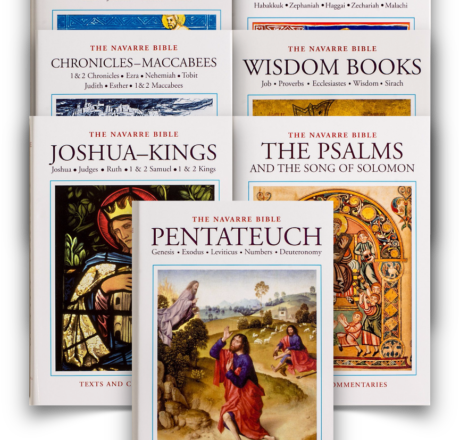
24:1-27. The account of the reign of Joash is written with a clearly pedagogical purpose; we divide it into two stages, to help show the religious message it contains.
The first stage (vv. 1-16) is all about the collection of monies to pay for the restoration of the temple (it follows the parallel passage of 2 Kings 12:1-17). During these years the real protagonist is Jehoiada the priest, who implemented the king's initiatives to do with rebuilding the temple and returning it to its original splendour (v. 13). When Jehoiada died, he was buried in the city of David, that is to say, he was accorded royal honours.
The second stage was marked by disloyalty to the Lord and by idolatry. The military defeats and conspiracies were forms of punishment for the king's transgressions (vv. 17-26). Joash's worst crime was the shameful execution of the son of Jehoiada, the prophet Zechariah (not the same person as the last of the minor prophets), who had dared to denounce the king's crimes. For this sin the king himself will lose his life at the hands of conspirators (v. 25). Once again we can see that God does not leave crimes unavenged.
This Zechariah is probably the prophet Jesus referred to as a prime example of an innocent victim sacrificed by his own people: “that upon you may come all the righteous blood shed on earth, from the blood of the innocent Abel to the blood of Zechariah the son of Barachiah, whom you murdered between the sanctuary and the altar” (Mt 23:35). The fact that Jesus calls him “son of Barachiah” instead of “son of Jehoiada” could be because different genealogies were being used, or else there may have been some error in the transmission of the text. Anyway, given that the book of Chronicles is the last book in the Hebrew Bible, Jesus is saying that all innocent victims, from the first (Abel) to the last (Zechariah), are figures of the Christian martyrs and share in the redemption Christ effected by his death on the cross: “Moreover, my brothers, you must not think that all those good men who suffered persecution at the hands of the wicked – including those who were sent to announce the coming of the Lord – were not members of Christ’s body. Any man who belongs to the city of which Christ is the king must be a servant of Christ. That city runs from the blood of the innocent Abel to the blood of Zechariah. And on from there, from the blood of John [the Baptist], through that of the apostles and martyrs and all those who were faithful to Christ: these people together make up the city of which we speak” (St Augustine, Enarrationes in Psalmos, 61, 3).
From: Matthew 6:24-34
Trust in God's Fatherly Providence (Continuation)
-------------------------------------------------
(Jesus said to His disciples,) [24] "No one can serve two masters; for either he will hate the one and love the other, or he will be devoted to the one and despise the other. You cannot serve God and mammon.
[25] "Therefore I tell you, do not be anxious about your life, what you shall eat or what you shall drink, nor about your body, what you shall put on. Is not life more than food, and the body more than clothing? [26] Look at the birds of the air; they neither sow nor reap nor gather into barns, and yet your Heavenly Father feeds them. Are you not of more value than they? [27] And which of you by being anxious can add one cubit to his span of life? [28] And why are you anxious about clothing? Consider the lilies of the field, how they grow; they neither toil nor spin; [29] yet I tell you, even Solomon in all his glory was not arrayed like one of these. [30] But if God so clothes the grass of the field, which today is alive and tomorrow is thrown into the oven, will He not much more clothe you, O men of little faith? [31] Therefore do not be anxious, saying, `What shall we eat?' or `What shall we drink?' or `What shall we wear?' [32] For the Gentiles seek all these things; and your Heavenly Father knows that you need them all. [33] But seek first His Kingdom and His righteousness, and all these things shall be yours as well.
[34] "Therefore do not be anxious about tomorrow, for tomorrow will be anxious for itself. Let the day's own trouble be sufficient for the day."
***********************************************************************
Commentary:
24. Man's ultimate goal is God; to attain this goal he should commit himself entirely. But in fact some people do not have God as their ultimate goal, and instead choose wealth of some kind--in which case wealth becomes their god. Man cannot have two absolute and contrary goals.
25-32. In this beautiful passage Jesus shows us the value of the ordinary things of life, and teaches us to put our trust in God's fatherly providence. Using simple examples and comparisons taken from everyday life, He teaches us to abandon ourselves into the arms of God.
27. The word "span" could be translated as "stature", but "span" is closer to the original (cf. Luke 12:25). A "cubit" is a measure of length which can metaphorically refer to time.
33. Here again the righteousness of the Kingdom means the life of grace in man--which involves a whole series of spiritual and moral values and can be summed up in the notion of "holiness". The search for holiness should be our primary purpose in life. Jesus is again insisting on the primacy of spiritual demands. Commenting on this passage, Pope Paul VI says: "Why poverty? It is to give God, the Kingdom of God, the first place in the scale of values which are the object of human aspirations. Jesus says: `Seek first His Kingdom and His righteousness'. And He says this with regard to all the other temporal goods, even necessary and legitimate ones, with which human desires are usually concerned. Christ's poverty makes possible that detachment from earthly things which allows us to place the relationship with God at the peak of human aspirations" ("General Audience", 5 January 1977).
34. Our Lord exhorts us to go about our daily tasks serenely and not to worry uselessly about what happened yesterday or what may happen tomorrow. This is wisdom based on God's fatherly providence and on our own everyday experience: "He who observes the wind will not sow; and he who regards the clouds will not reap" (Eccles 11:4).
What is important, what is within our reach, is to live in God's presence and make good use of the present moment: "Do your duty `now', without looking back on `yesterday', which has already passed, or worrying over `tomorrow', which may never come for you" (St J. Escriva, "The Way", 253).
Disclaimer: Opinions posted on Free Republic are those of the individual posters and do not necessarily represent the opinion of Free Republic or its management. All materials posted herein are protected by copyright law and the exemption for fair use of copyrighted works.

